
Safety
General information, not medical advice
Your prescriber and the leaflet in your pack know your situation. This page does not.
- Follow your prescriber and the leaflet
- Don't start, stop, or change a dose on your own
- Doses and warnings differ by country and product
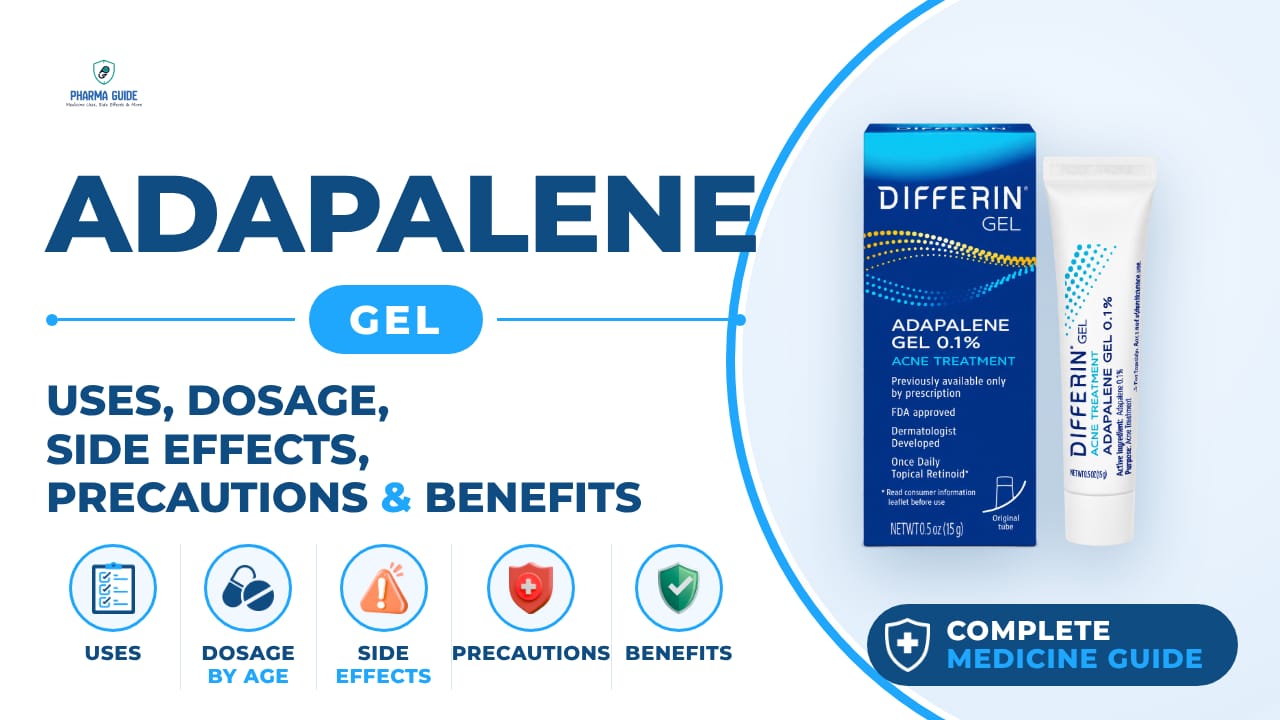
Adapalene Gel: Uses, Dosage, Side Effects, Precautions and Alternates
| Generic name | adapalene |
|---|---|
| Drug class | Retinoid (topical retinoid, vitamin A derivative) |
| Forms | Gel, Cream, Lotion, Solution (liquid) |
Quick overview
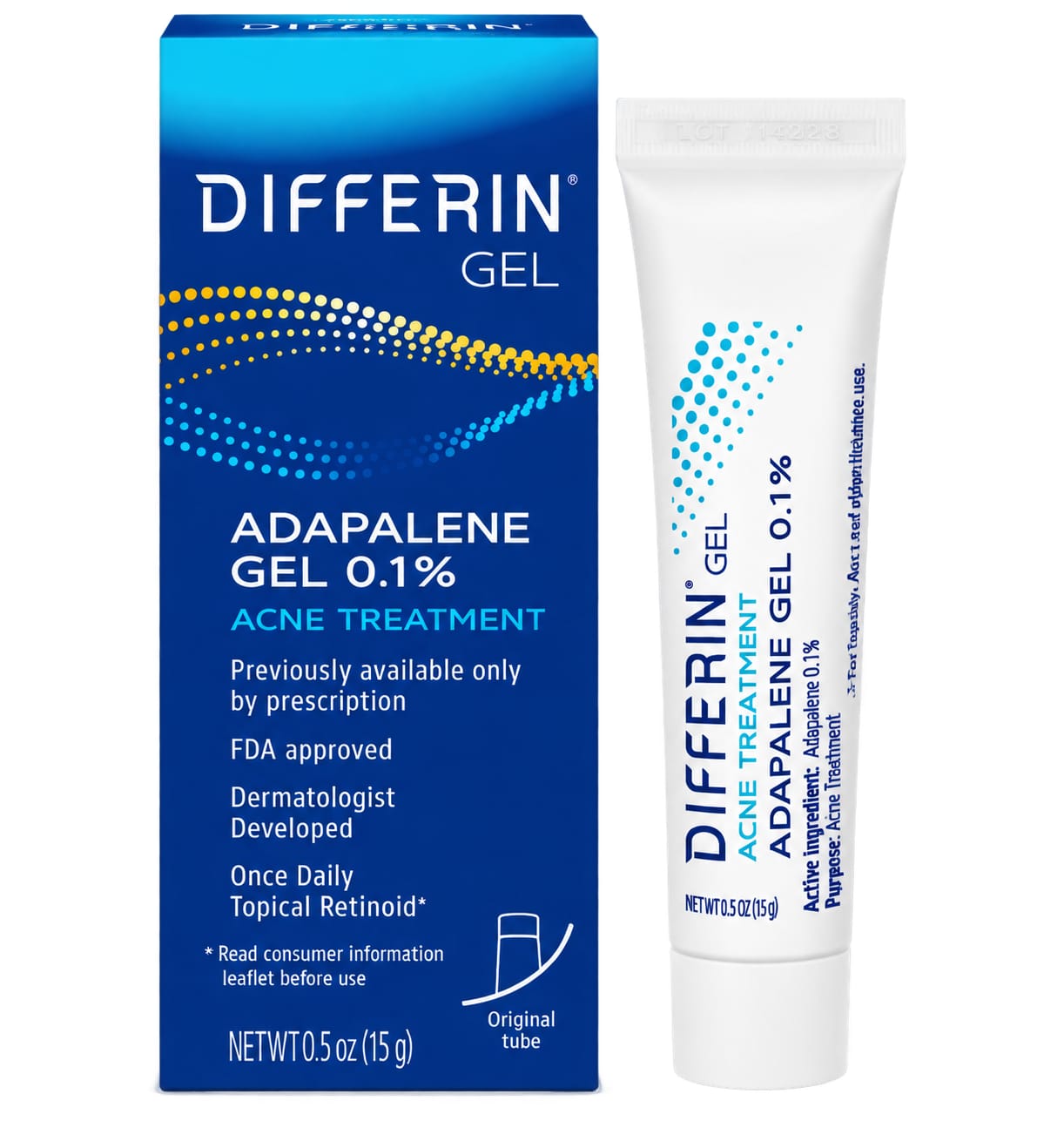
Adapalene Gel (adapalene) is a topical retinoid medicine used on the skin to treat acne vulgaris in people 12 years of age and older. It is available in prescription strength, and the 0.1% gel version is also sold over the counter for this age group. It works by affecting how skin cells grow, mature, and shed, which helps keep pores from clogging and helps calm skin inflammation. It is applied once daily and may take 8 to 12 weeks or longer to show full results.
What is Adapalene Gel
Adapalene gel is a topical retinoid (vitamin A derivative) medicine used on the skin to treat acne. It comes in prescription strength and, for the 0.1% gel, in an over-the-counter version for people 12 and older.
Adapalene Gel uses
- Treatment of acne vulgaris (blackheads, whiteheads, and pimples) in patients 12 years of age and older
Benefits of Adapalene Gel
- Helps clear blackheads, whiteheads, and pimples
- Generally well tolerated compared to some other retinoids
- More stable in sunlight than some other retinoids, so it may keep working even with light exposure
- Can be used long-term to help keep acne under control once it improves
How Adapalene Gel works
Adapalene attaches to certain skin cell receptors and affects how skin cells grow, mature, and shed. This helps stop pores from getting clogged with dead skin cells and oil, which is what leads to pimples, and it also helps calm inflammation in the skin.
Adapalene Gel dosage
Wash the affected skin gently with a mild, non-medicated soap and pat dry before applying. Apply a thin film of the gel to the entire face and any other affected areas once daily in the evening. Do not apply more gel or use it more often than directed, since this will not speed up results and may increase irritation. Avoid getting the gel in or on the eyes, lips, mouth, nose, or vagina. Do not apply to skin that is sunburned, broken, or has eczema until it has healed.
A moisturizer may be used for dryness or irritation, but avoid moisturizers or products containing alpha hydroxy acid or glycolic acid. Avoid other skin products that can dry or irritate the skin, such as harsh soaps, astringents, or products with high alcohol content, spices, or lime, and use caution with products containing sulfur, resorcinol, or salicylic acid. Do not use hot wax hair removal on treated skin during treatment.
Minimize sun exposure and use sunscreen and protective clothing when sun exposure can't be avoided, since this medicine can make skin more sensitive to sunlight. Acne may look worse during the first few weeks as hidden pimples come to the surface; continue using the medicine unless your doctor tells you otherwise. It may take 8 to 12 weeks or longer to see the full benefit.
If a dose is missed, apply it as soon as remembered, but skip it if it's almost time for the next dose; do not double up.
| Age group | Dose |
|---|---|
| Under 9 Years | Use only if prescribed by a doctor |
| 9 Years and Above | Apply a thin layer once daily, usually in the evening |
| Adults (18–64 Years) | Apply a thin layer once daily at night |
| Older Adults (65+ years) | Apply a thin layer once daily; use with caution on sensitive skin |
Available forms and strengths
- Gel (0.1%)
- Cream
- Lotion
- Solution (liquid)
Side effects of Adapalene Gel
Common
- Redness
- Scaling/peeling
- Dryness
- Burning or stinging
- Pain or discomfort at the application site
- Itching
- Sunburn
Serious
- Severe allergic reaction with hives, itching, or trouble breathing
- Swelling of the face, eyes, lips, tongue, or throat
- Chest pain
Warnings and precautions
- Avoid sunlight and sunlamps while using this medicine, since it can make skin more sensitive to sun. Use sunscreen and protective clothing when sun exposure can't be avoided.
- Skin redness, scaling, dryness, and stinging or burning can happen, especially in the first four weeks, and are usually mild to moderate and improve with continued use.
- Do not apply this medicine to cuts, scrapes, eczema, or sunburned skin.
- Do not use hot wax hair removal on skin being treated with this medicine because it can cause skin damage.
- Using other irritating skin products together with this medicine, especially ones containing sulfur, resorcinol, or salicylic acid, should be done cautiously because it can increase skin irritation.
- Serious allergic reactions, including swelling of the face, eyelids, or lips and severe itching, have been reported and may need medical treatment.
- Adapalene gel should be avoided during pregnancy if possible, and used only if the potential benefit outweighs the potential risk to the unborn baby. It is not known for certain if it is safe to use while pregnant, so tell your doctor if you are or plan to become pregnant.
- It isn't known whether adapalene passes into breast milk. If you use this medicine while breastfeeding, apply it to the smallest area of skin needed and for the shortest time possible, and avoid applying it to the nipple and areola area or anywhere the infant's skin might come into direct contact with it.
- Apply only a thin layer to clean, dry skin as directed, and avoid contact with eyes, lips, nose, and sensitive areas.
- Do not apply to cuts, sunburned skin, or irritated areas. Use sunscreen and avoid excessive sun exposure, as skin may become more sensitive.
- Avoid skin products with high concentrations of alcohol on treated skin, as they can increase irritation.
- Avoid using harsh scrubs, peeling agents, or irritating skincare products unless advised. Do not use more than the recommended amount; extra application will not improve results faster.
Storage
- Store at room temperature between 68°F to 77°F (20°C to 25°C)
- Do not freeze
- Keep out of the reach of children
- Dispose of unneeded medication through a medicine take-back program rather than flushing it down the toilet
When to see a doctor
- Stop using the medicine and get medical help right away if you have signs of an allergic reaction, such as rash, itching, hives, trouble breathing, chest pain, or swelling of the face, eyes, lips, tongue, or throat.
- Contact your doctor if you don't notice any improvement in your acne after using the medicine for 12 weeks.
- If someone swallows this medicine, contact your local poison control center for guidance, or call emergency services if the person has collapsed or is not breathing.
Alternatives
- Tretinoin Gel
- Benzoyl Peroxide Gel
- Salicylic Acid
Watch the video
FAQs
What is Adapalene Gel used for?
It is used to treat acne vulgaris, including blackheads, whiteheads, and pimples, in people 12 years of age and older.
How long does it take for Adapalene Gel to work?
It may take 8 to 12 weeks or longer to see the full benefit, and acne may look worse during the first few weeks before improving.
How should Adapalene Gel be applied?
Wash the skin with a mild soap and pat dry, then apply a thin film to the entire face and affected areas once daily in the evening, avoiding the eyes, lips, mouth, nose, and vagina.
What are the common side effects of Adapalene Gel?
Common side effects include redness, scaling or peeling, dryness, burning or stinging, pain or discomfort at the application site, itching, and sunburn.
Can I use other skin products with Adapalene Gel?
You should avoid moisturizers with alpha hydroxy or glycolic acid, harsh soaps, astringents, high-alcohol products, and use caution with products containing sulfur, resorcinol, or salicylic acid.
General information, not medical advice
Your prescriber and the leaflet in your pack know your situation. This page does not.
- Follow your prescriber and the leaflet
- Don't start, stop, or change a dose on your own
- Doses and warnings differ by country and product
Sources
Video
Related medicines

Injectafer Injection: Uses, Dosage, Side Effects, Precautions and Alternates
Iron products
Injectafer (ferric carboxymaltose) treats iron deficiency anemia and heart failure-related iron deficiency via IV. Learn uses, dosage, side effects, and

Gliclazide Tablet: Uses, Dosage, Side Effects, Precautions and Alternates
Sulfonylurea (hypoglycemic/antidiabetic agent)
Gliclazide Tablet is a sulfonylurea for type 2 diabetes that boosts insulin release. Learn about dosage, side effects, warnings, and precautions.