
Safety
General information, not medical advice
Your prescriber and the leaflet in your pack know your situation. This page does not.
- Follow your prescriber and the leaflet
- Don't start, stop, or change a dose on your own
- Doses and warnings differ by country and product
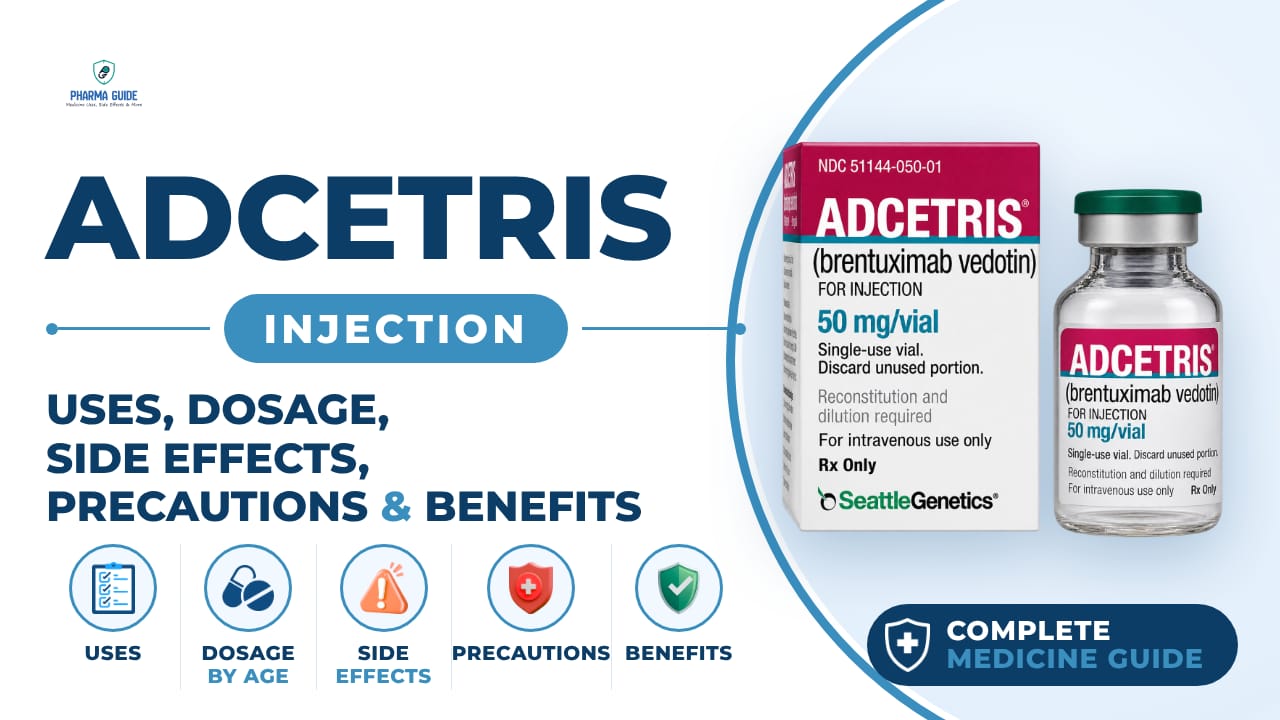
Adcetris Injection: Uses, Dosage, Side Effects, Precautions and Alternates
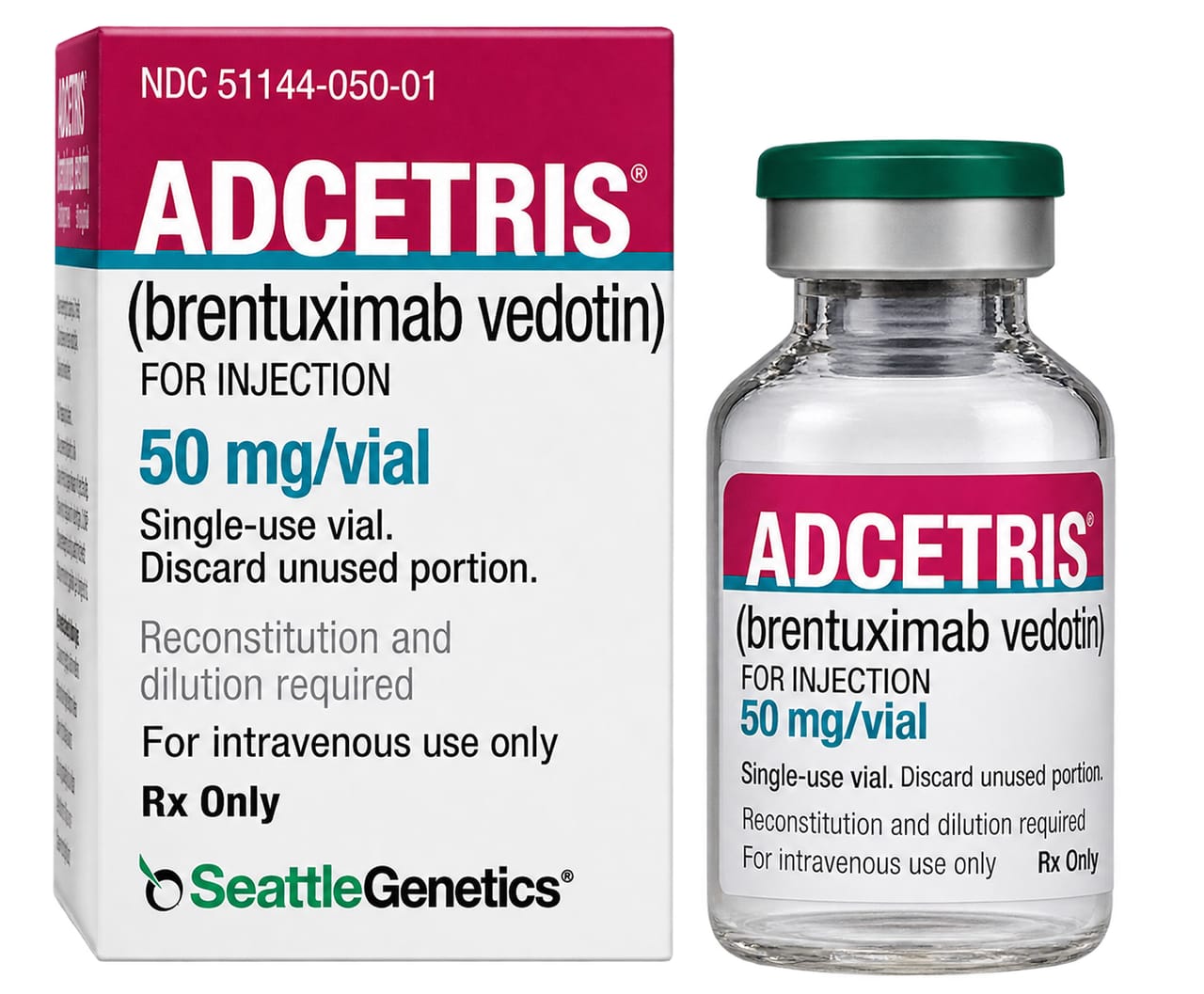
| Generic name | brentuximab vedotin |
|---|---|
| Drug class | CD30 monoclonal antibody / antibody-drug conjugate |
| Forms | Injection |
Quick overview
Adcetris Injection (brentuximab vedotin) is a prescription cancer medicine given by IV infusion for certain lymphomas where cancer cells carry a protein called CD30. It combines a targeted antibody with a cell-killing substance, working differently from traditional chemotherapy. It is used with other treatments for specific types of Hodgkin and T-cell lymphomas, and dosing is based on body weight and given on a set schedule by a healthcare provider.
What is Adcetris Injection
Adcetris is a prescription cancer medicine given by IV infusion. It is used for certain lymphomas when the cancer cells have a protein called CD30 on their surface. It combines a targeted antibody with a cell-killing substance, so it works differently from traditional chemotherapy.
Adcetris Injection uses
- Classical Hodgkin lymphoma (cHL) that is stage 3 or 4 and hasn't been treated before, used with chemotherapy
- cHL at high risk of coming back or getting worse after a stem cell transplant
- cHL that has come back after a stem cell transplant or after at least two chemotherapy treatments
- Untreated systemic anaplastic large cell lymphoma (sALCL) and other CD30-expressing peripheral T-cell lymphomas, used with chemotherapy
- sALCL that has come back after at least one chemotherapy treatment
- Primary cutaneous anaplastic large cell lymphoma and CD30-expressing mycosis fungoides that have come back after whole-body treatment
- Relapsed or refractory large B-cell lymphoma, used with lenalidomide and a rituximab product, in people who aren't candidates for stem cell transplant or CAR T-cell therapy
Benefits of Adcetris Injection
- Can lower the amount of lymphoma cancer cells in the body
- Targets cancer cells more precisely than traditional chemotherapy, which may mean less effect on healthy cells
- Shown in studies to help people live longer without their cancer getting worse, needing more treatment, or dying
- Some people have a complete response, meaning the cancer goes away completely during treatment
How Adcetris Injection works
Adcetris combines an antibody with a cell-killing substance. The antibody part attaches to a protein called CD30 found on the surface of lymphoma cells. Once attached, the drug is taken into the cell, where the cell-killing part is released and stops the cell from dividing, causing the cancer cell to die. This protein is not commonly found on healthy cells, so the drug mainly affects cancer cells.
Adcetris Injection dosage
Adcetris is given by a healthcare provider as an infusion into a vein, usually lasting at least 30 minutes, and is usually given once every 2 or 3 weeks depending on the condition being treated. Dosing is based on body weight, so your dose may change if you gain or lose weight. Your doctor may give you other medicines beforehand to help prevent side effects such as nausea or infusion reactions, and you'll have blood tests before each infusion to make sure it's safe to continue treatment.
If you need surgery, tell your surgeon you are using this medicine, as you may need to pause treatment. Treatment may continue for as long as it is working and side effects are manageable, which can mean many months of treatment. Drink plenty of fluids after your infusion to help your kidneys clear the drug and to help prevent dehydration. Wash hands often and avoid close contact with sick people, since this medicine can lower your white blood cell count. For about 48 hours after a dose, avoid letting body fluids such as urine, feces, or vomit contact your hands or other surfaces; caregivers should wear gloves when handling these or soiled laundry.
| Age group | Dose |
|---|---|
| Under 18 years | Not recommended |
| 18–64 years | 180 mg, once every 21 days |
| 65+ years | 180 mg, once every 21 days |
Available forms and strengths
- Injection
Side effects of Adcetris Injection
Common
- Numbness or tingling in hands or feet (peripheral neuropathy)
- Nausea and vomiting
- Fatigue (tiredness)
- Diarrhea
- Constipation
- Abdominal (belly) pain
- Fever
- Upper respiratory tract infections such as the common cold
- Hair loss
- Weight loss
- Mouth or lip sores (stomatitis/mucositis)
- Muscle or joint pain
- Rash
- Low blood cell counts
Serious
- Lung problems such as inflammation or respiratory distress syndrome
- Liver damage
- Serious skin reactions including Stevens-Johnson syndrome and toxic epidermal necrolysis
- Pancreatitis (inflammation of the pancreas)
- Serious digestive problems such as ulcers, bleeding, tears, or blockages in the stomach or intestines
- Serious allergic reaction (anaphylaxis)
- Peripheral neuropathy (nerve damage) that can worsen with more doses
- Blood disorders including low red blood cells, white blood cells, and platelets
- High blood sugar (hyperglycemia)
- Progressive multifocal leukoencephalopathy (PML), a serious brain infection
- Infusion-related reactions
- Serious infections
- Tumor lysis syndrome from fast breakdown of cancer cells
Warnings and precautions
- Adcetris carries a boxed warning, the FDA's most serious type of warning, for a rare but serious brain infection called progressive multifocal leukoencephalopathy (PML), which can cause severe disability and may be life threatening.
- Do not take Adcetris if you are also being treated with the chemotherapy drug bleomycin, because combining them raises the risk of serious lung problems
- Do not take Adcetris if you have had a severe allergic reaction (anaphylaxis) to it or any of its ingredients in the past
- Avoid live vaccines while taking Adcetris and for about 6 months after stopping, since the drug can lower your white blood cell levels, which may make vaccines less effective or cause live vaccines to trigger serious infections
- Adcetris should not be used during pregnancy because it may harm an unborn baby. Women who can become pregnant should have a pregnancy test before starting treatment and should use effective birth control during and for a period after treatment. Men should also use effective birth control, since the drug can affect sperm and might cause birth defects.
- Breastfeeding is not recommended during Adcetris treatment, as it is not known if the drug passes into breast milk, and the drug can cause serious side effects that could harm a breastfed child.
- People with severe kidney problems should avoid Adcetris, because the kidneys help clear the drug from the body and buildup can increase the risk of side effects.
- Liver problems can cause Adcetris to build up in the body and increase side effect risk; the drug can also worsen liver problems and cause liver damage. It's usually avoided in people with moderate to severe liver problems, and a lower dose may be used for mild liver problems.
- Adcetris isn't known to interact directly with alcohol, but drinking alcohol could make side effects such as nausea, tiredness, and liver problems worse. Ask your doctor what amount, if any, is safe for you.
Storage
- Store in a refrigerator at a temperature of 36°F to 46°F (2°C to 8°C)
- Do not freeze
- Keep the vial in its carton to protect it from light
- Keep out of the reach of children
- Ask your pharmacist what to do with any leftover medicine if treatment stops or it has expired
When to see a doctor
- Call your doctor right away if you have unexplained changes in mood or behavior, problems with thinking, memory, or speech, confusion, vision changes, clumsiness or trouble walking, or weakness on one side of your body — these can be signs of PML
- Get emergency help for signs of a severe allergic reaction, such as swelling of the face, lips, mouth, or throat, trouble breathing, or widespread hives
- Tell your doctor right away if you have signs of liver damage, such as loss of appetite, pain in the upper right side of your belly, tiredness, dark urine, or yellowing of your skin or eyes
- Seek medical help right away for signs of serious digestive problems, such as severe stomach pain, black or tarry stools, or vomiting blood or material that looks like coffee grounds
- Call your doctor right away if you have a fever, chills, sore throat, or other signs of infection, since low white blood cell counts can make infections serious quickly
- Tell your caregiver right away if you feel dizzy, nauseated, chilled or feverish, or have itching or trouble breathing during or soon after your infusion
- Get emergency help if you develop a severe skin reaction with flu-like symptoms followed by a painful red or purple rash that spreads and blisters, as this can signal Stevens-Johnson syndrome or toxic epidermal necrolysis
Alternatives
- Imfinzi
- Opdivo
- Keytruda
Watch the video
FAQs
What is Adcetris Injection used for?
Adcetris is used to treat certain types of Hodgkin lymphoma and T-cell lymphomas, including classical Hodgkin lymphoma, systemic anaplastic large cell lymphoma, primary cutaneous anaplastic large cell lymphoma, CD30-expressing mycosis fungoides, and relapsed or refractory large B-cell lymphoma, often combined with other treatments.
How does Adcetris Injection work?
Adcetris combines an antibody with a cell-killing substance. The antibody attaches to a protein called CD30 on lymphoma cells, and once taken into the cell, the cell-killing part is released, stopping the cell from dividing and causing it to die.
How is Adcetris Injection given?
Adcetris is given by a healthcare provider as an IV infusion lasting at least 30 minutes, usually once every 2 or 3 weeks depending on the condition, with dosing based on body weight.
What are the serious side effects of Adcetris Injection?
Serious side effects include lung problems, liver damage, serious skin reactions, pancreatitis, digestive problems like ulcers or bleeding, severe allergic reactions, worsening nerve damage, blood disorders, high blood sugar, PML brain infection, infusion reactions, serious infections, and tumor lysis syndrome.
What is the boxed warning for Adcetris Injection?
Adcetris carries a boxed warning for progressive multifocal leukoencephalopathy (PML), a rare but serious brain infection that can cause severe disability and may be life threatening.
General information, not medical advice
Your prescriber and the leaflet in your pack know your situation. This page does not.
- Follow your prescriber and the leaflet
- Don't start, stop, or change a dose on your own
- Doses and warnings differ by country and product
Sources
Video
Related medicines

Injectafer Injection: Uses, Dosage, Side Effects, Precautions and Alternates
Iron products
Injectafer (ferric carboxymaltose) treats iron deficiency anemia and heart failure-related iron deficiency via IV. Learn uses, dosage, side effects, and

Gliclazide Tablet: Uses, Dosage, Side Effects, Precautions and Alternates
Sulfonylurea (hypoglycemic/antidiabetic agent)
Gliclazide Tablet is a sulfonylurea for type 2 diabetes that boosts insulin release. Learn about dosage, side effects, warnings, and precautions.