
Safety
General information, not medical advice
Your prescriber and the leaflet in your pack know your situation. This page does not.
- Follow your prescriber and the leaflet
- Don't start, stop, or change a dose on your own
- Doses and warnings differ by country and product
Adlarity Patch: Uses, Dosage, Side Effects, Precautions and Alternates
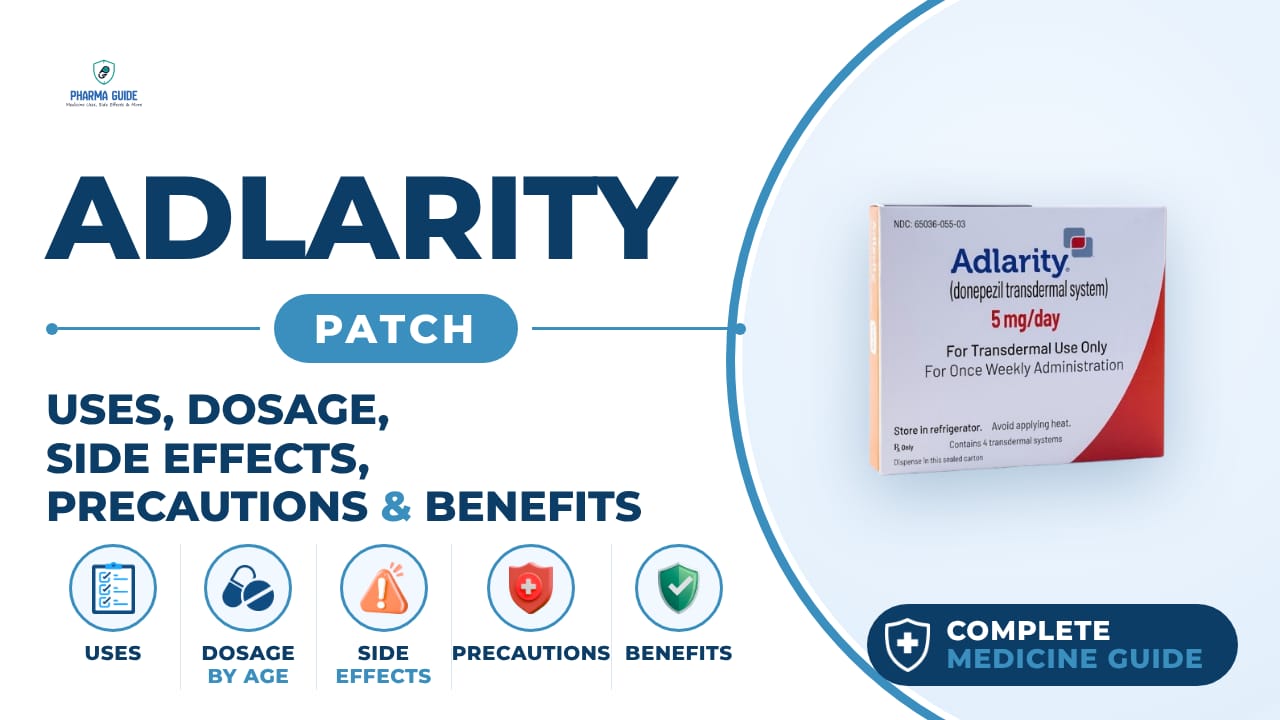
| Generic name | donepezil |
|---|---|
| Drug class | Acetylcholinesterase inhibitor (cholinesterase inhibitor) |
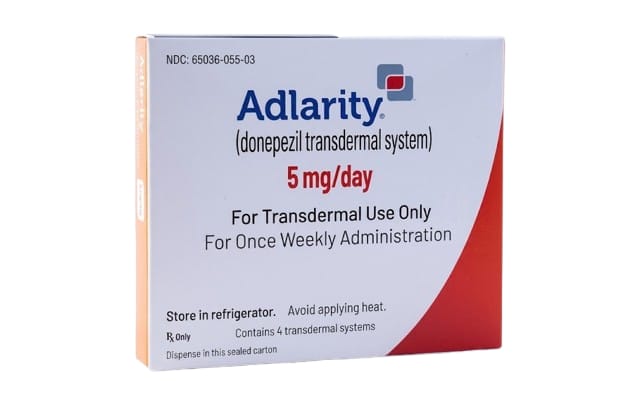
| Forms | Transdermal patch (5 mg/day and 10 mg/day) |
Quick overview
Adlarity Patch contains donepezil, an acetylcholinesterase inhibitor used to treat Alzheimer's disease dementia. It is a transdermal patch applied once weekly that helps increase a brain chemical involved in memory and thinking. Note that the Adlarity brand has been discontinued in the U.S., and no generic transdermal version is currently available.
What is Adlarity Patch
Adlarity is a prescription skin patch used to treat Alzheimer's disease dementia. It contains donepezil, a medicine that helps increase a brain chemical involved in memory and thinking. The Adlarity brand has been discontinued in the U.S., and no generic transdermal version is currently available.
Adlarity Patch uses
- Mild Alzheimer's disease dementia
- Moderate Alzheimer's disease dementia
- Severe Alzheimer's disease dementia
- Memory impairment associated with Alzheimer's disease
- Cognitive symptoms associated with Alzheimer's disease
Benefits of Adlarity Patch
- Helps manage Alzheimer's disease symptoms.
- May support memory and thinking.
- May help maintain daily functioning.
- May help with attention and awareness.
- May slow worsening of symptoms for some patients.
How Adlarity Patch works
People with Alzheimer's disease tend to have lower levels of a brain chemical called acetylcholine, which is needed for memory and learning. Donepezil blocks the enzyme that breaks down acetylcholine, so more of it stays available in the brain. This is thought to help ease some dementia symptoms, though it does not change the underlying course of the disease.
Adlarity Patch dosage
Use the patch exactly as your healthcare provider tells you to. It is for skin use only — apply one patch at a time to your skin, once weekly (every 7 days). Apply to clean, dry, intact skin with little to no hair. You may wear the patch during showers or baths; it does not need to be removed for bathing. Choose a consistent day each week to replace the patch to help you remember.
Do not place a new patch on the same skin spot for at least 2 weeks after removing a patch from that spot. Remove the old patch before applying a new one to a different skin site. Avoid long exposure to heat sources like strong sunlight, saunas, sunrooms, or heating pads while wearing the patch, since this may increase how much medicine your body absorbs.
If switching from donepezil tablets, apply the first patch on the same day as the last tablet dose, as directed by your healthcare provider. If you stop using the patch, contact your healthcare provider for instructions before restarting.
If donepezil tablets are prescribed instead, they are usually taken once daily with or without food; tablets should be swallowed whole without splitting, crushing, or chewing, and orally disintegrating tablets should be allowed to dissolve on the tongue before drinking water.
| Age group | Dose |
|---|---|
| Under 18 years | Not recommended |
| 18–64 years | 5 mg, once/day |
| 65+ years | 5 mg, once/day |
Available forms and strengths
- Transdermal patch (5 mg/day and 10 mg/day)
Side effects of Adlarity Patch
Common
- Nausea
- Diarrhea
- Trouble sleeping (insomnia)
- Vomiting
- Muscle cramps or spasms
- Tiredness/fatigue
- Decreased appetite
- Headache
- Itching at the application site
- Skin irritation or rash at the application site
- Stomach pain
- Constipation
- Dizziness
- Abnormal dreams
- Skin tearing/cuts
Serious
- Severe allergic skin reaction (allergic contact dermatitis) with spreading redness, swelling, peeling, or blistering
- Slow heartbeat, heart block, or fainting
- Increased stomach acid leading to ulcers or gastrointestinal bleeding (black tarry stools, vomiting blood or coffee-ground material)
- Problems passing urine (urinary retention)
- Seizures
- Worsening of asthma or other lung problems
- General severe allergic reaction (swelling of face, lips, tongue, throat, trouble breathing, hives)
Warnings and precautions
- Skin reactions can occur where the patch is applied. See a doctor if redness or irritation spreads beyond the patch, gets more intense, or does not improve within 48 hours after removing the patch — this could mean an allergic skin reaction.
- This medicine can slow the heart rate or cause heart block, which may lead to fainting, even in people with no prior heart problems.
- This medicine can cause nausea and vomiting, especially when starting treatment or after a dose increase, so patients should be watched closely during these times.
- This medicine may increase stomach acid, raising the risk of ulcers and gastrointestinal bleeding, especially in people already at higher risk.
- This medicine may make it harder to pass urine due to its effect on the bladder.
- This medicine may increase the risk of seizures, though seizures can also be caused by Alzheimer's disease itself.
- This medicine should be used cautiously in people with asthma or other lung conditions, since it may worsen these problems.
- During anesthesia, this medicine may increase the muscle-relaxing effect of succinylcholine-type drugs, so tell your doctor or dentist if you use this patch before any surgery or procedure.
- Do not use this medicine if you are allergic to donepezil or to piperidine-type medicines, or if you have had an allergic skin reaction to this patch before.
- Pregnancy: It is not known if this medicine will harm an unborn baby. Tell your healthcare provider if you are or plan to become pregnant.
- Breastfeeding: It is not known if this medicine passes into breast milk. Tell your healthcare provider if you are breastfeeding or plan to.
- Kidney: Tell your healthcare provider if you have kidney problems before using this medicine.
- Liver: Tell your healthcare provider if you have liver problems before using this medicine.
- Alcohol: It isn't known for certain how alcohol affects this medicine, but drinking alcohol may increase tiredness while using it.
Storage
- Store in the refrigerator between 36°F to 46°F (2°C to 8°C)
- Do not store in the freezer
- Keep in the sealed pouch until ready for use
- Keep out of the reach of children and pets
- Fold a used patch in half with the sticky sides pressed together and throw it away in household trash
- Do not flush used patches down the toilet
When to see a doctor
- Stop using the patch and call your healthcare provider right away if skin redness, swelling, peeling, or blistering spreads beyond the patch area or doesn't improve within 2 days of removing the patch.
- Call your healthcare provider right away if you feel faint or lightheaded while using this medicine.
- Call your healthcare provider right away if you have new or ongoing heartburn or stomach pain, vomit blood or dark material like coffee grounds, or have black, tarry stools.
- Call your healthcare provider right away if you have trouble passing urine.
- Call your healthcare provider right away if you have a seizure while using this medicine.
- Call your healthcare provider if you have new or worsening breathing problems while using this medicine.
- If you accidentally get the medicine in your eyes or your eyes become red after touching the patch, rinse with water right away and seek medical help if the problem doesn't go away.
- If an overdose occurs, get medical help right away or contact a poison control center for guidance.
Alternatives
- Rivastigmine Patch
- Donepezil
- Aricept
Watch the video
FAQs
What is Adlarity Patch used for?
Adlarity Patch is used to treat mild, moderate, and severe Alzheimer's disease dementia, helping with memory impairment and cognitive symptoms associated with the disease.
How often do you apply Adlarity Patch?
Adlarity Patch is applied once weekly, every 7 days, to clean, dry, intact skin with little to no hair. A consistent day each week should be chosen to help remember replacement.
Is Adlarity Patch still available?
The Adlarity brand has been discontinued in the U.S., and no generic transdermal version is currently available.
Can you shower with Adlarity Patch on?
Yes, the patch can be worn during showers or baths and does not need to be removed for bathing.
What are the serious side effects of Adlarity Patch?
Serious side effects include severe allergic skin reactions, slow heartbeat or fainting, increased stomach acid leading to ulcers or gastrointestinal bleeding, urinary retention, seizures, and worsening asthma or lung problems.
General information, not medical advice
Your prescriber and the leaflet in your pack know your situation. This page does not.
- Follow your prescriber and the leaflet
- Don't start, stop, or change a dose on your own
- Doses and warnings differ by country and product
Sources
Video
Related medicines

Injectafer Injection: Uses, Dosage, Side Effects, Precautions and Alternates
Iron products
Injectafer (ferric carboxymaltose) treats iron deficiency anemia and heart failure-related iron deficiency via IV. Learn uses, dosage, side effects, and

Gliclazide Tablet: Uses, Dosage, Side Effects, Precautions and Alternates
Sulfonylurea (hypoglycemic/antidiabetic agent)
Gliclazide Tablet is a sulfonylurea for type 2 diabetes that boosts insulin release. Learn about dosage, side effects, warnings, and precautions.