
Safety
General information, not medical advice
Your prescriber and the leaflet in your pack know your situation. This page does not.
- Follow your prescriber and the leaflet
- Don't start, stop, or change a dose on your own
- Doses and warnings differ by country and product
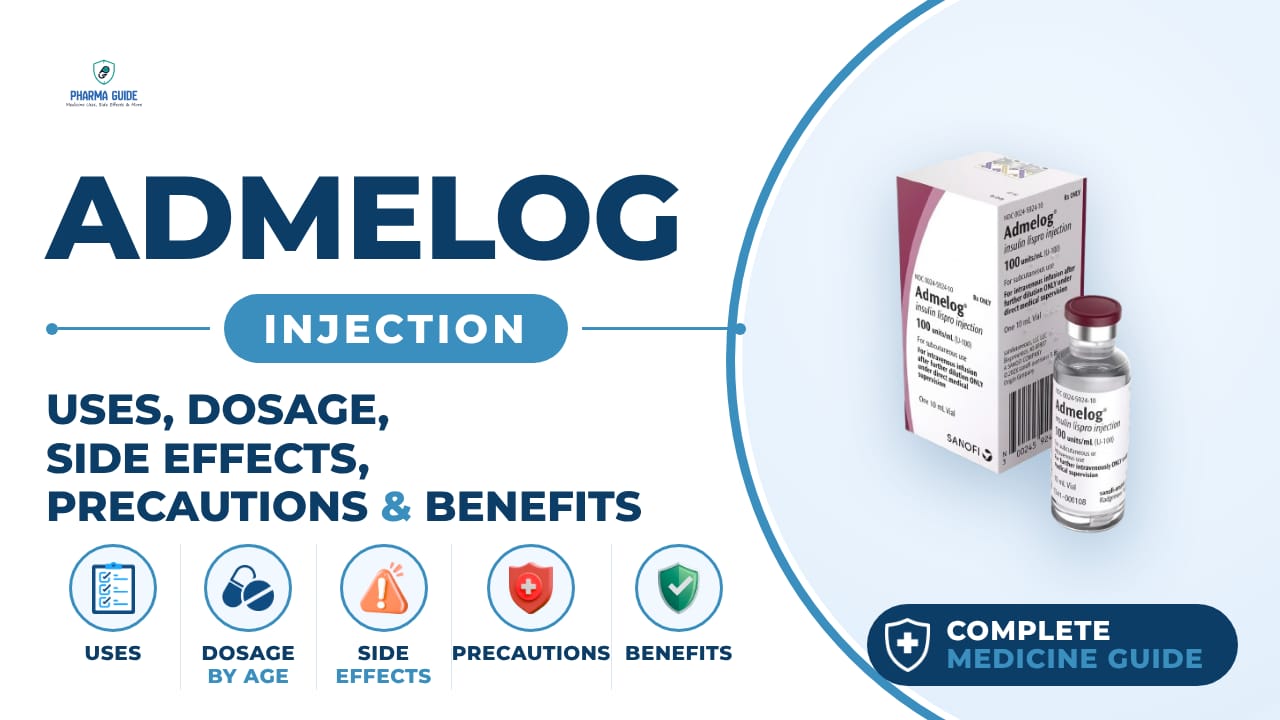
Admelog Injection: Uses, Dosage, Side Effects, Precautions and Alternates
| Generic name | insulin lispro |
|---|---|
| Drug class | Anti-Diabetic Agent (rapid-acting insulin) |
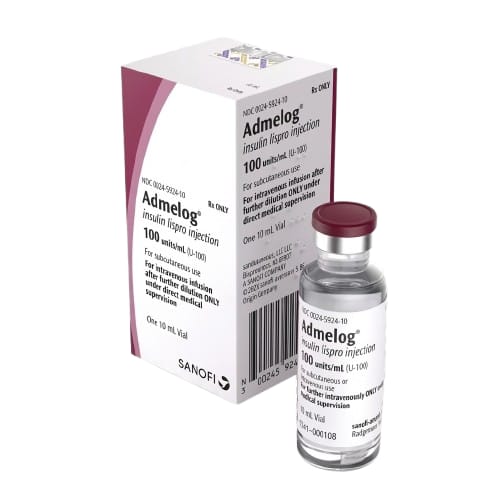
| Forms | Solution for injection, 100 units/mL, 10 mL vial |
Quick overview
Admelog Injection (insulin lispro) is a rapid-acting, man-made insulin used to help control blood sugar in people with diabetes. It is a biosimilar, meaning it is highly similar to another already-approved insulin medicine called Humalog. Admelog is used for type 1 diabetes, type 2 diabetes requiring insulin, and to manage blood sugar after meals as part of mealtime insulin therapy.
What is Admelog Injection
Admelog is a fast-acting, man-made insulin used to help control blood sugar in people with diabetes. It is a biosimilar, meaning it is highly similar to another insulin medicine called Humalog that was already approved.
Admelog Injection uses
- Type 1 diabetes.
- Type 2 diabetes requiring insulin.
- Control of blood sugar after meals.
- Mealtime insulin therapy.
- Blood sugar management alongside other prescribed diabetes treatments.
Benefits of Admelog Injection
- Helps lower blood sugar after meals.
- Improves glucose control.
- Helps reduce post-meal blood sugar spikes.
- Supports diabetes management.
- Helps maintain target blood glucose levels.
How Admelog Injection works
Admelog contains insulin lispro, a lab-made version of human insulin with a small change in its structure. This change lets it break apart faster after injection, so it starts lowering blood sugar more quickly and for a shorter time than regular insulin.
Admelog Injection dosage
Give this insulin within 15 minutes before a meal, or if needed, shortly after starting the meal (within about 20 minutes). It can be injected under the skin (subcutaneously), given through an insulin pump, or in some cases given into a vein by a healthcare professional. Only use a syringe marked for U-100 insulin.
Check that the liquid is clear and colorless with no particles before every injection; do not use it if it looks cloudy, thickened, or has particles. It is not necessary to shake the vial, cartridge, or pen before use.
Rotate injection sites (such as upper arms, thighs, buttocks, or abdomen) and avoid using the exact same spot repeatedly to help prevent skin changes. Do not inject into skin that is pitted, thickened, lumpy, tender, bruised, scaly, hard, scarred, or damaged.
If mixing with a longer-acting insulin such as NPH, draw this insulin into the syringe first, and inject the mixture right away after mixing. Do not mix or dilute this insulin when using it in an insulin infusion pump.
When used in a pump, change the insulin in the reservoir at least every 14 days, and change the infusion set as recommended by the pump maker (often about every 3 days) or as directed by your healthcare professional. Never share a pen, cartridge, or syringe with another person, even if the needle is changed.
Children can use this insulin the same way as adults, given within 15 minutes before a meal or shortly after starting the meal. Older adults can use this insulin if recommended by their doctor, with attention to kidney, liver, or heart conditions that are more common with age.
Use exactly as prescribed by your doctor or pharmacist.
Available forms and strengths
- Solution for injection, 100 units/mL
- 10 mL vial
Side effects of Admelog Injection
Common
- Low blood sugar (hypoglycemia)
- Injection site reactions such as redness, swelling, pain, or itching
- Skin rash or itching
- Swelling in the hands, feet, or ankles
- Weight gain
- Lipodystrophy (changes in the fat under the skin, causing pitted or thickened skin)
- Upper respiratory infection or common cold symptoms
Serious
- Severe low blood sugar that can cause confusion, seizures, loss of consciousness, coma, or death
- Severe allergic reaction with rash over the whole body, trouble breathing, fast heartbeat, or feeling faint
- Low potassium levels in the blood (hypokalemia)
- Heart failure, especially when used with certain diabetes pills called thiazolidinediones
- Diabetic ketoacidosis if too little insulin is used, especially in type 1 diabetes
Warnings and precautions
- Low blood sugar (hypoglycemia) is the most common side effect of this insulin, and uncorrected low or high blood sugar can lead to loss of consciousness, coma, or death. Regular blood sugar monitoring is recommended.
- Because this insulin acts quickly, it should be given within 15 minutes before a meal, or if needed, shortly after starting the meal.
- When used in an insulin pump, this insulin should not be diluted or mixed with any other insulin.
- Changing to a different insulin type or brand should only be done carefully and under a doctor's supervision, since it may require a change in dose.
- Do not use this insulin if it looks cloudy, colored, or has particles or clumps in it.
- Taking certain diabetes pills called TZDs (thiazolidinediones) together with this insulin can cause or worsen heart failure.
- Never share needles, pens, cartridges, or syringes with another person, even if the needle is changed, as this can spread serious infections.
- This insulin can be used during pregnancy if your doctor recommends it. Keeping good blood sugar control is very important for you and your baby during pregnancy, and your insulin needs may change as pregnancy progresses.
- The use of this insulin in breastfeeding mothers has not been specifically studied. Your insulin dose or diet may need to be adjusted if you are breastfeeding.
- People with kidney problems may need less insulin, so your doctor may need to adjust your dose and monitor your blood sugar more closely.
- Although liver problems do not change how this insulin is absorbed, your doctor may still need to monitor your blood sugar closely and adjust your dose.
- Drinking alcohol can affect your blood sugar and increase the risk of low blood sugar. Avoid drinking alcohol on an empty stomach and watch for signs of low blood sugar if you do drink.
- Low or high blood sugar can affect your ability to concentrate and react, which can be risky when driving or operating machinery, especially if you don't notice the warning signs of low blood sugar.
Storage
- Store unopened (not yet in use) vials, cartridges, and pens in a refrigerator between 2°C and 8°C
- Do not freeze; throw away the insulin if it has been frozen
- Protect from direct heat and light
- Once opened (in use), store at room temperature below 30°C and use within 28 days, even if insulin remains, then discard
- Keep out of the reach and sight of children
- Dispose of used needles in a puncture-resistant sharps container, and dispose of pens as directed by your healthcare professional without the needle attached
When to see a doctor
- Get emergency help right away if you have trouble breathing, shortness of breath, a fast heartbeat, swelling of your face, tongue, or throat, heavy sweating, extreme drowsiness, dizziness, or confusion.
- Call your doctor right away if you notice a generalized rash, shortness of breath, wheezing, or a drop in blood pressure, which can signal a serious allergic reaction.
- If you think you have taken too much insulin, contact your healthcare professional or go to an emergency department right away, even if you do not have symptoms.
- Seek medical help immediately if you have symptoms of diabetic acidosis such as drowsiness, flushed face, thirst, loss of appetite, heavy breathing, or a rapid pulse, since this can lead to loss of consciousness, coma, or death if untreated.
- Tell your doctor right away if you develop shortness of breath, sudden weight gain, or swelling of your ankles or feet, which may mean your heart failure risk is increasing, especially if you also take TZD medicines.
Alternatives
- Apidra
- NovoLog
- Humalog
Watch the video
FAQs
What is Admelog Injection used for?
Admelog is used to help control blood sugar in people with type 1 diabetes, type 2 diabetes requiring insulin, and to manage blood sugar after meals as part of mealtime insulin therapy.
When should Admelog be injected?
Admelog should be given within 15 minutes before a meal, or if needed, shortly after starting the meal (within about 20 minutes).
How is Admelog different from regular insulin?
Admelog contains insulin lispro, which has a small structural change that lets it break apart faster after injection, so it starts lowering blood sugar more quickly and for a shorter time than regular insulin.
What are the common side effects of Admelog?
Common side effects include low blood sugar, injection site reactions, skin rash or itching, swelling in the hands, feet, or ankles, weight gain, lipodystrophy, and upper respiratory infection or cold symptoms.
How should Admelog be stored?
Unopened vials, cartridges, and pens should be stored in a refrigerator between 2°C and 8°C and not frozen. Once opened, store at room temperature below 30°C and use within 28 days, then discard.
General information, not medical advice
Your prescriber and the leaflet in your pack know your situation. This page does not.
- Follow your prescriber and the leaflet
- Don't start, stop, or change a dose on your own
- Doses and warnings differ by country and product
Sources
Video
Related medicines

Injectafer Injection: Uses, Dosage, Side Effects, Precautions and Alternates
Iron products
Injectafer (ferric carboxymaltose) treats iron deficiency anemia and heart failure-related iron deficiency via IV. Learn uses, dosage, side effects, and

Gliclazide Tablet: Uses, Dosage, Side Effects, Precautions and Alternates
Sulfonylurea (hypoglycemic/antidiabetic agent)
Gliclazide Tablet is a sulfonylurea for type 2 diabetes that boosts insulin release. Learn about dosage, side effects, warnings, and precautions.