
Safety
General information, not medical advice
Your prescriber and the leaflet in your pack know your situation. This page does not.
- Follow your prescriber and the leaflet
- Don't start, stop, or change a dose on your own
- Doses and warnings differ by country and product
Adrenaline Injection: Uses, Dosage, Side Effects, Precautions and Alternates
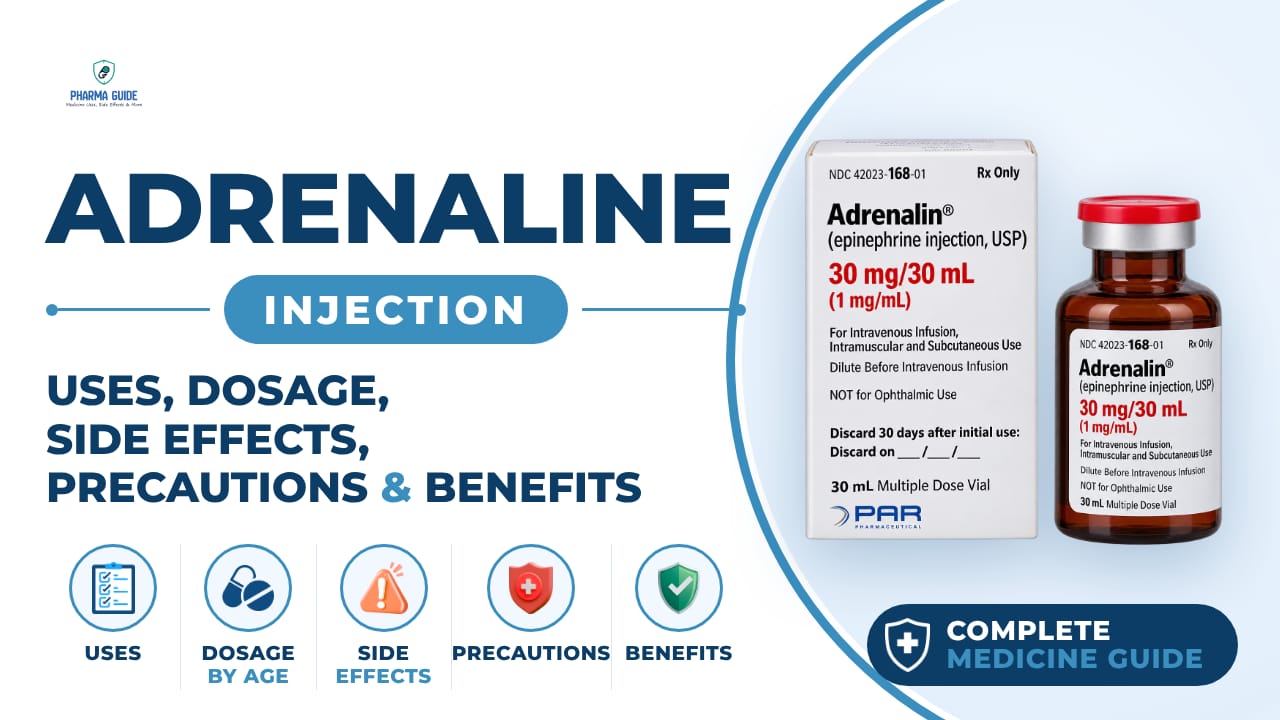
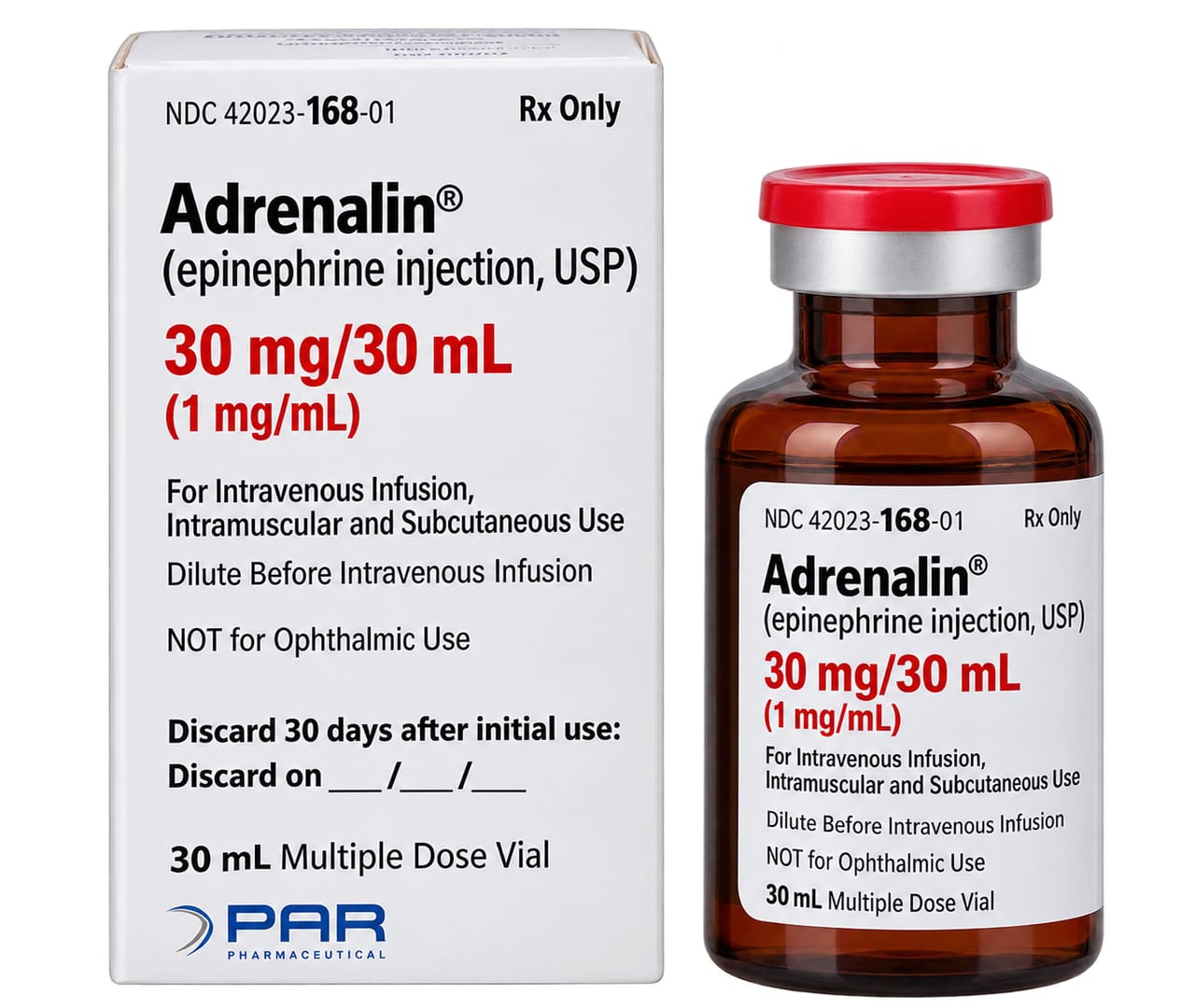
| Generic name | Adrenaline (epinephrine) |
|---|---|
| Drug class | Adrenergic and dopaminergic agent |
| Forms | Solution for injection in ampoules |
Quick overview
Adrenaline Injection, also known as epinephrine, is an adrenergic and dopaminergic agent used in life-threatening emergencies such as cardiac arrest and severe allergic reactions (anaphylaxis). It is given by injection by trained medical personnel to help restart the heart, open airways, and support blood pressure. It can cause side effects ranging from anxiety and palpitations to serious reactions affecting the heart and blood vessels, so it requires careful medical use and monitoring.
What is Adrenaline Injection
Adrenaline is a hormone made naturally in your body, but it is also made into a medicine used in emergencies. It is given as an injection to treat life-threatening situations such as severe allergic reactions and cardiac arrest.
Adrenaline Injection uses
- Treatment of cardiac arrest (when the heart suddenly stops working)
- Treatment of acute severe allergic reaction (anaphylaxis)
- Used as an adjunct in managing cardiac arrest
- May be used for symptomatic relief of breathing difficulty caused by bronchospasm
- May also be given in treatment of croup and asthma in emergencies
Benefits of Adrenaline Injection
- Can help restart the heart and make it beat more strongly during cardiac arrest
- Quickly reduces throat swelling, opens airways, and helps stop blood pressure from dropping too low during a severe allergic reaction
- Can help save your life during anaphylaxis
How Adrenaline Injection works
Adrenaline acts on receptors found on tissues throughout the body that are controlled by the sympathetic nervous system. It makes the heart pump harder, raises blood pressure in some ways while lowering it in others, and relaxes tightened airways in the lungs. It also raises blood sugar by releasing stored sugar from the liver.
Adrenaline Injection dosage
This medicine is normally given to you by a doctor, nurse, or paramedic, who will decide the right amount and how and when it should be given. It is usually injected into a vein, into a bone, or into the large muscle of the thigh, depending on the emergency. It should not be injected into the buttocks.
If you do not feel better and cannot breathe easily a few minutes after your first injection for a severe allergic reaction, use a second injection from a new device. If you are given this injection outside of a hospital, you should still go to a hospital afterward, even if you feel better, so you can be monitored for several hours.
Children are given a lower dose based on their body weight. This medicine is for single use only in one person — any leftover solution should be thrown away and not reused. Do not use the injection if the solution looks cloudy, coloured, or contains particles.
| Age group | Dose |
|---|---|
| Under 18 years | 0.3 mg, once/day |
| 18–60 years | 0.5 mg, once/day |
| 60+ years | 0.5 mg, once/day |
Available forms and strengths
- Solution for injection in ampoules
Side effects of Adrenaline Injection
Common
- Anxiety
- Difficulty breathing (dyspnoea)
- Nervousness
- Fear
- Sweating
- Palpitations (irregular or faster heartbeat)
- Fast heart rate (tachycardia)
- Pallor (looking pale)
- Tremors
- Weakness
- Dizziness
- Headache
- Nausea
- Vomiting
- Cold hands and feet
- Difficulty passing urine
- Restlessness
- Confusion
- Tenseness
Serious
- Hallucinations
- Fainting (syncope)
- High blood sugar levels (hyperglycaemia)
- Low potassium levels in the blood (hypokalaemia)
- Increased acidity in the blood (metabolic acidosis)
- Irregular heartbeats or cardiac arrest
- High blood pressure with risk of bleeding in the brain
- Narrowing of blood vessels in the skin, limbs, or kidneys
- Acute angina attacks
- Risk of heart attack
- Tissue damage (necrosis) at the injection site from repeated injections
- Convulsions (fits)
Warnings and precautions
- This medicine is for emergency use and requires continuous medical monitoring after it is given. Do not use this medicine if you are allergic to adrenaline or any of its ingredients, unless no other option is available. This medicine should not be used in certain conditions, including shock other than from severe allergic reaction, during general anaesthesia, with local anaesthesia, or during labour.
- Using this medicine with certain other drugs, such as some antidepressants, decongestants, and medicines for heart conditions or blood pressure, may cause serious interactions. Repeated injections into the same site can cause tissue damage due to narrowing of blood vessels. This medicine contains sodium, which may matter for people on a low-sodium diet.
- If you are pregnant, planning to become pregnant, or think you may be pregnant, tell your doctor before being given this medicine. It should not be used during labour because it can delay labour by stopping contractions.
- Tell your doctor if you are breastfeeding, as adrenaline passes into breast milk.
- People with severe kidney problems have a higher risk of side effects from this medicine.
- Do not drive, operate machinery, or do anything risky until you know how this medicine affects you, as it may cause confusion, disorientation, or dizziness.
Storage
- Keep out of the sight and reach of children.
- Do not store above 25°C.
- Store in the original pack or aluminium pouch to protect from light and oxygen.
- Do not open the aluminium pouch until use.
- After opening the pouch, the product must be used immediately.
- Do not freeze.
- Do not use sharp instruments to open the pouch.
- Do not use the medicine if it has been partly used or shows signs of visible damage.
- Do not use this medicine after the expiry date.
- Do not throw away medicines via wastewater or household waste; take unused or expired medicine to a pharmacy for safe disposal.
When to see a doctor
- If you or someone else shows signs of a severe allergic reaction, use the adrenaline autoinjector right away, then call for emergency help immediately.
- After being given an adrenaline injection outside a hospital, go to a hospital even if you feel better, so you can be monitored for several hours.
- Get emergency help right away if you have difficulty breathing, whiteness, swelling, pain or loss of feeling at the injection site, convulsions, or an abnormal or irregular heartbeat.
- If you think too much adrenaline has been given, get urgent medical attention right away, even if you feel fine.
Alternatives
- Epinephrine Injection
- Adrenalin Injection
- EpiPen
Watch the video
FAQs
What is Adrenaline Injection used for?
It is used to treat cardiac arrest and acute severe allergic reactions (anaphylaxis), and may also help relieve breathing difficulty from bronchospasm, croup, or asthma in emergencies.
How is Adrenaline Injection given?
It is given by a doctor, nurse, or paramedic, usually injected into a vein, into a bone, or into the large muscle of the thigh, depending on the emergency. It should not be injected into the buttocks.
What should I do if I don't feel better after the first adrenaline injection for an allergic reaction?
If you do not feel better and cannot breathe easily a few minutes after the first injection, use a second injection from a new device, and still go to a hospital afterward for monitoring.
What are the common side effects of Adrenaline Injection?
Common side effects include anxiety, difficulty breathing, nervousness, sweating, palpitations, fast heart rate, tremors, dizziness, headache, nausea, and vomiting.
When should I seek emergency help after an adrenaline injection?
Seek emergency help if you have difficulty breathing, whiteness, swelling, pain or loss of feeling at the injection site, convulsions, or an abnormal or irregular heartbeat, or if you think too much adrenaline has been given.
General information, not medical advice
Your prescriber and the leaflet in your pack know your situation. This page does not.
- Follow your prescriber and the leaflet
- Don't start, stop, or change a dose on your own
- Doses and warnings differ by country and product
Sources
Video
Related medicines

Injectafer Injection: Uses, Dosage, Side Effects, Precautions and Alternates
Iron products
Injectafer (ferric carboxymaltose) treats iron deficiency anemia and heart failure-related iron deficiency via IV. Learn uses, dosage, side effects, and

Gliclazide Tablet: Uses, Dosage, Side Effects, Precautions and Alternates
Sulfonylurea (hypoglycemic/antidiabetic agent)
Gliclazide Tablet is a sulfonylurea for type 2 diabetes that boosts insulin release. Learn about dosage, side effects, warnings, and precautions.