
Safety
General information, not medical advice
Your prescriber and the leaflet in your pack know your situation. This page does not.
- Follow your prescriber and the leaflet
- Don't start, stop, or change a dose on your own
- Doses and warnings differ by country and product
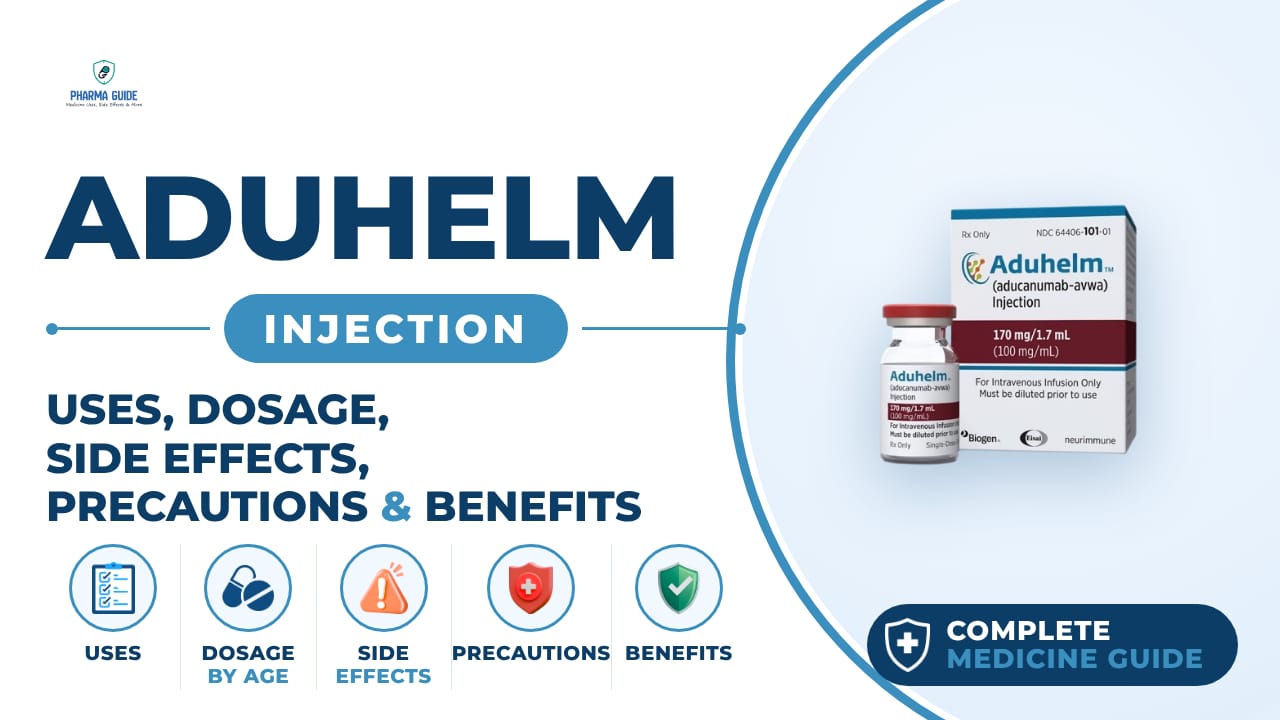
Aduhelm Injection: Uses, Dosage, Side Effects, Precautions and Alternates
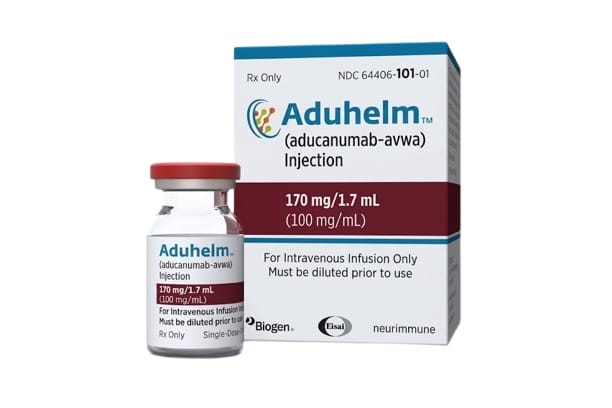
| Generic name | aducanumab-avwa |
|---|---|
| Drug class | Monoclonal Antibodies |
| Forms | Injection] |
Quick overview
Aduhelm Injection (aducanumab-avwa) is a prescription monoclonal antibody given by IV infusion to treat early Alzheimer's disease in adults with mild cognitive impairment or mild dementia. It works by targeting amyloid-beta plaques in the brain. Note that the manufacturer discontinued production of Aduhelm, and it was no longer available by prescription after November 1, 2024.
What is Aduhelm Injection
Aduhelm is a prescription medicine given by IV infusion to treat Alzheimer's disease. It is approved for adults in the early stages of the disease who have mild cognitive impairment or mild dementia. The manufacturer discontinued production of Aduhelm, and it was no longer available by prescription after November 1, 2024.
Aduhelm Injection uses
- Early Alzheimer's disease
- Mild cognitive impairment due to Alzheimer's disease
- Mild dementia due to Alzheimer's disease
- Reduction of amyloid-beta plaques in the brain
- Treatment studied to slow memory and thinking decline
Benefits of Aduhelm Injection
- Was intended to treat early Alzheimer's disease.
- Targets amyloid-beta plaques in the brain.
- Reduced amyloid plaque levels in clinical studies.
- Was studied for slowing cognitive decline.
- Was intended for patients with mild cognitive impairment or mild dementia due to Alzheimer's disease.
How Aduhelm Injection works
Aduhelm is a lab-made antibody that attaches to amyloid beta protein plaques in the brain and helps the immune system break them down. In theory, reducing these plaques may help slow nerve cell damage and the worsening of Alzheimer's symptoms, but this benefit has not been proven for certain.
Aduhelm Injection dosage
Aduhelm is given by a healthcare professional through a needle placed in a vein (intravenous infusion). Each infusion lasts about one hour and is given once every 4 weeks, at least 21 days apart. Your doctor will gradually increase your dose over time before reaching the regular maintenance dose. You will need brain MRI scans before starting treatment and before certain infusions to check for side effects. It is meant to be used as a long-term treatment.
Use exactly as prescribed by your doctor or pharmacist.
Available forms and strengths
- Injection
Side effects of Aduhelm Injection
Common
- Temporary swelling in the brain, with or without small spots of bleeding (ARIA)
- Headache
- Falls
- Diarrhea
- Confusion, delirium, altered mental status, or disorientation
Serious
- Hives, difficulty breathing, or swelling of the face, lips, tongue, or throat (serious allergic reaction)
- Temporary swelling of the brain (ARIA-E)
- Small spots of bleeding on the brain (ARIA-H)
- Larger areas of bleeding in the brain (intracerebral hemorrhage)
- Severe headache, confusion, slurred speech, arm or leg weakness, trouble walking, loss of coordination, feeling unsteady, very stiff muscles, high fever, profuse sweating, or tremors
- Seizures
- Serious eye symptoms such as sudden vision loss, blurred vision, tunnel vision, eye pain or swelling, or seeing halos around lights
- Serious heart symptoms such as fast, irregular, or pounding heartbeats, fluttering in the chest, shortness of breath, sudden dizziness, lightheadedness, or passing out
Warnings and precautions
- This medicine can cause brain swelling or small areas of bleeding in the brain, known as ARIA. This usually does not cause symptoms but can be serious, and rarely can be life-threatening or fatal. Your doctor will do MRI brain scans before and during treatment to check for this.
- People with a certain genetic trait (having two copies of the ApoE ε4 gene) have a higher chance of developing ARIA with this medicine. Ask your doctor about getting tested.
- Taking blood thinners, including aspirin, while on this medicine may increase the risk of bleeding in the brain.
- Serious allergic reactions, including swelling of the face, lips, mouth, or tongue, and hives, have happened during infusions of this medicine.
- It isn't known if Aduhelm is safe during pregnancy or if it could harm an unborn baby. Tell your doctor if you are pregnant or plan to become pregnant.
- It isn't known if Aduhelm passes into breast milk or how it might affect a nursing baby. Talk to your doctor before breastfeeding.
- No studies have looked at how this medicine affects people with kidney problems, but it is not expected to be removed from the body through the kidneys.
- No studies have looked at how this medicine affects people with liver problems, but it is not expected to be broken down by liver enzymes.
- Alcohol is not expected to interact directly with this medicine, but it may worsen some side effects like headaches and increase the risk of falls. Ask your doctor how much alcohol, if any, is safe for you.
Storage
- Store in original carton until use to protect from light.
- Store in a refrigerator at 2°C to 8°C (36°F to 46°F).
- Do not freeze or shake.
- If no refrigeration is available, ADUHELM may be stored unopened in its original carton to protect from light at room temperature up to 25°C (77°F) for up to 3 days.
- Prior to dilution, unopened vials of ADUHELM may be removed from and returned to the refrigerator if necessary, when kept in the original carton. Total combined time out of refrigeration with protection from light should not exceed 24 hours at room temperature up to 25°C (77°F).
When to see a doctor
- Call your healthcare provider or go to the nearest emergency room right away if you have headache, nausea, confusion, difficulty walking, dizziness, vision changes, or seizures.
- Get emergency medical help right away if you have signs of a serious allergic reaction, such as hives, trouble breathing, or swelling of your face, lips, tongue, or throat.
- Seek medical care right away if you have sudden vision loss, blurred vision, eye pain, fast or irregular heartbeat, chest fluttering, shortness of breath, sudden dizziness, or passing out.
Alternatives
- Kisunla (Donanemab)
- Leqembi (Lecanemab)
Watch the video
FAQs
Is Aduhelm still available?
No, the manufacturer discontinued production of Aduhelm, and it was no longer available by prescription after November 1, 2024.
What was Aduhelm used for?
Aduhelm was used to treat early Alzheimer's disease in adults with mild cognitive impairment or mild dementia by targeting and reducing amyloid-beta plaques in the brain.
How was Aduhelm given?
Aduhelm was given by a healthcare professional through an IV infusion lasting about one hour, once every 4 weeks, at least 21 days apart, with the dose gradually increased over time.
What are the serious side effects of Aduhelm?
Serious side effects included ARIA (brain swelling or small bleeds), larger brain hemorrhages, seizures, serious allergic reactions, serious eye symptoms, and serious heart symptoms like irregular heartbeat or passing out.
What are alternatives to Aduhelm?
Alternatives mentioned include Kisunla (Donanemab) and Leqembi (Lecanemab).
General information, not medical advice
Your prescriber and the leaflet in your pack know your situation. This page does not.
- Follow your prescriber and the leaflet
- Don't start, stop, or change a dose on your own
- Doses and warnings differ by country and product
Sources
Video
Related medicines

Injectafer Injection: Uses, Dosage, Side Effects, Precautions and Alternates
Iron products
Injectafer (ferric carboxymaltose) treats iron deficiency anemia and heart failure-related iron deficiency via IV. Learn uses, dosage, side effects, and

Gliclazide Tablet: Uses, Dosage, Side Effects, Precautions and Alternates
Sulfonylurea (hypoglycemic/antidiabetic agent)
Gliclazide Tablet is a sulfonylurea for type 2 diabetes that boosts insulin release. Learn about dosage, side effects, warnings, and precautions.