
Safety
General information, not medical advice
Your prescriber and the leaflet in your pack know your situation. This page does not.
- Follow your prescriber and the leaflet
- Don't start, stop, or change a dose on your own
- Doses and warnings differ by country and product
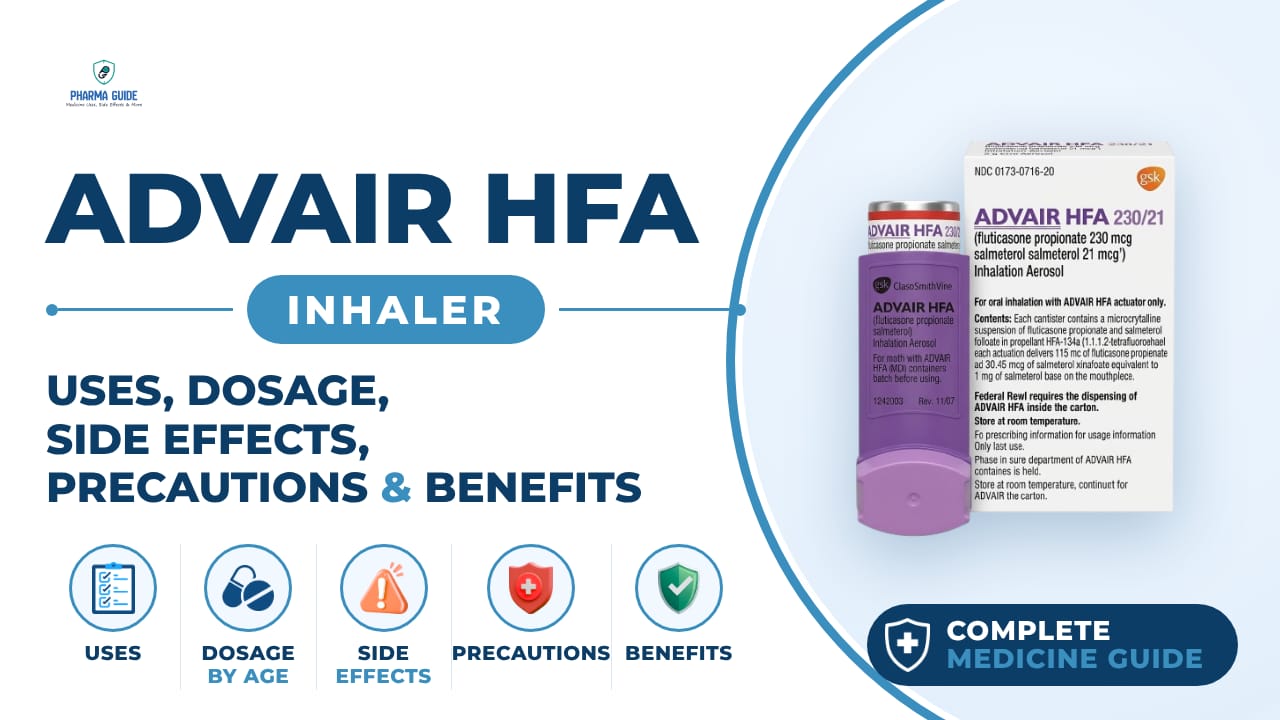
Advair HFA Inhaler: Uses, Dosage, Side Effects, Precautions and Alternates
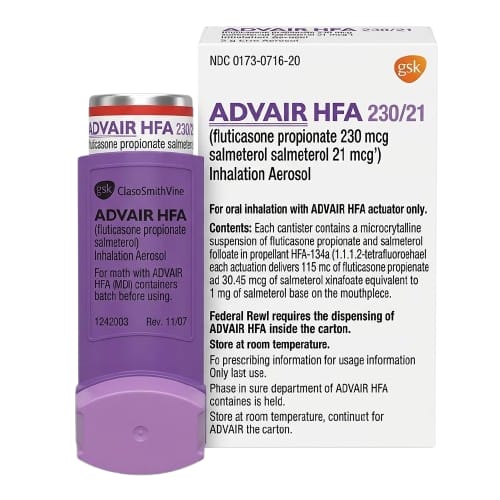
| Generic name | fluticasone propionate and salmeterol |
|---|---|
| Drug class | Bronchodilator combination (inhaled corticosteroid + long-acting beta2-adrenergic agonist) |
| Forms | Inhalation Aerosol (metered-dose inhaler) |
Quick overview
Advair HFA Inhaler (fluticasone propionate and salmeterol) is a bronchodilator combination medicine that combines an inhaled corticosteroid with a long-acting beta2-adrenergic agonist (LABA). It is used for asthma maintenance treatment, including persistent asthma and recurrent wheezing associated with asthma. It is not intended to relieve sudden asthma symptoms and must be used alongside a short-acting rescue inhaler. It is available as an inhalation aerosol (metered-dose inhaler).
What is Advair HFA Inhaler
Advair HFA is an inhaled medicine that combines two drugs in one inhaler: fluticasone propionate, a corticosteroid that reduces inflammation in the lungs, and salmeterol, a long-acting beta2-agonist (LABA) that relaxes the muscles around the airways to keep them open.
Advair HFA Inhaler uses
- Asthma maintenance treatment
- Persistent asthma
- Recurrent wheezing associated with asthma
- Asthma-related chest tightness
- Prevention of asthma symptoms
Benefits of Advair HFA Inhaler
- Helps control asthma symptoms.
- Reduces airway inflammation.
- Helps prevent wheezing.
- Helps reduce shortness of breath.
- Helps improve breathing over time.
How Advair HFA Inhaler works
Advair HFA contains two medicines that work differently. Fluticasone propionate is a corticosteroid that reduces inflammation in the lungs, which helps prevent asthma symptoms. Salmeterol is a long-acting beta2-agonist that helps relax the muscles around the airways so they stay open, preventing wheezing and shortness of breath.
Advair HFA Inhaler dosage
Use at regular intervals twice daily, morning and evening, about 12 hours apart, every day. Do not use more often or in a higher number of inhalations than prescribed. If you miss a dose, skip it and take your next dose at the usual time; do not take two doses at once. Always carry a short-acting inhaler to treat sudden breathing problems between doses. Do not use this inhaler to relieve sudden symptoms or an asthma attack. Do not stop using this medicine without your doctor's guidance, as symptoms may return. While using this medicine twice daily, do not use other medicines containing a long-acting beta2-agonist for any reason.
Shake the inhaler well for 5 seconds before each use. Prime the inhaler before first use, and again if it has not been used for more than 4 weeks or if it has been dropped. After inhaling, rinse your mouth with water and spit it out; do not swallow. Clean the inhaler at least once a week after the evening dose. Use only with the actuator supplied with the product. Never immerse the canister in water to check how much medicine is left.
| Age group | Dose |
|---|---|
| Under 18 years | Not recommended |
| 18–64 years | 2 inhalations, twice/day |
| 65+ years | 2 inhalations, twice/day |
Available forms and strengths
- Inhalation Aerosol (metered-dose inhaler)
Side effects of Advair HFA Inhaler
Common
- Upper respiratory tract infection
- Throat irritation
- Headache
- Dizziness
- Nausea and vomiting
- Hoarseness or voice changes
- Musculoskeletal pain
- Muscle pain
- Cough
- Nervousness
- Tremor
- Fast or irregular heartbeat
- Thrush (fungal infection of mouth or throat)
Serious
- Serious allergic reactions including rash, hives, swelling of face, mouth, and tongue, and breathing problems
- Immediate worsening of breathing (paradoxical bronchospasm) right after use
- Weakened immune system and higher chance of infections
- Lower bone mineral density
- Eye problems including glaucoma and cataracts
- Slowed growth in children
- Signs of adrenal insufficiency such as tiredness, weakness, nausea, vomiting, or low blood pressure
- Pneumonia
- Increased risk of asthma-related death with long-acting beta2-agonists like salmeterol
- Cardiac arrhythmias including atrial fibrillation and ventricular tachycardia
Warnings and precautions
- Long-acting beta2-agonists like salmeterol, one of the ingredients in this medicine, may increase the risk of death related to asthma. It should only be used in patients not adequately controlled on other asthma medicines or whose disease requires two maintenance therapies.
- This medicine should not be started in people whose asthma is rapidly getting worse or life-threatening, as serious and sometimes fatal breathing problems have been reported in this situation.
- This medicine does not treat sudden asthma symptoms. A fast-acting inhaler should always be used for sudden shortness of breath.
- Do not exceed the recommended dose, as fatalities have occurred with excessive use of inhaled medicines of this type.
- This medicine can rarely cause a sudden worsening of breathing (paradoxical bronchospasm) right after use, which can be life-threatening.
- People switching from oral steroid pills to this inhaled medicine need special care, because deaths from adrenal insufficiency have occurred during and after this kind of switch.
- This medicine should be used cautiously in people with heart problems, as it can affect heart rate, blood pressure, and heart rhythm.
- People taking medicines that suppress the immune system are more prone to infections, and conditions like chickenpox or measles can be more serious or even fatal in these patients.
- Long-term use of inhaled corticosteroids may reduce bone density and growth velocity in children, and may increase the risk of cataracts, glaucoma, and respiratory infections like pneumonia.
- There is not enough research in pregnant women to know if this medicine is safe for an unborn baby. It should be used during pregnancy only if the potential benefit justifies the potential risk.
- It is not known whether this medicine passes into breast milk or if it could harm a nursing baby. A decision should be made about whether to stop nursing or stop the medicine, and caution should be used if it is given to a nursing woman.
- Use regularly as prescribed; do not exceed the recommended dose in people with kidney concerns.
- Because the medicine is cleared mainly through the liver, liver problems may cause it to build up in the body, so people with liver disease should be monitored closely.
- Inform your healthcare provider if you have heart disease, high blood pressure, diabetes, or thyroid problems.
- Seek urgent medical help for severe breathing difficulty or an allergic reaction.
Storage
- Store at room temperature with the mouthpiece down
- Do not puncture the canister
- Do not use or store near heat or an open flame
- Avoid storing in temperatures above 120°F, as this may cause the canister to burst
- Never throw the container into a fire or incinerator
- For best results, the inhaler should be at room temperature before use
- Keep out of reach of children
- Avoid spraying in eyes
- Discard the inhaler after 120 actuations have been used, even if it is not completely empty
When to see a doctor
- Get emergency medical care if your breathing problems worsen quickly and your short-acting rescue inhaler does not relieve your symptoms.
- Call your healthcare provider if your breathing problems get worse over time while using this medicine, as you may need different treatment.
- Contact your healthcare provider right away if you notice signs of worsening asthma, such as your rescue inhaler becoming less effective, needing it more often, or a significant decrease in lung function.
- Seek emergency help if you have signs of a serious allergic reaction, such as rash, hives, or swelling of the face, mouth, or tongue, along with breathing problems.
- Contact your doctor right away if breathing problems happen immediately after using the inhaler, as this could be a sign of a dangerous reaction requiring you to stop the medicine.
- Tell your healthcare provider right away if you are exposed to chickenpox or measles while using this medicine.
Alternatives
- Symbicort
- Wixela Inhub
- AirDuo RespiClick
Watch the video
FAQs
What is Advair HFA Inhaler used for?
It is used for asthma maintenance treatment, including persistent asthma, recurrent wheezing, chest tightness, and prevention of asthma symptoms. It is not meant to relieve sudden asthma attacks.
How often should Advair HFA Inhaler be used?
It should be used twice daily, morning and evening, about 12 hours apart, every day, with 2 inhalations per dose for adults and seniors.
What are the common side effects of Advair HFA Inhaler?
Common side effects include upper respiratory tract infection, throat irritation, headache, dizziness, nausea, hoarseness, muscle pain, cough, nervousness, tremor, fast or irregular heartbeat, and thrush.
Can Advair HFA Inhaler be used for sudden asthma symptoms?
No, it does not treat sudden asthma symptoms. A fast-acting rescue inhaler should always be carried and used for sudden breathing problems.
How should Advair HFA Inhaler be stored?
Store at room temperature with the mouthpiece down, away from heat or open flame, and discard after 120 actuations even if not completely empty.
General information, not medical advice
Your prescriber and the leaflet in your pack know your situation. This page does not.
- Follow your prescriber and the leaflet
- Don't start, stop, or change a dose on your own
- Doses and warnings differ by country and product
Sources
Video
Related medicines

Injectafer Injection: Uses, Dosage, Side Effects, Precautions and Alternates
Iron products
Injectafer (ferric carboxymaltose) treats iron deficiency anemia and heart failure-related iron deficiency via IV. Learn uses, dosage, side effects, and

Gliclazide Tablet: Uses, Dosage, Side Effects, Precautions and Alternates
Sulfonylurea (hypoglycemic/antidiabetic agent)
Gliclazide Tablet is a sulfonylurea for type 2 diabetes that boosts insulin release. Learn about dosage, side effects, warnings, and precautions.