
Safety
General information, not medical advice
Your prescriber and the leaflet in your pack know your situation. This page does not.
- Follow your prescriber and the leaflet
- Don't start, stop, or change a dose on your own
- Doses and warnings differ by country and product
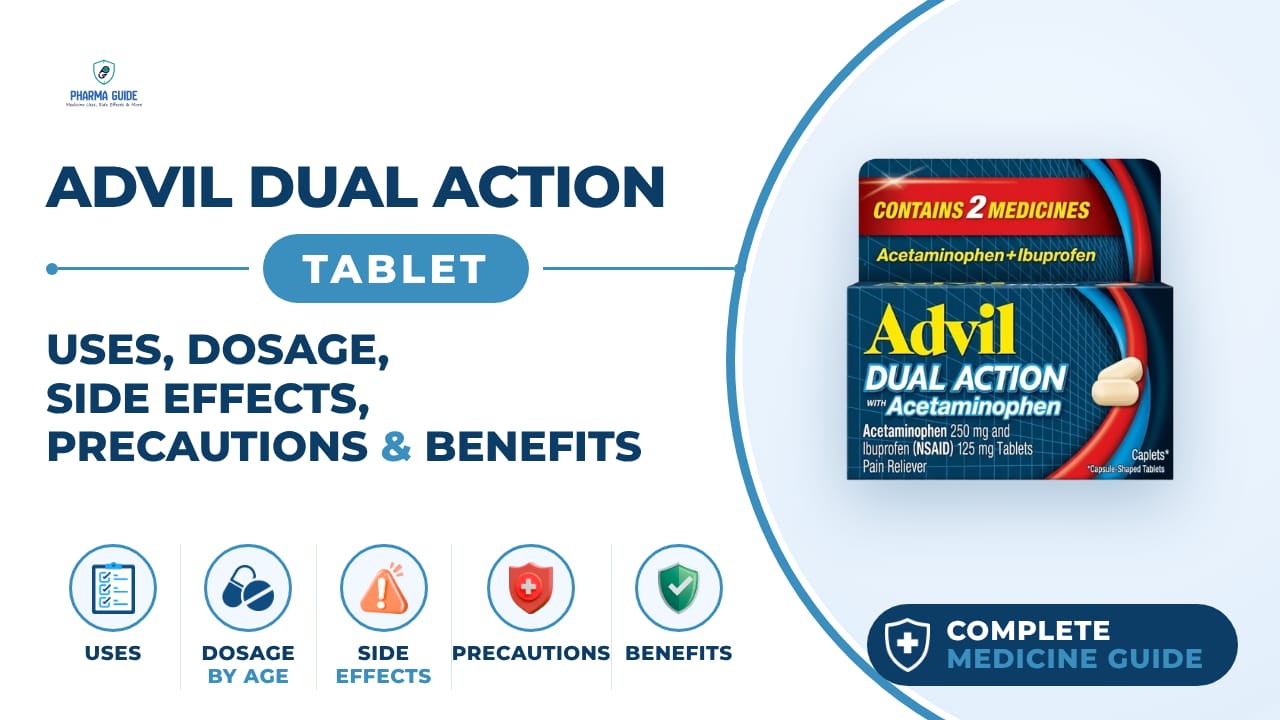
Advil Dual Action Tablet: Uses, Dosage, Side Effects, Precautions and Alternates
| Generic name | acetaminophen / ibuprofen |
|---|---|
| Drug class | analgesic combinations |
| Forms | tablet |
Quick overview
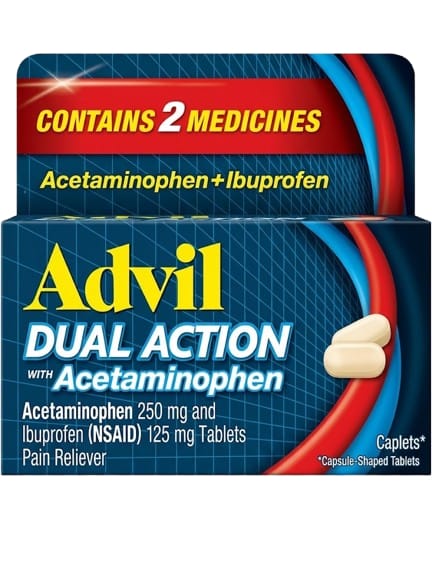
Advil Dual Action Tablet is a combination medicine containing acetaminophen and ibuprofen, from the analgesic combinations drug class. It treats pain by working in two different ways at the same time. It is used for headaches, muscle aches, backaches, and arthritis or other joint pain, and is available as a tablet.
What is Advil Dual Action Tablet
Advil Dual Action is a combination medicine that contains two pain relievers, ibuprofen and acetaminophen, in one tablet. It is used to treat pain and works in two different ways at the same time.
Advil Dual Action Tablet uses
- Pain relief
- Headaches
- Muscle aches
- Backaches
- Arthritis and other joint pain
Benefits of Advil Dual Action Tablet
- Combines two pain relievers that fight pain using two different approaches
- Fast onset of action
- Provides 8 hours of pain relief
- Shown in a clinical study to give greater pain relief than ibuprofen alone or acetaminophen alone
- Allows lower maximum daily doses of each individual medicine
How Advil Dual Action Tablet works
This medicine fights pain in two ways. Ibuprofen is an anti-inflammatory drug that lowers the production of substances in the body called prostaglandins, which cause swelling and pain signals. Acetaminophen is a pain reliever that blocks pain signals from reaching the brain.
Advil Dual Action Tablet dosage
Do not take this medicine with other products that also contain acetaminophen, since acetaminophen is found in many other pain, fever, cold/flu, and sleep medicines. Always read the label before use.
| Age group | Dose |
|---|---|
| Under 18 years | Not recommended |
| 18–64 years | 2 tablets, every 8 hours |
| 65+ years | 2 tablets, every 8 hours |
Available forms and strengths
- Tablet
Side effects of Advil Dual Action Tablet
Common
- Dizziness
- Nausea
- Stomach upset
- Heartburn
- Skin rashes
- Trouble sleeping
- Acid or sour stomach
- Belching
- Ringing in the ear (tinnitus)
- Gas
- Constipation
- Diarrhea
- Vomiting
- Headache
- Itching
- Loss of appetite
Serious
- Signs of liver problems: pain or tenderness in the upper stomach, pale stools, dark urine, loss of appetite, nausea, vomiting, or yellow eyes or skin
- Signs of heart problems: chest pain or tightness, fast or irregular heartbeat, unusual flushing or warmth of the skin
- Signs of stomach or bowel bleeding: severe stomach pain, black tarry stools, vomiting blood or material that looks like coffee grounds
- Signs of high blood pressure: headaches, dizziness, or blurred vision
- Signs of kidney problems: bloody urine, decreased urine output, increased blood pressure, increased thirst, loss of appetite, lower back or side pain, nausea, swelling of the face, fingers, or lower legs, trouble breathing, unusual tiredness or weakness, vomiting, weight gain
- Signs of high potassium: stomach pain, confusion, difficulty breathing, irregular heartbeat, nausea or vomiting, nervousness, numbness or tingling in hands, feet, or lips, weakness or heaviness of the legs
- Signs of a serious allergic reaction (anaphylaxis): rash, itching, trouble breathing or swallowing, swelling of hands, face, or mouth
- Serious skin reactions: blistering, peeling, or loosening of the skin, chills, cough, diarrhea, itching, joint or muscle pain, red irritated eyes, red skin lesions, sore throat, sores or white spots in the mouth or on the lips
- Signs of DRESS syndrome: black tarry stools, chest pain, chills, cough, fever, painful or difficult urination, sore throat, sores or white spots in the mouth, swollen glands, unusual bleeding or bruising, unusual tiredness or weakness
- Changes in vision or blurred vision
- Signs of aseptic meningitis: fever, headache, nausea, stiff neck or back, vomiting
- Signs of stroke: sudden numbness or weakness of face, arm, or leg, trouble speaking, confusion, trouble walking, loss of balance or coordination, dizziness, severe headache, change in vision
- Signs of heart attack: pain or tightness in the chest, shoulders, arms, or jaw, nausea, shortness of breath, cold or clammy skin, feeling faint or lightheaded
- Signs of heart failure: shortness of breath, swelling of ankles, feet, or hands, sudden weight gain, unusual weakness or fatigue
- Severe asthma attack: chest pain, cough, difficulty breathing, wheezing
Warnings and precautions
- This medicine contains acetaminophen. Do not take it with other medicines that also contain acetaminophen, since many products for pain, fever, cold and flu, or sleep also contain this ingredient.
- Do not take more than the recommended dose, as this can be harmful and may cause serious liver damage.
- This medicine contains ibuprofen, an NSAID, which can increase the risk of serious heart problems like heart attack and stroke, which can be fatal. This risk can occur early in treatment and may increase with longer use.
- This medicine should not be used for pain relief right before or after heart bypass surgery (CABG).
- This medicine can increase the risk of serious stomach or intestinal bleeding, ulcers, or holes in the stomach or intestine wall, which can be fatal. These problems can happen without any warning signs at any time during use. Older adults and people who have had a stomach ulcer or bleeding before are at higher risk.
- Your doctor should check your progress regularly with blood and urine tests to make sure the medicine is working properly and not causing harm.
- Do not take other medicines, including over-the-counter drugs, herbal products, or vitamins, unless you have discussed them with your doctor first.
- Using this medicine during the later part of pregnancy can harm your unborn baby. If you think you may be pregnant while using it, tell your doctor right away.
- Consult a healthcare professional if you have kidney disease, liver disease, heart disease, or high blood pressure before breastfeeding.
- People with kidney disease should talk to their doctor before taking this medicine, since it can cause serious kidney problems.
- This medicine contains acetaminophen, which can cause serious liver damage, especially at high doses or when combined with other products containing acetaminophen. People with liver disease should talk to their doctor before taking it.
- Avoid use if you have a history of stomach ulcers or stomach bleeding unless advised by a healthcare professional.
- Do not combine with other medicines containing paracetamol (acetaminophen) or ibuprofen.
Storage
- Store at 20–25°C.
- Keep away from excessive heat above 40°C.
- Keep in the original packaging.
- Keep out of reach of children.
When to see a doctor
- Get medical help right away if you notice signs of a serious liver problem, such as pain or tenderness in the upper stomach, pale stools, dark urine, loss of appetite, nausea, vomiting, or yellowing of the eyes or skin.
- Get medical help right away if you have signs of a heart problem, such as chest pain or tightness, a fast or irregular heartbeat, or unusual flushing or warmth of the skin.
- Get medical help right away if you have severe stomach pain, black tarry stools, or are vomiting blood or material that looks like coffee grounds, as these can be signs of stomach or bowel bleeding.
- Get medical help right away if you have signs of a kidney problem, such as bloody urine, reduced urine output, high blood pressure, increased thirst, loss of appetite, back or side pain, nausea, swelling of the face, fingers, or legs, trouble breathing, unusual tiredness, vomiting, or weight gain.
- Get medical help right away if you have a rash, itching, trouble breathing or swallowing, or swelling of your hands, face, or mouth, as this could be a serious allergic reaction.
- Get medical help right away if you develop blistering, peeling, or loosening of the skin, along with chills, cough, diarrhea, itching, joint or muscle pain, red irritated eyes, red skin lesions, sore throat, or sores in the mouth, as this could be a serious skin reaction.
- Get medical help right away if you have sudden numbness or weakness of the face, arm, or leg, trouble speaking, confusion, trouble walking, loss of balance, dizziness, a severe headache, or vision changes, as these could be signs of a stroke.
Alternatives
- Nurofen
- Panadol
- Tylenol
Watch the video
FAQs
What is Advil Dual Action Tablet used for?
It is used for pain relief, including headaches, muscle aches, backaches, and arthritis or other joint pain.
How does Advil Dual Action Tablet work?
It fights pain in two ways: ibuprofen lowers prostaglandins that cause swelling and pain signals, while acetaminophen blocks pain signals from reaching the brain.
What is the dosage for Advil Dual Action Tablet?
For adults aged 18 to 64 and those 65 and older, the dose is 2 tablets every 8 hours. It is not recommended for those under 18 years.
What are the common side effects of Advil Dual Action Tablet?
Common side effects include dizziness, nausea, stomach upset, heartburn, skin rashes, trouble sleeping, gas, constipation, diarrhea, and headache.
What precautions should I take with Advil Dual Action Tablet?
Avoid taking it with other products containing acetaminophen, do not exceed the recommended dose, and consult a doctor if you have kidney, liver, or heart disease, or a history of stomach ulcers.
General information, not medical advice
Your prescriber and the leaflet in your pack know your situation. This page does not.
- Follow your prescriber and the leaflet
- Don't start, stop, or change a dose on your own
- Doses and warnings differ by country and product
Sources
Video
Related medicines
Saridon Tablet: Uses, Dosage, Side Effects, Precautions and Alternates
Analgesic combinations
Saridon Tablet contains Propyphenazone, Paracetamol, and Caffeine. Learn its uses, dosage, side effects, warnings, and precautions before use.
Excedrin Tablet: Uses, Dosage, Side Effects, Precautions and Alternates
Analgesic combinations
Excedrin Tablet combines acetaminophen, aspirin, and caffeine to relieve headaches and migraines. Learn about its uses, dosage, side effects, and precautions.