
Safety
General information, not medical advice
Your prescriber and the leaflet in your pack know your situation. This page does not.
- Follow your prescriber and the leaflet
- Don't start, stop, or change a dose on your own
- Doses and warnings differ by country and product
Advil Liquid Gel: Uses, Dosage, Side Effects, Precautions and Alternates
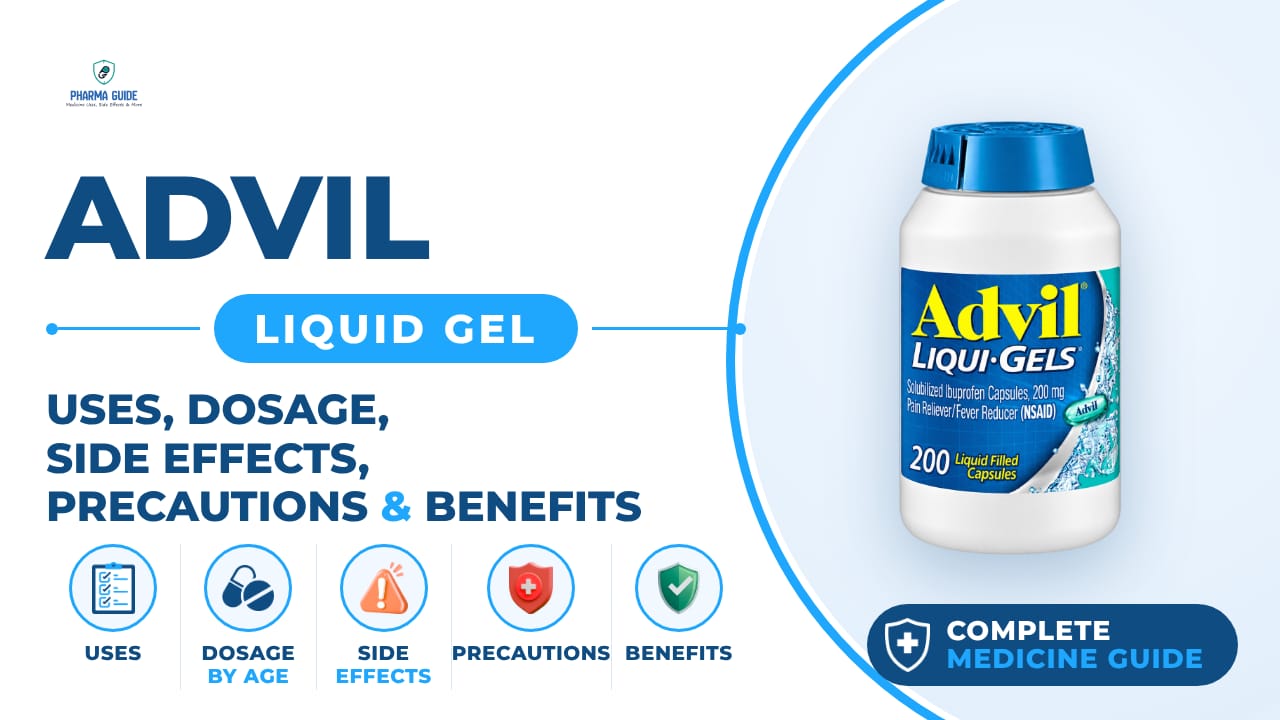
| Generic name | Ibuprofen |
|---|---|
| Drug class | Nonsteroidal anti-inflammatory drug (NSAID) |
| Forms | Liquid-filled capsule (Liqui-Gel) |
Quick overview
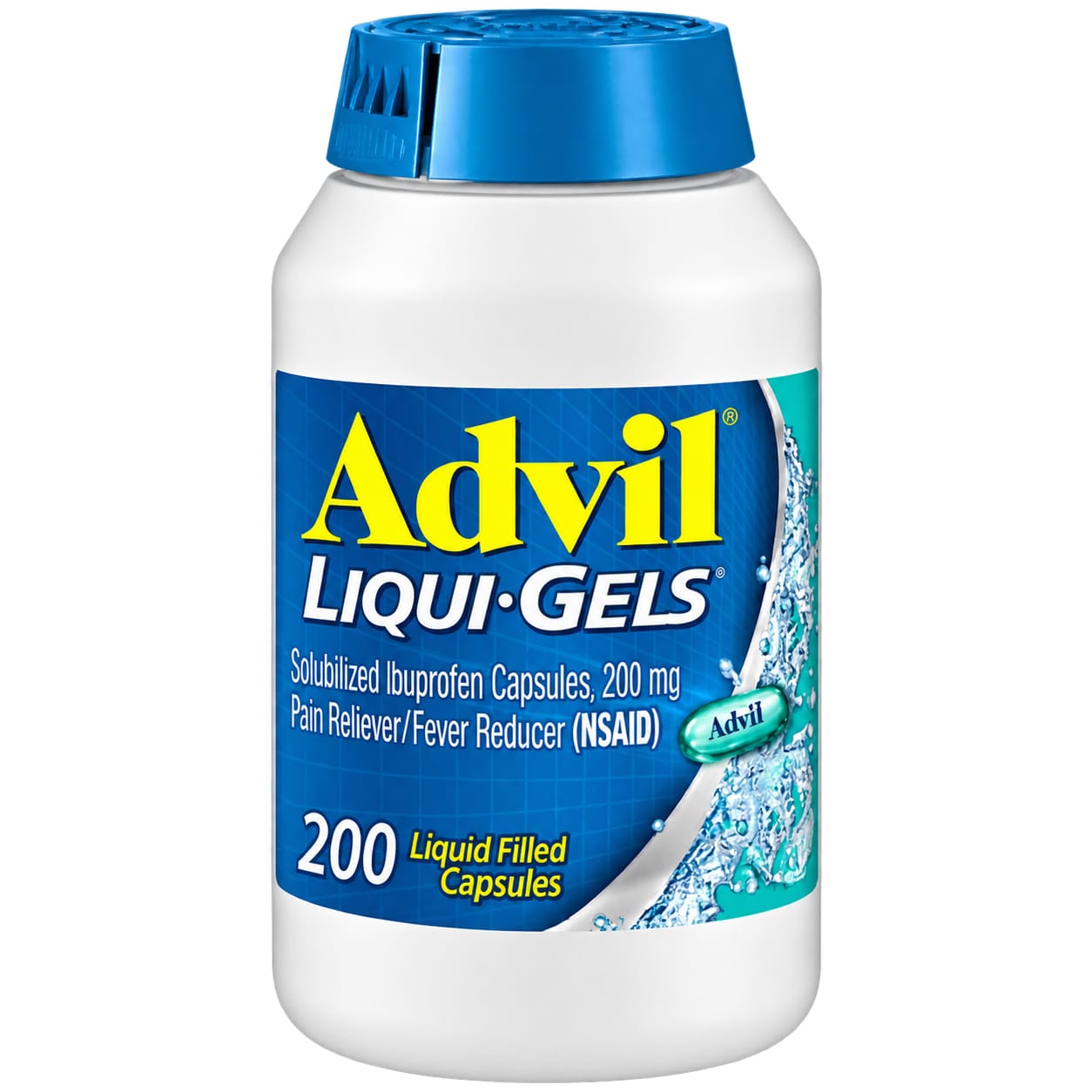
Advil Liquid Gel is a liquid-filled capsule containing ibuprofen, a nonsteroidal anti-inflammatory drug (NSAID). It is used to relieve pain, reduce fever, and ease inflammation and swelling. It works by reducing the chemicals in the body that cause pain, inflammation, swelling, and fever, and clinical studies show it can provide long-lasting relief for up to 8 hours.
What is Advil Liquid Gel
Advil Liqui-Gels is a liquid-filled capsule containing ibuprofen, a non-steroidal anti-inflammatory drug (NSAID). It helps relieve pain and reduce inflammation, swelling, and fever.
Advil Liquid Gel uses
- Relief of pain from headache, toothache, back pain, muscle pain, and menstrual pain
- Reduction of fever
- Anti-inflammatory relief in rheumatic diseases such as arthritis
- Treatment of migraine-related pain
- Relief of muscle aches, joint and body pain, backache, sprains and strains
- Relief of aches and pain due to the common cold and flu
Benefits of Advil Liquid Gel
- Provides fast and effective temporary relief of mild to moderate pain
- Clinical studies show long lasting pain relief for up to 8 hours
How Advil Liquid Gel works
Ibuprofen is an NSAID that reduces the chemicals your body makes that cause pain, inflammation, swelling, and fever.
Advil Liquid Gel dosage
Take with or without food; take with food or milk if it causes an upset stomach. Take with a full glass of water. Swallow the capsule whole; do not halve, crush, or chew it because it contains liquid. Wait at least 4 hours between doses; the recommended interval is about 6 to 8 hours. Use the lowest dose for the shortest time needed to relieve symptoms. Do not use longer than 3 days for a fever or 5 days for pain relief without checking with a doctor. If you miss a dose, take it when you remember, but skip it if it is almost time for the next dose; do not take two doses at once.
| Age group | Dose |
|---|---|
| Under 12 years | Ask a doctor |
| 12–17 years | 1 capsule (200 mg) every 4–6 hours as needed; if needed, 2 capsules may be used |
| 18–64 years | 1 capsule (200 mg) every 4–6 hours as needed; if 1 capsule doesn't provide relief, 2 may be used |
| 65+ years | Same labeled dose, but consult a doctor/pharmacist if regular use is needed |
Available forms and strengths
- Liquid-filled capsule (Liqui-Gel), 200 mg
Side effects of Advil Liquid Gel
Common
- Abdominal pain, indigestion, heartburn, and nausea
- Headache or dizziness
- Hives, rash, and itchy skin
- Diarrhea, flatulence, constipation, and vomiting
- Gas
- Ringing or buzzing in the ears
Serious
- Signs of an allergic reaction such as rash, hives, swelling of the face, tongue, or throat, wheezing, or trouble breathing
- Signs of stomach bleeding such as vomiting blood, coffee-ground-like vomit, or black or bloody stools
- Stomach ulcer or perforation with severe abdominal pain
- Signs of kidney problems such as swelling of the ankles or a change in urine
- Liver problems such as yellowing of the skin or eyes
- Signs of meningitis such as stiff neck, headache, fever, or confusion
- Severe skin reactions with blistering or peeling skin (including Stevens-Johnson syndrome and DRESS syndrome)
- Heart attack or stroke symptoms such as chest pain, weakness on one side of the body, or trouble speaking
- High blood pressure, heart failure, or chest pain
Warnings and precautions
- This medicine may raise the risk of heart attack and stroke, which can be deadly. The risk may be higher with higher doses or long-term use, and can happen within the first weeks. Do not use right before or after bypass heart surgery.
- This medicine may raise the chance of severe and sometimes deadly stomach or bowel problems like ulcers or bleeding. The risk is greater in older people and those who have had ulcers or bleeding before. These may occur without warning signs.
- Do not take more than directed or for longer than directed, as this may raise the chance of very bad side effects.
- This medicine may mask signs of infection such as fever and pain and delay proper treatment. If symptoms persist or worsen while you have an infection, seek medical advice immediately.
- Do not use this medicine if you are taking aspirin at a daily dose higher than 75 mg or other NSAIDs. Ibuprofen may interfere with the preventive benefits of low-dose ASA.
- Do not use if you have a soy or peanut allergy, as the capsules contain soy lecithin. The capsules also contain sorbitol, a source of fructose; talk to your doctor if you have hereditary fructose intolerance.
- Do not use in the last 3 months of pregnancy. Ibuprofen can harm the unborn baby and may cause kidney problems in the fetus and reduced amniotic fluid from the 20th week onward. Consult your doctor before using it in the first 6 months of pregnancy.
- Ibuprofen passes into breast milk in very low amounts and is unlikely to harm a breastfed baby, but consult your doctor before using it while breastfeeding.
- Do not use if you have serious kidney disease. Use with caution if you are at risk of kidney problems, including the elderly or those using diuretics. Stop use immediately if you have difficulty or pain when urinating.
- Do not use if you have serious liver disease. Talk to your doctor or pharmacist before use if you have liver problems.
- The chance of stomach bleeding is higher if you have 3 or more alcoholic drinks every day while using this product. Talk with your doctor before you drink alcohol.
Storage
- Store at room temperature (15°-30°C) in a dry place, below 25°C
- Protect from light and heat
- Do not store in a bathroom
- Keep all drugs out of the reach and sight of children and pets
- Throw away unused or expired drugs; do not flush down a toilet or pour down a drain unless told to do so; check with your pharmacist about the best way to dispose of medicines
When to see a doctor
- Stop taking this medicine and seek medical advice immediately if you develop any type of skin rash, mucous membrane lesions, blisters, or any other sign of allergy, as these can be first signs of very serious skin reactions
- Call your doctor right away if you have signs of meningitis such as headache, fever, chills, very upset stomach or vomiting, stiff neck, rash, sensitivity to light, drowsiness, or confusion
- Call your doctor right away if you have signs of liver problems like dark urine, feeling tired, loss of appetite, upset stomach or stomach pain, light-colored stools, vomiting, or yellow skin or eyes
- If an overdose is suspected, call your local poison control center or get medical care right away, even if there are no symptoms. Be ready to say what was taken, how much, and when
- Stop use and ask a doctor if you show signs of stomach bleeding, pain worsens or lasts more than 5 days, fever worsens or lasts more than 3 days, or any new symptoms appear
Alternatives
- Ibuprofen Gel
- Diclofenac Gel
- Ketoprofen Gel
- Piroxicam Gel
- Indomethacin Gel
- Naproxen Gel
- Capsaicin Cream
Watch the video
FAQs
What is Advil Liquid Gel used for?
It is used to relieve pain from headaches, toothaches, back pain, muscle pain, and menstrual pain, reduce fever, ease inflammation in conditions like arthritis, and relieve aches from colds and flu.
How long does Advil Liquid Gel take to work and how long does relief last?
Clinical studies show it provides fast, effective temporary relief of mild to moderate pain with long-lasting relief for up to 8 hours.
What is the dosage for Advil Liquid Gel?
For ages 12-64, take 1 capsule (200 mg) every 4-6 hours as needed; 2 capsules may be used if 1 doesn't provide relief. Wait at least 4 hours between doses. Do not use longer than 3 days for fever or 5 days for pain without consulting a doctor. Children under 12 should ask a doctor.
Who should avoid taking Advil Liquid Gel?
Avoid it if you have a soy or peanut allergy (it contains soy lecithin), serious kidney or liver disease, are in the last 3 months of pregnancy, or are taking aspirin above 75 mg daily or other NSAIDs.
What are the serious side effects of Advil Liquid Gel?
Serious side effects include signs of stomach bleeding, allergic reactions, kidney or liver problems, severe skin reactions, heart attack or stroke symptoms, and signs of meningitis such as stiff neck, headache, fever, or confusion.
General information, not medical advice
Your prescriber and the leaflet in your pack know your situation. This page does not.
- Follow your prescriber and the leaflet
- Don't start, stop, or change a dose on your own
- Doses and warnings differ by country and product
Sources
Video
Related medicines
Relaxyl Capsule: Uses, Dosage, Side Effects, Precautions and Alternates
Nonsteroidal Anti-Inflammatory Drug (NSAID)
Relaxyl Capsule contains diclofenac, an NSAID used to relieve joint and muscle pain, swelling, and inflammation. Learn uses, dosage, and side effects.
Nabumetone Tablet: Uses, Dosage, Side Effects, Precautions and Alternates
Nonsteroidal anti-inflammatory drug (NSAID)
Nabumetone Tablet is an NSAID for osteoarthritis and rheumatoid arthritis pain relief. Learn its dosage, uses, side effects, and safety warnings.