
Safety
General information, not medical advice
Your prescriber and the leaflet in your pack know your situation. This page does not.
- Follow your prescriber and the leaflet
- Don't start, stop, or change a dose on your own
- Doses and warnings differ by country and product
Nabumetone Tablet: Uses, Dosage, Side Effects, Precautions and Alternates
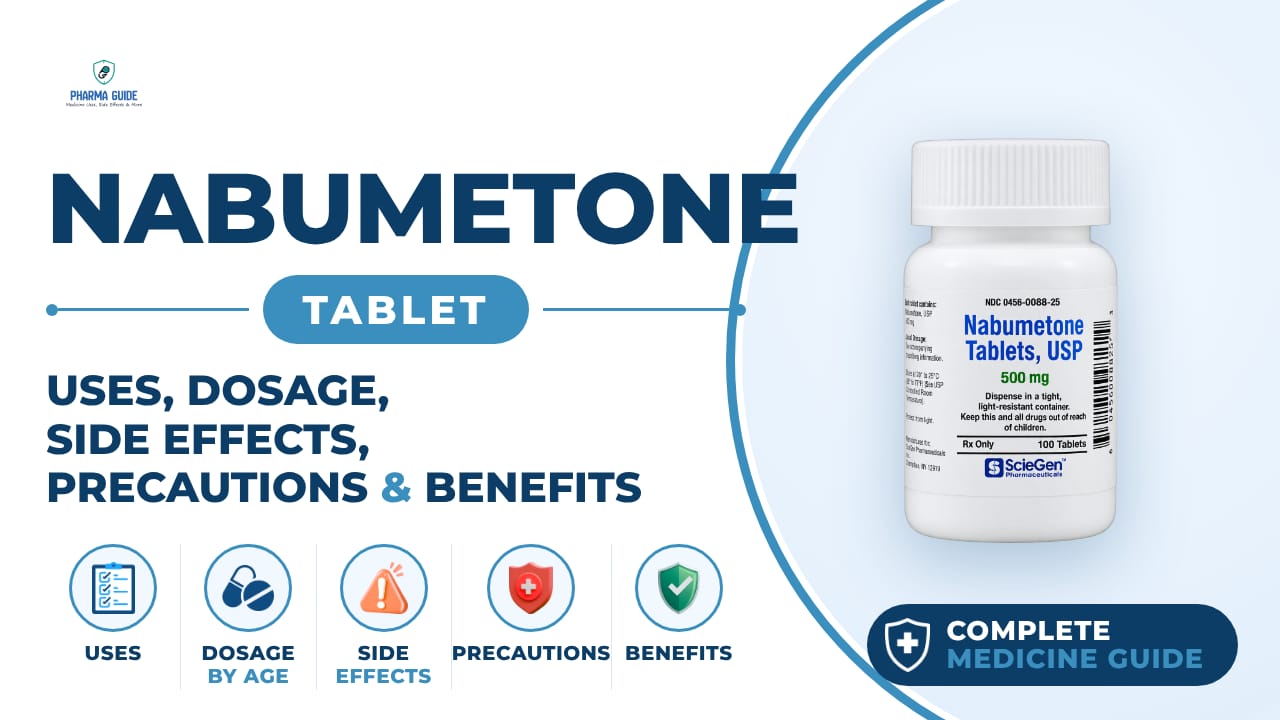
| Generic name | nabumetone |
|---|---|
| Drug class | Nonsteroidal anti-inflammatory drug (NSAID) |
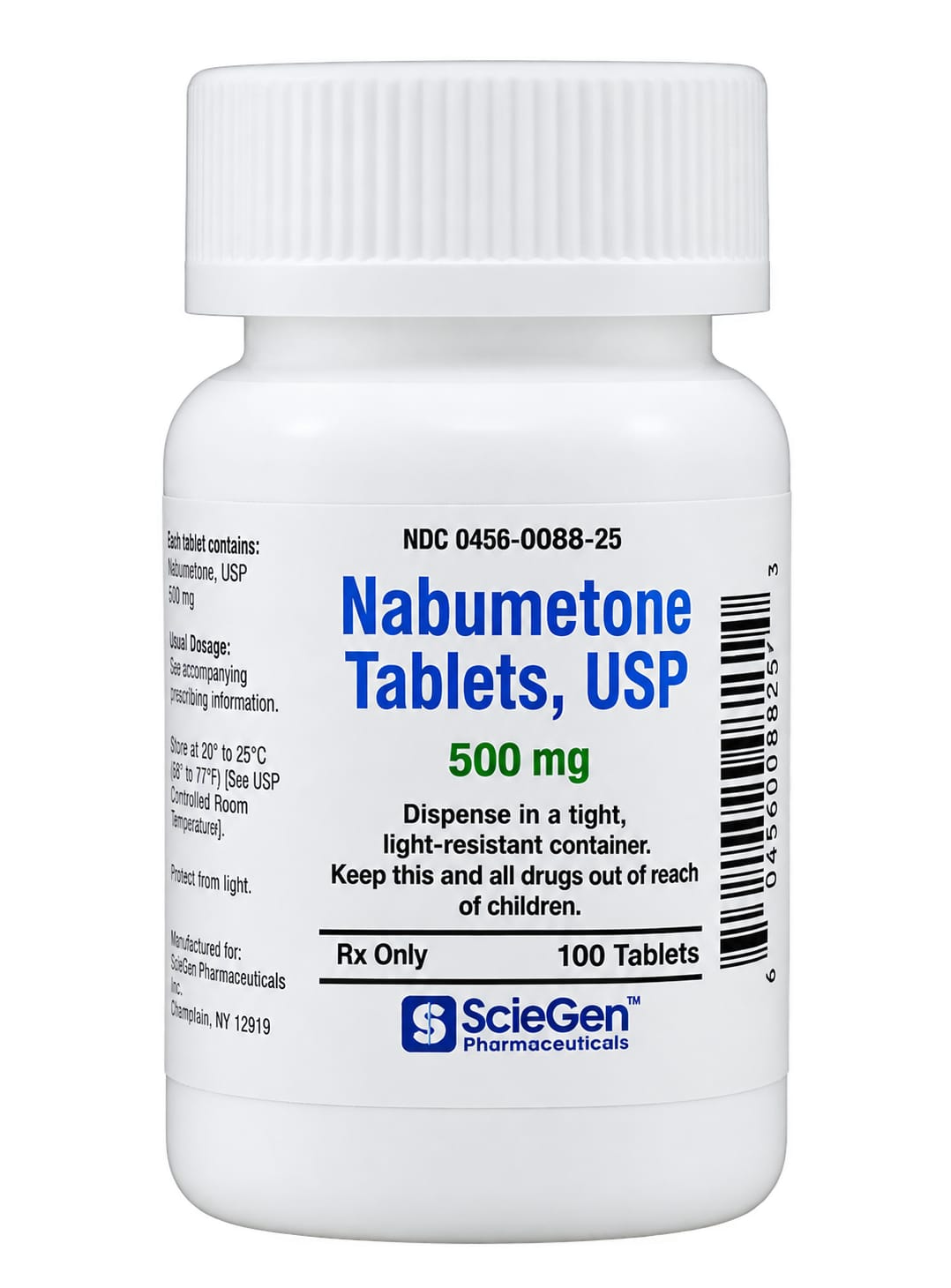
| Forms | 500 mg oral tablet, 750 mg oral tablet, 1000 mg oral tablet |
Quick overview
Nabumetone Tablet is a nonsteroidal anti-inflammatory drug (NSAID) used to relieve the signs and symptoms of osteoarthritis and rheumatoid arthritis. It works by blocking substances in the body that cause pain, swelling, and fever. It is taken by mouth and is not approved for use in children or anyone younger than 18 years old.
What is Nabumetone Tablet
Nabumetone is a nonsteroidal anti-inflammatory drug (NSAID) used to treat arthritis symptoms. It is a tablet taken by mouth.
Nabumetone Tablet uses
- Relief of signs and symptoms of osteoarthritis
- Relief of signs and symptoms of rheumatoid arthritis
Benefits of Nabumetone Tablet
- Reduces joint pain, stiffness, and swelling from arthritis
- Reduces inflammation and the tissue damage that comes with it
How Nabumetone Tablet works
After you swallow it, the body changes nabumetone into an active form that blocks substances in the body called prostaglandins, which cause pain, swelling, and fever. This helps reduce inflammation and pain.
Nabumetone Tablet dosage
Nabumetone tablets can be taken with or without food, though taking it with food or milk may help lessen stomach upset. Swallow the tablet whole; do not chew or crush it. Try to take your tablets at the same time each day. After taking the medicine, remain sitting or standing upright for about 15 to 30 minutes to help prevent irritation that could cause trouble swallowing. Keep taking the medicine even after you start to feel better, since full relief may take up to a week in some cases. If you miss a dose, skip it and take your next dose at the normal time; do not double up. This medicine is not approved for use in children or anyone younger than 18 years old.
| Age group | Dose |
|---|---|
| Under 18 years | Not recommended |
| 18–60 years | 1,000 mg, once/day |
| 60+ years | 500–1,000 mg, once/day |
Available forms and strengths
- 500 mg oral tablet
- 750 mg oral tablet
- 1000 mg oral tablet
Side effects of Nabumetone Tablet
Common
- Stomach pain or upset stomach
- Indigestion or heartburn
- Nausea or vomiting
- Diarrhea or constipation
- Gas (flatulence)
- Headache
- Dizziness
- Rash or itching
- Ringing in the ears (tinnitus)
- Swelling in hands and feet
- Increased sweating
- Trouble sleeping
- Drowsiness or tiredness
Serious
- Signs of a heart attack or stroke, such as chest pain, shortness of breath, weakness on one side of the body, or slurred speech
- Signs of stomach bleeding, such as bloody or tarry stools, vomiting blood, or vomit that looks like coffee grounds
- Liver problems, such as nausea, tiredness, itching, yellowing of skin or eyes, dark urine, or flu-like symptoms
- Kidney problems, such as little or no urination, painful urination, or swelling in feet or ankles
- Low red blood cell count (anemia), such as paleness, tiredness, or feeling light-headed
- Serious allergic reactions, such as hives, swelling of the face or throat, or trouble breathing
- Serious skin reactions, such as fever, sore throat, burning eyes, skin pain, or a red or purple rash with blistering and peeling
- Unusual weight gain or swelling (fluid retention)
- High blood pressure or worsening of existing high blood pressure
- Heart failure symptoms such as shortness of breath or swelling in the legs
Warnings and precautions
- NSAIDs like nabumetone can increase the chance of a heart attack or stroke that can lead to death, and this risk grows with longer use.
- Never use nabumetone for pain right before or after a heart bypass surgery (coronary artery bypass graft, or CABG), as this raises the risk of heart attack or stroke.
- Nabumetone can cause ulcers and bleeding in the stomach and intestines at any time during treatment, sometimes without any warning signs, and this can be fatal.
- People who have had an asthma attack, hives, or allergic reaction after taking aspirin or another NSAID should not take nabumetone, since severe and sometimes fatal reactions have occurred.
- Nabumetone can cause serious skin reactions such as exfoliative dermatitis, Stevens-Johnson syndrome, and toxic epidermal necrolysis, which can be fatal and may happen without warning.
- Nabumetone can make skin more sensitive to sunlight, increasing the risk of sunburn. Use sunscreen and protective clothing when outdoors.
- Avoid nabumetone during pregnancy, especially in the last few months, unless your doctor tells you to take it. It may cause heart or kidney problems in the unborn baby and complications with delivery.
- It is not known if nabumetone passes into breast milk. You should not breastfeed while using this medicine unless your doctor says it's okay.
- Use nabumetone with caution if you have kidney problems, since the drug and its byproducts are removed from the body mainly through the kidneys, and NSAIDs can cause kidney damage.
- Use nabumetone cautiously if you have liver problems, since the drug is processed by the liver and can rarely cause serious liver damage, including liver failure.
- Avoid drinking alcohol while taking this medicine, as it raises the risk of stomach bleeding and ulcers.
- This medicine can cause dizziness or drowsiness. Do not drive or operate machinery if you feel dizzy after taking it.
Storage
- Store at room temperature between 68°F and 77°F (20°C and 25°C)
- Can tolerate brief exposure to temperatures between 59°F and 86°F (15°C and 30°C), such as during transport
- Store in a cool, dry place in a tight, light-resistant container
- Keep the bottle tightly closed when not in use
- Keep out of the reach of children
- Do not keep outdated medicine or medicine no longer needed
When to see a doctor
- Get emergency help right away if you have shortness of breath or trouble breathing, chest pain, weakness on one side of your body, slurred speech, or swelling of the face or throat.
- Stop taking nabumetone and call your doctor right away if you notice nausea, unusual tiredness or weakness, itching, yellowing of skin or eyes, stomach pain, flu-like symptoms, vomiting blood, black or tarry stools, unusual weight gain, skin rash or blisters with fever, or swelling of the arms, legs, hands, or feet.
- If you develop any skin rash or signs of asthma while taking this medicine, stop taking it and contact your doctor immediately.
- If you think you have taken too much nabumetone, seek emergency medical help or contact a poison control center right away.
Alternatives
- Etodolac
- Diclofenac
- Naproxen
Watch the video
FAQs
What is Nabumetone Tablet used for?
Nabumetone Tablet is used to relieve the signs and symptoms of osteoarthritis and rheumatoid arthritis by blocking substances in the body that cause pain, swelling, and fever.
How should I take Nabumetone Tablet?
Swallow the tablet whole with or without food; taking it with food or milk may lessen stomach upset. Remain upright for 15 to 30 minutes after taking it, and take it at the same time each day. Keep taking it even after you feel better, since full relief may take up to a week.
What is the dosage of Nabumetone Tablet?
Adults aged 18–60 years typically take 1,000 mg once daily, while those over 60 take 500–1,000 mg once daily. It is not recommended for anyone under 18 years old.
What are the common side effects of Nabumetone Tablet?
Common side effects include stomach pain, indigestion, nausea, diarrhea or constipation, gas, headache, dizziness, rash, ringing in the ears, swelling in hands and feet, increased sweating, trouble sleeping, and drowsiness.
What precautions should I follow when taking Nabumetone Tablet?
Avoid alcohol, use sunscreen since it can increase sun sensitivity, avoid it during pregnancy unless advised by a doctor, and use caution if you have kidney or liver problems. It can also cause dizziness, so avoid driving if affected.
General information, not medical advice
Your prescriber and the leaflet in your pack know your situation. This page does not.
- Follow your prescriber and the leaflet
- Don't start, stop, or change a dose on your own
- Doses and warnings differ by country and product
Sources
Video
Related medicines
Relaxyl Capsule: Uses, Dosage, Side Effects, Precautions and Alternates
Nonsteroidal Anti-Inflammatory Drug (NSAID)
Relaxyl Capsule contains diclofenac, an NSAID used to relieve joint and muscle pain, swelling, and inflammation. Learn uses, dosage, and side effects.
Anaprox DS Tablet: Uses, Dosage, Side Effects, Precautions and Alternates
Nonsteroidal anti-inflammatory drug (NSAID)
Anaprox DS Tablet (naproxen sodium) relieves pain, inflammation, and swelling from arthritis, gout, and menstrual cramps. Learn uses, dosage, and side effects.