
Safety
General information, not medical advice
Your prescriber and the leaflet in your pack know your situation. This page does not.
- Follow your prescriber and the leaflet
- Don't start, stop, or change a dose on your own
- Doses and warnings differ by country and product
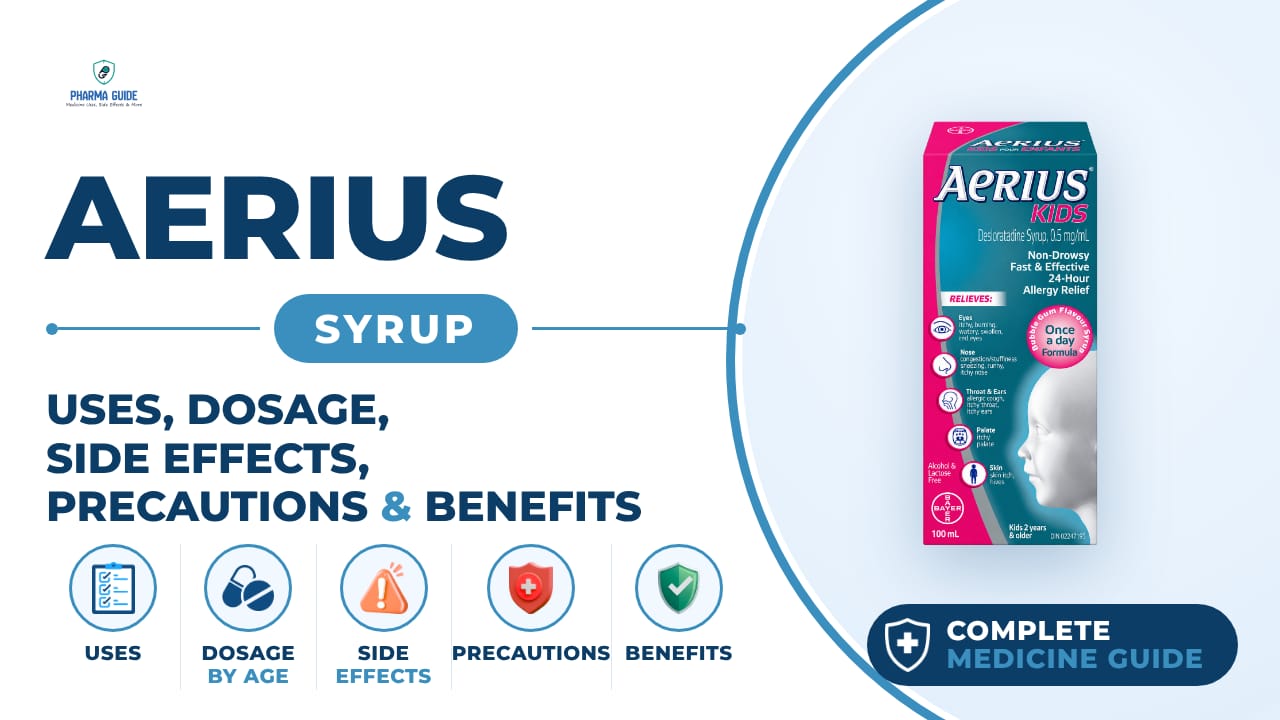
Aerius Syrup: Uses, Dosage, Side Effects, Precautions and Alternates
| Generic name | desloratadine |
|---|---|
| Drug class | antihistamine (H1 antagonist) |
| Forms | Film-coated tablets, Syrup, Oral solution, Oral lyophilisate, Orodispersible tablets |
Quick overview
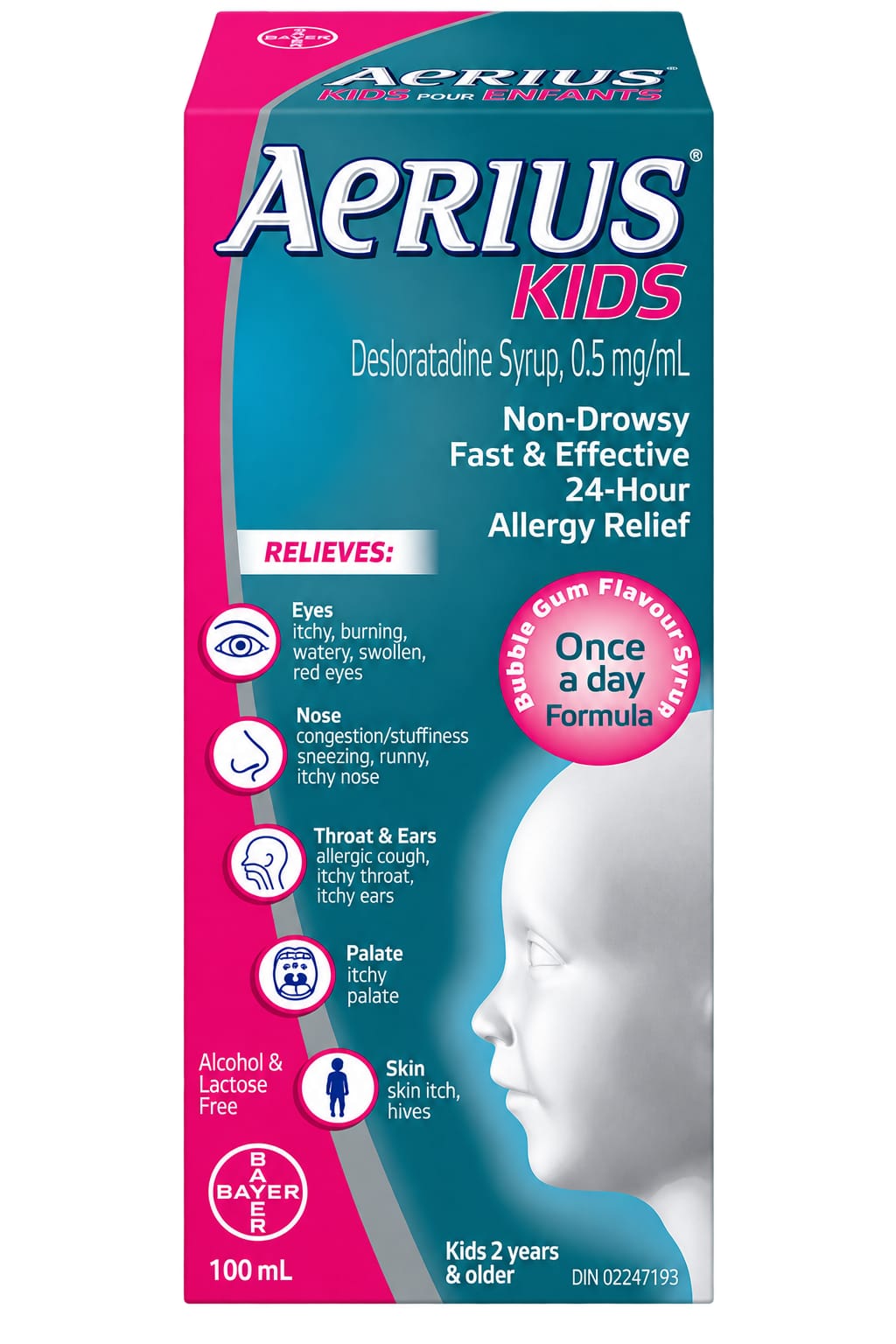
Aerius Syrup contains desloratadine, a non-sedating antihistamine used to relieve symptoms of allergic rhinitis and urticaria. It works by blocking histamine receptors and typically does not cause drowsiness. The syrup is given once daily, with the dose depending on age, and should be used exactly as directed.
What is Aerius Syrup
Aerius Syrup is a non-sedating antihistamine medicine used to relieve allergy symptoms. It contains desloratadine and does not usually cause drowsiness.
Aerius Syrup uses
- Relief of symptoms associated with allergic rhinitis (inflammation of the nasal passages caused by an allergy, for example hay fever or dust mite allergy)
- Relief of symptoms associated with urticaria (a skin condition caused by an allergy, including itching and hives)
Benefits of Aerius Syrup
- Non-sedating, long-acting relief of allergy symptoms
- Effectively controls symptoms for 24 hours
- Can be taken with or without food
- Helps patients resume normal daily activities and sleep
- Provides once-daily dosing
- Offers up to 24-hour allergy symptom control
- Usually causes less drowsiness than older antihistamines
How Aerius Syrup works
Desloratadine blocks histamine receptors in the body. Histamine is a substance that causes allergy symptoms, so blocking its receptors reduces those symptoms.
Aerius Syrup dosage
This syrup may be taken without regard to mealtime. Shake well before each dose. Swallow the dose of syrup, then drink some water.
Children 1 through 5 years should use the smaller measured dose once a day. Children 6 through 11 years should use the medium measured dose once a day. Adults and adolescents 12 years and over should use the full measured dose once a day. Use the provided measuring spoon or oral measuring syringe to measure the dose accurately.
If a dose is missed, take it as soon as possible, then return to the regular schedule. Do not take a double dose to make up for a missed one.
| Age group | Dose |
|---|---|
| Under 1 year | No standard Aerius syrup dose is established in the EU product information |
| 1–5 years | 1.25 mg once daily = 2.5 mL once daily |
| 6–11 years | 2.5 mg once daily = 5 mL once daily |
| 12–64 years | 5 mg once daily = 10 mL once daily |
Available forms and strengths
- Film-coated tablets
- Syrup
- Oral solution
- Oral lyophilisate
- Orodispersible tablets
Side effects of Aerius Syrup
Common
- Fatigue
- Dry mouth
- Headache
- Diarrhoea (in young children)
- Fever (in young children)
- Insomnia (in young children)
Serious
- Hallucinations
- Dizziness, somnolence, insomnia, psychomotor hyperactivity, seizures
- Tachycardia, palpitations
- Abdominal pain, nausea, vomiting, dyspepsia, diarrhoea
- Elevations of liver enzymes, increased bilirubin, hepatitis
- Myalgia
- Hypersensitivity reactions such as anaphylaxis, angioedema, dyspnoea, pruritus, rash, and urticaria
Warnings and precautions
- Do not take this medicine if you are allergic to desloratadine, to loratadine, or to any of the other ingredients.
- This syrup should not be used by people with certain rare hereditary sugar intolerance problems, since it contains sucrose and sorbitol.
- This syrup contains a colouring agent (E110) that may cause allergic reactions in some people.
- Safety and effectiveness have not been established in children under 1 year of age, and a doctor should be consulted before use in this age group.
- Most cases of a runny/blocked nose in children under 2 years old are caused by infection, not allergy, and there is no evidence this medicine helps with infectious causes.
- The safe use of this medicine during pregnancy has not been established, so it is not recommended for pregnant women. Desloratadine passes into breast milk, so this medicine is not recommended for breastfeeding women.
- People with severe kidney problems should use this medicine with caution. Significant liver disease may require closer monitoring.
- In studies, taking this medicine together with alcohol did not make the effects of alcohol worse, but you should still avoid alcohol or sedatives while using this product.
- This medicine is not expected to affect your ability to drive or use machines, but in rare cases it may cause drowsiness that could affect these abilities.
Storage
- Do not store above 30°C.
- Store in the original package.
- Keep out of the reach and sight of children.
- Do not use after the expiry date stated on the bottle.
- Medicines should not be disposed of via wastewater or household waste. Ask your pharmacist how to dispose of medicines no longer required.
When to see a doctor
- If any side effect becomes severe, or if you notice any side effect not listed in the leaflet, tell your doctor or pharmacist.
- Stop using the medicine and get medical help right away if you notice unusual or severe side effects.
- If you take more than the recommended amount, contact your doctor or pharmacist, even though serious problems are not expected from accidental overdose.
Alternatives
- Relieves sneezing
- Relieves runny or itchy nose
- Relieves itchy or watery eyes
Watch the video
FAQs
What is Aerius Syrup used for?
It is used to relieve symptoms of allergic rhinitis (such as hay fever or dust mite allergy) and urticaria, a skin condition caused by allergy that includes itching and hives.
What is the dosage of Aerius Syrup for children?
Children 1–5 years take 1.25 mg (2.5 mL) once daily, and children 6–11 years take 2.5 mg (5 mL) once daily. Adults and adolescents 12 years and over take 5 mg (10 mL) once daily.
Does Aerius Syrup cause drowsiness?
Aerius Syrup is a non-sedating antihistamine and usually does not cause drowsiness, though in rare cases it may cause drowsiness that could affect activities like driving.
Can Aerius Syrup be taken with food?
Yes, it may be taken without regard to mealtime, so it can be taken with or without food.
Is Aerius Syrup safe during pregnancy or breastfeeding?
It is not recommended during pregnancy since safe use has not been established, and it is not recommended for breastfeeding women because desloratadine passes into breast milk.
General information, not medical advice
Your prescriber and the leaflet in your pack know your situation. This page does not.
- Follow your prescriber and the leaflet
- Don't start, stop, or change a dose on your own
- Doses and warnings differ by country and product
Sources
Video
Related medicines

Injectafer Injection: Uses, Dosage, Side Effects, Precautions and Alternates
Iron products
Injectafer (ferric carboxymaltose) treats iron deficiency anemia and heart failure-related iron deficiency via IV. Learn uses, dosage, side effects, and

Gliclazide Tablet: Uses, Dosage, Side Effects, Precautions and Alternates
Sulfonylurea (hypoglycemic/antidiabetic agent)
Gliclazide Tablet is a sulfonylurea for type 2 diabetes that boosts insulin release. Learn about dosage, side effects, warnings, and precautions.