
Safety
General information, not medical advice
Your prescriber and the leaflet in your pack know your situation. This page does not.
- Follow your prescriber and the leaflet
- Don't start, stop, or change a dose on your own
- Doses and warnings differ by country and product
Afatinib Tablet: Uses, Dosage, Side Effects, Precautions and Alternates
| Generic name | afatinib |
|---|---|
| Drug class | Kinase inhibitor (tyrosine kinase inhibitor / multikinase inhibitor) |
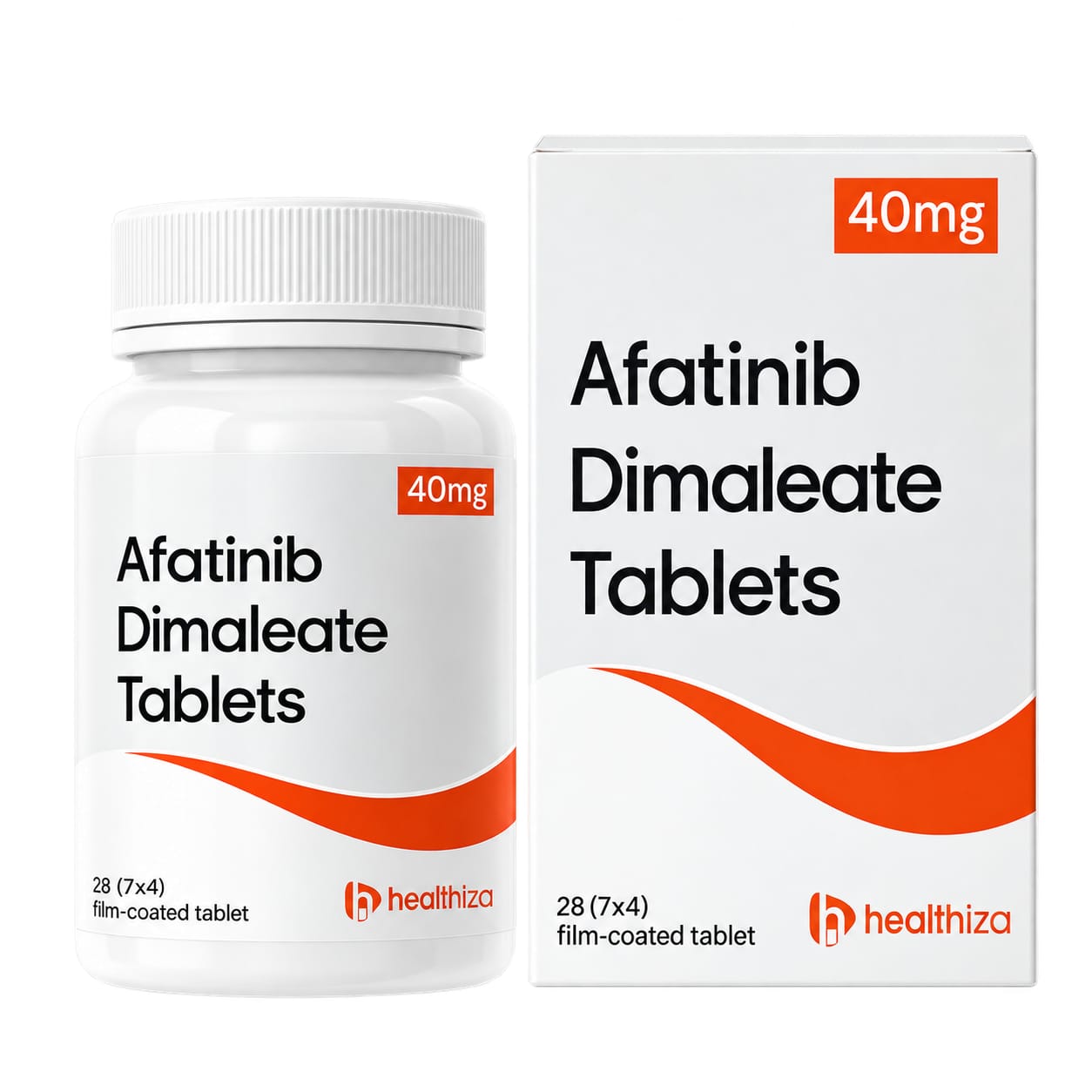
| Forms | Tablets: 40 mg, 30 mg, and 20 mg |
Quick overview
Afatinib Tablet (afatinib) is a prescription kinase inhibitor taken by mouth to treat certain types of non-small cell lung cancer (NSCLC) that have spread to other parts of the body. It is used specifically for tumors with certain EGFR gene mutations and for squamous NSCLC that has worsened after chemotherapy. Afatinib works by blocking the EGFR protein that drives cancer cell growth, and it is taken once daily on an empty stomach exactly as prescribed.
What is Afatinib Tablet
Afatinib is a prescription cancer medicine taken as a tablet by mouth. It is used to treat a type of lung cancer called non-small cell lung cancer (NSCLC) that has spread to other parts of the body. It belongs to a class of medicines called kinase inhibitors (tyrosine kinase inhibitor / multikinase inhibitor).
Afatinib Tablet uses
- First-line treatment of metastatic non-small cell lung cancer (NSCLC) whose tumors have certain non-resistant EGFR gene mutations found by an FDA-approved test
- Treatment of metastatic squamous NSCLC that has gotten worse after platinum-based chemotherapy
Benefits of Afatinib Tablet
- May help stop or slow the spread of EGFR-positive NSCLC
- May help some people with EGFR-positive NSCLC live longer
- Provides oral targeted cancer therapy
- Targets specific EGFR-driven cancers
- Taken once daily
- May delay disease progression in appropriately selected patients
How Afatinib Tablet works
Afatinib blocks a protein called EGFR (epidermal growth factor receptor) that sits on the surface of cancer cells. Abnormal EGFR can cause cells to grow out of control; by blocking it, afatinib helps stop the cancer from growing and spreading.
Afatinib Tablet dosage
Take Afatinib Tablet on an empty stomach, at least 1 hour before a meal or 2 hours after a meal. Do not cut or crush the tablet. If you miss a dose and it is within 12 hours of your next dose, skip the missed dose and take your next dose at the regular time — do not take two doses at once. Take exactly as your doctor tells you; do not change your dose or stop the medicine unless your doctor tells you to. Avoid grapefruit or grapefruit juice while taking this medicine, as it can raise the amount of drug in your body. Limit sun exposure and use sunscreen and protective clothing, since this medicine can make skin more sensitive to sunlight.
| Age group | Dose |
|---|---|
| Under 18 years | Safety and effectiveness are not established; no standard pediatric dose |
| 18–39 years | 40 mg once daily |
| 40–64 years | 40 mg once daily |
| 65–74 years | Usually 40 mg once daily; no routine age-based reduction |
Available forms and strengths
- Tablets: 40 mg, 30 mg, and 20 mg
Side effects of Afatinib Tablet
Common
- Diarrhea
- Rash/acne or acneiform dermatitis
- Mouth sores (stomatitis)
- Nail inflammation (paronychia)
- Dry skin
- Decreased appetite
- Nausea
- Vomiting
- Itching (pruritus)
Serious
- Severe diarrhea leading to dehydration and kidney problems
- Severe skin reactions such as peeling or blistering of the skin, or blisters in the mouth (including possible Stevens-Johnson syndrome or toxic epidermal necrolysis)
- Lung or breathing problems (interstitial lung disease) with trouble breathing, cough, or fever
- Liver problems including yellowing of skin/eyes, dark urine, right-sided abdominal pain, easy bruising/bleeding, tiredness
- Tear (perforation) in the stomach or intestine causing severe abdominal pain
- Eye problems (keratitis) including eye pain, swelling, redness, tearing, blurred vision, light sensitivity
- Heart problems including new or worsening shortness of breath, cough, tiredness, swelling of legs/ankles/feet, palpitations, sudden weight gain
- Decreased fertility in females and males
Warnings and precautions
- Diarrhea is very common and can sometimes be severe, leading to dehydration and kidney problems that can be fatal. Your doctor should give you medicine to treat diarrhea.
- Severe blistering and peeling skin reactions can occur and may require stopping the medicine.
- Lung inflammation (interstitial lung disease) can occur and may be life-threatening.
- Liver damage, sometimes fatal, can occur, so liver function will be checked regularly.
- Eye inflammation (keratitis) can occur, especially in people with a history of eye problems or who wear contact lenses.
- This medicine can cause tears in the stomach or intestine, which can sometimes be fatal, especially in people with a history of ulcers or who take certain other medicines.
- Can cause harm to an unborn baby; effective birth control is needed during treatment and for 2 weeks after the last dose.
- This medicine can harm an unborn baby and should not be used during pregnancy unless necessary. Women who can become pregnant should use effective birth control during treatment and for at least 2 weeks after the last dose.
- Women should not breastfeed during treatment and for 2 weeks after the last dose, since it is not known if the medicine passes into breast milk.
- People with severe kidney problems have higher levels of this medicine in their body and need a lower dose and close monitoring by their doctor.
- This medicine can cause or worsen liver problems. People with severe liver problems need close monitoring, and liver function blood tests are done periodically during treatment for everyone.
- It is not known how this medicine interacts with alcohol, so check with your doctor before drinking alcohol.
- This medicine may cause dizziness in some people, so avoid driving or operating machinery if you feel dizzy.
Storage
- Store at room temperature between 68°F and 77°F (20°C to 25°C)
- Keep in the original container and keep the container tightly closed
- Keep away from moisture and light
- Do not store in moist or damp areas such as bathrooms
- Safely throw away (discard) any medicine that is out of date or no longer needed
- Keep out of the reach of children
When to see a doctor
- Get medical help right away if diarrhea does not go away or becomes severe.
- Get medical help right away for severe skin reactions such as peeling or blistering skin, or blisters in the mouth.
- Tell your doctor right away about new or worsening lung symptoms such as trouble breathing, shortness of breath, cough, or fever.
- Tell your doctor right away about signs of liver problems such as yellowing skin or eyes, dark urine, pain on the right side of the stomach, easy bruising or bleeding, or extreme tiredness.
- Get medical help right away if you have severe stomach-area pain, which could mean a tear in the stomach or intestine.
- Tell your doctor right away about eye problems such as pain, swelling, redness, tearing, blurred vision, or light sensitivity.
- Contact a healthcare professional right away for signs of heart problems such as new or worsening shortness of breath, cough, fatigue, swelling of the legs/ankles, palpitations, or sudden weight gain.
- Seek emergency care if you experience trouble breathing or swelling of the throat or tongue, which could be a severe allergic reaction.
Alternatives
- Osimertinib
- Erlotinib
- Gefitinib
Watch the video
FAQs
What is Afatinib Tablet used for?
It is used as first-line treatment for metastatic NSCLC with certain EGFR mutations, and for metastatic squamous NSCLC that has worsened after platinum-based chemotherapy.
How should I take Afatinib Tablet?
Take it once daily on an empty stomach, at least 1 hour before or 2 hours after a meal. Do not cut or crush the tablet, and take it exactly as prescribed.
What are the common side effects of Afatinib Tablet?
Common side effects include diarrhea, rash or acneiform dermatitis, mouth sores, nail inflammation, dry skin, decreased appetite, nausea, vomiting, and itching.
What serious risks are linked to Afatinib Tablet?
Serious risks include severe diarrhea, severe skin reactions, interstitial lung disease, liver problems, stomach or intestinal perforation, eye problems, and heart problems.
Can Afatinib Tablet be taken during pregnancy?
No, it can harm an unborn baby, so effective birth control is needed during treatment and for at least 2 weeks after the last dose.
General information, not medical advice
Your prescriber and the leaflet in your pack know your situation. This page does not.
- Follow your prescriber and the leaflet
- Don't start, stop, or change a dose on your own
- Doses and warnings differ by country and product
Sources
Video
Related medicines

Injectafer Injection: Uses, Dosage, Side Effects, Precautions and Alternates
Iron products
Injectafer (ferric carboxymaltose) treats iron deficiency anemia and heart failure-related iron deficiency via IV. Learn uses, dosage, side effects, and

Gliclazide Tablet: Uses, Dosage, Side Effects, Precautions and Alternates
Sulfonylurea (hypoglycemic/antidiabetic agent)
Gliclazide Tablet is a sulfonylurea for type 2 diabetes that boosts insulin release. Learn about dosage, side effects, warnings, and precautions.