
Safety
General information, not medical advice
Your prescriber and the leaflet in your pack know your situation. This page does not.
- Follow your prescriber and the leaflet
- Don't start, stop, or change a dose on your own
- Doses and warnings differ by country and product
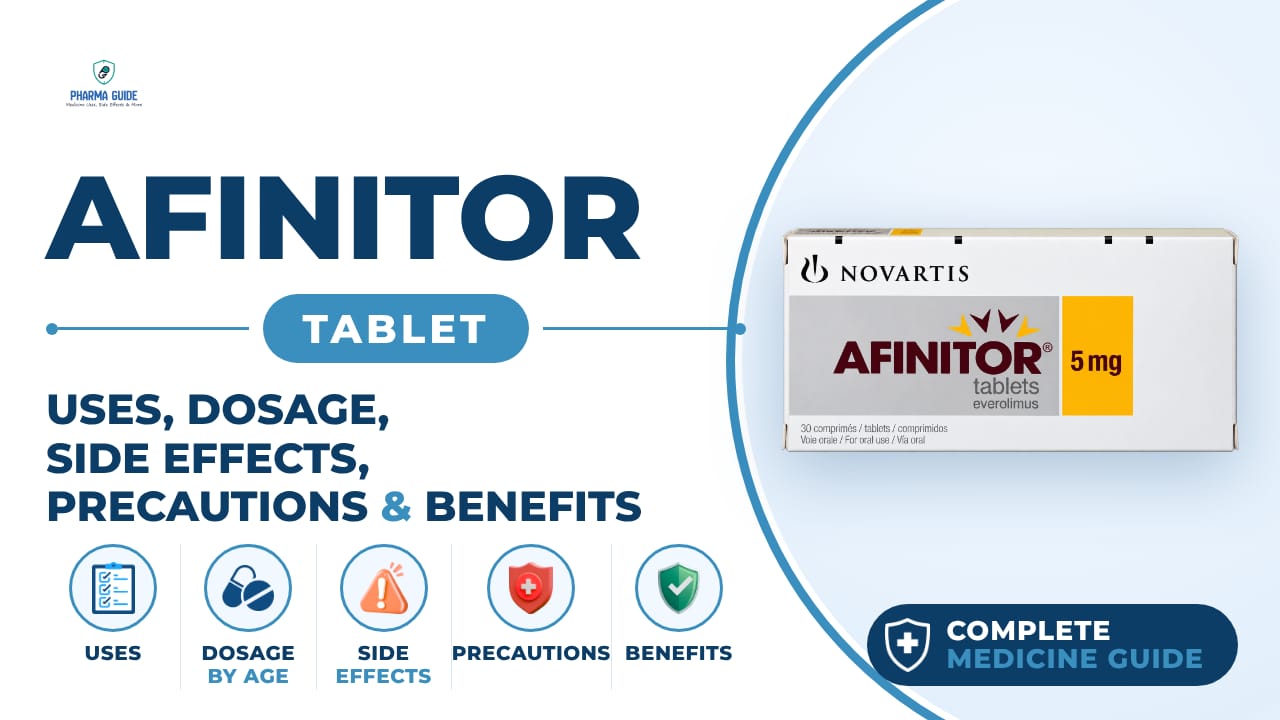
Afinitor Tablet: Uses, Dosage, Side Effects, Precautions and Alternates
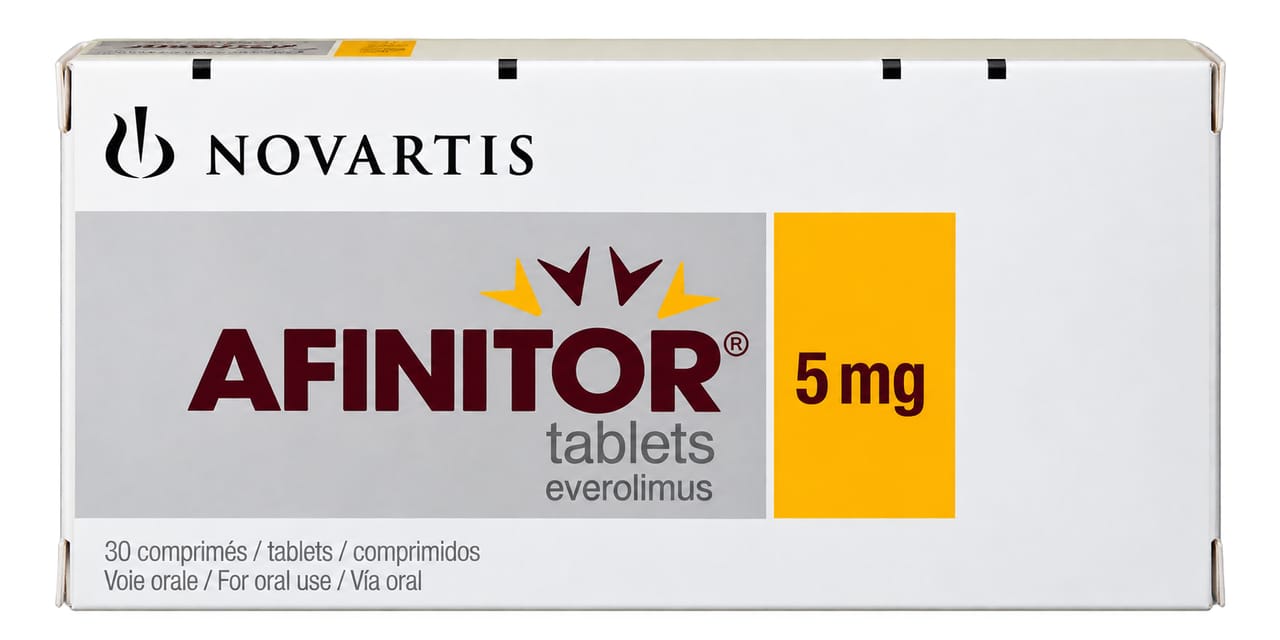
| Generic name | everolimus |
|---|---|
| Drug class | Kinase inhibitor (mTOR inhibitor) |
| Forms | Tablets (2.5 mg, 5 mg, 7.5 mg, and 10 mg) |
Quick overview
Afinitor Tablet contains everolimus, a kinase inhibitor that works as an mTOR inhibitor. It is a prescription medicine used to treat certain advanced cancers, including hormone receptor-positive, HER2-negative breast cancer and certain neuroendocrine tumors. Afinitor comes as tablets taken by mouth, and dosing, monitoring, and precautions should be managed by a doctor.
What is Afinitor Tablet
Afinitor is a prescription medicine containing everolimus, a kinase inhibitor that blocks a protein called mTOR. It is used to treat certain cancers and tumors and seizures linked to a genetic condition called tuberous sclerosis complex (TSC). It comes as tablets taken by mouth.
Afinitor Tablet uses
- Postmenopausal women with advanced hormone receptor-positive, HER2-negative breast cancer, in combination with exemestane, after failure of treatment with letrozole or anastrozole
- Adults with progressive neuroendocrine tumors of pancreatic origin (PNET) that cannot be removed by surgery or have spread
- Adults with progressive, well-differentiated, non-functional neuroendocrine tumors (NET) of the gastrointestinal tract or lung that cannot be removed by surgery or have spread
Benefits of Afinitor Tablet
- Can slow down the growth and spread of certain tumors
- Can shrink some kidney tumors (angiomyolipoma) and brain tumors (SEGA) associated with tuberous sclerosis complex
- Has been shown to significantly delay disease progression compared with placebo in several cancer types
How Afinitor Tablet works
Afinitor blocks a protein called mTOR that normally helps cells grow and divide and helps tumors form new blood vessels. By switching off mTOR activity, the medicine slows the growth of cancer cells and tumors and reduces their blood supply.
Afinitor Tablet dosage
Take Afinitor by mouth once a day at about the same time every day. Take it the same way every time, either always with food or always without food. Swallow tablets whole with a glass of water; do not chew or crush them, and do not take a tablet that is broken or crushed.
If you cannot swallow tablets whole, they can be dispersed completely in a glass of water and the mixture swallowed right away, followed by rinsing the glass with more water and drinking the rinse to get the full dose.
If you miss a dose, you may still take it if it is less than 6 hours after your usual time; if more than 6 hours have passed, skip that day's dose and take your next dose at the usual time the following day. Do not take two doses to make up for a missed dose.
You should have regular blood tests before starting and during treatment to check blood counts, kidney and liver function, cholesterol, and blood sugar. If taking Afinitor for SEGA, you will need regular blood tests to measure the amount of medicine in your blood so your healthcare provider can adjust your dose.
| Age group | Dose |
|---|---|
| Under 1 year | Safety and effectiveness are not established |
| 12–17 years | 4.5 mg/m² once daily |
| 40–64 years | 10 mg once daily |
Available forms and strengths
- Tablets (2.5 mg, 5 mg, 7.5 mg, and 10 mg)
Side effects of Afinitor Tablet
Common
- Mouth ulcers and sores (stomatitis)
- Infections
- Rash
- Feeling weak or tired (fatigue, asthenia)
- Diarrhea
- Swelling of arms, hands, feet, ankles, face, or other parts of the body (edema)
- Nausea and vomiting
- Fever
- Cough
- Headache
- Decreased appetite
- Dry mouth
- Abnormal taste
- Nose bleeds
- Pain in arms, legs, mouth, throat, back, or joints
- High blood glucose
- High blood pressure
- Difficulty sleeping
- Hair loss
- Muscle spasms
- Dizziness
- Nail disorders
- Acne or eczema
- Absence of menstrual periods
Serious
- Non-infectious pneumonitis (lung or breathing problems), which can be severe or fatal
- Serious infections, including reactivation of hepatitis B, which can be severe or fatal
- Kidney failure, including acute renal failure, which can be fatal
- Severe hypersensitivity (allergic) reactions, including anaphylaxis and angioedema
- Angioedema, with increased risk in patients also taking ACE inhibitors
- Impaired wound healing
- Decreased blood cell counts (anemia, low white blood cells, low platelets)
- High blood sugar and high cholesterol/triglycerides
- Increased risk of death and treatment discontinuation in patients 65 years and older
- Radiation sensitization and radiation recall reactions
Warnings and precautions
- Afinitor can cause non-infectious lung inflammation (pneumonitis), which can be severe and sometimes fatal. Report any new or worsening cough, shortness of breath, chest pain, or wheezing right away.
- Afinitor increases the risk of serious infections, including reactivation of hepatitis B, which can be fatal.
- Serious allergic reactions can occur, including anaphylaxis and swelling of the airway or tongue (angioedema).
- People taking ACE inhibitor blood pressure medicines along with Afinitor may have a higher risk of angioedema.
- Avoid live vaccines and close contact with people who have recently received live vaccines while taking Afinitor.
- Avoid grapefruit, grapefruit juice, and St. John's Wort during treatment, as they can affect everolimus levels in the blood.
- Afinitor can impair wound healing; treatment should be stopped before planned surgery and not restarted until the wound has healed.
- Afinitor can harm an unborn baby. Women who can become pregnant should have a pregnancy test before starting treatment and use effective birth control during treatment and for 8 weeks after the last dose. Men with partners who can become pregnant should use effective contraception during treatment and for 4 weeks after the last dose.
- It is not known if Afinitor passes into breast milk. Women should not breastfeed during treatment and for 2 weeks after the last dose.
- Afinitor can cause kidney failure, sometimes fatal. Kidney function should be monitored before and during treatment, especially in patients with other risk factors for kidney problems.
- People with liver problems may have higher levels of the medicine in their blood, and dose adjustments are needed depending on how severe the liver impairment is.
- The label does not provide specific guidance on alcohol consumption, but advises avoiding alcohol-containing mouthwashes if you develop mouth sores.
- The effects of Afinitor on driving were not formally studied, but side effects like tiredness, weakness, and trouble sleeping could affect your ability to drive or operate machinery safely.
Storage
- Store at room temperature, between 68°F to 77°F (20°C to 25°C)
- Keep Afinitor in the package it comes in
- Open the blister package just before taking the medicine
- Keep the blister package and tablets dry prior to taking
- Keep out of light
- Throw away medicine that is out of date or no longer needed
- Keep out of the reach of children
When to see a doctor
- Get medical help right away if you have new or worsening cough, shortness of breath, chest pain, or difficulty breathing/wheezing.
- Seek care right away if you have a fever of 100.5°F or above, chills, or signs of infection or hepatitis B such as yellowing skin, dark urine, pale stools, or pain in the upper right side of your stomach.
- Get emergency help for signs of a severe allergic reaction, such as rash, itching, hives, trouble breathing or swallowing, flushing, chest pain, or dizziness.
- Get medical help right away if you develop swelling of your tongue, mouth, or throat, or trouble breathing, which could be signs of angioedema.
- Contact your healthcare provider if you develop pain, discomfort, or open sores in your mouth.
- If you take too much Afinitor, contact your healthcare provider or go to the nearest hospital emergency department right away, and bring the medicine pack with you.
Alternatives
- Sirolimus
- Temsirolimus
Watch the video
FAQs
What is Afinitor Tablet used for?
Afinitor is used to treat postmenopausal women with advanced hormone receptor-positive, HER2-negative breast cancer (with exemestane), and adults with progressive neuroendocrine tumors of pancreatic, gastrointestinal, or lung origin that cannot be removed by surgery or have spread.
How does Afinitor Tablet work?
Afinitor contains everolimus, which blocks a protein called mTOR that normally helps cells grow and divide and helps tumors form new blood vessels. This slows tumor growth and reduces blood supply to tumors.
How should I take Afinitor Tablet?
Take Afinitor by mouth once a day at the same time, consistently either with or without food. Swallow tablets whole with water; do not chew or crush them. If you miss a dose by less than 6 hours, take it; if more than 6 hours have passed, skip it and resume the next day.
What are the serious side effects of Afinitor Tablet?
Serious side effects include non-infectious pneumonitis, serious infections including hepatitis B reactivation, kidney failure, severe allergic reactions including anaphylaxis and angioedema, impaired wound healing, and decreased blood cell counts.
What should I avoid while taking Afinitor Tablet?
Avoid live vaccines and close contact with recently vaccinated individuals, and avoid grapefruit, grapefruit juice, and St. John's Wort, as these can affect everolimus levels in the blood.
General information, not medical advice
Your prescriber and the leaflet in your pack know your situation. This page does not.
- Follow your prescriber and the leaflet
- Don't start, stop, or change a dose on your own
- Doses and warnings differ by country and product
Sources
Video
Related medicines

Injectafer Injection: Uses, Dosage, Side Effects, Precautions and Alternates
Iron products
Injectafer (ferric carboxymaltose) treats iron deficiency anemia and heart failure-related iron deficiency via IV. Learn uses, dosage, side effects, and

Gliclazide Tablet: Uses, Dosage, Side Effects, Precautions and Alternates
Sulfonylurea (hypoglycemic/antidiabetic agent)
Gliclazide Tablet is a sulfonylurea for type 2 diabetes that boosts insulin release. Learn about dosage, side effects, warnings, and precautions.