
Safety
General information, not medical advice
Your prescriber and the leaflet in your pack know your situation. This page does not.
- Follow your prescriber and the leaflet
- Don't start, stop, or change a dose on your own
- Doses and warnings differ by country and product
Agamree Suspension: Uses, Dosage, Side Effects, Precautions and Alternates
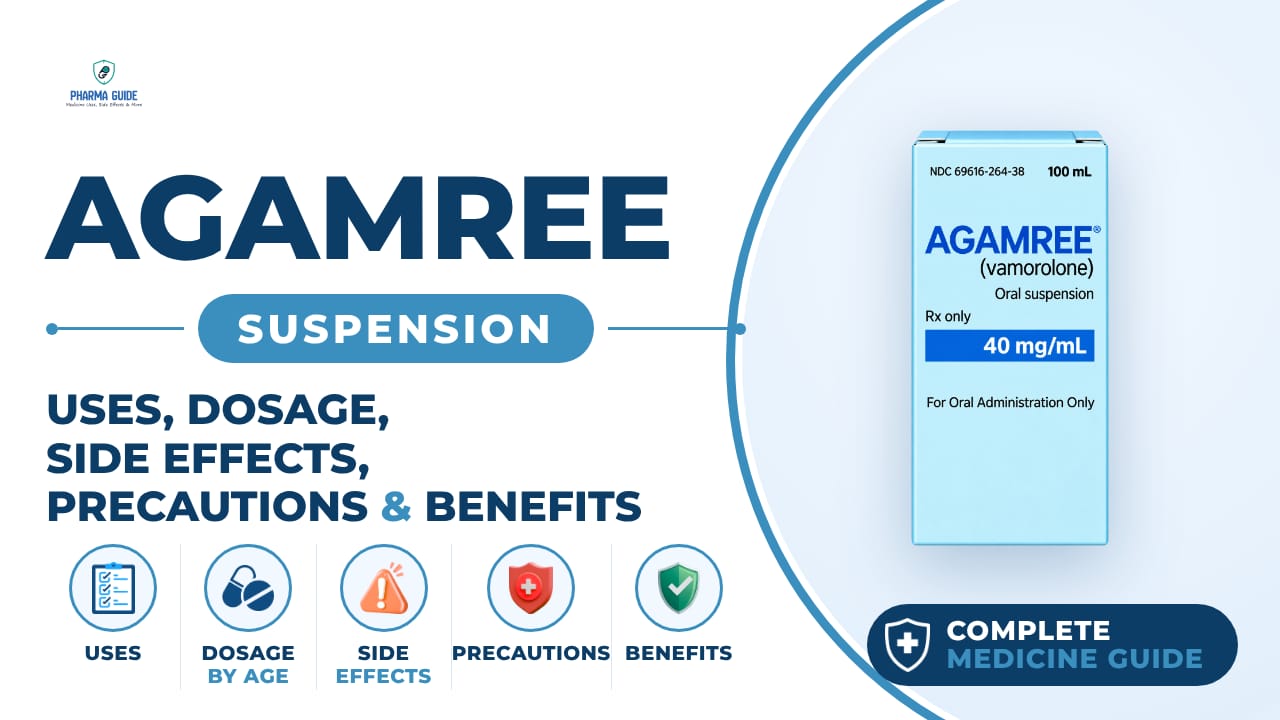
| Generic name | vamorolone |
|---|---|
| Drug class | Corticosteroid (glucocorticoid receptor agonist) |
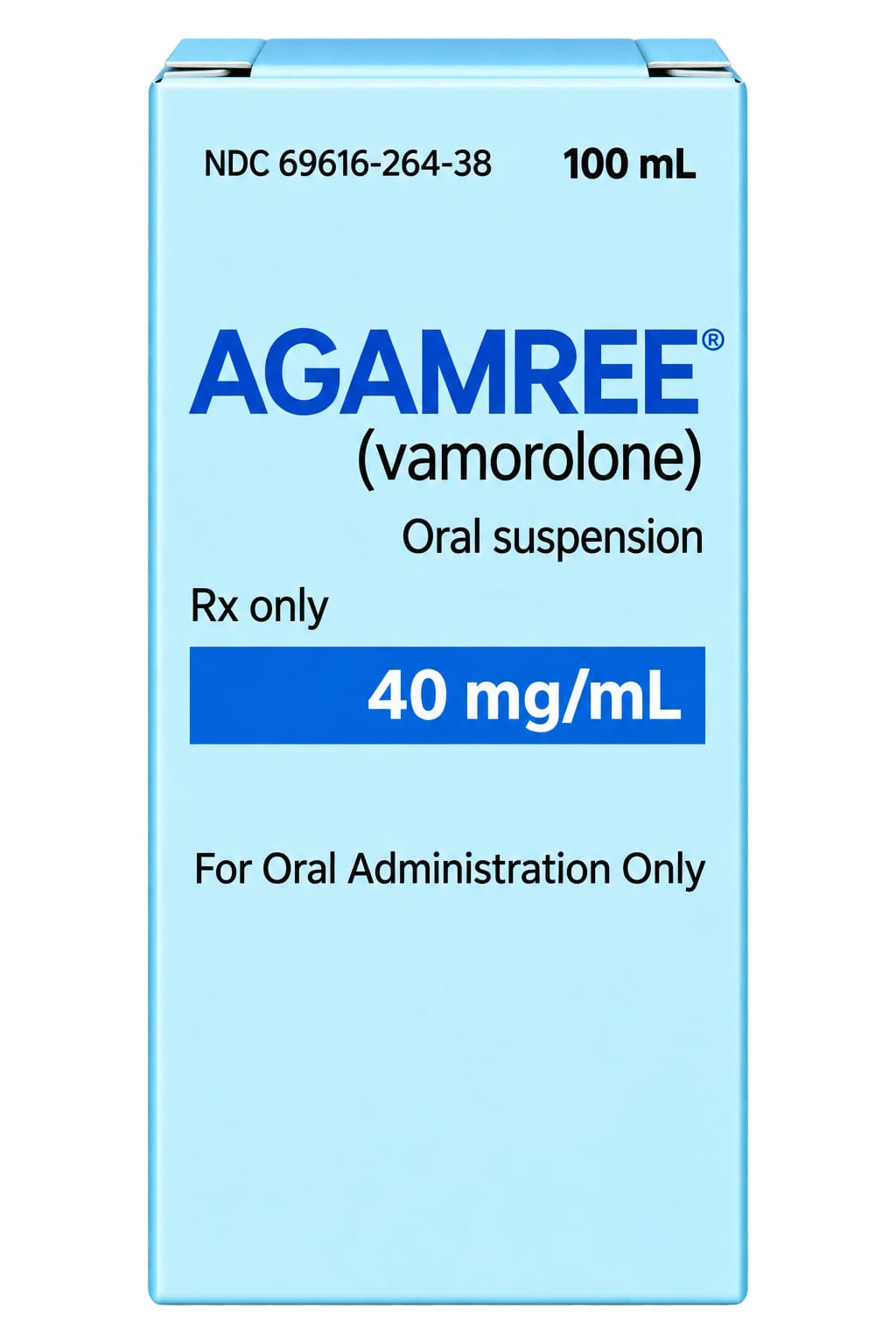
| Forms | Oral Suspension (40 mg/mL) |
Quick overview
Agamree Suspension contains vamorolone, a corticosteroid that acts on the glucocorticoid receptor. It is given as an oral suspension to treat Duchenne muscular dystrophy (DMD) in patients 2 years of age and older, helping to stabilize or improve muscle strength, preserve muscle function, and reduce inflammation associated with the condition. It is taken once daily, preferably with a meal, using the oral syringe provided with the product.
What is Agamree Suspension
Agamree is a corticosteroid medicine that contains vamorolone. It is given as an oral suspension to treat Duchenne muscular dystrophy (DMD), a genetic muscle-wasting disease.
Agamree Suspension uses
- Treatment of Duchenne muscular dystrophy (DMD) in patients 2 years of age and older
- Used to stabilize or improve muscle strength in patients with DMD
- Treats Duchenne muscular dystrophy
- Helps preserve muscle function
- Helps reduce inflammation associated with DMD
Benefits of Agamree Suspension
- Improved Time to Stand velocity compared to placebo in clinical studies
- Improved 6 Minute Walk Test distance compared to placebo
- Improved Time to Run/Walk 10 meters velocity compared to placebo
How Agamree Suspension works
Vamorolone acts on the same receptor as corticosteroids (the glucocorticoid receptor) to reduce inflammation and suppress the immune system. Exactly how it helps muscles in DMD patients is not fully understood.
Agamree Suspension dosage
Take once daily, preferably with a meal. Shake the oral suspension well for about 30 seconds before each use. Use only the oral syringe provided with the product; do not mix the suspension with any liquid before taking it. Dispense the dose directly into the mouth, aiming toward the cheek, and do not push the plunger too fast to avoid choking. Do not stop taking this medicine suddenly or change the dose without talking to your doctor, since the dose needs to be lowered gradually. It can be given through an enteral feeding tube if needed, following the instructions in the feeding tube kit, flushing the tube with water before and after.
| Age group | Dose |
|---|---|
| Under 2 years | Safety and effectiveness are not established |
| 2–5 years | 6 mg/kg once daily, preferably with a meal |
| 18–64 years | 6 mg/kg once daily, preferably with a meal |
| 65 years and older | No separate age-based dosage is established; dosing remains weight-based and clinically individualized |
Available forms and strengths
- Oral Suspension (40 mg/mL)
Side effects of Agamree Suspension
Common
- Cushingoid features (rounded, puffy face)
- Weight gain
- Increased appetite
- Irritability
- Vomiting
- Belly pain
- Diarrhea
- Headache
- Vitamin D deficiency
- Cough
- Rhinitis
- Behavior and mood changes such as anxiety, agitation, aggression, or sleep problems
Serious
- Adrenal insufficiency or adrenal crisis, especially if the medicine is stopped suddenly
- Increased risk of serious or life-threatening infections
- High blood pressure and fluid retention
- Severe behavioral or mood changes, including depression or suicidal thoughts
- Decreased bone mineral density leading to risk of fractures
- Cataracts or glaucoma
- Stomach or bowel perforation in people with certain digestive conditions
- Blood clots (thromboembolic events)
- Severe allergic reaction (anaphylaxis)
Warnings and precautions
- Do not stop this medicine suddenly without talking to your doctor. Stopping suddenly can cause life-threatening adrenal insufficiency.
- This medicine weakens the immune system, raising the risk of new or worsening infections, which can sometimes be severe or fatal and may hide typical signs of infection.
- Avoid exposure to chickenpox or measles while taking this medicine, since these infections can be serious or fatal in people on corticosteroids who are not immune.
- Do not receive live or live-attenuated vaccines while on this medicine; these vaccines should be given at least 4 to 6 weeks before starting treatment.
- This medicine can cause severe mood or behavior changes such as depression, mood swings, or psychosis.
- Long-term use can weaken bones, increasing the risk of fractures.
- This medicine may cause eye problems such as cataracts or glaucoma, especially with use longer than 6 weeks.
- Avoid grapefruit and grapefruit juice while taking this medicine, as they can change how the medicine works.
- Tell your doctor about all other medicines you take, including certain antifungal and antibiotic drugs, seizure medicines, St. John's Wort, and potassium-sparing diuretics, since these can change how this medicine works.
- Corticosteroids like Agamree should only be used during pregnancy if the benefit outweighs the risk to the baby. There is no specific data on using Agamree during pregnancy.
- It is not known whether vamorolone passes into breast milk. Corticosteroids in general can appear in breast milk and may affect the nursing infant, so this should be discussed with a doctor.
- This medicine should be used with caution in people with kidney problems, as corticosteroids can affect blood pressure and fluid balance.
- People with mild to moderate liver problems need a lower dose. This medicine should not be used by people with severe liver problems.
- Alcohol may worsen gastrointestinal or metabolic adverse effects.
- This medicine is not expected to affect your ability to drive or use machines, but discuss this with your doctor based on your condition.
Storage
- Store the unopened bottle upright at room temperature between 68°F to 77°F (20°C to 25°C) in the original carton
- After opening the bottle, store the bottle upright in a refrigerator between 36°F to 46°F (2°C to 8°C)
- Do not freeze
- Throw away any unused oral suspension remaining after 3 months of first opening the bottle
- Keep out of the sight and reach of children
- Do not throw away medicines via wastewater or household waste; ask your pharmacist how to dispose of medicines you no longer use
When to see a doctor
- Get medical help right away if you develop a fever or other signs of infection.
- Seek medical attention if you notice mood or behavior changes, especially feeling depressed or having thoughts of suicide.
- Contact your doctor immediately if you are exposed to chickenpox or measles while on this medicine.
- If you take more than your prescribed dose, contact your doctor or a hospital for advice.
- Tell your doctor if you develop symptoms like excess tiredness, dizziness, or confusion, which may be signs of a life-threatening adrenal crisis.
Alternatives
- Prednisone
- Other specialist-selected corticosteroid therapy
- Deflazacort
- DMD-specific disease-modifying treatments when eligible
Watch the video
FAQs
What is Agamree Suspension used for?
Agamree Suspension is used to treat Duchenne muscular dystrophy (DMD) in patients 2 years of age and older. It helps stabilize or improve muscle strength, preserve muscle function, and reduce inflammation associated with the condition.
How should I take Agamree Suspension?
Agamree Suspension is taken once daily, preferably with a meal, using the oral syringe provided with the product. Shake the suspension well for about 30 seconds before each use, dispense it directly into the mouth aiming toward the cheek, and do not mix it with any liquid before taking it.
What are the common side effects of Agamree Suspension?
Common side effects include Cushingoid features (rounded, puffy face), weight gain, increased appetite, irritability, vomiting, belly pain, diarrhea, headache, vitamin D deficiency, cough, rhinitis, and behavior or mood changes such as anxiety, agitation, aggression, or sleep problems.
Can I stop taking Agamree Suspension suddenly?
No, you should not stop taking Agamree Suspension suddenly without talking to your doctor, as stopping suddenly can cause life-threatening adrenal insufficiency. The dose needs to be lowered gradually.
What should be avoided while taking Agamree Suspension?
While taking Agamree Suspension, avoid grapefruit and grapefruit juice as they can change how the medicine works, avoid exposure to chickenpox or measles since these infections can be serious in people on corticosteroids, and do not receive live or live-attenuated vaccines during treatment.
General information, not medical advice
Your prescriber and the leaflet in your pack know your situation. This page does not.
- Follow your prescriber and the leaflet
- Don't start, stop, or change a dose on your own
- Doses and warnings differ by country and product
Sources
Video
Related medicines

Injectafer Injection: Uses, Dosage, Side Effects, Precautions and Alternates
Iron products
Injectafer (ferric carboxymaltose) treats iron deficiency anemia and heart failure-related iron deficiency via IV. Learn uses, dosage, side effects, and

Gliclazide Tablet: Uses, Dosage, Side Effects, Precautions and Alternates
Sulfonylurea (hypoglycemic/antidiabetic agent)
Gliclazide Tablet is a sulfonylurea for type 2 diabetes that boosts insulin release. Learn about dosage, side effects, warnings, and precautions.