
Safety
General information, not medical advice
Your prescriber and the leaflet in your pack know your situation. This page does not.
- Follow your prescriber and the leaflet
- Don't start, stop, or change a dose on your own
- Doses and warnings differ by country and product
Aggrenox Capsule: Uses, Dosage, Side Effects, Precautions and Alternates
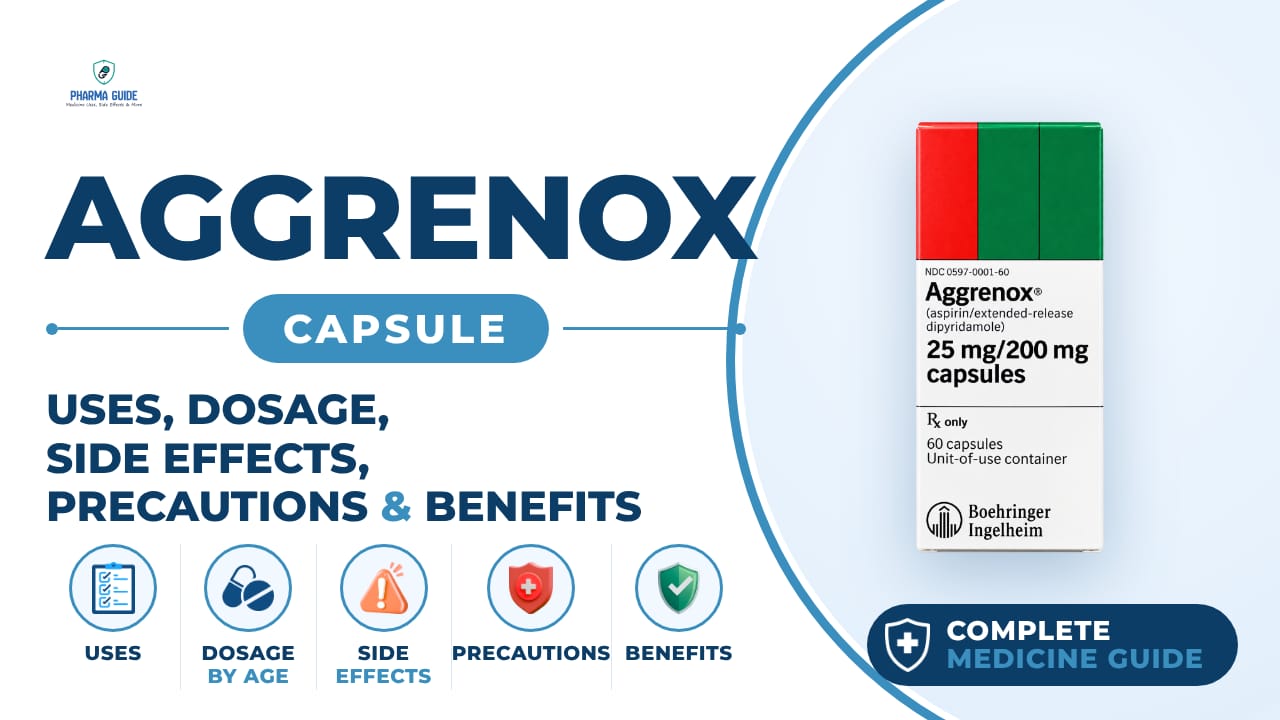
| Generic name | Dipyridamole/Acetylsalicylic Acid (ASA) |
|---|---|
| Drug class | Antiplatelet agent |
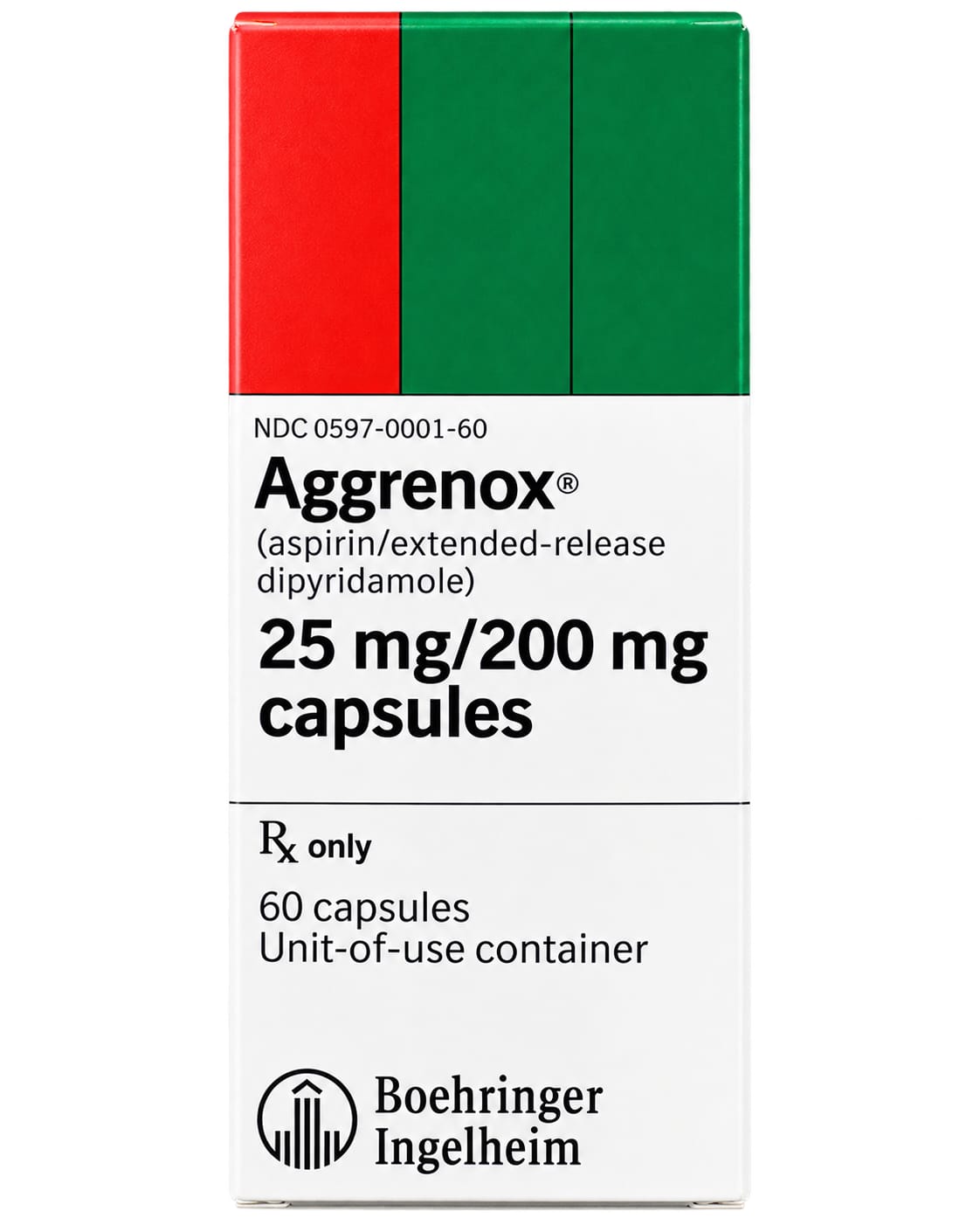
| Forms | Capsules (200 mg extended-release dipyridamole / 25 mg immediate-release acetylsalicylic acid) |
Quick overview
Aggrenox Capsule combines extended-release dipyridamole and immediate-release aspirin (acetylsalicylic acid), an antiplatelet medicine that helps stop blood platelets from clumping together to form clots. It is used to help prevent recurrent ischemic stroke and may be given after a transient ischemic attack (TIA). The capsule is taken twice daily and carries risks of bleeding and other side effects that require attention.
What is Aggrenox Capsule
Aggrenox is a capsule that combines two medicines, extended-release dipyridamole and immediate-release aspirin (ASA). It belongs to a group of medicines called antiplatelet drugs that help stop blood cells called platelets from clumping together to form clots.
Aggrenox Capsule uses
- Helps prevent recurrent ischemic stroke
- Used after a transient ischemic attack (TIA)
- Reduces platelet clumping
- Helps lower the risk of forming harmful blood clots
Benefits of Aggrenox Capsule
- Helps reduce the risk of recurrent ischemic stroke
- Helps prevent blood clot formation
- Used after certain transient ischemic attacks (TIA)
- Combines two different antiplatelet mechanisms
How Aggrenox Capsule works
Aggrenox works by stopping blood platelets from sticking together and forming early clots. The aspirin part blocks a substance that causes platelets to clump, while the dipyridamole part increases a natural substance that keeps platelets from sticking together.
Aggrenox Capsule dosage
Take one capsule twice daily, one in the morning and one in the evening, with or without food. Swallow the capsule whole. Do not chew, crush, or open it.
If you get intolerable headaches when starting treatment, your doctor may have you take one capsule at bedtime along with a low dose of aspirin alone in the morning until headaches ease, usually within about a week, before returning to the normal twice-daily schedule.
Not recommended for children or teenagers under 18 years of age.
If you miss a dose, take it as soon as you remember, but if it is almost time for your next dose, skip the missed dose and continue your regular schedule. Do not take a double dose.
| Age group | Dose |
|---|---|
| Under 18 years | Safety and effectiveness are not established |
| 18–64 years | 1 capsule twice daily |
| 65–74 years | Usually 1 capsule twice daily, with closer monitoring for bleeding |
Available forms and strengths
- Capsules (200 mg extended-release dipyridamole / 25 mg immediate-release acetylsalicylic acid)
Side effects of Aggrenox Capsule
Common
- Headache
- Dizziness
- Dyspepsia (indigestion/heartburn)
- Diarrhea
- Nausea
- Abdominal pain
- Upset stomach
Serious
- Allergic reaction (hives, swelling of face, lips, tongue, or throat, difficulty breathing)
- Internal or stomach bleeding (easy bruising, bleeding nose or gums, bloody urine, dark or tarry stools, vomit that looks like coffee grounds, persistent stomach pain)
- Bleeding inside the brain (confusion, memory problems, severe headache, fainting)
- Stomach ulcers or gastritis
- Anaemia (fatigue, breathlessness, loss of stamina, fast heartbeat)
- Worsening of heart problems such as angina (weakness, pain, breathlessness)
- Liver problems (upper stomach pain, itching, loss of appetite, dark urine, pale stools, yellowing of skin or eyes)
- Kidney problems (reduced urination, swelling, foamy or bloody urine)
- Very low blood pressure (dizziness, lightheadedness, fainting, confusion)
- Hearing problems or ringing in the ears
Warnings and precautions
- Aggrenox should not be used in the last three months of pregnancy. In the first two trimesters, it should only be used if your doctor decides the benefit to you outweighs the possible risk to the baby.
- Both parts of this medicine pass into breast milk, so it should only be used while breastfeeding if your doctor decides the benefit to you outweighs the possible risk to your baby.
- This medicine should be avoided in people with severe kidney failure because of the aspirin component. It should also be avoided in people with severe liver problems because of the aspirin component.
- Drinking alcohol, especially three or more drinks a day, while taking this medicine can increase the risk of bleeding, including stomach bleeding.
- This medicine can cause dizziness or confusion. If this happens, avoid driving or operating machinery.
- Do not use Aggrenox if you are allergic to aspirin or NSAIDs, or if you have asthma along with nasal polyps, as this can cause a severe allergic reaction.
- Do not give this medicine to children or teenagers who have a viral infection such as flu or chicken pox, because of the risk of a rare but serious condition called Reye's syndrome.
- Avoid taking other medicines that contain aspirin or NSAIDs, such as ibuprofen or naproxen, without checking with your doctor, since long-term use of ibuprofen may make this medicine less effective and combining them can raise the risk of bleeding.
- This medicine increases the risk of bleeding, including serious bleeding in the stomach or brain.
- If you need surgery, your doctor may have you stop taking this medicine about 10 days beforehand to reduce bleeding risk.
- Use with caution if you have severe coronary artery disease, since this medicine can widen blood vessels and may worsen chest pain.
- Avoid this medicine if you have an active stomach ulcer or a bleeding disorder, since the aspirin component can irritate the stomach lining and increase bleeding.
- People with myasthenia gravis may need their other medicines adjusted, since this medicine can interfere with drugs used to treat that condition.
Storage
- Store at 15 to 30°C.
- Protect from excessive moisture.
- Keep in the sealed container provided by your doctor or pharmacist.
- Keep out of the reach of children.
- Do not use the medicine after the expiry date printed on the label.
When to see a doctor
- Get emergency help right away if you have signs of a serious allergic reaction, such as hives, difficulty breathing, or swelling of the face, lips, tongue, or throat.
- Call your doctor right away if you notice signs of bleeding, such as vomiting blood or material that looks like coffee grounds, black or bloody stools, or bleeding that will not stop.
- Seek medical help immediately if you experience confusion, memory problems, a severe headache, or fainting, as these can be signs of bleeding in the brain.
- Contact your doctor if you develop a severe headache, especially when you first start this medicine.
- Call your doctor if you have new or worsening chest pain, or if you feel like you might faint.
- Get medical help if you have signs of liver problems, such as yellowing of the skin or eyes, dark urine, pale stools, loss of appetite, or stomach pain.
- If you think you or someone else has taken too much of this medicine, get medical help immediately even if there are no symptoms yet.
Alternatives
- Clopidogrel
- Aspirin alone
- Dipyridamole-based antiplatelet therapy
Watch the video
FAQs
What is Aggrenox Capsule used for?
Aggrenox is used to help prevent recurrent ischemic stroke and may be given after a transient ischemic attack (TIA). It works by reducing platelet clumping to lower the risk of harmful blood clots.
How should Aggrenox Capsule be taken?
Take one capsule twice daily, one in the morning and one in the evening, with or without food. Swallow the capsule whole without chewing, crushing, or opening it.
What should I do if I miss a dose of Aggrenox?
If you miss a dose, take it as soon as you remember, but if it is almost time for your next dose, skip the missed dose and continue your regular schedule. Do not take a double dose.
What are the serious side effects of Aggrenox Capsule?
Serious side effects include internal or stomach bleeding, bleeding inside the brain, stomach ulcers or gastritis, anaemia, liver or kidney problems, very low blood pressure, and allergic reactions.
Can Aggrenox Capsule be used during pregnancy?
Aggrenox should not be used in the last three months of pregnancy. In the first two trimesters, it should only be used if your doctor decides the benefit outweighs the possible risk to the baby.
General information, not medical advice
Your prescriber and the leaflet in your pack know your situation. This page does not.
- Follow your prescriber and the leaflet
- Don't start, stop, or change a dose on your own
- Doses and warnings differ by country and product
Sources
Video
Related medicines

Injectafer Injection: Uses, Dosage, Side Effects, Precautions and Alternates
Iron products
Injectafer (ferric carboxymaltose) treats iron deficiency anemia and heart failure-related iron deficiency via IV. Learn uses, dosage, side effects, and

Gliclazide Tablet: Uses, Dosage, Side Effects, Precautions and Alternates
Sulfonylurea (hypoglycemic/antidiabetic agent)
Gliclazide Tablet is a sulfonylurea for type 2 diabetes that boosts insulin release. Learn about dosage, side effects, warnings, and precautions.