
Safety
General information, not medical advice
Your prescriber and the leaflet in your pack know your situation. This page does not.
- Follow your prescriber and the leaflet
- Don't start, stop, or change a dose on your own
- Doses and warnings differ by country and product
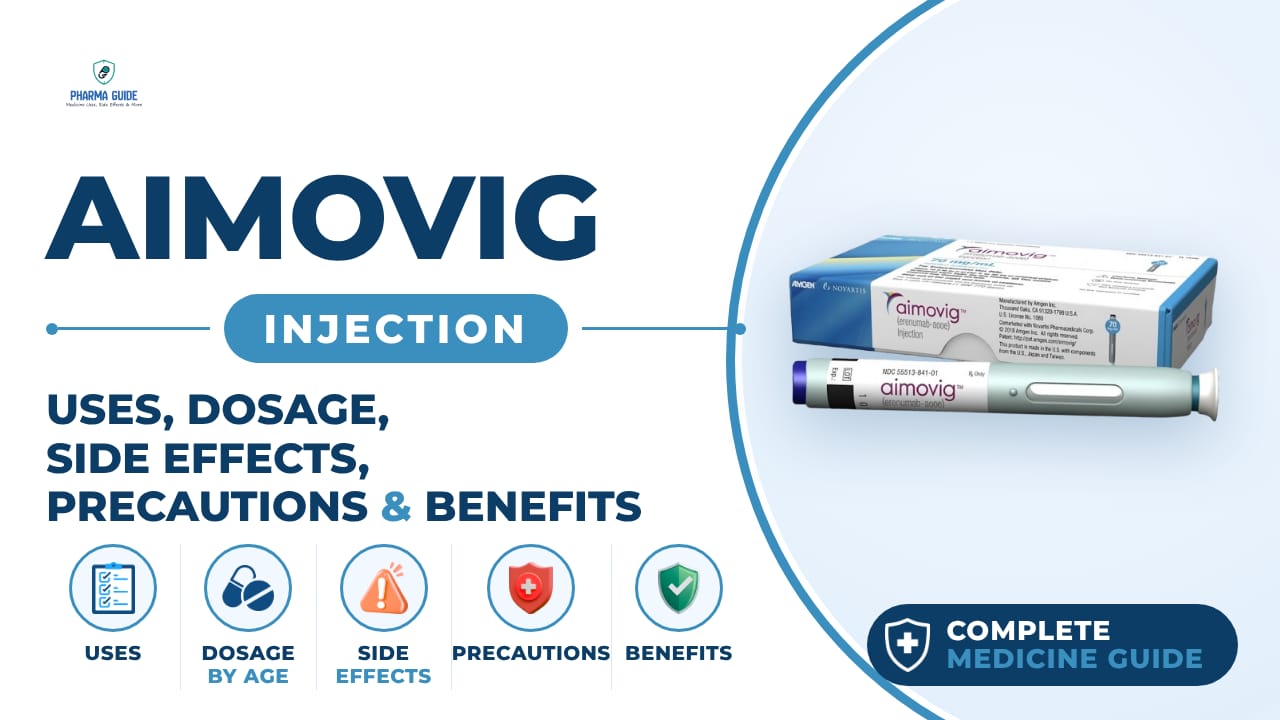
Aimovig Injection: Uses, Dosage, Side Effects, Precautions and Alternates
| Generic name | erenumab-aooe |
|---|---|
| Drug class | CGRP inhibitor (calcitonin gene-related peptide receptor antagonist); monoclonal antibody |
| Forms | Injection |
Quick overview
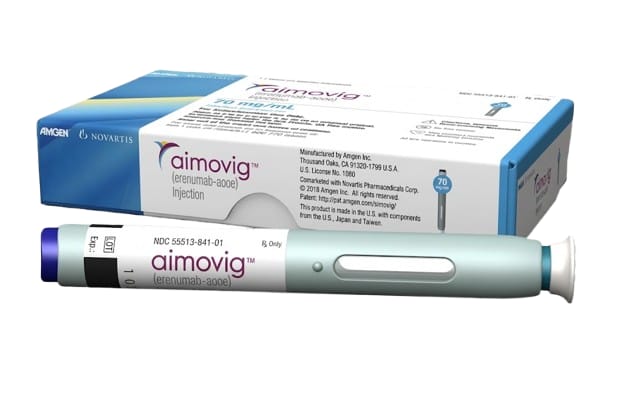
Aimovig Injection (erenumab-aooe) is a prescription CGRP inhibitor given as a once-monthly injection to help prevent migraine in adults. It is a monoclonal antibody biologic, and no generic or biosimilar version is currently available. Aimovig is used for both episodic and chronic migraine prevention and works by blocking a protein involved in migraine pain.
What is Aimovig Injection
Aimovig is a prescription medicine given as a once-monthly injection to help prevent migraine in adults. It is a biologic drug called a monoclonal antibody, which is a lab-made protein that works like antibodies naturally found in the body. There is no generic or biosimilar version available.
Aimovig Injection uses
- Preventive treatment of migraine in adults, including both episodic migraine (fewer than 15 headache days a month) and chronic migraine (15 or more headache days a month)
Benefits of Aimovig Injection
- Can reduce the number of migraine days per month
- May take effect within about a month, with continued improvement over several months
- Tends to cause fewer drug interactions and side effects than many other migraine prevention drugs because it works on only one protein
- Can be self-injected at home once a month instead of taking a daily pill
How Aimovig Injection works
Aimovig blocks a protein called CGRP from attaching to its receptor on brain cells. CGRP normally causes inflammation and widening of blood vessels in the brain, which can lead to migraine pain. By blocking this activity, Aimovig helps prevent migraines before they start.
Aimovig Injection dosage
Aimovig is given as an injection under the skin (subcutaneous) once a month, at any time of day, with or without food. It is used in the stomach area (avoiding the 2 inches around the navel), the front of the thighs, or the outer upper arm (upper arm only if someone else gives the injection). It should only be self-injected after a healthcare provider has shown you how to do it.
Take the injection out of the refrigerator and let it sit at room temperature for about 30 minutes before injecting. Keep it away from direct sunlight and do not warm it with heat or a microwave. Do not shake the syringe or autoinjector before use. Check the label each time to make sure you have the correct medicine and dose. Do not inject into skin that is red, bruised, tender, or hard.
Each prefilled syringe or autoinjector is for one use only and should be thrown away after use, even if some medicine is left. If a dose is missed, take it as soon as you remember, then resume the monthly schedule from that new date. Safety and effectiveness have not been established in children.
| Age group | Dose |
|---|---|
| Under 18 years | Not recommended |
| 18–60 years | 70 mg, once/month |
| 60+ years | 70 mg, once/month |
Available forms and strengths
- Injection
Side effects of Aimovig Injection
Common
- Pain, redness, swelling, or other reactions at the injection site
- Constipation
- Muscle cramps or spasms
- Upper respiratory infections (such as a cold or sinus infection)
- Flu-like symptoms
- Back pain
Serious
- Allergic reactions, including rash, swelling of the face/lips/tongue/throat, trouble breathing, or hives
- Severe constipation, sometimes needing hospital care or surgery
- New or worsening high blood pressure
- Raynaud's phenomenon (fingers or toes feeling cold, numb, painful, or changing color)
- Hair loss (reported after approval)
Warnings and precautions
- Aimovig can cause serious allergic reactions, including rash, swelling, and anaphylaxis. These reactions can happen anywhere from a few hours to more than a week after the injection. If a serious reaction happens, stop using Aimovig and get medical help right away.
- Do not use Aimovig if you have had a serious allergic reaction to erenumab-aooe or any of its ingredients.
- The needle cover on the autoinjector and prefilled syringe contains dry natural rubber (a form of latex), which may cause allergic reactions in people sensitive to latex.
- Aimovig can cause new or worsened high blood pressure, which can happen at any time but often appears within the first week after the first dose.
- Aimovig can cause or worsen Raynaud's phenomenon, a circulation problem that can make fingers or toes feel cold, numb, or painful, or change color.
- Aimovig only prevents migraines — it does not treat a migraine that has already started.
- It isn't known whether Aimovig is safe to use during pregnancy or if it could harm an unborn baby. Untreated migraine itself may raise certain pregnancy risks, so the benefit of preventing migraines may outweigh potential risks.
- A pregnancy registry collects information from women who use this medicine while pregnant.
- It isn't known whether Aimovig passes into breast milk or whether it's safe during breastfeeding. Talk with your doctor about the best way to feed your baby while using this medicine.
- Aimovig's processing in the body does not appear to differ in people with mild or moderate kidney problems compared with those with normal kidney function. Severe kidney impairment has not been studied.
- Liver problems are not expected to change how Aimovig works in the body, though no specific studies were done in people with liver impairment.
- There is no known direct interaction between Aimovig and alcohol, but alcohol can still trigger or worsen migraines in some people.
Storage
- Store in the refrigerator between 36°F to 46°F (2°C to 8°C)
- Keep it in its original carton to protect it from light
- Once removed from the refrigerator, it can be stored at room temperature (up to 77°F/25°C) for up to 7 days
- Throw away the medicine if it has been at room temperature for more than 7 days
- Do not put it back in the refrigerator once it has reached room temperature
- Do not freeze
- Do not shake
- Keep out of the reach of children
- Place used syringes or autoinjectors in a puncture-proof sharps disposal container right away after use; do not throw them in household trash; follow your local community guidelines for disposing of the sharps container
When to see a doctor
- Get emergency help right away if you have symptoms of a severe allergic reaction, such as swelling of the face, lips, tongue, or throat, trouble breathing, wheezing, hives, or a racing heart.
- Contact your healthcare provider right away if you have severe constipation along with ongoing belly pain, vomiting, or swelling or bloating of the stomach area.
- Get medical attention right away if your blood pressure reading is very high (top number 180 or higher, or bottom number 120 or higher), or if you have a sudden severe headache, chest pain, confusion, trouble breathing, or vision changes.
- Contact your healthcare provider if your fingers or toes become numb, cool, painful, or change color, as this may be a sign of a circulation problem.
- If you think you have used too much Aimovig, get medical help right away or contact a poison control center.
Alternatives
- Nurtec ODT
- Vyepti
- Emgality
Watch the video
FAQs
What is Aimovig Injection used for?
Aimovig is used for preventive treatment of migraine in adults, including both episodic migraine (fewer than 15 headache days a month) and chronic migraine (15 or more headache days a month).
How does Aimovig Injection work?
Aimovig blocks a protein called CGRP from attaching to its receptor on brain cells. CGRP normally causes inflammation and widening of blood vessels in the brain, which can lead to migraine pain, so blocking this activity helps prevent migraines before they start.
What is the dosage for Aimovig Injection?
Aimovig is given as a 70 mg subcutaneous injection once a month for adults, at any time of day, with or without food.
What are the common side effects of Aimovig Injection?
Common side effects include pain, redness, swelling, or other reactions at the injection site, constipation, muscle cramps or spasms, upper respiratory infections, flu-like symptoms, and back pain.
How should Aimovig Injection be stored?
Store Aimovig in the refrigerator between 36°F to 46°F (2°C to 8°C) in its original carton to protect it from light. Once removed, it can be kept at room temperature (up to 77°F/25°C) for up to 7 days, but should not be put back in the refrigerator or frozen.
General information, not medical advice
Your prescriber and the leaflet in your pack know your situation. This page does not.
- Follow your prescriber and the leaflet
- Don't start, stop, or change a dose on your own
- Doses and warnings differ by country and product
Sources
Video
Related medicines

Injectafer Injection: Uses, Dosage, Side Effects, Precautions and Alternates
Iron products
Injectafer (ferric carboxymaltose) treats iron deficiency anemia and heart failure-related iron deficiency via IV. Learn uses, dosage, side effects, and

Gliclazide Tablet: Uses, Dosage, Side Effects, Precautions and Alternates
Sulfonylurea (hypoglycemic/antidiabetic agent)
Gliclazide Tablet is a sulfonylurea for type 2 diabetes that boosts insulin release. Learn about dosage, side effects, warnings, and precautions.