
Safety
General information, not medical advice
Your prescriber and the leaflet in your pack know your situation. This page does not.
- Follow your prescriber and the leaflet
- Don't start, stop, or change a dose on your own
- Doses and warnings differ by country and product
Airomir Inhaler: Uses, Dosage, Side Effects, Precautions and Alternates
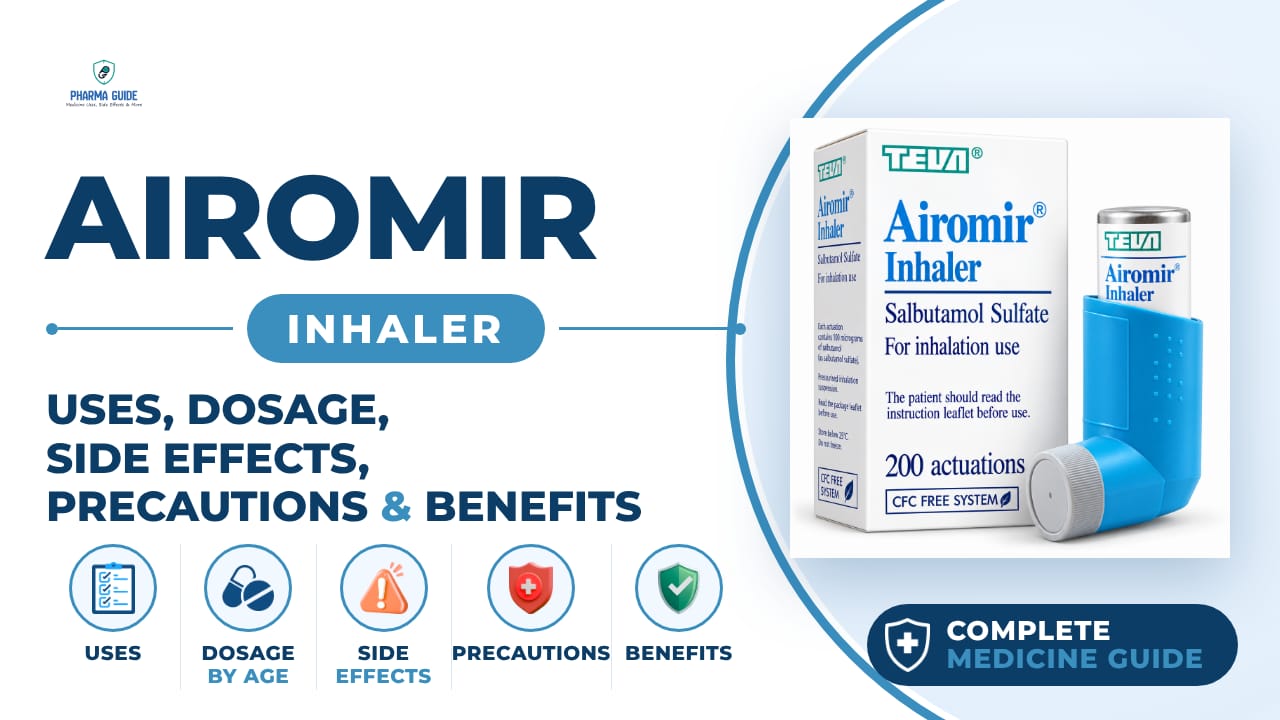
| Generic name | Salbutamol sulfate |
|---|---|
| Drug class | Short-Acting Beta2-Agonist (SABA) / bronchodilator |
| Forms | Pressurised metered-dose inhaler (Autohaler, breath-actuated), Pressurised metered-dose inhaler (standard press-and-breathe Inhaler) |
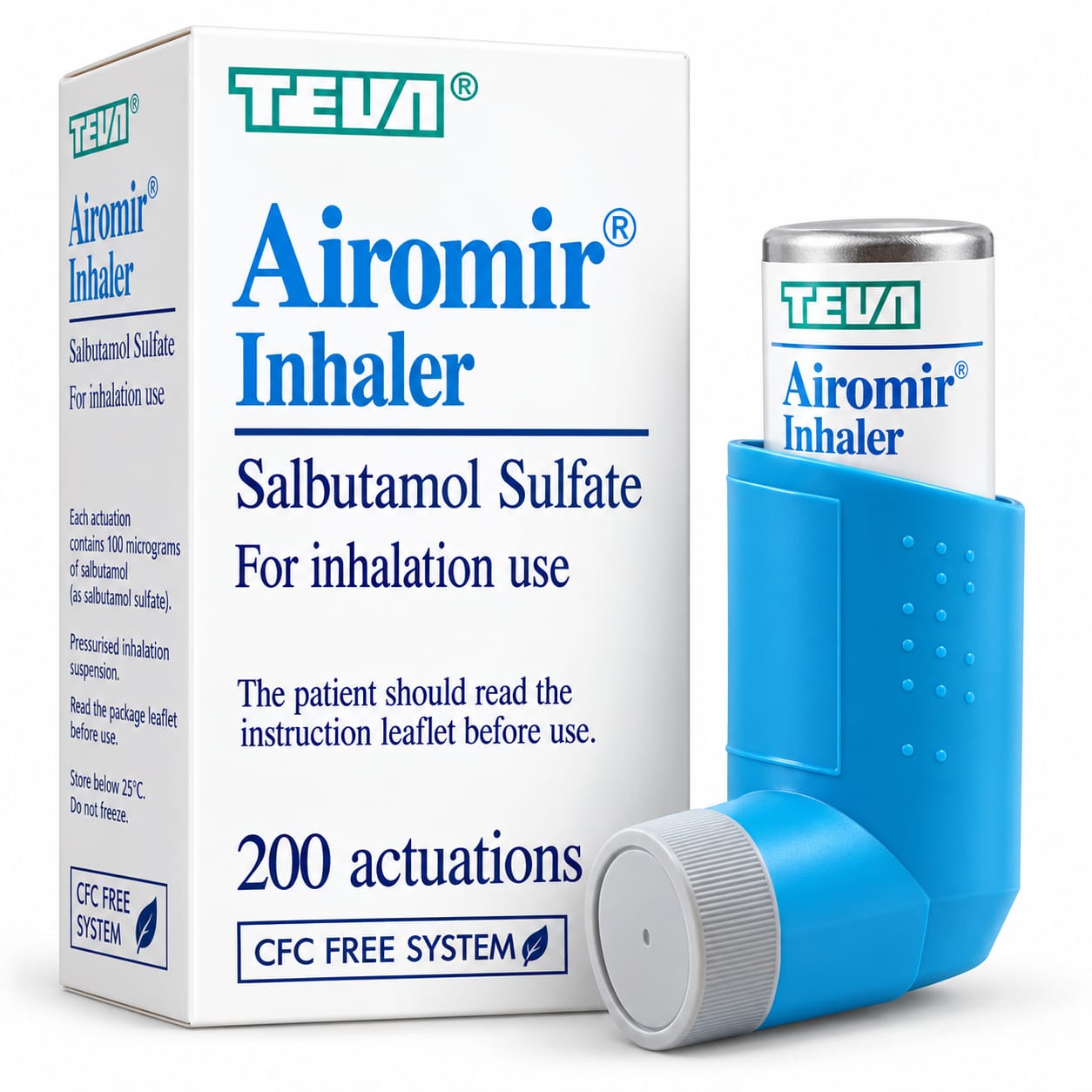
Quick overview
Airomir Inhaler contains salbutamol sulfate, a short-acting beta2-agonist (bronchodilator). It is a breath-actuated or press-and-breathe inhaler used as a quick-relief treatment for asthma and similar breathing conditions. It works within minutes to relax the muscles around the airways, easing wheezing, tightness, and breathlessness. It can also be used shortly before exercise to help prevent exercise-induced breathing difficulties.
What is Airomir Inhaler
Airomir is a breath-actuated or press-and-breathe inhaler containing salbutamol sulfate, a medicine that quickly relaxes the muscles around the airways to make breathing easier. It is used as a quick-relief ('reliever') treatment for asthma and similar breathing conditions.
Airomir Inhaler uses
- Quick relief of sudden asthma symptoms like wheezing, chest tightness, and breathlessness
- Relief and prevention of bronchospasm in asthma, chronic bronchitis, and other chronic lung conditions
- Prevention of exercise-induced breathing difficulties when used shortly before physical activity
Benefits of Airomir Inhaler
- Works within minutes to relieve tight, wheezy airways
- Breath-actuated design (Autohaler) releases the dose automatically when you breathe in, making it easier to use correctly
- Can be used before exercise to stop symptoms from starting
How Airomir Inhaler works
Salbutamol attaches to receptors in the muscles around the airways, signalling them to relax. This widens the airways so more air can move in and out of the lungs, quickly easing tightness and wheezing.
Airomir Inhaler dosage
Use as needed to relieve symptoms, or shortly before exercise to help prevent symptoms. Shake the inhaler well before each use. Breathe out fully away from the mouthpiece before taking a puff, then close your lips around it and breathe in slowly and deeply. Hold your breath for about 10 seconds after inhaling, then breathe out slowly. If a second puff is needed, wait about one minute before repeating the steps.
If the inhaler is new or hasn't been used for two weeks or more, release a few test puffs into the air away from your face before using it. Children should be supervised by a responsible adult to make sure they use the inhaler correctly. If you also use a steroid inhaler, use this inhaler first, wait a few minutes, then use the steroid inhaler. Clean the mouthpiece regularly with warm water and let it air dry fully to stop it clogging. There is no 'missed dose' for this medicine since it is used only when needed for symptoms or before exercise.
| Age group | Dose |
|---|---|
| Under 4 years | Routine inhaler dosing is not well established; specialist-directed treatment is required |
| 4–11 years | Usually 100 mcg (1 puff) as needed; may be increased to 200 mcg (2 puffs) if required |
| 18–64 years | Usually 100–200 mcg (1–2 puffs) as needed |
| 65–74 years | Generally follows the standard adult dose |
Available forms and strengths
- Pressurised metered-dose inhaler (Autohaler, breath-actuated)
- Pressurised metered-dose inhaler (standard press-and-breathe Inhaler)
Side effects of Airomir Inhaler
Common
- Headache
- Fine shaking or trembling of the hands (tremor)
- Mild irritation of the mouth or throat
- Feeling tense or nervous
- Dizziness or lightheadedness
- Muscle cramps or leg cramps
- Nausea
- Unusual taste in the mouth
- Dry or irritated throat
- Cough
- Drowsiness or feeling tired/weak
- Trouble sleeping
- Flushing
Serious
- Chest pain
- Heart palpitations (racing, pounding, or irregular heartbeat)
- Signs of a severe allergic reaction: swelling of the face, lips, tongue, or throat; difficulty breathing; severe skin rash
- Sudden worsening of breathing difficulties right after use (paradoxical bronchospasm)
- Low potassium levels in the blood causing muscle weakness or spasms
- In children, hallucinations (seeing or hearing things that are not there) - very rare
Warnings and precautions
- If your usual dose stops working as well, or doesn't last as long as usual, this can mean your asthma is getting worse — get medical help straight away rather than repeating doses without effect.
- Do not use more puffs or use it more often than directed, since overuse can be dangerous and can cause fast or irregular heartbeat, shakiness, nervousness, headache, and low potassium levels.
- People with heart problems, high blood pressure, overactive thyroid, diabetes, or low blood potassium need special caution and should discuss this with their doctor before use.
- Do not use this medicine if you are allergic to salbutamol sulfate or any of its other ingredients.
- Certain other medicines can interact with Airomir, including beta-blockers, diuretics (water pills), digoxin, and other bronchodilators or theophylline, which can change how well it works or raise the risk of side effects.
- Airomir should not be used in pregnancy unless your doctor decides it is clearly necessary, as the medicine can cross to the baby.
- Salbutamol passes into breast milk and the effect on a nursing baby isn't known, so only use it while breastfeeding if your doctor says it's essential.
- No specific dose change is usually needed for kidney problems, but caution and medical supervision are advised.
- No specific dose change is usually needed for liver problems, but caution and medical supervision are advised.
- No major direct interaction with alcohol is established.
- Airomir can cause dizziness or lightheadedness in some people, so don't drive or use machinery until you know how it affects you.
Storage
- Store below 30°C. Protect from heat and direct sunlight.
- Do not store in a bathroom or near a sink. Keep it dry.
- Keep the mouthpiece cover on when not in use to keep it clean.
- Keep out of sight and reach of children.
- Do not puncture or incinerate the canister, even when empty.
- If your medicine is out of date or no longer needed, return it to your pharmacy for safe disposal.
When to see a doctor
- Get medical help immediately if you think you've used too much of this medicine, even if you feel fine.
- Stop using Airomir and get medical help right away if you have chest pain, heart palpitations, signs of a severe allergic reaction (swelling of face, lips, tongue, or throat; difficulty breathing; severe rash), or if your breathing suddenly gets worse right after using it.
- Contact your doctor urgently if your usual dose stops working as well or doesn't last as long as before.
Alternatives
- Ventolin
- Salbutamol inhaler
- Albuterol inhaler
- Terbutaline inhaler
Watch the video
FAQs
What is Airomir Inhaler used for?
Airomir is a quick-relief inhaler used to ease sudden asthma symptoms such as wheezing, chest tightness, and breathlessness, and to relieve or prevent bronchospasm in asthma, chronic bronchitis, and other chronic lung conditions. It can also be used shortly before exercise to prevent exercise-induced breathing difficulties.
How quickly does Airomir Inhaler work?
Airomir works within minutes to relax the muscles around the airways, widening them so more air can move in and out of the lungs and easing wheezing, tightness, and breathlessness.
What is the dosage of Airomir Inhaler for adults?
Adults aged 18–64 usually use 100–200 mcg (1–2 puffs) as needed to relieve symptoms or shortly before exercise. The inhaler should be shaken well before use, and if a second puff is needed, wait about one minute before repeating the steps.
What are the common side effects of Airomir Inhaler?
Common side effects include headache, tremor, mild irritation of the mouth or throat, feeling tense or nervous, dizziness, muscle cramps, nausea, unusual taste, cough, drowsiness, trouble sleeping, and flushing.
Can Airomir Inhaler be used during pregnancy or breastfeeding?
Airomir should not be used in pregnancy unless a doctor decides it is clearly necessary, as it can cross to the baby. It also passes into breast milk, so it should only be used while breastfeeding if a doctor says it's essential.
General information, not medical advice
Your prescriber and the leaflet in your pack know your situation. This page does not.
- Follow your prescriber and the leaflet
- Don't start, stop, or change a dose on your own
- Doses and warnings differ by country and product
Sources
Video
Related medicines

Injectafer Injection: Uses, Dosage, Side Effects, Precautions and Alternates
Iron products
Injectafer (ferric carboxymaltose) treats iron deficiency anemia and heart failure-related iron deficiency via IV. Learn uses, dosage, side effects, and

Gliclazide Tablet: Uses, Dosage, Side Effects, Precautions and Alternates
Sulfonylurea (hypoglycemic/antidiabetic agent)
Gliclazide Tablet is a sulfonylurea for type 2 diabetes that boosts insulin release. Learn about dosage, side effects, warnings, and precautions.