
Safety
General information, not medical advice
Your prescriber and the leaflet in your pack know your situation. This page does not.
- Follow your prescriber and the leaflet
- Don't start, stop, or change a dose on your own
- Doses and warnings differ by country and product
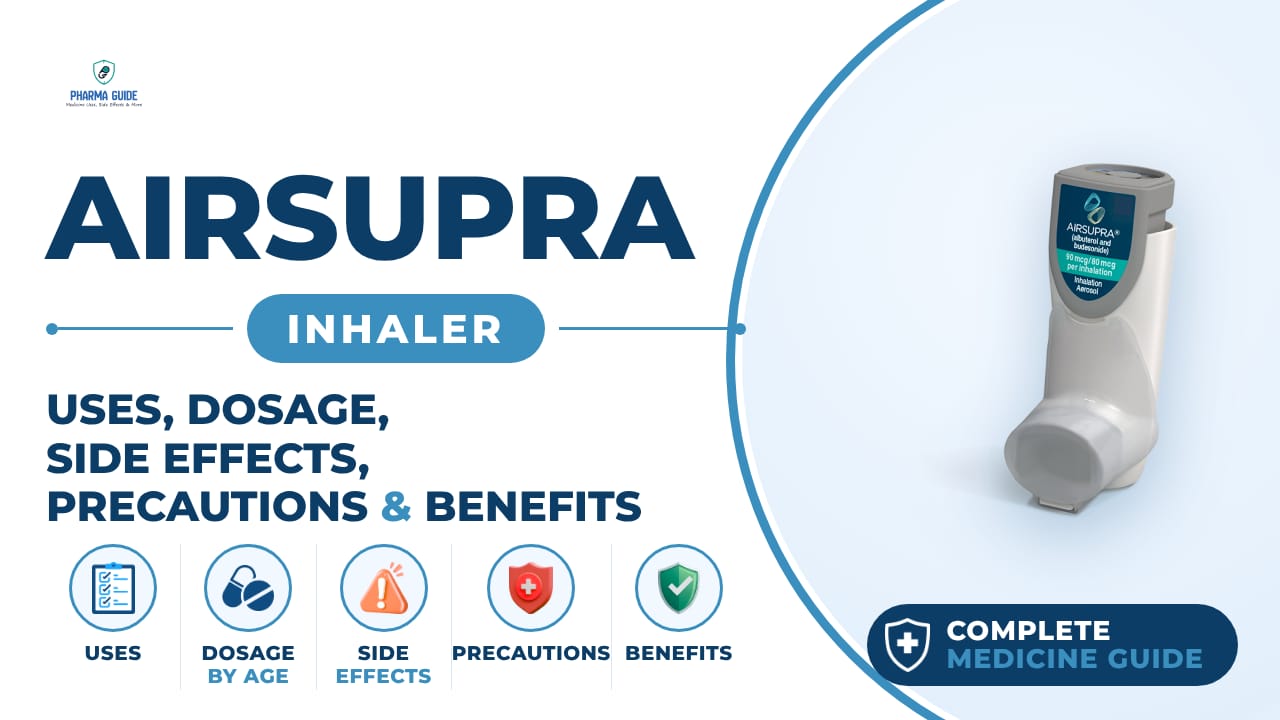
Airsupra Inhaler: Uses, Dosage, Side Effects, Precautions and Alternates
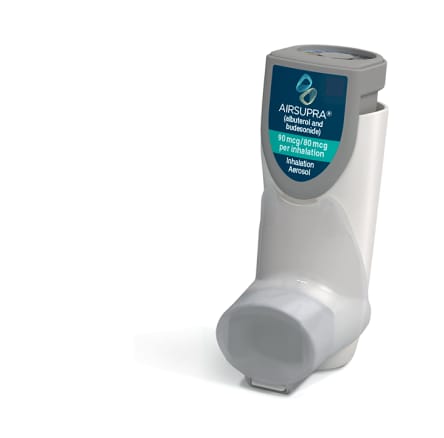
| Generic name | albuterol and budesonide |
|---|---|
| Drug class | Antiasthmatic combinations |
| Forms | Inhalation aerosol (pressurized metered dose inhaler) |
Quick overview
Airsupra is a prescription rescue inhaler that combines albuterol sulfate, a short-acting medicine that relaxes airway muscles, with budesonide, a corticosteroid that reduces lung inflammation. It is used as needed to treat or prevent asthma symptoms and is not meant to be used as a daily maintenance medicine. It belongs to the antiasthmatic combinations drug class.
What is Airsupra Inhaler
Airsupra is a prescription rescue inhaler that combines two medicines in one device: albuterol sulfate, a short-acting medicine that relaxes airway muscles, and budesonide, a corticosteroid that reduces lung inflammation. It is used as needed, not as a daily maintenance medicine.
Airsupra Inhaler uses
- Used as needed as a rescue inhaler to treat or prevent asthma symptoms like tight airways, wheezing, cough, and shortness of breath
- Used to help prevent sudden severe asthma attacks
Benefits of Airsupra Inhaler
- Helps widen airways quickly for easier breathing
- Helps reduce lung inflammation that can cause breathing difficulty
- Shown to reduce the risk of severe asthma flare-ups compared to albuterol alone
How Airsupra Inhaler works
Airsupra contains two medicines that work differently: albuterol relaxes the smooth muscles around the airways so they open up and breathing becomes easier, while budesonide reduces inflammation in the lungs that can cause breathing problems.
Airsupra Inhaler dosage
Airsupra is for oral inhalation only. Use the inhaler exactly as your healthcare provider tells you to. Prime the inhaler before using it for the first time by spraying test puffs into the air, shaking well before each one. Re-prime the inhaler if it hasn't been used for more than 7 days, if it is dropped, or after cleaning it. Shake the inhaler well before each use.
Breathe out fully before placing the mouthpiece in your mouth, then breathe in slowly and deeply while spraying one puff. Hold your breath for as long as you can, up to 10 seconds, after each puff. Immediately repeat the inhaling steps to take a second puff, since two puffs make one dose.
Rinse your mouth with water after use, without swallowing it, to lower the chance of getting a mouth and throat fungal infection (thrush). Rinse the white actuator once a week and let it air-dry before reassembling and re-priming the inhaler.
Do not change or stop other asthma medicines without talking to your healthcare provider first. This inhaler is not for use as a daily maintenance treatment; keep taking any separate long-term asthma control medicine as prescribed. It is not known to be safe and effective for use in children.
| Age group | Dose |
|---|---|
| Under 18 years | Safety and effectiveness are not established; Airsupra is not FDA-approved for pediatric patients |
| 18–39 years | 2 inhalations as needed for asthma symptoms |
| 40–64 years | 2 inhalations as needed |
| 65–74 years | Same adult dosage; monitor response and adverse effects |
| 75 years and older | No separate age-specific dose; use is individualized with appropriate monitoring |
Available forms and strengths
- Inhalation aerosol (pressurized metered dose inhaler)
Side effects of Airsupra Inhaler
Common
- Headache
- Cough
- Hoarseness
Serious
- Worsening trouble breathing, coughing, and wheezing (paradoxical bronchospasm)
- Heart problems, including faster heart rate and higher blood pressure
- Possible death in people who use too much of this medicine
- Serious allergic reactions including skin rash, severe itching, swelling of face/mouth/tongue, trouble breathing or swallowing, chest pain
- Low potassium levels that may cause abnormal heart rhythms
- Weakened immune system and increased chance of infections
- Fungal infection in the mouth and throat (thrush)
- Reduced adrenal function (adrenal insufficiency)
- Bone thinning or weakness (osteoporosis)
- Eye problems, including glaucoma and cataracts
Warnings and precautions
- This medicine can cause a sudden worsening of breathing, coughing, and wheezing called paradoxical bronchospasm, which can be life-threatening. This is more likely to happen the first time you use a new inhaler canister. Stop using the inhaler and get medical help right away if this happens.
- Do not use more than the recommended maximum of 6 doses (12 puffs) in 24 hours. Using too much can cause serious heart problems and has been linked to deaths from overuse of similar inhaled medicines.
- Serious allergic reactions, including anaphylaxis, can occur with this medicine. Stop using it right away if you notice signs of a severe allergic reaction.
- This medicine should be used carefully in people with heart conditions, high blood pressure, or irregular heartbeats, since it can increase heart rate and blood pressure and cause changes seen on heart tracings.
- Long-term use of the corticosteroid part of this medicine can lower the body's ability to fight infections, make existing infections like tuberculosis worse, and cause more serious illness from chickenpox or measles in people who haven't had these diseases or been vaccinated.
- This medicine can reduce bone density with long-term use, which may raise the risk of fractures over time, especially in people who already have risk factors for weak bones.
- Long-term use may increase the risk of glaucoma, high pressure in the eye, and cataracts. Regular eye exams are recommended.
- This medicine is not approved for and has not been shown to be safe and effective in children, since it did not show a clear benefit in reducing asthma attacks in younger age groups studied.
- It is not known if this medicine may harm an unborn baby. There is a pregnancy registry that tracks outcomes in women who use asthma medicines during pregnancy, and pregnant women are encouraged to enroll.
- It isn't known if the medicines in this inhaler pass into breast milk or if they could harm a nursing baby. Talk with your healthcare provider to decide whether to use this medicine while breastfeeding.
- This medicine is cleared by the kidneys, so people with kidney problems may be at greater risk of side effects and may need monitoring, especially at higher doses.
- People with liver problems should tell their healthcare provider, since liver disease can affect how budesonide (one of the two medicines in this inhaler) is cleared from the body and may lead to it building up.
Storage
- Store at room temperature between 68°F to 77°F (20°C to 25°C). Keep in a dry place away from heat and sunlight.
- Store the inhaler in the unopened foil pouch and only open when ready for use.
- Do not put a hole in the canister.
- Do not use or store near heat or a flame. Temperatures above 120°F (49°C) may cause the canister to burst.
- Do not throw the canister into a fire or an incinerator.
- Throw away the inhaler 12 months after you open the foil pouch or when the dose indicator reaches zero "0", whichever comes first.
- Keep out of the reach of children and pets.
When to see a doctor
- Get emergency medical care right away if your breathing problems get worse, you need to use this inhaler more often than usual, or it stops working as well to relieve your asthma symptoms.
- Stop using the inhaler and get emergency help right away if you develop worsening trouble breathing, coughing, or wheezing right after using it.
- Get emergency medical help right away for signs of a serious allergic reaction, such as rash, severe itching, swelling of the face, mouth or tongue, trouble breathing or swallowing, or chest pain.
- Tell your healthcare provider about any signs of infection, such as fever, aches, chills, feeling tired, or nausea and vomiting, since this medicine can weaken your immune system.
- Watch for signs of reduced adrenal function, such as tiredness, weakness, low energy, nausea, vomiting, or low blood pressure, and tell your healthcare provider if these occur, especially during illness, injury, or surgery.
Alternatives
- Albuterol inhaler
- Levalbuterol inhaler
- Budesonide/formoterol when prescribed as an appropriate reliever strategy
- Other clinician-selected asthma reliever/controller combinations
Watch the video
FAQs
What is Airsupra Inhaler used for?
Airsupra is used as needed as a rescue inhaler to treat or prevent asthma symptoms like tight airways, wheezing, cough, and shortness of breath, and to help prevent sudden severe asthma attacks.
How does Airsupra Inhaler work?
Airsupra contains albuterol, which relaxes the smooth muscles around the airways so they open up and breathing becomes easier, and budesonide, which reduces inflammation in the lungs that can cause breathing problems.
What is the dosage for Airsupra Inhaler?
Airsupra is for oral inhalation only. Adults typically use 2 inhalations as needed for asthma symptoms, with a maximum of 6 doses (12 puffs) in 24 hours. It is not approved for use in children.
What are the common side effects of Airsupra Inhaler?
Common side effects include headache, cough, and hoarseness.
Can Airsupra Inhaler be used as a daily maintenance medicine?
No, Airsupra is not meant to be used as a daily maintenance medicine. It should be used as needed, and any separate long-term asthma control medicine should continue as prescribed.
General information, not medical advice
Your prescriber and the leaflet in your pack know your situation. This page does not.
- Follow your prescriber and the leaflet
- Don't start, stop, or change a dose on your own
- Doses and warnings differ by country and product
Sources
Video
Related medicines

Injectafer Injection: Uses, Dosage, Side Effects, Precautions and Alternates
Iron products
Injectafer (ferric carboxymaltose) treats iron deficiency anemia and heart failure-related iron deficiency via IV. Learn uses, dosage, side effects, and

Gliclazide Tablet: Uses, Dosage, Side Effects, Precautions and Alternates
Sulfonylurea (hypoglycemic/antidiabetic agent)
Gliclazide Tablet is a sulfonylurea for type 2 diabetes that boosts insulin release. Learn about dosage, side effects, warnings, and precautions.