
Safety
General information, not medical advice
Your prescriber and the leaflet in your pack know your situation. This page does not.
- Follow your prescriber and the leaflet
- Don't start, stop, or change a dose on your own
- Doses and warnings differ by country and product
Akeega Tablet: Uses, Dosage, Side Effects, Precautions and Alternates
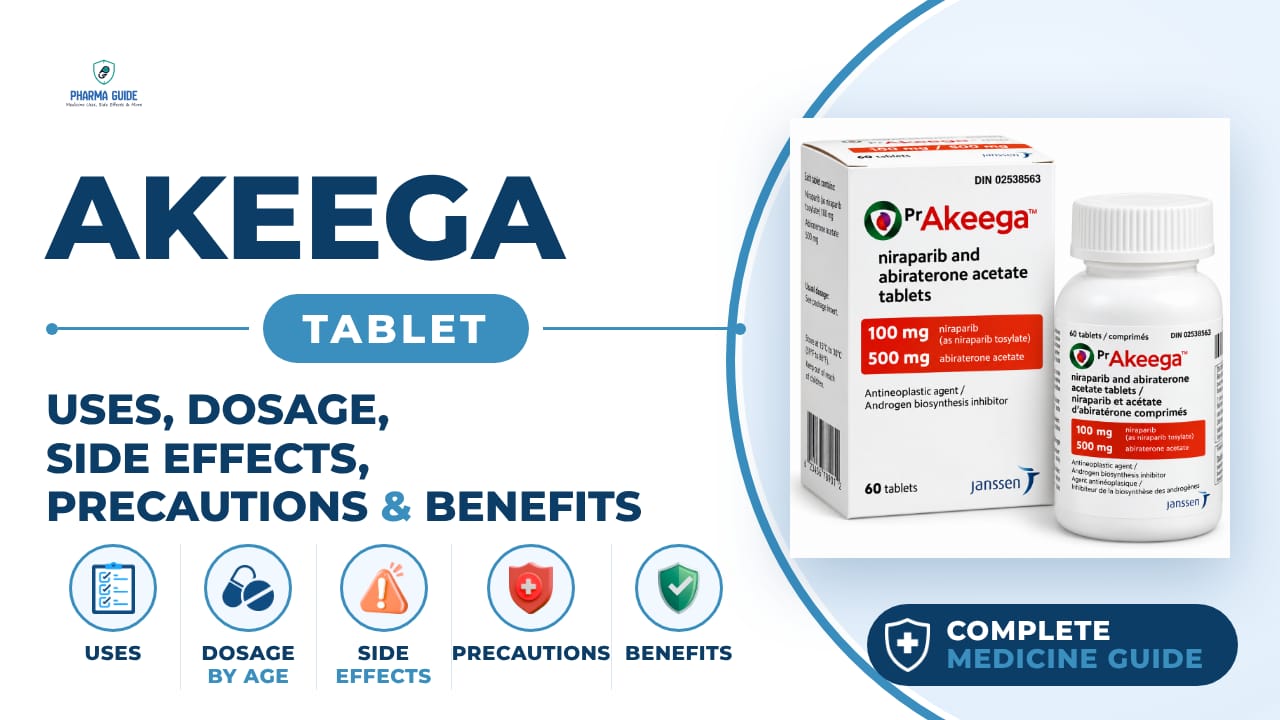
| Generic name | niraparib and abiraterone acetate |
|---|---|
| Drug class | Antineoplastic combinations |
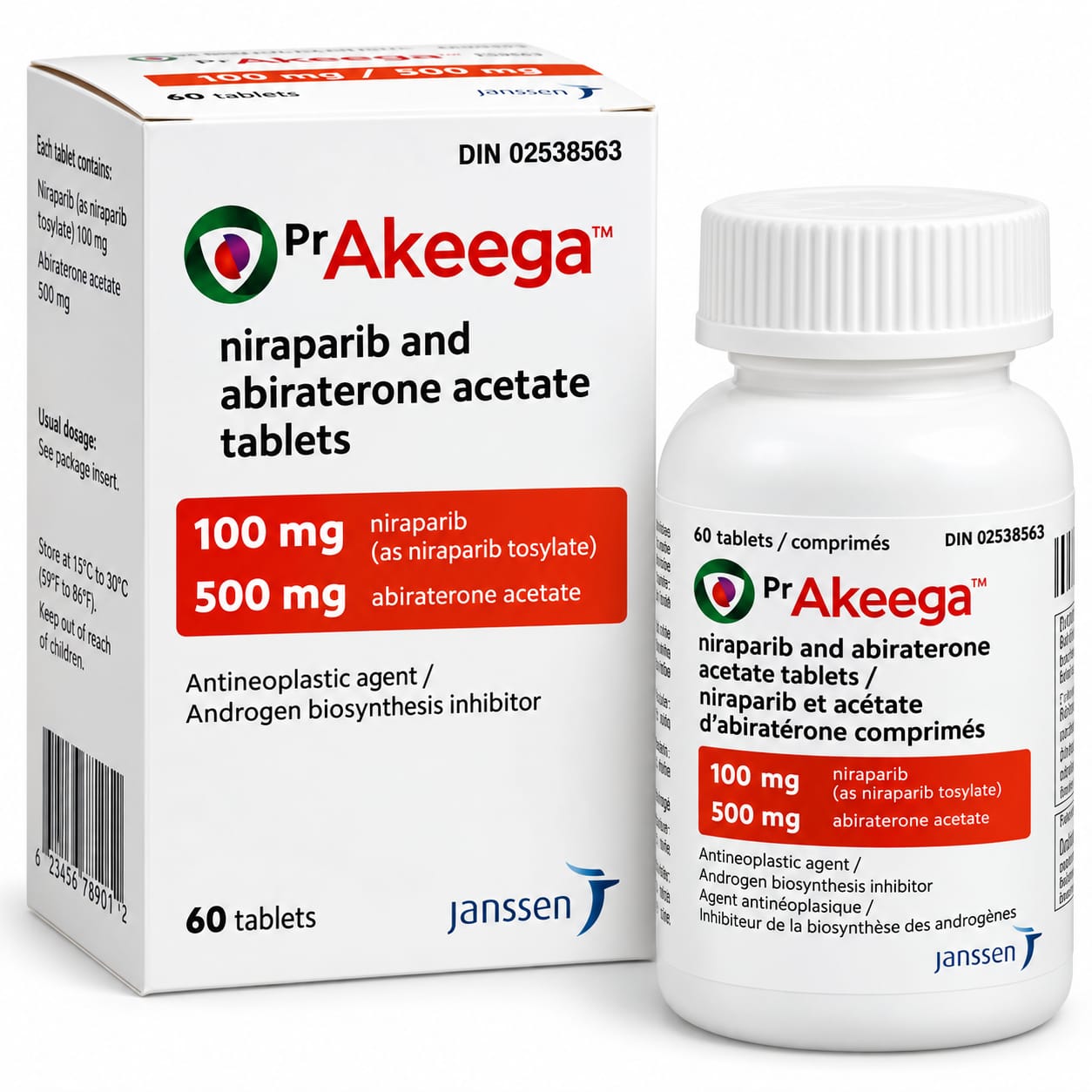
| Forms | 50 mg niraparib/500 mg abiraterone acetate tablet, 100 mg niraparib/500 mg abiraterone acetate tablet |
Quick overview
Akeega Tablet combines niraparib and abiraterone acetate, an antineoplastic combination medicine used with prednisone to treat adult men with metastatic prostate cancer linked to a BRCA gene mutation. It works by blocking cancer cells' DNA repair and by lowering testosterone production. Akeega is taken once daily on an empty stomach and carries risks of bone marrow problems, liver problems, and other serious effects that require medical monitoring.
What is Akeega Tablet
Akeega is a prescription cancer medicine that combines two active ingredients, niraparib and abiraterone acetate, in one tablet. It is used together with prednisone to treat adult men with a certain type of prostate cancer that has a BRCA gene change and has spread to other parts of the body.
Akeega Tablet uses
- Treats adult men with metastatic prostate cancer who have a BRCA gene mutation
- Used for metastatic castration-sensitive prostate cancer (mCSPC) when combined with hormone therapy
- Used for metastatic castration-resistant prostate cancer (mCRPC) when chemotherapy cannot be used
Benefits of Akeega Tablet
- Slows the time it takes for scans to show the cancer getting worse
- Combines two cancer-fighting actions in a single tablet taken once a day
How Akeega Tablet works
Akeega contains two medicines that fight cancer in different ways. Niraparib blocks proteins called PARP that cancer cells need to repair their own damaged DNA, so the cancer cells die. Abiraterone acetate blocks the body from making testosterone, which prostate cancer needs to grow, so this slows the cancer down.
Akeega Tablet dosage
Take Akeega and prednisone exactly as your healthcare provider tells you. Take your prescribed dose one time a day on an empty stomach, well away from meals, since taking it with food may cause the body to absorb too much medicine and increase side effects. Swallow tablets whole with water; do not break, crush, or chew them. If you miss a dose, take it as soon as possible the same day, then return to your normal schedule the next day; do not take extra tablets to make up for a missed dose. Do not change or stop your dose without talking to your healthcare provider first. You should start or continue a GnRH analog therapy during treatment unless you have had surgery to lower testosterone (surgical castration). Women should not take this medicine, and it has not been studied in children.
| Age group | Dose |
|---|---|
| Under 18 years | Safety and effectiveness are not established; no pediatric dose |
| 18–39 years | 200 mg niraparib + 1,000 mg abiraterone acetate once daily |
| 40–64 years | 200 mg + 1,000 mg once daily |
| 65–74 years | Same standard adult dose; treatment is adjusted according to tolerability and adverse effects |
Available forms and strengths
- 50 mg niraparib/500 mg abiraterone acetate tablet
- 100 mg niraparib/500 mg abiraterone acetate tablet
Side effects of Akeega Tablet
Common
- Muscle and bone pain
- Tiredness
- Decreased hemoglobin
- Decreased platelets
- Decreased lymphocytes
- Decreased neutrophils
- Changes in liver function blood tests
- Changes in kidney function blood tests
- Constipation
- High blood pressure
- Nausea
- Increased potassium level in the blood
- Decreased potassium level in the blood
- Swelling in legs or feet
- Increased bilirubin levels in blood
- Respiratory tract infection
- Irregular heartbeat (arrhythmia)
- Shortness of breath
- Decreased appetite
- Vomiting
- Dizziness
- Headache
- Stomach area pain
- Bleeding
- Urinary tract infection
- Cough
- Trouble sleeping
- Decreased weight
- Falls
- Fever
Serious
- Bone marrow problems such as myelodysplastic syndrome (MDS) or acute myeloid leukemia (AML), which can lead to death
- Low blood potassium, fluid retention, high blood pressure, and heart problems
- Severe liver problems, liver failure, and death
- Adrenal gland problems
- Low blood sugar, especially in people taking diabetes medicines
- Increased risk of bone fracture and death if combined with Radium-223 radiation therapy
- Posterior Reversible Encephalopathy Syndrome (PRES), a brain condition
- Fertility problems in males
Warnings and precautions
- This medicine can cause bone marrow problems, including a blood cancer called acute myeloid leukemia, which has led to death in some people.
- Do not combine this medicine with Radium-223 radiation treatment, as this raises the risk of bone fractures and death.
- This medicine can cause a rare brain condition called PRES, which may cause headaches, vision changes, confusion, or seizures.
- You must take prednisone together with Akeega exactly as directed to reduce the chance of low potassium, fluid retention, high blood pressure, and heart problems.
- Akeega can harm an unborn baby and cause miscarriage. Women should not take this medicine. If a woman who is or may become pregnant needs to handle the tablets, she should wear gloves. Men with partners who could become pregnant should use effective birth control during treatment and for 4 months after the last dose.
- It is not known if Akeega passes into breast milk. Tell your healthcare provider if you are breastfeeding or plan to breastfeed.
- Tell your healthcare provider if you have kidney problems before starting this medicine.
- Tell your healthcare provider if you have liver problems. This medicine must not be used in patients with severe liver problems, and it can cause severe liver damage, liver failure, and death in some people.
- Alcohol may add to liver-related concerns and should be discussed with the oncology team.
- Fatigue or dizziness may affect driving ability.
Storage
Store between 68°F to 77°F (20°C to 25°C).
When to see a doctor
- Get medical help right away if you notice pale skin, weakness, shortness of breath, tiredness, easy bruising or bleeding, fever, frequent infections, blood in urine or stool, or unexplained weight loss, as these can be signs of serious bone marrow problems.
- Call your healthcare provider right away if you develop yellowing of the skin or eyes, dark urine, or severe nausea or vomiting, which can be signs of liver problems.
- Contact your healthcare provider right away if you have a headache, vision changes, confusion, or a seizure, as this could be a sign of a rare brain condition.
- If you take too much of this medicine, call your healthcare provider or go to the nearest hospital emergency room right away.
Alternatives
- Lynparza / olaparib
- Talzenna / talazoparib
- Zejula / niraparib
- Enzalutamide
Watch the video
FAQs
What is Akeega Tablet used for?
Akeega is used together with prednisone to treat adult men with metastatic prostate cancer that has a BRCA gene mutation, including metastatic castration-sensitive prostate cancer (with hormone therapy) and metastatic castration-resistant prostate cancer when chemotherapy cannot be used.
How does Akeega Tablet work?
Akeega contains niraparib, which blocks PARP proteins that cancer cells need to repair their DNA, causing the cancer cells to die, and abiraterone acetate, which blocks testosterone production that prostate cancer needs to grow.
How should I take Akeega Tablet?
Take Akeega and prednisone exactly as prescribed, once a day on an empty stomach, well away from meals, and swallow the tablets whole with water without breaking, crushing, or chewing them.
What are the serious side effects of Akeega Tablet?
Serious side effects include bone marrow problems such as myelodysplastic syndrome or acute myeloid leukemia, severe liver problems or liver failure, adrenal gland problems, low blood sugar, PRES (a brain condition), fertility problems in males, and increased risk of bone fracture and death if combined with Radium-223 therapy.
Can women take Akeega Tablet?
No, women should not take Akeega because it can harm an unborn baby and cause miscarriage; men with partners who could become pregnant should use effective birth control during treatment and for 4 months after the last dose.
General information, not medical advice
Your prescriber and the leaflet in your pack know your situation. This page does not.
- Follow your prescriber and the leaflet
- Don't start, stop, or change a dose on your own
- Doses and warnings differ by country and product
Sources
Video
Related medicines

Injectafer Injection: Uses, Dosage, Side Effects, Precautions and Alternates
Iron products
Injectafer (ferric carboxymaltose) treats iron deficiency anemia and heart failure-related iron deficiency via IV. Learn uses, dosage, side effects, and

Gliclazide Tablet: Uses, Dosage, Side Effects, Precautions and Alternates
Sulfonylurea (hypoglycemic/antidiabetic agent)
Gliclazide Tablet is a sulfonylurea for type 2 diabetes that boosts insulin release. Learn about dosage, side effects, warnings, and precautions.