
Safety
General information, not medical advice
Your prescriber and the leaflet in your pack know your situation. This page does not.
- Follow your prescriber and the leaflet
- Don't start, stop, or change a dose on your own
- Doses and warnings differ by country and product
Akineton Tablet: Uses, Dosage, Side Effects, Precautions and Alternates
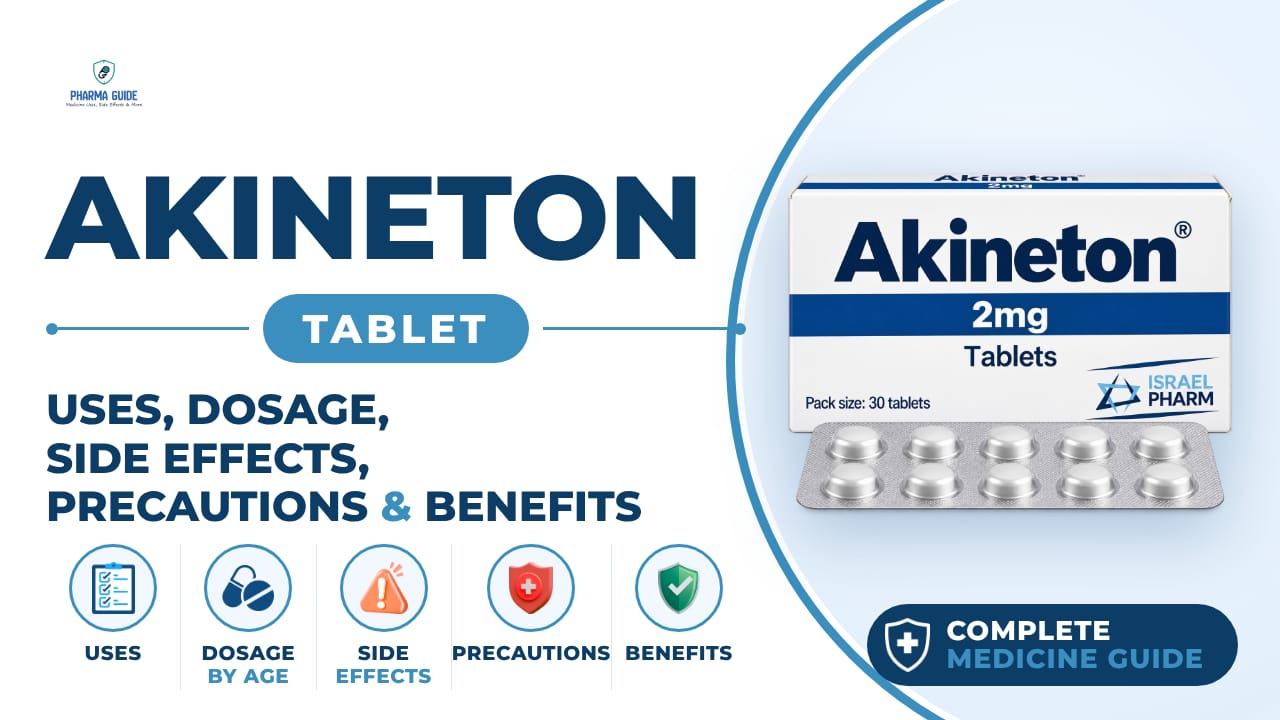
| Generic name | Biperiden |
|---|---|
| Drug class | Anticholinergic antiparkinson agent |
| Forms | Tablet, Injection solution (for patients who need a faster-acting form) |
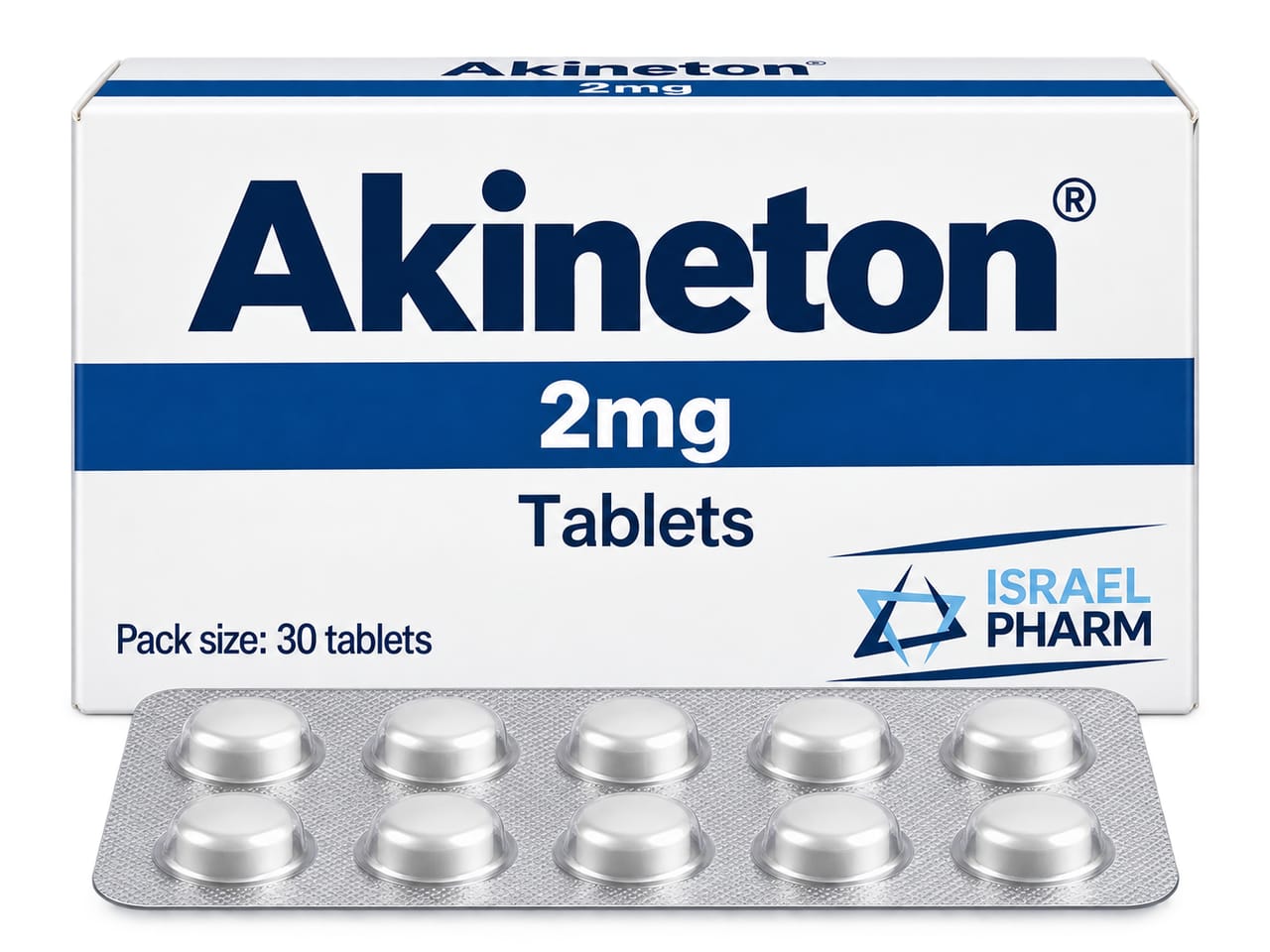
Quick overview
Akineton Tablet contains biperiden hydrochloride, an anticholinergic medicine that acts on the central nervous system. It is used to treat all forms of Parkinson's disease and to control muscle twitching and spasms caused by certain other medicines, such as antipsychotics. It works by blocking acetylcholine in the brain to help restore balance with dopamine.
What is Akineton Tablet
Akineton contains the active substance biperiden hydrochloride, which is an anticholinergic medicine that acts on the central nervous system.
Akineton Tablet uses
- Treats all forms of Parkinson's disease by relaxing muscle spasms and controlling muscle twitching
- Controls muscle twitching and spasms (extrapyramidal symptoms) caused by certain other medicines, such as antipsychotics
Benefits of Akineton Tablet
- Reduces muscle stiffness, tremors, and poor muscle control in Parkinson's disease
- Treats extrapyramidal symptoms such as muscle spasms, restlessness, cramping, and twitching caused by other medicines
How Akineton Tablet works
Biperiden blocks a brain chemical called acetylcholine, which helps restore the balance between acetylcholine and dopamine in the brain. This balance is disturbed in Parkinson's disease and in movement problems caused by certain other medicines.
Akineton Tablet dosage
Tablets may be broken in half along the break line to get the right dose. Tablets can be taken at any time of day, with or without food, but taking them with or after a meal and with enough liquid can help avoid stomach upset. The total daily dose should be split into several smaller doses and spread evenly throughout the day.
Do not share your medicine with other people. Do not stop taking this medicine suddenly, even if you feel better; your doctor will tell you how to reduce the dose gradually. If you forget a dose, take the next dose at its usual time; do not take a double dose to make up for a missed one. If you take too much, contact a doctor right away or go to the nearest hospital emergency department.
Older patients should start on the lowest possible dose, with any increases made slowly based on how they respond. People with liver or kidney problems should start on the lowest possible dose, with any increases made slowly.
| Age group | Dose |
|---|---|
| Under 18 years | No standard routine pediatric dose is established; specialist-directed only |
| 18–39 years | Commonly 2 mg 1–3 times daily, adjusted according to symptoms and response |
| 65–74 years | Usually started cautiously at a lower effective dose because confusion, blurred vision, constipation, and urinary retention may be more likely |
| 75 years and older | Individualized very cautiously; anticholinergic adverse effects may be more pronounced |
Available forms and strengths
- Tablet
- Injection solution (for patients who need a faster-acting form)
Side effects of Akineton Tablet
Common
- Dry mouth
- Blurred vision or large pupils
- Drowsiness
- Difficulty urinating or constipation
- Nervousness or anxiety
- Upset stomach, nausea, or gastric disorder
- Decreased sweating
- Dizziness and memory problems
- Fast heartbeat (palpitations, tachycardia)
- Muscle twitching
- Fatigue
Serious
- Allergic reaction (difficulty breathing, swelling of lips, tongue or face, hives, rash or itching)
- Increased tendency for seizures or convulsions
- Involuntary movement disorders and problems with coordination or speech
- Increased eye pressure (closed-angle glaucoma)
- Slowing of the heart rate (bradycardia)
- Difficulty emptying the bladder, especially in men with an enlarged prostate
- Confusion, hallucinations, agitation, delirium, or loss of consciousness
- Unusual fever or overheating due to decreased sweating
- Fast or irregular heartbeat
Warnings and precautions
- Do not take this medicine if you are allergic to biperiden or any of its ingredients, are lactose intolerant, have narrow angle glaucoma, have a narrow stomach or bowel or other bowel problems, have abnormal widening of the colon, have a condition that affects brain function, are pregnant or breastfeeding, or have myasthenia gravis.
- This medicine can be habit-forming if taken for longer than prescribed or at higher doses than recommended.
- Do not stop taking this medicine suddenly, as this can cause nausea, sweating, and a sudden urgent need to urinate; your doctor will help you reduce the dose gradually.
- Talk to your doctor before taking this medicine if you have reduced brain function, low tolerance to medicines, hardening of brain arteries, an enlarged prostate, heart failure, fast heartbeat, fits, a history of alcohol problems, or glaucoma.
- This medicine should not be used if you have an untreated narrow-angle glaucoma, a mechanical blockage in your gut, an abnormally widened colon, or a bowel blockage.
- The safety of this medicine during pregnancy has not been established.
- If you are pregnant, think you may be pregnant, or are planning to have a baby, talk to your doctor before taking this medicine, as it should only be used after a careful weighing of risks and benefits.
- Do not take this medicine if you are breastfeeding. It can pass into breast milk and may reduce milk production, so weaning is recommended if treatment is needed.
- There is no specific data on how this medicine behaves in people with kidney problems, so it should be used with caution, starting at the lowest dose and increasing slowly depending on how the patient responds.
- There is no specific data on how this medicine behaves in people with liver problems, so it should be used with caution, starting at the lowest dose and increasing slowly depending on how the patient responds.
- Avoid alcohol while taking this medicine, as it can increase the medicine's effects and make you more drowsy or dizzy.
- This medicine can cause tiredness, dizziness, and drowsiness, which may affect your ability to drive or operate machinery safely, especially if you also drink alcohol or take other medicines that act on the brain.
Storage
- Store in a dry place at or below 25°C
- Keep in the original package and outer carton until you need it
- Do not use after the expiry date shown on the container
- Store out of reach of children
- Any unused product or waste material should be disposed of according to local requirements
When to see a doctor
- Stop taking this medicine and get emergency medical help if you have an allergic reaction such as difficulty breathing, swelling of your lips, tongue or face, or hives.
- Seek urgent medical help if you have seizures, uncontrolled movements, problems with coordination or speech, eye pain or increased eye pressure, a slow heartbeat, or trouble emptying your bladder.
- Get emergency medical attention if you develop an unusual fever, a fast or irregular heartbeat, severe anxiety, hallucinations, confusion, agitation, hyperactivity, loss of consciousness, seizures, a rash, or eye pain.
- If you take more than your prescribed dose, contact a doctor immediately or go to the nearest hospital emergency department.
Alternatives
- Benztropine
- Trihexyphenidyl
- Procyclidine
- Amantadine
Watch the video
FAQs
What is Akineton Tablet used for?
Akineton Tablet is used to treat all forms of Parkinson's disease and to control muscle twitching and spasms (extrapyramidal symptoms) caused by certain other medicines, such as antipsychotics.
How does Akineton Tablet work?
It contains biperiden hydrochloride, an anticholinergic medicine that blocks acetylcholine in the brain, helping restore the balance between acetylcholine and dopamine that is disturbed in Parkinson's disease and drug-induced movement problems.
What is the common dosage of Akineton Tablet for adults?
For adults aged 18-39 years, the commonly used dose is 2 mg taken 1 to 3 times daily, adjusted according to symptoms and response. The total daily dose should be split into several smaller doses spread evenly throughout the day.
What are the common side effects of Akineton Tablet?
Common side effects include dry mouth, blurred vision or large pupils, drowsiness, difficulty urinating or constipation, nervousness, upset stomach, decreased sweating, dizziness, fast heartbeat, muscle twitching, and fatigue.
Can I stop taking Akineton Tablet suddenly?
No, you should not stop taking this medicine suddenly, even if you feel better, as this can cause nausea, sweating, and a sudden urgent need to urinate. Your doctor will help you reduce the dose gradually.
General information, not medical advice
Your prescriber and the leaflet in your pack know your situation. This page does not.
- Follow your prescriber and the leaflet
- Don't start, stop, or change a dose on your own
- Doses and warnings differ by country and product
Sources
Video
Related medicines
Artane Tablet: Uses, Dosage, Side Effects, Precautions and Alternates
Anticholinergic antiparkinson agent
Artane Tablet (trihexyphenidyl) treats Parkinson's tremors, stiffness, and drug-induced muscle problems. Learn its uses, dosage, side effects, and precautions.
Cogintol Tablet: Uses, Dosage, Side Effects, Precautions and Alternates
Anticholinergic antiparkinson agent
Cogintol Tablet (benztropine mesylate) treats Parkinson's movement symptoms and drug-induced movement side effects. Learn uses, dosage, side effects, and