
Safety
General information, not medical advice
Your prescriber and the leaflet in your pack know your situation. This page does not.
- Follow your prescriber and the leaflet
- Don't start, stop, or change a dose on your own
- Doses and warnings differ by country and product
Artane Tablet: Uses, Dosage, Side Effects, Precautions and Alternates
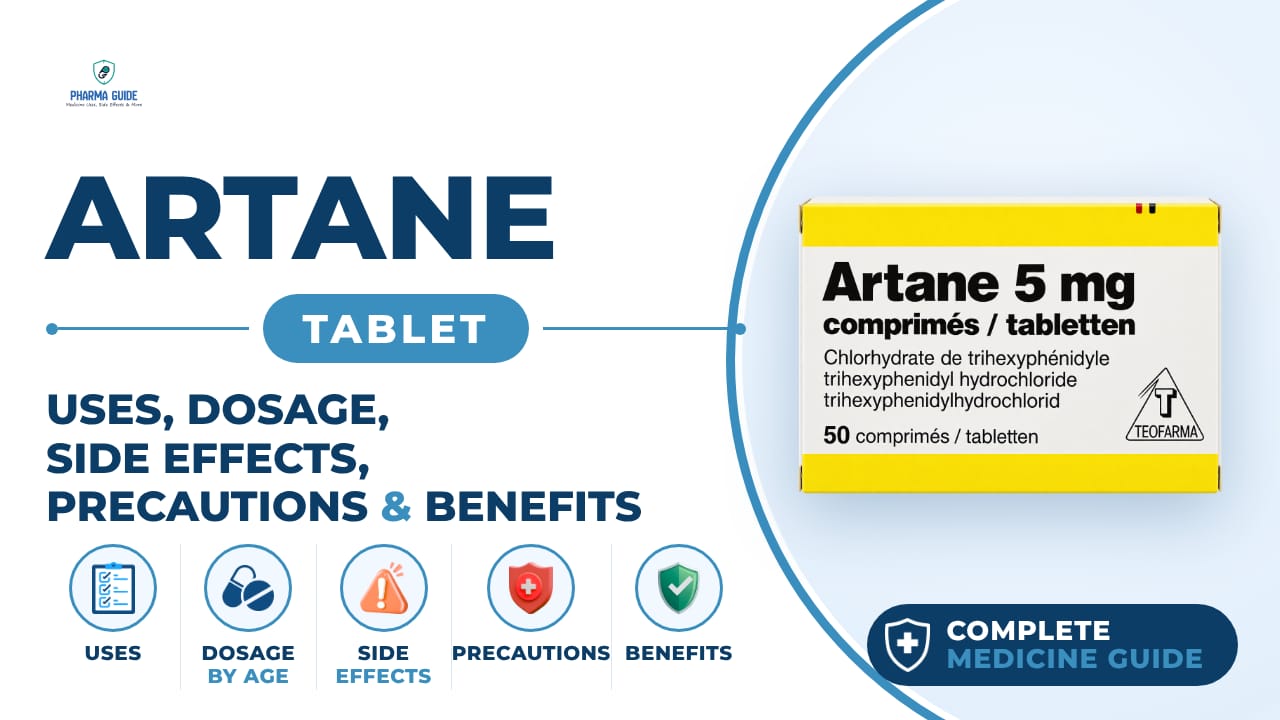
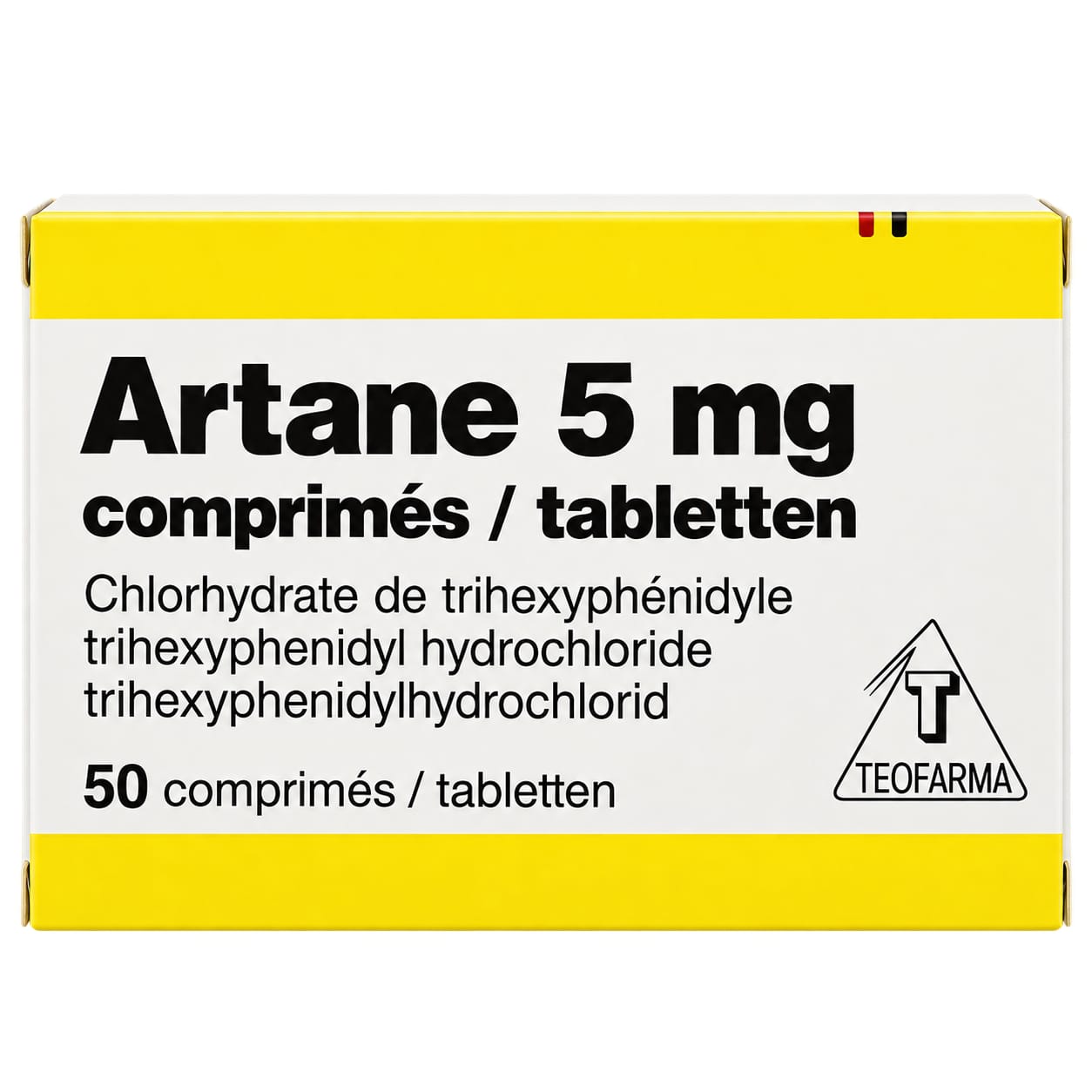
| Generic name | trihexyphenidyl |
|---|---|
| Drug class | Anticholinergic antiparkinson agent |
| Forms | Tablets, Elixir (oral liquid solution) |
Quick overview
Artane Tablet contains trihexyphenidyl, an anticholinergic antiparkinson agent. It is used to manage stiffness, tremors, spasms, and poor muscle control caused by Parkinson's disease, as well as muscle movement problems caused by certain other medicines and dystonia. It works by blocking a brain chemical called acetylcholine to help restore balance in the brain and relax stiff muscles. It is available as tablets and an oral liquid elixir.
What is Artane Tablet
Artane is a prescription medicine that belongs to a group of drugs called anticholinergics. It alters unusual nerve impulses and relaxes stiff muscles.
Artane Tablet uses
- Treats stiffness, tremors, spasms, and poor muscle control caused by Parkinson's disease
- Treats and prevents muscle movement problems (extrapyramidal symptoms) caused by certain other medicines such as chlorpromazine, fluphenazine, perphenazine, haloperidol, and thiothixene
- Helps with dystonia, which causes abnormal muscle postures and contractions
Benefits of Artane Tablet
- Helps manage tremors, rigidity, spasms, and poor muscle control in Parkinson's disease
- Reduces involuntary muscle contractions and restlessness caused by other medicines
- Eases abnormal muscle postures and contractions from dystonia
How Artane Tablet works
Artane blocks a brain chemical called acetylcholine. This helps restore the balance between acetylcholine and dopamine in the brain, which relaxes stiff muscles and reduces movement symptoms.
Artane Tablet dosage
Take each dose with a full glass of water. It can be taken with or without meals; taking it with food may lessen stomach upset. If stomach upset happens, it may help to take it before meals, unless this causes nausea, in which case taking it after meals may be better. If using the liquid form, measure the dose with a proper dose-measuring spoon or cup, not a regular kitchen spoon. Do not stop taking this medicine suddenly without talking to your doctor, as this can cause your symptoms to get worse. If you miss a dose, take it as soon as you remember, but if it is almost time for your next dose, skip the missed one and go back to your normal schedule; do not take two doses at once. Older adults may need a lower dose and should be monitored more closely.
| Age group | Dose |
|---|---|
| Under 18 years | Safety and effectiveness not established; no standard pediatric dosage |
| 18–39 years | Starting dose: 1 mg daily; usual maintenance 6–10 mg daily |
| 40–64 years | Starting dose: 1 mg daily; usual maintenance 6–10 mg daily |
| 65–74 years | No separate established dose; lower individualized doses are preferred because of increased sensitivity |
Available forms and strengths
- Tablets
- Elixir (oral liquid solution)
Side effects of Artane Tablet
Common
- Dry mouth, nose, and throat
- Blurred vision or dilated pupils
- Dizziness, drowsiness, or lightheadedness
- Constipation or mild nausea/vomiting
- Difficulty or slight retention in urinating
- Nervousness, anxiety, or mild confusion
- Fast heartbeat
- Feeling unusually weak or tired
- Headache
Serious
- Severe confusion, delirium, or hallucinations
- Sudden eye pain, severe vision changes, seeing halos around lights, or signs of elevated eye pressure/glaucoma
- Inability to urinate or severe urinary retention
- Fast, pounding, or irregular heartbeat, fluttering in the chest, or shortness of breath
- High fever or decreased sweating, which can lead to overheating or heat stroke
- Allergic reactions such as rash, hives, or swelling of the face, lips, tongue, or throat, or trouble breathing
- Severe headache, confusion, slurred speech, arm or leg weakness, trouble walking, loss of coordination, feeling unsteady, very stiff muscles, high fever, profuse sweating, or tremors (possible neuroleptic malignant syndrome)
- Signs of a salivary gland infection such as swelling or pain inside the cheek, foul taste in the mouth, fever or chills, or trouble chewing or swallowing
- Signs of slowed gut movement such as severe stomach pain or bloating, feeling full after a small amount of food, trouble passing gas or stool, black or tarry stool, or blood in the stool
- Signs of misuse such as sudden confusion, feeling paranoid, intense euphoria, or seizures
Warnings and precautions
- Do not stop taking this medicine suddenly. Stopping abruptly can cause your Parkinson's symptoms to suddenly get much worse, or can lead to a serious condition called neuroleptic malignant syndrome.
- This medicine can reduce sweating, which raises the risk of overheating or heat stroke in hot weather or during hard exercise. Try to stay cool and watch for signs of heat-related illness.
- This medicine should not be used by people with narrow-angle glaucoma, as it can raise pressure in the eye and has been linked to cases of blindness.
- Use this medicine with caution if you have glaucoma, an enlarged prostate or trouble urinating, epilepsy or seizures, heart disease or irregular heartbeat, depression or other psychiatric illness, a bowel blockage, or myasthenia gravis.
- Older adults (over 60-65) are more sensitive to side effects like confusion and memory problems and usually need lower doses and closer monitoring.
- Taking this medicine with alcohol, opioids, barbiturates, or cannabis products can increase sedation and carries a risk of misuse.
- It is not known whether Artane could harm an unborn baby. Talk to your doctor before taking it if you are pregnant or could become pregnant.
- It is not known whether this medicine passes into breast milk. Talk to your doctor before taking it if you are breastfeeding.
- People with kidney problems should be closely monitored while taking this medicine, and may need a dosage adjustment.
- People with liver problems should be closely monitored while taking this medicine, and may need a dosage adjustment.
- Drinking alcohol while taking this medicine can increase drowsiness and dizziness, so it should be avoided or used with caution.
- This medicine can cause dizziness or blurred vision, so be careful when driving, operating machinery, or doing other activities that need alertness until you know how it affects you.
Storage
- Store Artane at room temperature away from moisture and heat.
- Oral Tablet: Trihexyphenidyl tablets should be stored at room temperature, between 68 F to 77 F (20 C to 25 C). It can be exposed to temperatures between 59 F to 86 F (15 C to 30 C) for shorter periods of time, such as when transporting it. Store in a cool, dry place.
- Oral Liquid: Trihexyphenidyl liquid should be stored at room temperature, between 68 F to 77 F (20 C to 25 C). Do not freeze.
When to see a doctor
- Get emergency medical help right away if you have signs of a serious allergic reaction, such as difficulty breathing, swelling of the lips, tongue, face, or throat, or hives.
- Get medical help right away if you develop a fast or irregular heartbeat, high fever, severe confusion, hallucinations, agitation, seizures, or sudden eye pain.
- Call your healthcare provider right away if you have signs of neuroleptic malignant syndrome, such as high fever, severe muscle stiffness, changes in breathing or heart rate, heavy sweating, or confusion.
- If you think you or someone else has taken too much of this medicine, get medical help right away or contact a poison control center.
Alternatives
- Biperiden
- Amantadine
- Procyclidine
- Benztropine
Watch the video
FAQs
What is Artane Tablet used for?
Artane is used to treat stiffness, tremors, spasms, and poor muscle control caused by Parkinson's disease, to treat and prevent muscle movement problems caused by certain other medicines like chlorpromazine and haloperidol, and to help with dystonia.
How does Artane Tablet work?
Artane blocks a brain chemical called acetylcholine, which helps restore the balance between acetylcholine and dopamine in the brain, relaxing stiff muscles and reducing movement symptoms.
Can I stop taking Artane Tablet suddenly?
No, you should not stop taking Artane suddenly without talking to your doctor, as this can cause your Parkinson's symptoms to suddenly worsen or lead to a serious condition called neuroleptic malignant syndrome.
What are the common side effects of Artane Tablet?
Common side effects include dry mouth, nose, and throat, blurred vision or dilated pupils, dizziness or drowsiness, constipation or mild nausea, difficulty urinating, nervousness or mild confusion, fast heartbeat, weakness or tiredness, and headache.
Who should avoid taking Artane Tablet?
Artane should not be used by people with narrow-angle glaucoma, as it can raise eye pressure and has been linked to blindness. It should be used with caution in people with an enlarged prostate, epilepsy, heart disease, depression, bowel blockage, or myasthenia gravis.
General information, not medical advice
Your prescriber and the leaflet in your pack know your situation. This page does not.
- Follow your prescriber and the leaflet
- Don't start, stop, or change a dose on your own
- Doses and warnings differ by country and product
Sources
Video
Related medicines
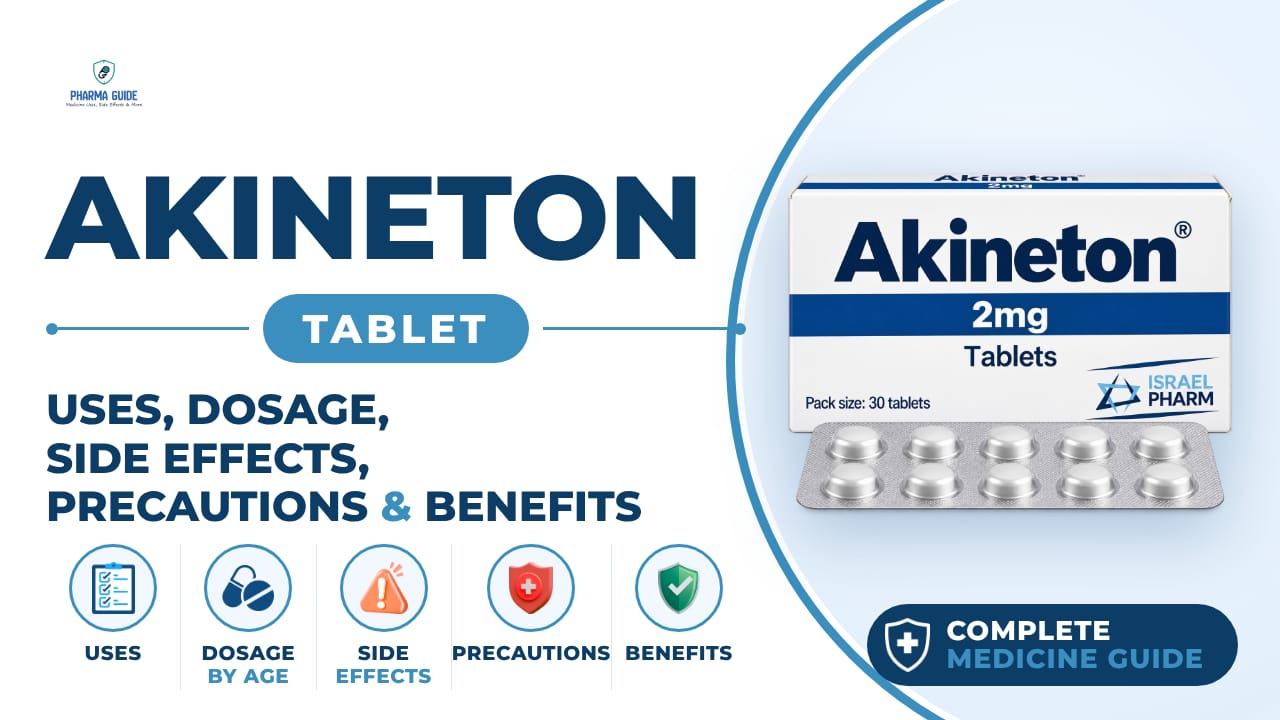
Akineton Tablet: Uses, Dosage, Side Effects, Precautions and Alternates
Anticholinergic antiparkinson agent
Akineton Tablet (biperiden) treats Parkinson's disease and drug-induced muscle spasms. Learn uses, dosage, side effects, warnings, and alternatives.
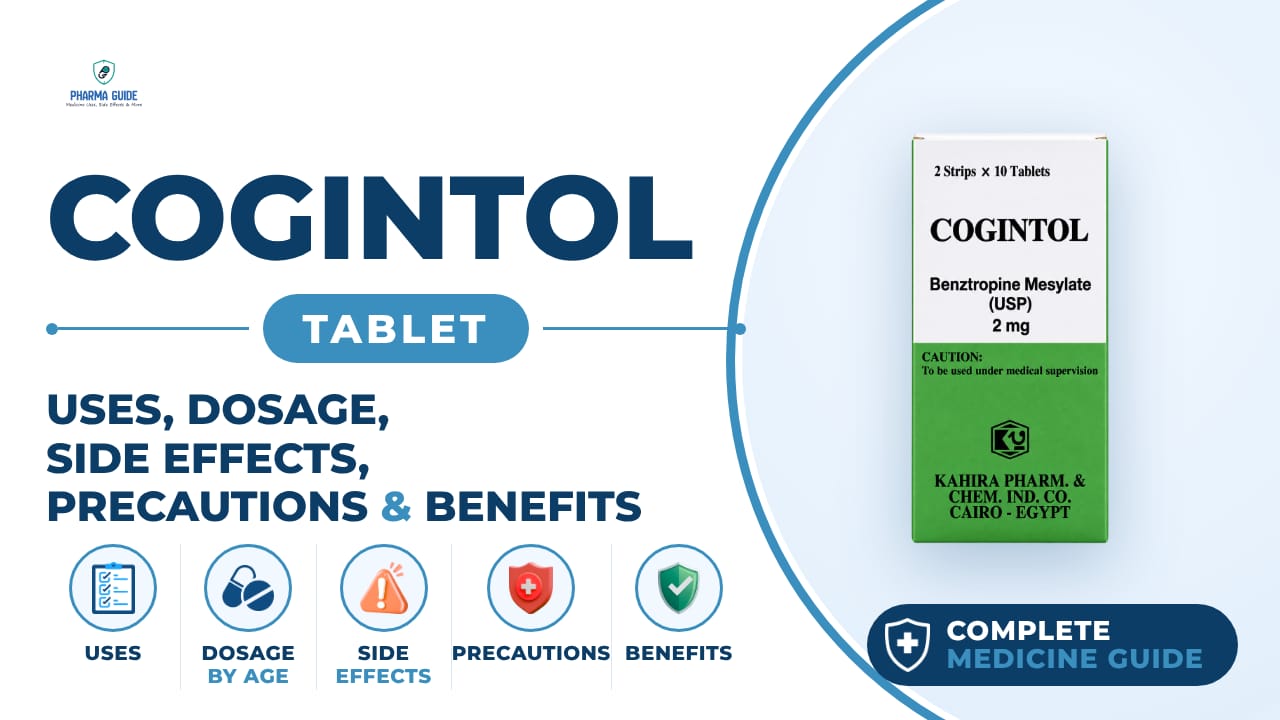
Cogintol Tablet: Uses, Dosage, Side Effects, Precautions and Alternates
Anticholinergic antiparkinson agent
Cogintol Tablet (benztropine mesylate) treats Parkinson's movement symptoms and drug-induced movement side effects. Learn uses, dosage, side effects, and