
Safety
General information, not medical advice
Your prescriber and the leaflet in your pack know your situation. This page does not.
- Follow your prescriber and the leaflet
- Don't start, stop, or change a dose on your own
- Doses and warnings differ by country and product
Cogintol Tablet: Uses, Dosage, Side Effects, Precautions and Alternates
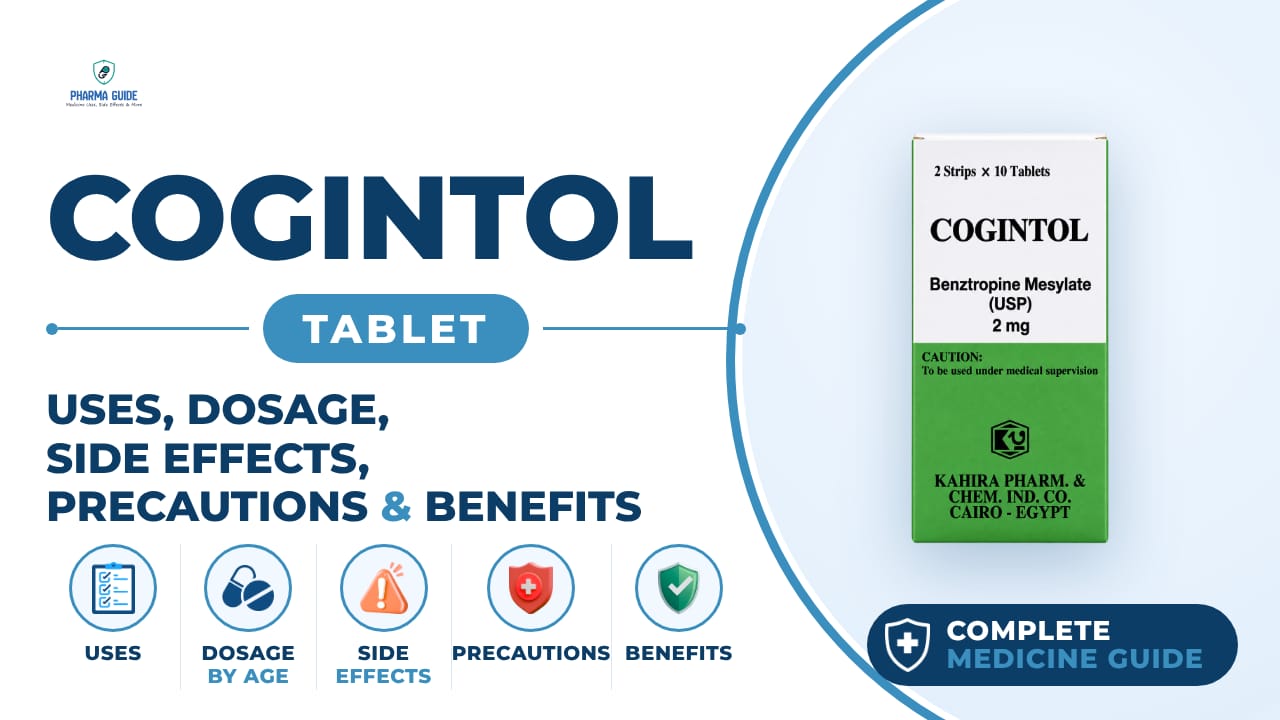
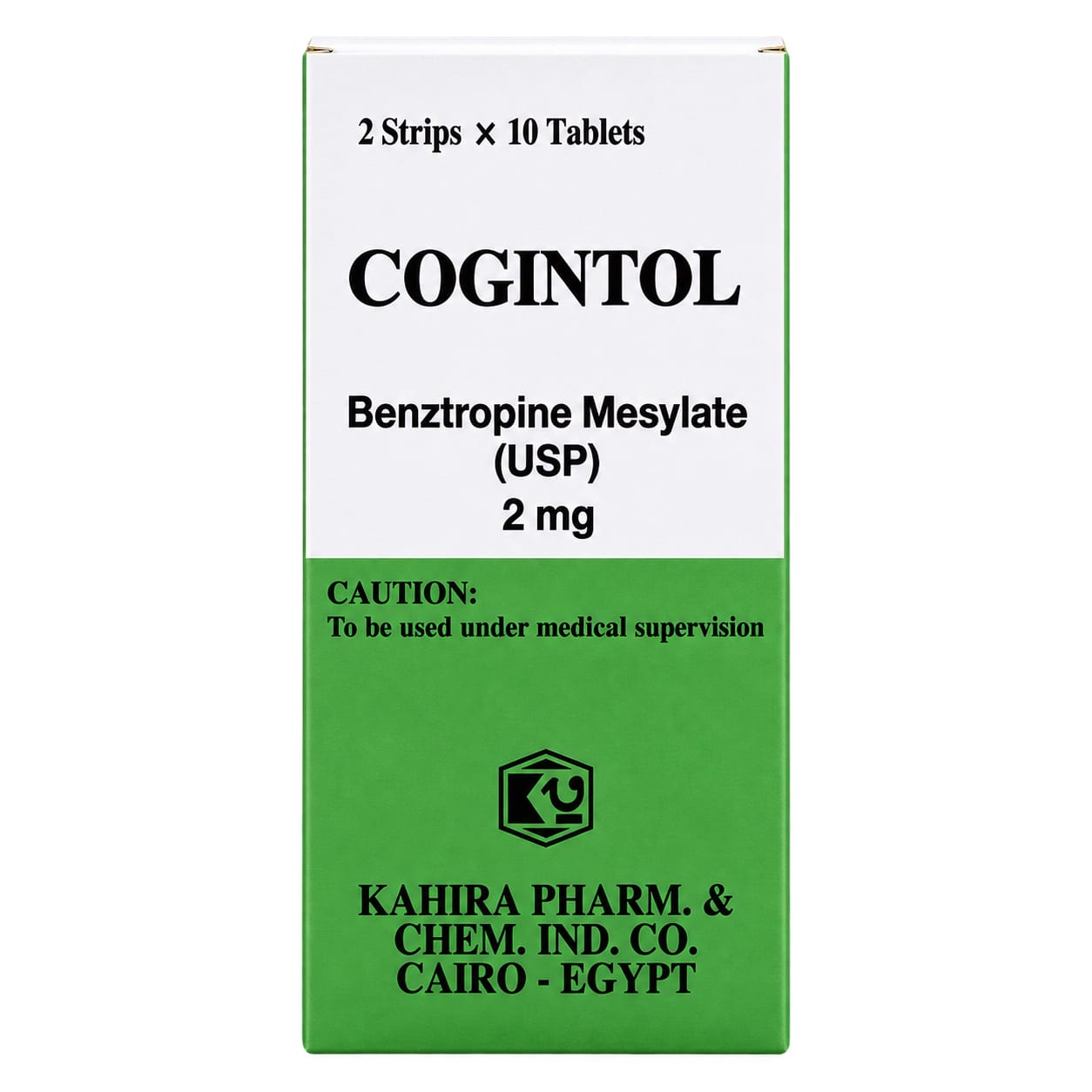
| Generic name | Benztropine mesylate |
|---|---|
| Drug class | Anticholinergic antiparkinson agent |
| Forms | Tablet |
Quick overview
Cogintol Tablet contains benztropine mesylate, an anticholinergic antiparkinson agent. It is a prescription medicine used to treat movement problems caused by Parkinson's disease and by certain other medicines. It works by helping balance certain brain chemicals involved in movement and coordination, which helps reduce symptoms like stiffness and tremors.
What is Cogintol Tablet
Cogintol is a prescription medicine that contains benztropine mesylate. It is an anticholinergic and antihistaminic medication used to treat movement problems caused by Parkinson's disease and by certain other medicines.
Cogintol Tablet uses
- Helps reduce muscle stiffness, tremors, and slow movements in Parkinson's disease, used along with other treatments
- Controls movement side effects (such as muscle spasms, stiffness, and restlessness) caused by antipsychotic medicines like haloperidol or phenothiazines
- Not helpful for tardive dyskinesia and may make those symptoms worse
Benefits of Cogintol Tablet
- May reduce tremors associated with Parkinson's disease
- Helps relieve muscle stiffness and rigidity
- Can improve movement control in selected patients
- May reduce certain medication-induced movement symptoms
- Provides an oral treatment option for selected patients with parkinsonism
How Cogintol Tablet works
The medicine works by balancing certain substances in the brain that help control body movement and coordination, which reduces symptoms like stiffness and tremors.
Cogintol Tablet dosage
Take by mouth with a full glass of water. Take it exactly as directed on your prescription label and keep taking it unless your care team tells you to stop. It may be prescribed for children as young as 3 years for certain conditions, but special precautions apply. If you miss a dose, take it as soon as you can; if it is almost time for your next dose, just take that dose — do not double up. This medicine is only for you; do not share it with others.
| Age group | Dose |
|---|---|
| Under 18 years | Under 3 years: Contraindicated. 3–17 years |
| 18–39 years | Adult prescribing range: 0.5–6 mg daily; usual maintenance 1–2 mg daily |
| 40–64 years | Adult prescribing range: 0.5–6 mg daily; usual maintenance 1–2 mg daily |
| 65–74 years | No separate established dosage; generally requires lower, individualized doses because of increased adverse-effect risks |
Available forms and strengths
- Tablet
Side effects of Cogintol Tablet
Common
- Dry mouth
- Nausea and vomiting
- Constipation
- Blurred vision
- Dizziness or confusion
- Fast or irregular heartbeat
Serious
- Difficulty or pain when urinating (urinary retention)
- Decreased sweating, which increases risk of overheating and heatstroke in warm weather
- Hallucinations, delusions, severe confusion, or depression
- Severe urinary retention or intestinal blockage (paralytic ileus)
- Allergic reactions such as skin rash, itching, hives, or swelling of the face, lips, tongue, or throat
- Anticholinergic toxicity: flushed face, blurry vision, dry mouth and skin, confusion, fast or irregular heartbeat, trouble passing urine, constipation
- Fever that does not go away
- Sudden eye pain or change in vision such as blurry vision, seeing halos around lights, vision loss
Warnings and precautions
- Can cause mental changes such as hallucinations, delusions, severe confusion, or depression
- May cause severe urinary retention or a blockage of the intestines (paralytic ileus)
- Do not stop this medicine suddenly — stopping abruptly can cause symptoms to worsen or trigger severe rebound effects; doses should be reduced gradually under a doctor's guidance
- Avoid becoming overheated, since this medicine can decrease sweating and raise the risk of heat stroke
- It is not known if this medicine will harm an unborn baby. Tell your doctor if you are pregnant or plan to become pregnant. Tell your doctor if you are breastfeeding before using this medicine.
- Specific dosage adjustments for renal impairment are not established. Patients with significant kidney disease require individualized medical assessment.
- Limited dosing information is available for hepatic impairment. Patients with significant liver disease require careful monitoring.
- Drinking alcohol with this medication can increase the risk of dizziness or fainting spells. This medicine may affect your coordination, reaction time, or judgment. Do not drive or operate machinery until you know how it affects you.
Storage
- Keep out of the reach of children and pets
- Store at room temperature between 20 and 25 degrees C (68 and 77 degrees F). Get rid of any unused medication after the expiration date
- Take the medication to a take-back program. Check with your pharmacy or law enforcement to find a location
- If you cannot return the medication, check the label or package insert to see if the medication should be thrown out in the garbage or flushed down the toilet. If you are not sure, ask your care team. If it is safe to put it in the trash, empty the medication out of the container, mix it with cat litter, dirt, coffee grounds, or other unwanted substance, seal the mixture in a bag or container, and put it in the trash
When to see a doctor
- Get emergency help right away if you have signs of an allergic reaction: hives, difficulty breathing, or swelling of your face, lips, tongue, or throat
- Call your doctor right away if you have dry mouth that causes trouble talking or swallowing, little or no urination, uncontrolled muscle movements, vomiting, severe constipation, fast heartbeats, muscle weakness, blurred or tunnel vision, eye pain, seeing halos around lights, confusion, hallucinations, or a severe skin rash
- If you think you have taken too much of this medicine, contact a poison control center or emergency room right away
Alternatives
- Amantadine
- Biperiden
- Procyclidine
- Trihexyphenidyl
Watch the video
FAQs
What is Cogintol Tablet used for?
Cogintol Tablet contains benztropine mesylate and is used to reduce muscle stiffness, tremors, and slow movements in Parkinson's disease, and to control movement side effects like muscle spasms and restlessness caused by antipsychotic medicines such as haloperidol or phenothiazines.
How does Cogintol Tablet work?
It works by balancing certain substances in the brain that help control body movement and coordination, which reduces symptoms like stiffness and tremors.
What is the usual dosage of Cogintol Tablet for adults?
For adults, the prescribing range is 0.5–6 mg daily, with a usual maintenance dose of 1–2 mg daily. It should be taken by mouth with a full glass of water exactly as directed.
What are the common side effects of Cogintol Tablet?
Common side effects include dry mouth, nausea and vomiting, constipation, blurred vision, dizziness or confusion, and fast or irregular heartbeat.
Can Cogintol Tablet be stopped suddenly?
No, this medicine should not be stopped suddenly as it can cause symptoms to worsen or trigger severe rebound effects; doses should be reduced gradually under a doctor's guidance.
General information, not medical advice
Your prescriber and the leaflet in your pack know your situation. This page does not.
- Follow your prescriber and the leaflet
- Don't start, stop, or change a dose on your own
- Doses and warnings differ by country and product
Sources
Video
Related medicines
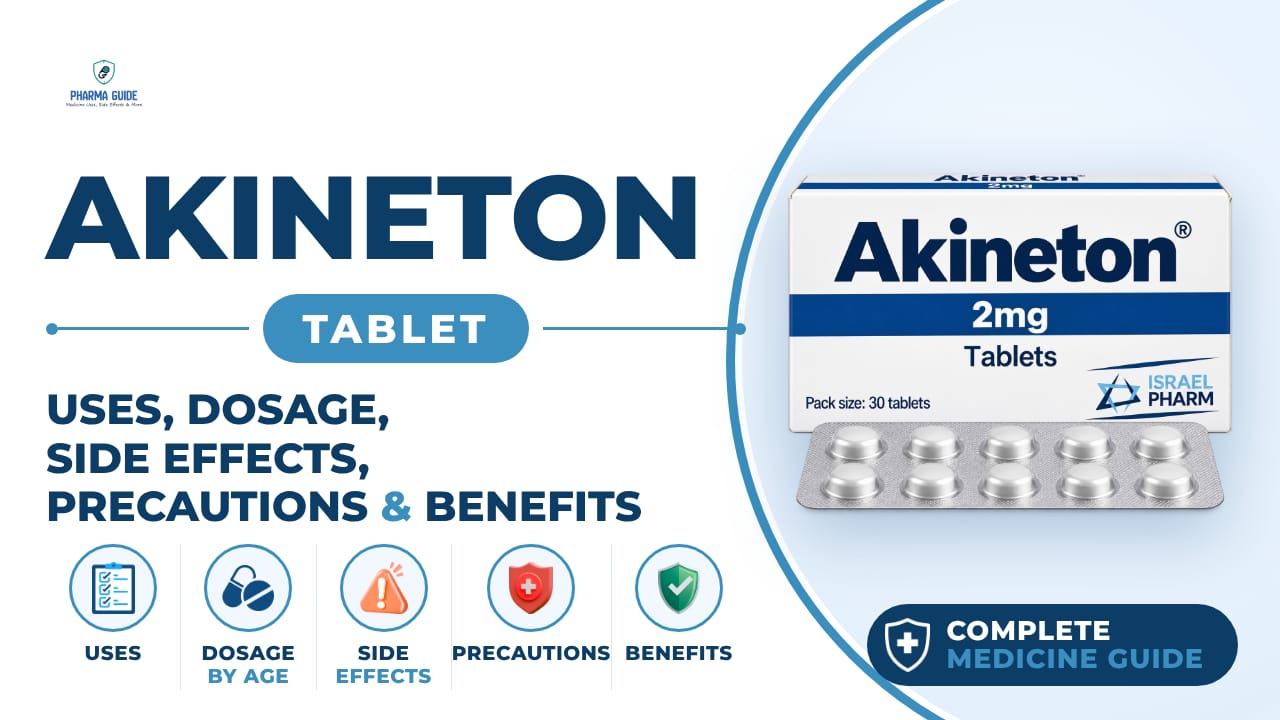
Akineton Tablet: Uses, Dosage, Side Effects, Precautions and Alternates
Anticholinergic antiparkinson agent
Akineton Tablet (biperiden) treats Parkinson's disease and drug-induced muscle spasms. Learn uses, dosage, side effects, warnings, and alternatives.
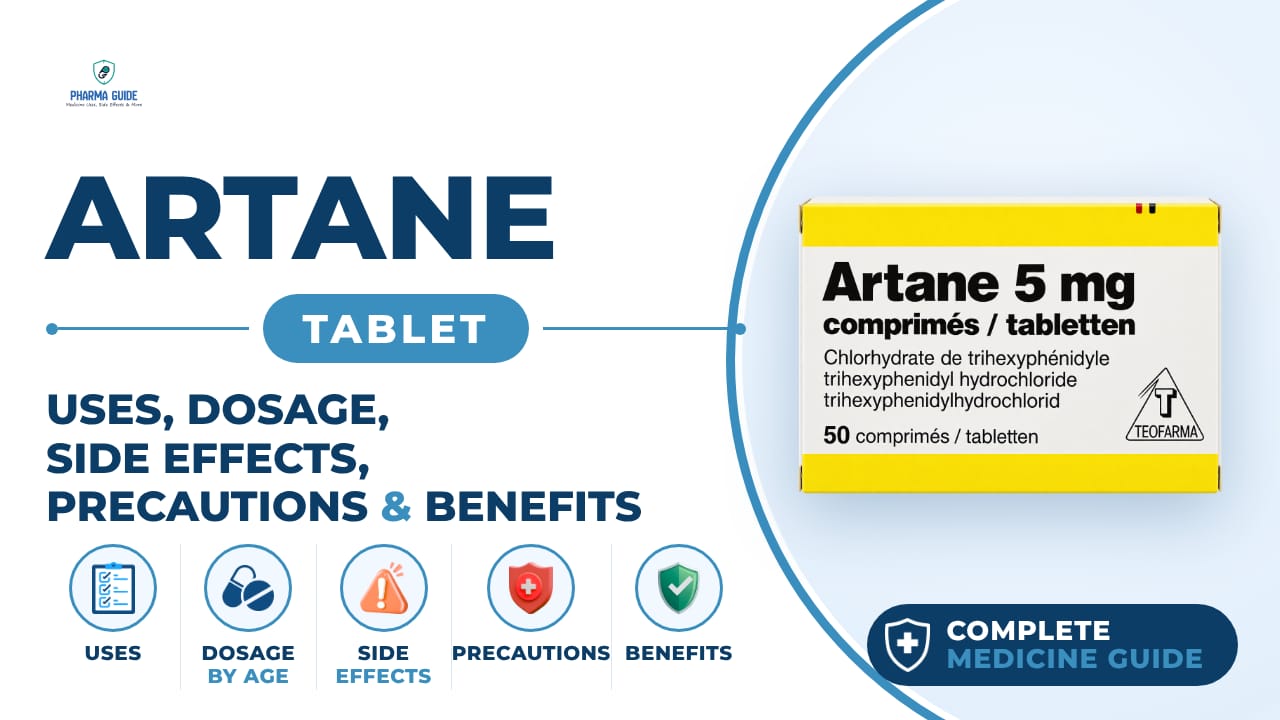
Artane Tablet: Uses, Dosage, Side Effects, Precautions and Alternates
Anticholinergic antiparkinson agent
Artane Tablet (trihexyphenidyl) treats Parkinson's tremors, stiffness, and drug-induced muscle problems. Learn its uses, dosage, side effects, and precautions.