
Safety
General information, not medical advice
Your prescriber and the leaflet in your pack know your situation. This page does not.
- Follow your prescriber and the leaflet
- Don't start, stop, or change a dose on your own
- Doses and warnings differ by country and product
Aklief Cream: Uses, Dosage, Side Effects, Precautions and Alternates
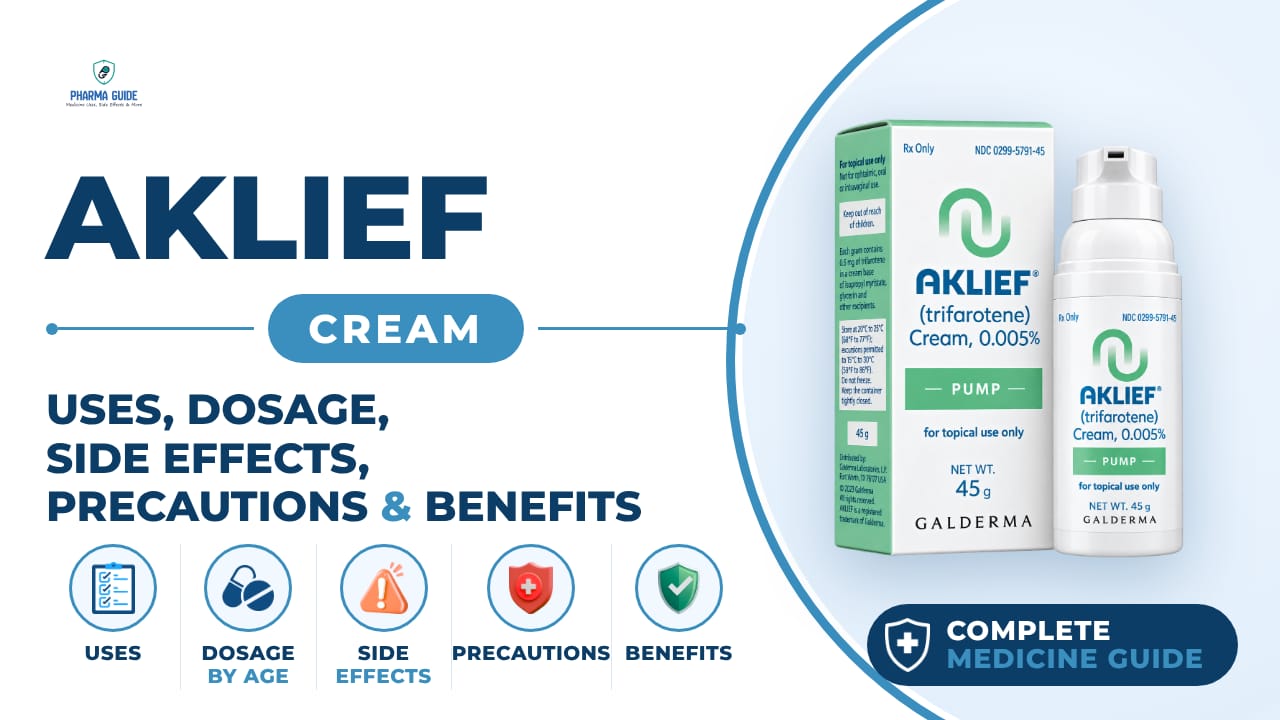
| Generic name | trifarotene |
|---|---|
| Drug class | topical retinoid |
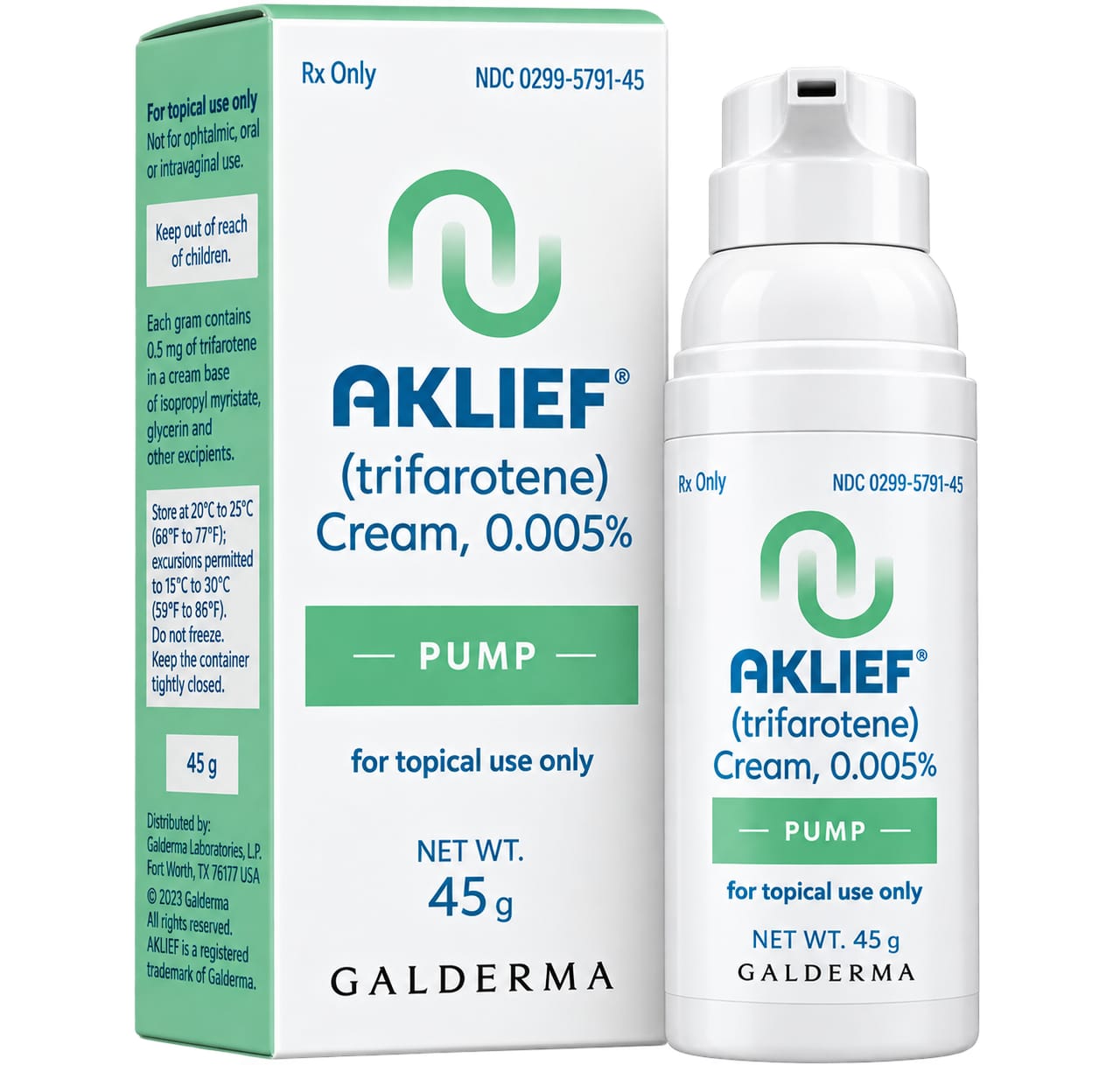
| Forms | Cream (topical), 2 g sample tube, 15 g, 30 g, 45 g and 75 g pump |
Quick overview
Aklief Cream is a prescription topical retinoid containing trifarotene, used to treat acne vulgaris on the face and trunk in patients 9 years of age and older. It works by unplugging blocked hair follicles and preventing new plugs from forming, reducing both pimples and blackheads/whiteheads. It is applied once daily in the evening, and improvement is generally seen within 4 to 8 weeks.
What is Aklief Cream
Aklief is a prescription cream applied to the skin to treat acne. It contains the medicine trifarotene, which belongs to a group of medicines called retinoids.
Aklief Cream uses
- Treats acne vulgaris (pimples, blackheads, and whiteheads) on the face and trunk (chest, shoulders, and back) in patients 9 years of age and older (12 years and older in Canada)
- Treats acne vulgaris
- Treats facial acne
- Treats acne affecting the chest, shoulders, and back
Benefits of Aklief Cream
- Helps unclog blocked hair follicles and prevents new plugs from forming
- Reduces both inflammatory lesions (pimples) and non-inflammatory lesions (blackheads and whiteheads)
- Can be used on larger body areas like the upper back, shoulders, and chest, as well as the face
- Acne improvement is generally seen within 4 to 8 weeks of treatment
How Aklief Cream works
Aklief contains trifarotene, a retinoid that targets a specific receptor in the skin. It works by unplugging blocked hair follicles and helping to stop new plugs from forming, which reduces inflammation and helps control skin cell turnover involved in acne.
Aklief Cream dosage
Apply exactly as your doctor tells you to use it, once a day in the evening, to clean and dry skin. Use only on the skin; do not use in or on the mouth, eyes, lips, corners of the nose, vagina, armpits, or neck. If the product gets into the eyes, rinse right away with warm water.
One pump actuation is usually enough to cover the face (forehead, cheeks, nose, and chin). Two pump actuations are usually enough for the upper trunk (reachable upper back, shoulders, and chest); one more pump may be used for the middle and lower back if acne is present there. Spread a thin layer over the entire affected area; do not use more than needed.
Wash your hands before and after applying the cream. A moisturizer may be used before and after application as needed, allowing time for the skin to dry in between. Do not cover the treated area with dressings or bandages.
Avoid using other acne medications at the same time unless your doctor tells you to. If a dose is missed, continue with the usual amount the next evening; do not apply extra to make up for it.
| Age group | Dose |
|---|---|
| Under 9 years | Safety and effectiveness are not established |
| 9–11 years | Apply a thin layer once daily in the evening to affected acne areas |
| 12–17 years | Apply a thin layer once daily in the evening |
| 65 years and older | No separate age-specific dose is established; use is individualized |
Available forms and strengths
- Cream (topical)
- 2 g sample tube
- 15 g, 30 g, 45 g and 75 g pump
Side effects of Aklief Cream
Common
- Skin redness
- Dryness
- Itching
- Peeling/scaling
- Burning or stinging
- Pigment loss of the skin
- Sunburn
Serious
- Severe skin irritation or local inflammatory reaction
- Severe allergic reaction (swelling of face, lips, mouth, tongue, or throat; trouble breathing; hives; dizziness or fainting)
Warnings and precautions
- This medicine can make skin more sensitive to sunlight and sunlamps. Avoid too much sun exposure, including sunlamps and tanning beds, and use sunscreen (SPF 15 or higher) and protective clothing over treated areas when you cannot avoid being in the sun.
- Do not use this medicine on cuts, scrapes, eczema, or sunburned skin, and avoid waxing the treated areas, as this can increase irritation.
- Avoid using other skin products that can dry or irritate the skin, such as harsh soaps, strong cleansers, or products with high alcohol content, as these can increase the risk of severe skin reactions when combined with this medicine.
- Do not use this medicine together with other acne products unless your doctor tells you to, since this may worsen skin irritation.
- Aklief should not be used during pregnancy or by women planning to become pregnant, because of possible risks to the baby.
- Women who can become pregnant should use effective birth control while using this medicine, and should stop treatment and tell their doctor right away if they become pregnant.
- It is not known if this medicine passes into breast milk. If used while breastfeeding, it should be applied to the smallest area needed, for the shortest time possible, and should not be applied to the chest or near the nipple and areola to avoid contact with the baby.
- No specific dose adjustment is generally required because systemic absorption of topical trifarotene is very low. Use as directed and consult a clinician if you have severe kidney disease.
- No specific dose adjustment is generally required. Systemic exposure is minimal, but significant liver disease should still be discussed with a healthcare professional.
- It is not known if drinking alcohol affects this medicine, but skin products containing high amounts of alcohol should be avoided because they can irritate the skin.
- Aklief is not expected to impair driving or operating machinery because it is a topical medicine with minimal systemic effects.
Storage
- Store AKLIEF at room temperature (15°C to 30°C). Keep from freezing.
- Keep out of reach and sight of children.
- If you receive a sample tube of AKLIEF Cream, keep the tube tightly closed.
- Keep away from heat.
When to see a doctor
- Get medical help right away if you have signs of a serious allergic reaction, such as trouble breathing, wheezing, a racing heart, fever, swollen glands, swelling of the face, lips, mouth, tongue or throat, trouble swallowing, throat tightness, hives, nausea, vomiting, dizziness, fainting, stomach cramps, or joint pain.
- If you think you have used too much of this medicine, contact your healthcare professional, go to a hospital emergency department, or call your local poison control center right away, even if you do not have symptoms.
- Tell your healthcare provider if you develop troublesome skin reactions like redness, scaling, dryness, or stinging/burning that bother you or interfere with daily activities, as your doctor may need to adjust how often you use the medicine.
- If you think you may have become pregnant while using this medicine, stop using it right away and contact your healthcare provider.
Alternatives
- Adapalene
- Tretinoin
- Tazarotene
- Clascoterone
Watch the video
FAQs
What is Aklief Cream used for?
Aklief Cream treats acne vulgaris (pimples, blackheads, and whiteheads) on the face and trunk, including the chest, shoulders, and back, in patients 9 years of age and older.
How do you apply Aklief Cream?
Apply a thin layer once daily in the evening to clean, dry skin. One pump is usually enough for the face, and two pumps for the upper trunk, with an extra pump for the middle and lower back if needed. Avoid the eyes, lips, mouth, nose corners, vagina, armpits, and neck.
How long does it take for Aklief Cream to work?
Acne improvement is generally seen within 4 to 8 weeks of treatment.
What are the common side effects of Aklief Cream?
Common side effects include skin redness, dryness, itching, peeling or scaling, burning or stinging, pigment loss of the skin, and sunburn.
Can Aklief Cream be used during pregnancy?
No, Aklief should not be used during pregnancy or by women planning to become pregnant due to possible risks to the baby. Women who can become pregnant should use effective birth control while using this medicine.
General information, not medical advice
Your prescriber and the leaflet in your pack know your situation. This page does not.
- Follow your prescriber and the leaflet
- Don't start, stop, or change a dose on your own
- Doses and warnings differ by country and product
Sources
Video
Related medicines

Injectafer Injection: Uses, Dosage, Side Effects, Precautions and Alternates
Iron products
Injectafer (ferric carboxymaltose) treats iron deficiency anemia and heart failure-related iron deficiency via IV. Learn uses, dosage, side effects, and

Gliclazide Tablet: Uses, Dosage, Side Effects, Precautions and Alternates
Sulfonylurea (hypoglycemic/antidiabetic agent)
Gliclazide Tablet is a sulfonylurea for type 2 diabetes that boosts insulin release. Learn about dosage, side effects, warnings, and precautions.