
Safety
General information, not medical advice
Your prescriber and the leaflet in your pack know your situation. This page does not.
- Follow your prescriber and the leaflet
- Don't start, stop, or change a dose on your own
- Doses and warnings differ by country and product
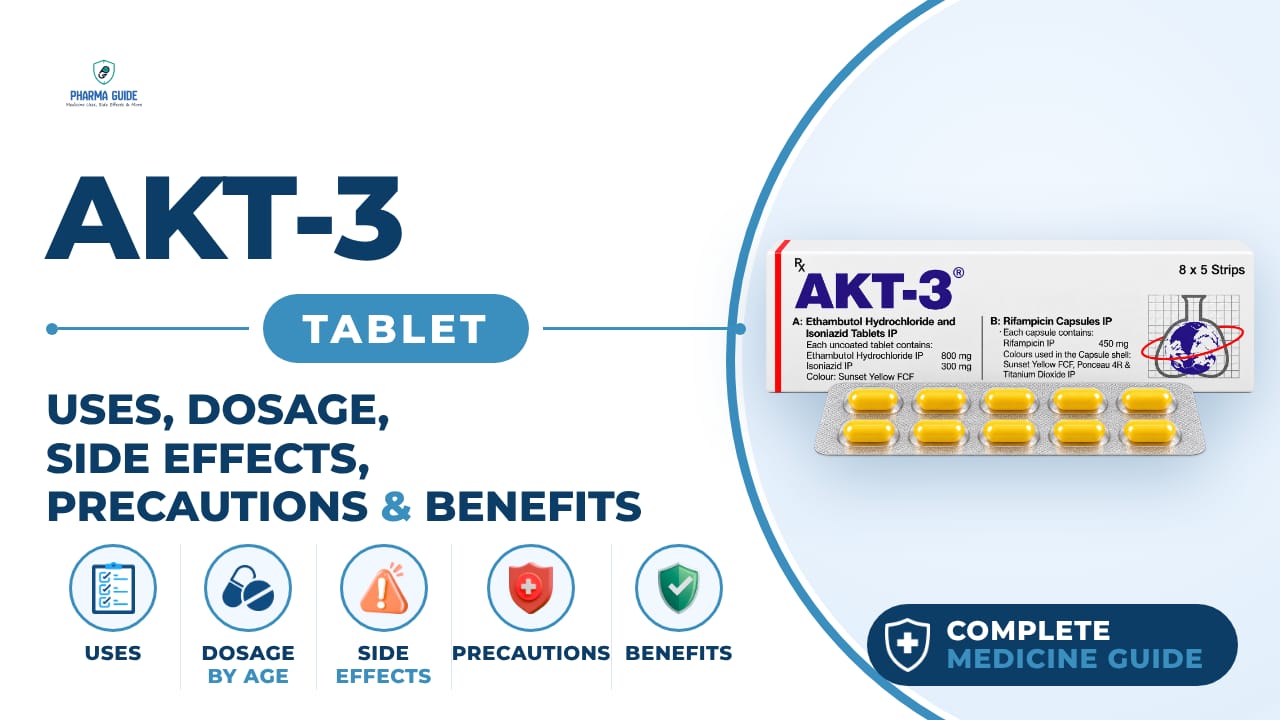
AKT-3 Tablet: Uses, Dosage, Side Effects, Precautions and Alternates
| Generic name | Ethambutol + Isoniazid + Rifampicin |
|---|---|
| Drug class | Anti-tubercular combination medicine |
| Forms | Tablet, Kit |
Quick overview
AKT-3 Tablet is a combination medicine containing Ethambutol, Isoniazid, and Rifampicin, belonging to the anti-tubercular combination medicine class. It is used to treat tuberculosis (TB) by stopping the growth of the bacteria that cause the infection. It is available as a tablet and as a kit, and it is important to complete the full prescribed course for the infection to be fully cured.
What is AKT-3 Tablet
AKT-3 Kit is a combination medicine made of three antibiotics (Ethambutol, Isoniazid, and Rifampicin). It is used to treat tuberculosis (TB) by stopping the growth of the bacteria that cause the infection.
AKT-3 Tablet uses
- Treatment of Tuberculosis (TB)
- Treats active tuberculosis
- Treats pulmonary tuberculosis
- May be used for extrapulmonary tuberculosis
Benefits of AKT-3 Tablet
Tuberculosis is an infectious disease that mainly affects the lungs but can affect other parts of the body as well. AKT-3 Kit helps treat tuberculosis by stopping the growth of bacteria causing infection.
Symptoms might improve after using AKT-3 Kit, but it is important to complete the full course of treatment to ensure the infection is completely cured and prevent it from returning.
How AKT-3 Tablet works
AKT-3 combines three medicines that attack TB bacteria in different ways. Rifampicin blocks an enzyme the bacteria need to make proteins and multiply. Isoniazid stops the bacteria from building their protective outer covering. Ethambutol slows down the growth of the bacteria. Together they kill the bacteria and clear the infection.
AKT-3 Tablet dosage
Follow your doctor's guidance regarding the dose and duration of this medication, and check the label before use.
It is best to take this medicine on an empty stomach, about one hour before or two hours after meals, at a fixed time each day.
Avoid taking it with tyramine-rich foods such as cheese, smoked fish, meats, and some types of beer.
Finish the entire prescribed course of treatment even if you start to feel better, since stopping early may make the infection harder to treat.
If you miss a dose, take it as soon as you remember; but if it is almost time for your next dose, skip the missed one and continue your normal schedule. Do not take a double dose to make up for a missed one.
| Age group | Dose |
|---|---|
| Under 6 years | No standard age-based AKT-3 tablet dose; pediatric TB treatment is weight-based and specialist-directed |
| 6–11 years | Dose is determined by body weight and the TB treatment regimen; this adult-strength combination may not be suitable for smaller children |
| 12–17 years | Weight-based TB dosing under specialist supervision; no universal dose based on age alone |
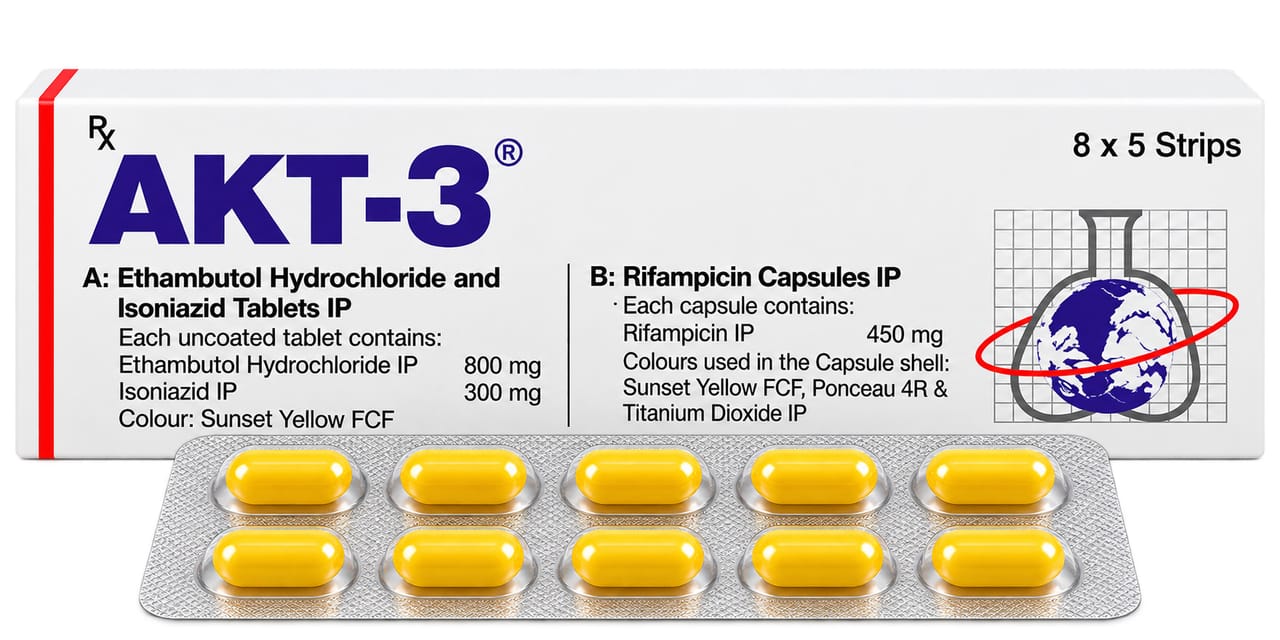
| 18–39 years | Dose is determined by the prescribed TB regimen and body weight; AKT-3 contains 450 mg rifampicin + 300 mg isoniazid + 800 mg ethambutol per kit/tablet combination |
Available forms and strengths
- Tablet
- Kit
- 450 mg rifampicin + 300 mg isoniazid + 800 mg ethambutol per kit/tablet combination
Side effects of AKT-3 Tablet
Common
- Nausea
- Vomiting
- Rash
- Fever
- Dark-colored urine
- Sweating
- Increased sputum production
- Increased saliva
- Watery eyes
- Diarrhoea
- Loss of appetite
Serious
- Increased liver enzymes
- Jaundice
- Visual impairment
- Increased uric acid level in blood
- Gout
- Peripheral neuropathy (tingling and numbness of feet and hand)
Warnings and precautions
- AKT-3 may be unsafe to use during pregnancy. Animal studies have shown harmful effects on the developing baby, though there are limited studies in humans. Your doctor will weigh the benefits and risks before prescribing it, so talk to your doctor before taking it.
- AKT-3 is generally considered safe to use during breastfeeding when prescribed by a doctor. Studies suggest the drug does not pass into breastmilk in significant amounts and is not harmful to the baby.
- Use with caution if you have kidney disease. Your dose may need to be adjusted, and your doctor may want kidney function tests before you start this medicine.
- Use with caution if you have liver disease. Your dose may need to be adjusted, so talk to your doctor before starting this medicine.
- It is not safe to drink alcohol while taking this medicine, as it can cause a reaction with symptoms such as flushing, a faster heartbeat, nausea, thirst, chest pain, and low blood pressure.
- This medicine may occasionally cause eyesight problems or tingling/numbness in the hands or feet, which could affect your ability to drive. Do not drive until you know how this medicine affects you.
- This medicine can make birth control pills less effective, so ask your doctor about using a non-hormonal method of birth control such as a condom, diaphragm, or spermicide.
- This medicine can cause temporary discoloration (red, orange, or brown color) of your teeth, sweat, urine, saliva, and tears. This is usually harmless.
- You should not take this medicine if you have liver disease, kidney disease, or epilepsy unless your doctor tells you to.
- Stopping this medicine suddenly may reduce its effectiveness and could lead to drug-resistant tuberculosis, so complete the full course as prescribed.
Storage
- Store in a cool and dry place, and keep the temperature below 30°C.
When to see a doctor
- If you have any allergic reaction such as rashes, itching, swelling, or shortness of breath, seek immediate medical help.
- If side effects get worse, consult your doctor immediately.
- Consult your doctor if your condition does not improve or seems to get worse.
Alternatives
- Rifampicin + isoniazid combinations
- Standard WHO-recommended TB fixed-dose combinations
- Rifater
- Other TB regimens selected after susceptibility testing
Watch the video
FAQs
What is AKT-3 Tablet used for?
AKT-3 Tablet is used to treat tuberculosis (TB), including active pulmonary tuberculosis and may be used for extrapulmonary tuberculosis, by stopping the growth of the bacteria causing the infection.
How should AKT-3 Tablet be taken?
It is best taken on an empty stomach, about one hour before or two hours after meals, at a fixed time each day. Avoid tyramine-rich foods like cheese, smoked fish, meats, and some beers. Complete the full prescribed course even if you feel better.
What are the common side effects of AKT-3 Tablet?
Common side effects include nausea, vomiting, rash, fever, dark-colored urine, sweating, increased sputum, increased saliva, watery eyes, diarrhoea, and loss of appetite.
Can I drink alcohol while taking AKT-3 Tablet?
No, it is not safe to drink alcohol while taking this medicine, as it can cause a reaction with symptoms such as flushing, faster heartbeat, nausea, thirst, chest pain, and low blood pressure.
Does AKT-3 Tablet affect birth control pills?
Yes, AKT-3 can make birth control pills less effective, so your doctor may recommend a non-hormonal method of birth control such as a condom, diaphragm, or spermicide.
General information, not medical advice
Your prescriber and the leaflet in your pack know your situation. This page does not.
- Follow your prescriber and the leaflet
- Don't start, stop, or change a dose on your own
- Doses and warnings differ by country and product
Sources
Video
Related medicines

Injectafer Injection: Uses, Dosage, Side Effects, Precautions and Alternates
Iron products
Injectafer (ferric carboxymaltose) treats iron deficiency anemia and heart failure-related iron deficiency via IV. Learn uses, dosage, side effects, and

Gliclazide Tablet: Uses, Dosage, Side Effects, Precautions and Alternates
Sulfonylurea (hypoglycemic/antidiabetic agent)
Gliclazide Tablet is a sulfonylurea for type 2 diabetes that boosts insulin release. Learn about dosage, side effects, warnings, and precautions.