
Safety
General information, not medical advice
Your prescriber and the leaflet in your pack know your situation. This page does not.
- Follow your prescriber and the leaflet
- Don't start, stop, or change a dose on your own
- Doses and warnings differ by country and product
Akurit Tablet: Uses, Dosage, Side Effects, Precautions and Alternates
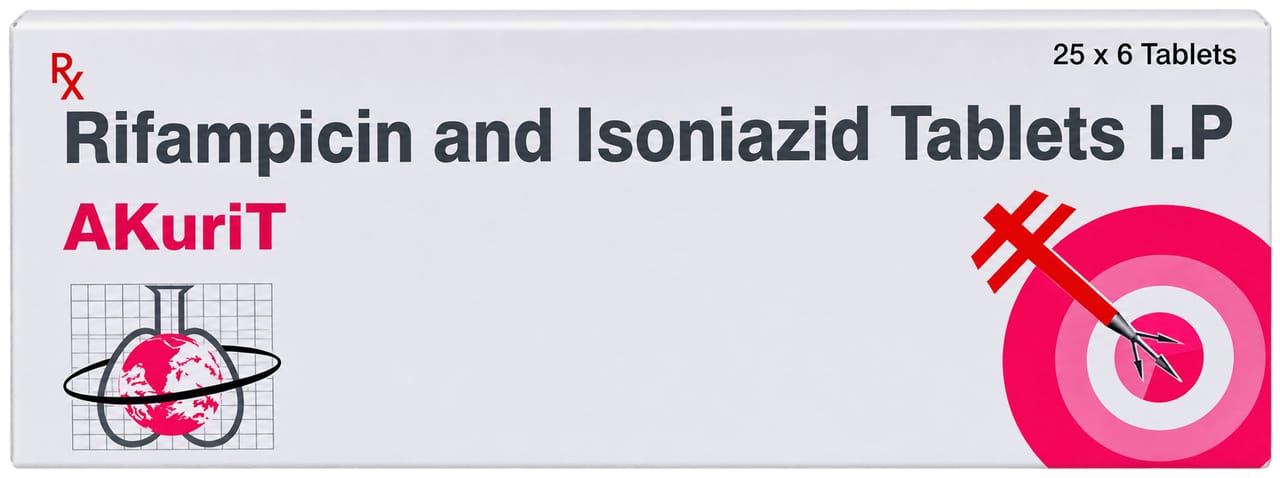
| Generic name | Rifampicin + Isoniazid |
|---|---|
| Drug class | Antituberculosis agent |
| Forms | Tablet |
Quick overview
Akurit Tablet is a combination medicine containing rifampicin and isoniazid, belonging to the antituberculosis class of medicines. It is used to treat tuberculosis and other bacterial infections like leprosy, and may also be given as preventive treatment for people exposed to tuberculosis. Dosing is based on body weight, and it carries a risk of liver damage, so it must be used exactly as prescribed.
What is Akurit Tablet
Akurit is a combination medicine containing rifampicin and isoniazid. It is used to treat tuberculosis (TB), a serious bacterial infection that mainly affects the lungs.
Akurit Tablet uses
- Treatment of tuberculosis
- Preventive treatment for people exposed to tuberculosis
- Treatment of other bacterial infections like leprosy
Benefits of Akurit Tablet
- Kills the bacteria that cause tuberculosis
- Helps stop the bacteria from multiplying, reducing the risk of drug resistance
How Akurit Tablet works
Isoniazid stops the bacteria from building their protective outer wall, which kills them. Rifampicin blocks an enzyme the bacteria need to copy their genetic material, which stops them from multiplying.
Akurit Tablet dosage
Take this medicine by mouth as a tablet. Take it on an empty stomach, at least one hour before or two hours after a meal, because food can reduce how well the medicine is absorbed. If you have trouble swallowing the tablet, it can be crushed or dissolved in water before taking.
Children should only take this medicine if they are able to swallow whole tablets and weigh enough for the fixed-dose combination. Do not stop or interrupt treatment on your own; complete the full course as prescribed by your doctor.
If you miss a dose, take it as soon as you remember, but skip it if it is almost time for your next dose. Do not take a double dose to make up for a missed one.
| Age group | Dose |
|---|---|
| Under 25 kg | Not suitable for the adult Akurit tablet; pediatric formulation is preferred |
| 25–35 kg | 2 tablets once daily |
| 36–55 kg | 3 tablets once daily |
| 56 kg and above | 4 tablets once daily |
Available forms and strengths
- Tablet
Side effects of Akurit Tablet
Common
- Abdominal pain
- Nausea
- Vomiting
- Headache
- Stomach upset
- Heartburn
- Dizziness
- Muscle pain
- Joint pain
- Loss of appetite
- Unusual tiredness or weakness
Serious
- Liver damage
- Jaundice (yellowing of skin or eyes)
- Peripheral neuropathy (tingling or numbness in hands and feet)
- Reddish-orange discoloration of bodily fluids (urine, tears, sweat)
- Dark urine
- Skin rash
- Unusual bleeding or bruising
Warnings and precautions
- Do not take this medicine if you are allergic to any of its ingredients.
- Do not use this medicine if you have severe or acute liver disease.
- Do not use this medicine if you have acute gout.
- This medicine may cause severe skin reactions, including serious conditions that affect the skin and mucous membranes. Tell your doctor right away about any rash or mouth sores.
- Do not stop taking this medicine on your own without talking to your doctor, even if you feel better, since stopping early can lead to drug-resistant bacteria.
- This medicine can interact with many other drugs, including blood thinners, antifungal medicines, HIV medicines, heart medicines, and birth control pills, making them less effective or increasing their side effects.
- This medicine should only be used during pregnancy if your doctor decides the benefits outweigh the risks. It is not recommended, especially in the first three months of pregnancy, unless absolutely necessary.
- This medicine passes into breast milk in small amounts, but it is generally considered safe for breastfeeding. It is not recommended unless absolutely necessary, and your baby should be watched for any unusual symptoms.
- Use this medicine with caution if you have kidney disease, as it may cause more serious side effects. Your doctor may need to monitor your kidney function or adjust your dose.
- This medicine carries a high risk of liver damage. It should not be used in people with severe liver disease, and liver function should be closely monitored during treatment, especially if you already have liver problems.
- Avoid alcohol while taking this medicine, as combining them can increase the risk of liver damage.
- This medicine may cause dizziness, drowsiness, or vision problems. Be careful when driving or operating machinery until you know how the medicine affects you.
Storage
- Store at room temperature, away from moisture and heat.
- Keep out of the reach of children and pets.
- Do not store in the bathroom or near the kitchen sink.
- Store in a dry place, away from direct light.
- Do not use after the expiration date or if the tablets show signs of damage.
- Dispose of unused or expired tablets properly according to local regulations.
When to see a doctor
- Tell your doctor right away if your skin or eyes turn yellow, which can be a sign of liver damage.
- Get medical help right away if you take too much of this medicine, since overdose can cause severe vomiting, headache, dizziness, hallucinations, facial swelling, coma, or seizures.
- Report any skin rash or mouth/mucous membrane sores to your doctor immediately, as these can be signs of a severe skin reaction.
- Contact your doctor if you notice numbness or tingling in your hands and feet, as this could be a sign of nerve damage.
Alternatives
- Rimactazid
- R-Cinex
- Rifamate
Watch the video
FAQs
What is Akurit Tablet used for?
Akurit Tablet is used to treat tuberculosis, as preventive treatment for people exposed to tuberculosis, and to treat other bacterial infections like leprosy.
How should Akurit Tablet be taken?
Akurit Tablet should be taken by mouth on an empty stomach, at least one hour before or two hours after a meal, since food can reduce how well it is absorbed. It can be crushed or dissolved in water if swallowing is difficult.
What should I do if I miss a dose of Akurit Tablet?
If you miss a dose, take it as soon as you remember, but skip it if it is almost time for your next dose. Do not take a double dose to make up for a missed one.
What are the serious side effects of Akurit Tablet?
Serious side effects include liver damage, jaundice, peripheral neuropathy, reddish-orange discoloration of bodily fluids, dark urine, skin rash, and unusual bleeding or bruising.
Is it safe to drink alcohol while taking Akurit Tablet?
No, alcohol should be avoided while taking Akurit Tablet because combining them can increase the risk of liver damage.
General information, not medical advice
Your prescriber and the leaflet in your pack know your situation. This page does not.
- Follow your prescriber and the leaflet
- Don't start, stop, or change a dose on your own
- Doses and warnings differ by country and product
Sources
Video
Related medicines

Injectafer Injection: Uses, Dosage, Side Effects, Precautions and Alternates
Iron products
Injectafer (ferric carboxymaltose) treats iron deficiency anemia and heart failure-related iron deficiency via IV. Learn uses, dosage, side effects, and

Gliclazide Tablet: Uses, Dosage, Side Effects, Precautions and Alternates
Sulfonylurea (hypoglycemic/antidiabetic agent)
Gliclazide Tablet is a sulfonylurea for type 2 diabetes that boosts insulin release. Learn about dosage, side effects, warnings, and precautions.