
Safety
General information, not medical advice
Your prescriber and the leaflet in your pack know your situation. This page does not.
- Follow your prescriber and the leaflet
- Don't start, stop, or change a dose on your own
- Doses and warnings differ by country and product
Albendazole Tablet: Uses, Dosage, Side Effects, Precautions and Alternates
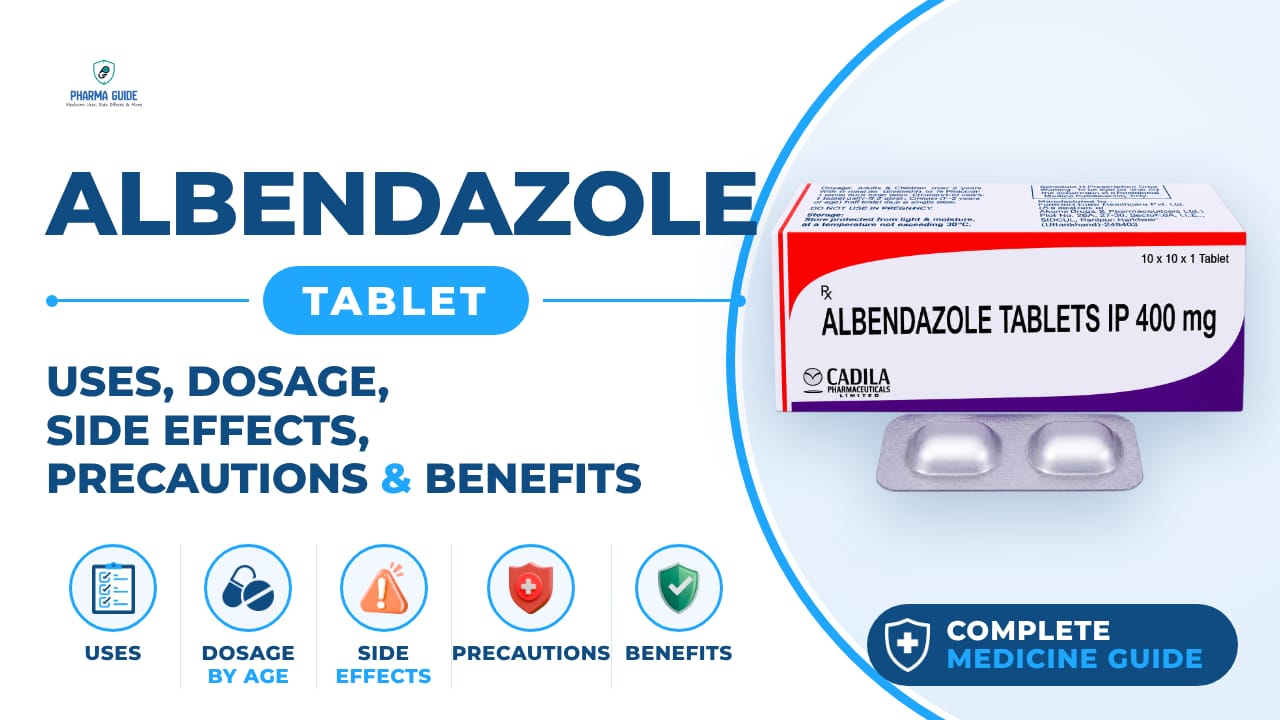
| Generic name | Albendazole |
|---|---|
| Drug class | Benzimidazole anthelmintic (antiparasitic) |
| Forms | Tablet, Chewable tablet |
Quick overview
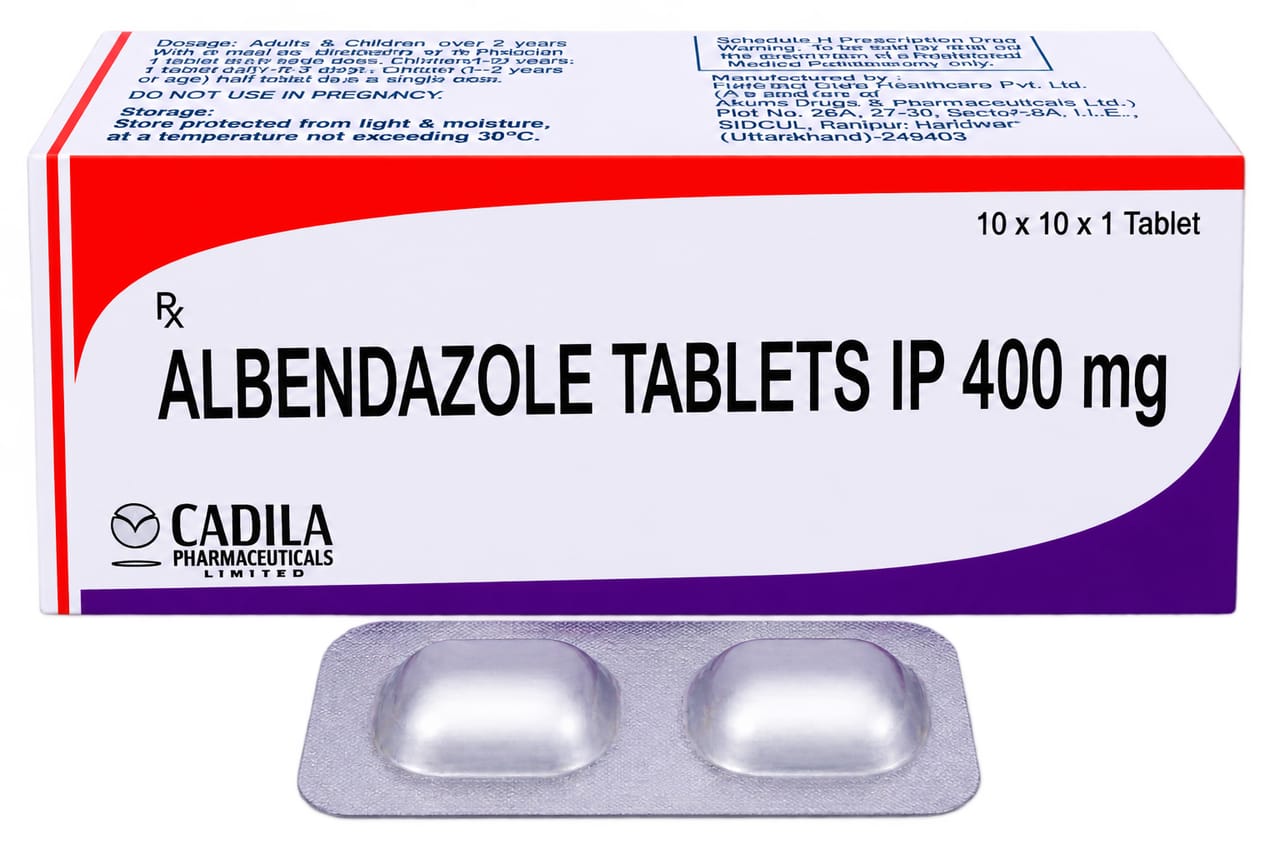
Albendazole Tablet contains the generic medicine Albendazole, a benzimidazole anthelmintic (antiparasitic) used to clear worms and parasites from the gut and other body tissues. It is a broad-spectrum medicine that treats many types of parasitic infections, often with a single dose for some intestinal worm infections. It is available as a tablet and as a chewable tablet, and should be used exactly as prescribed by your doctor.
What is Albendazole Tablet
Albendazole is a prescription medicine used to clear worms and parasites from the gut and other body tissues. It is a broad-spectrum anti-worm and anti-protozoal medicine that treats many types of parasitic infections.
Albendazole Tablet uses
- Roundworm infections (ascariasis)
- Hookworm infections
- Whipworm infections (trichuriasis)
- Pinworm or threadworm infections (enterobiasis)
- Tapeworm infections
- Neurocysticercosis (pork tapeworm affecting the brain)
- Hydatid disease (dog tapeworm cysts in organs like the liver and lungs)
- Strongyloidiasis
- Giardiasis
- Lymphatic filariasis (elephantiasis), used with other medicines
- Cutaneous larva migrans (skin infection from animal hookworm larvae)
Benefits of Albendazole Tablet
- Kills a wide range of intestinal and tissue parasites
- Can clear some intestinal worm infections with just one dose
- Works against both adult worms and larvae, unlike some older antiparasitic drugs
How Albendazole Tablet works
Albendazole attaches to a part of the worm's cell structure (called beta-tubulin), stopping the worm from forming the structures it needs to function. This blocks the worm from taking in and using glucose for energy, so its energy stores run out. The worm becomes weak, dies, and is passed out of the body in stool.
Albendazole Tablet dosage
Tablets are usually taken on an empty stomach, but your doctor may tell you to take them after food depending on your condition. For some infections, taking the tablet with a fatty meal helps the body absorb the medicine better. Tablets may be swallowed whole, or crushed or chewed if you have trouble swallowing. No special laxative or fasting is needed.
Take the medicine exactly as your doctor has prescribed and finish the full course rather than stopping when you feel better. For treatments lasting several days, take the dose at the same time each day and do not skip doses. Your doctor may want to check on you a few weeks after treatment to make sure it has worked; a second dose or course is sometimes needed.
| Age group | Dose |
|---|---|
| Under 1 year | Not routinely recommended |
| 1–23 months | 200 mg once |
| 2–11 years | 400 mg once |
| 12–17 years | 400 mg once |
| Adults ≥18 years | 400 mg once |
Available forms and strengths
- Tablet
- Chewable tablet
Side effects of Albendazole Tablet
Common
- Headache or dizziness
- Nausea or vomiting
- Stomach pain or diarrhoea
- Fever
- Mild skin rash or itchiness
- Temporary hair thinning (with prolonged use)
- Mild increase in liver enzymes
Serious
- Bone pain
- Tiredness, shortness of breath, and looking pale
- Frequent infections
- Unusual bleeding or bruising
- Yellowing of the skin and eyes (jaundice), dark coloured urine, and/or light coloured stools
- Infections of the throat, mouth, skin, or nasal passage
- Seizures
- Blurred or abnormal vision
- Unusual behaviour
- Unusual numbness or weakness
- Unusual taste, smell, or hearing
- Bone marrow suppression, very low white blood cell counts, or low platelet counts
- Severe skin reactions such as Stevens-Johnson syndrome
- Signs of allergic reaction such as swelling of the limbs, face, mouth, or throat, shortness of breath or breathing difficulties, and hives or severe skin reactions
Warnings and precautions
- Do not take this medicine if you have ever had an allergic reaction to albendazole, similar medicines such as mebendazole, or any of its ingredients.
- Your doctor should check your blood counts and liver function before starting treatment and regularly during therapy.
- Do not change your dose without checking with your doctor, and do not use this medicine for any other complaint unless your doctor tells you to.
- Do not give this medicine to anyone else even if their symptoms seem similar to yours.
- This medicine is not recommended for children under 2 years of age.
- Albendazole should not be used during pregnancy because it can harm an unborn baby. Effective contraception should be used during treatment and for a period afterward, and treatment should only start after a negative pregnancy test or during the first week of a period.
- Breastfeeding should be stopped while taking this medicine and for several days after treatment, since the medicine can pass into breast milk and be absorbed by the baby.
- This medicine is generally considered safe for people with kidney disease, though you should confirm with your doctor.
- People with liver problems need closer monitoring, including liver function tests, because the medicine is processed by the liver and can affect it.
- It's best to avoid alcohol while taking this medicine, since alcohol may increase the risk of side effects and both are processed by the liver.
- Be careful before driving or using machines or tools until you know how this medicine affects you, as it may cause dizziness.
Storage
- Keep tablets in the pack until it is time to take them
- Store in a cool, dry place, away from moisture, heat, or sunlight, where the temperature stays below 30°C
- Do not store in the bathroom, near a sink, in the car, or on window sills
- Keep it where young children cannot reach it
- If you no longer need the medicine or it is out of date, take it to a pharmacy for safe disposal
When to see a doctor
- Tell your doctor immediately if you notice bone pain, tiredness, shortness of breath, looking pale, frequent infections, unusual bleeding or bruising, yellowing of the skin or eyes, dark urine, light coloured stools, seizures, blurred vision, unusual behaviour, numbness or weakness, or unusual taste, smell, or hearing.
- Call your doctor right away or go to the Emergency Department if you notice swelling of the limbs, face, mouth, or throat, shortness of breath or breathing difficulties, or hives or severe skin reactions.
- If you or someone else has taken too much of this medicine, contact your doctor or go to the nearest hospital Emergency Department right away, even if there are no symptoms.
- Call your doctor if you notice signs of overdose such as severe nausea or vomiting, ongoing stomach pain or diarrhoea, liver problems, severe tiredness, or difficulty breathing.
Alternatives
- Mebendazole
- Pyrantel pamoate
- Ivermectin
Watch the video
FAQs
What is Albendazole Tablet used for?
It is used to treat worm and parasite infections including roundworm, hookworm, whipworm, pinworm, tapeworm, neurocysticercosis, hydatid disease, strongyloidiasis, giardiasis, lymphatic filariasis, and cutaneous larva migrans.
How does Albendazole Tablet work?
It attaches to beta-tubulin in the worm's cell structure, blocking the worm from taking in and using glucose for energy, which causes it to weaken, die, and be passed out in stool.
What is the dosage of Albendazole Tablet for adults?
Adults aged 18 years and above are usually given 400 mg as a single dose, though this depends on the condition being treated.
What are the common side effects of Albendazole Tablet?
Common side effects include headache, dizziness, nausea, vomiting, stomach pain, diarrhoea, fever, mild skin rash or itchiness, temporary hair thinning, and mild increase in liver enzymes.
Can Albendazole Tablet be taken during pregnancy?
No, it should not be used during pregnancy as it can harm an unborn baby. Effective contraception should be used during treatment and for a period afterward.
General information, not medical advice
Your prescriber and the leaflet in your pack know your situation. This page does not.
- Follow your prescriber and the leaflet
- Don't start, stop, or change a dose on your own
- Doses and warnings differ by country and product
Sources
- https://www.medanta.org/medicine-detail/albendazole-uses-side-effects-precautions-and-dosage
- https://www.novahospitalmeerut.com/blog/albendazole-400-mg-tablet-uses-dosage-for-adults-deworming-guide
- ZENTEL Consumer Medicine Information, Aspen Pharmacare Australia Pty Ltd, revised January 2025
Video
Related medicines

Injectafer Injection: Uses, Dosage, Side Effects, Precautions and Alternates
Iron products
Injectafer (ferric carboxymaltose) treats iron deficiency anemia and heart failure-related iron deficiency via IV. Learn uses, dosage, side effects, and

Gliclazide Tablet: Uses, Dosage, Side Effects, Precautions and Alternates
Sulfonylurea (hypoglycemic/antidiabetic agent)
Gliclazide Tablet is a sulfonylurea for type 2 diabetes that boosts insulin release. Learn about dosage, side effects, warnings, and precautions.