
Safety
General information, not medical advice
Your prescriber and the leaflet in your pack know your situation. This page does not.
- Follow your prescriber and the leaflet
- Don't start, stop, or change a dose on your own
- Doses and warnings differ by country and product
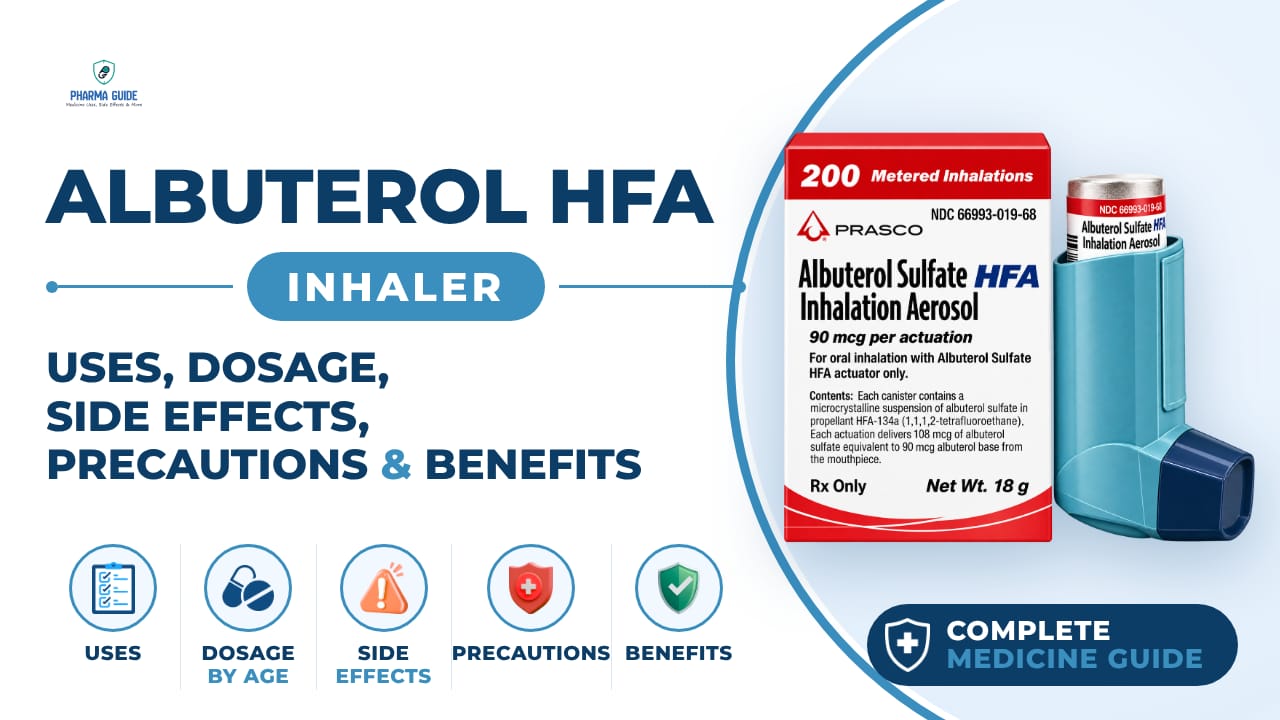
Albuterol HFA Inhaler: Uses, Dosage, Side Effects, Precautions and Alternates
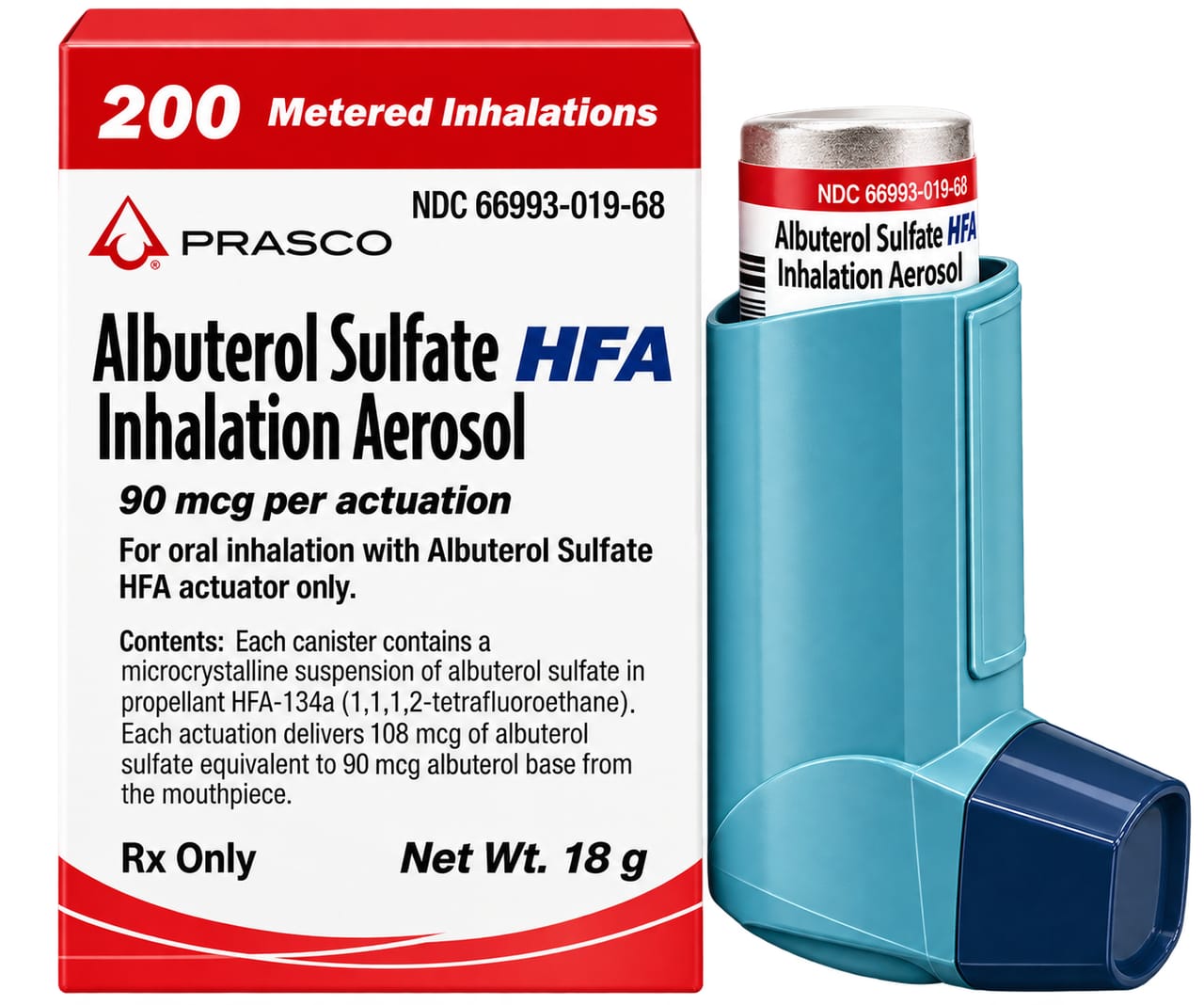
| Generic name | albuterol (salbutamol) |
|---|---|
| Drug class | Adrenergic bronchodilators |
| Forms | Aerosol metered-dose inhaler, Powder metered-dose inhaler, Nebulized solution, Tablets, Extended-release tablets, Oral syrup |
Quick overview
Albuterol HFA Inhaler contains albuterol (salbutamol), a bronchodilator that relaxes the muscles in the airways to make breathing easier. It is used to treat or prevent bronchospasm in asthma and certain types of COPD, and to prevent exercise-induced bronchospasm, in adults and children at least 2 years old. It works quickly, usually within minutes, and should be used exactly as prescribed by a doctor.
What is Albuterol HFA Inhaler
Generic name: albuterol (salbutamol). Drug class: Adrenergic bronchodilators. Albuterol is a bronchodilator medicine that relaxes the muscles in your airways, making it easier for air to flow into your lungs.
Albuterol HFA Inhaler uses
- Treats or prevents bronchospasm (narrowing of the airways) in people with asthma
- Treats certain types of chronic obstructive pulmonary disease (COPD)
- Prevents exercise-induced bronchospasm
- Used in adults and children at least 2 years old
Benefits of Albuterol HFA Inhaler
- Opens airways quickly to relieve wheezing, chest tightness, and shortness of breath
- Can be used before exercise to prevent breathing problems
- Fast-acting relief, usually starting within minutes
How Albuterol HFA Inhaler works
Albuterol works by acting on receptors in the airway muscles, causing them to relax. This widens the airways and also reduces the release of substances that can trigger airway narrowing. It has little effect on the heart at normal doses.
Albuterol HFA Inhaler dosage
Use exactly as prescribed by your doctor; do not use more or less than recommended, or for longer than recommended. Read all patient instructions and ask your doctor or pharmacist if you have questions. You may need to prime the inhaler before first use, following the instructions that come with your device. Some inhalers (such as ProAir HFA, Proventil HFA, or Ventolin HFA) must be shaken before each use; ProAir RespiClick does not need to be shaken.
Clean the plastic actuator with the canister removed at least once a week to make sure you are getting your full dose. Do not allow a young child to use the inhaler without help from an adult. For preventing exercise-induced symptoms, use the inhaler shortly before exercising, as directed by your doctor.
Keep track of doses using the dose counter on the inhaler and refill your prescription before you run out; always switch to a new inhaler when you get a refill. Do not float the canister in water to check if it's empty. Do not wash or put the ProAir RespiClick device in water; if the mouthpiece needs cleaning, wipe it gently with a dry cloth or tissue. Do not use a spacer or holding chamber with ProAir RespiClick.
If you are also using other asthma medicines, keep using them as prescribed and do not change your schedule without talking to your doctor. If you miss a dose, use it as soon as you remember, but skip it if it is almost time for your next dose — do not double up.
| Age group | Dose |
|---|---|
| Under 4 years | Safety and effectiveness of Albuterol HFA are not established |
| years | 2 inhalations every 4–6 hours as needed for bronchospasm; in some patients, 1 inhalation every 4 hours may be sufficient |
| 40–64 years | 2 inhalations every 4–6 hours as needed |
| 65–74 years | Generally follows the same adult regimen, individualized according to response |
Available forms and strengths
- Aerosol metered-dose inhaler
- Powder metered-dose inhaler
- Nebulized solution
- Tablets
- Extended-release tablets
- Oral syrup
Side effects of Albuterol HFA Inhaler
Common
- Chest pain, fast or pounding heartbeats
- Upset stomach, vomiting
- Painful urination
- Dizziness
- Feeling shaky or nervous
- Headache, back pain, body aches
- Cough, sore throat, sinus pain, runny or stuffy nose
- Trouble sleeping
- Tremors (shakiness), especially in the hands
Serious
- Signs of an allergic reaction: hives, difficulty breathing, swelling of the face, lips, tongue, or throat
- Wheezing, choking, or other breathing problems after using this medicine (paradoxical bronchospasm)
- Chest pain, fast heart rate, pounding heartbeats or fluttering in the chest
- Signs of low potassium: leg cramps, constipation, irregular heartbeats, fluttering in the chest, extreme thirst, increased urination, numbness or tingling, muscle weakness or limp feeling
- Signs of high blood sugar: increased thirst, increased urination, hunger, dry mouth, fruity breath odor, drowsiness, dry skin, blurred vision, weight loss
Warnings and precautions
- Keep albuterol on hand at all times and refill your prescription before you run out. Keep taking your other asthma medications as prescribed.
- If you find you need to use your asthma medicine more often within a day, this could be an early sign of a serious asthma attack, so talk to your doctor.
- Only use albuterol as prescribed. An overdose can be fatal, so seek emergency help right away if you think you've taken too much.
- Do not use this medicine if you are allergic to albuterol. If you are allergic to milk proteins, avoid inhalers that contain lactose, such as ProAir RespiClick or ProAir Digihaler.
- Tell your doctor if you have heart disease, high blood pressure, heart failure, an irregular heartbeat, a seizure disorder, diabetes, an overactive thyroid, or low potassium levels, since albuterol may affect these conditions.
- In rare cases, inhaling albuterol can cause your breathing to suddenly worsen instead of improve. If this happens, stop use right away and get medical help.
- Albuterol can cause changes in heart rate, blood pressure, and heart rhythm. Caution is advised for people with underlying heart conditions.
- It is not known if albuterol can harm an unborn baby. However, poorly controlled asthma during pregnancy can increase risks to both mother and baby, so the benefit of preventing breathing problems may outweigh any risk. Talk to your doctor if you are pregnant or planning to become pregnant.
- It may not be safe to breastfeed while using this medicine. Ask your doctor about any risk.
- There is no specific dosage guidance for people with kidney problems, but doctors should be careful with higher doses because the body clears the drug more slowly in people with reduced kidney function.
- There is no specific dosage adjustment advice for people with liver problems.
- There is no major direct interaction between albuterol HFA and alcohol. However, alcohol may worsen dizziness, headache, rapid heartbeat, or shakiness in some people.
- Tremor, dizziness, or palpitations can occur; avoid driving if these affect you.
Storage
- Store at room temperature away from moisture, heat, or cold temperatures.
- Keep the albuterol canister away from open flame or high heat, such as in a car on a hot day. The canister may explode if it gets too hot. Do not puncture or burn an empty inhaler canister.
When to see a doctor
- Get emergency medical help if you have signs of an allergic reaction: hives, difficulty breathing, or swelling of your face, lips, tongue, or throat.
- Call your doctor right away if you have wheezing, choking, or other breathing problems after using this medicine, chest pain, a fast or pounding heartbeat, painful urination, signs of high blood sugar, or signs of low potassium.
- Seek emergency medical attention right away if you think you have taken too much albuterol, since an overdose can be fatal.
- If you or your child experiences worsening breathing symptoms after using the inhaler, contact a healthcare professional as soon as possible.
Alternatives
- Levalbuterol
- Ventolin HFA
- ProAir-type albuterol HFA products
- Other clinician-selected rescue bronchodilators
Watch the video
FAQs
What is Albuterol HFA Inhaler used for?
It treats or prevents bronchospasm in people with asthma, treats certain types of COPD, and prevents exercise-induced bronchospasm in adults and children at least 2 years old.
How fast does Albuterol HFA Inhaler work?
It works quickly, usually within minutes, by relaxing the muscles in the airways to make breathing easier.
Do I need to shake the Albuterol HFA Inhaler before use?
Some inhalers, such as ProAir HFA, Proventil HFA, or Ventolin HFA, must be shaken before each use, while ProAir RespiClick does not need to be shaken.
What are the serious side effects of Albuterol HFA Inhaler?
Serious side effects include allergic reactions, paradoxical bronchospasm (worsening breathing after use), chest pain, fast or pounding heartbeats, and signs of low potassium or high blood sugar.
Is it safe to use Albuterol HFA Inhaler during pregnancy?
It is not known if albuterol can harm an unborn baby, but poorly controlled asthma during pregnancy can increase risks, so the benefit of preventing breathing problems may outweigh any risk. Talk to your doctor if pregnant or planning to become pregnant.
General information, not medical advice
Your prescriber and the leaflet in your pack know your situation. This page does not.
- Follow your prescriber and the leaflet
- Don't start, stop, or change a dose on your own
- Doses and warnings differ by country and product
Sources
Video
Related medicines

Injectafer Injection: Uses, Dosage, Side Effects, Precautions and Alternates
Iron products
Injectafer (ferric carboxymaltose) treats iron deficiency anemia and heart failure-related iron deficiency via IV. Learn uses, dosage, side effects, and

Gliclazide Tablet: Uses, Dosage, Side Effects, Precautions and Alternates
Sulfonylurea (hypoglycemic/antidiabetic agent)
Gliclazide Tablet is a sulfonylurea for type 2 diabetes that boosts insulin release. Learn about dosage, side effects, warnings, and precautions.