
Safety
General information, not medical advice
Your prescriber and the leaflet in your pack know your situation. This page does not.
- Follow your prescriber and the leaflet
- Don't start, stop, or change a dose on your own
- Doses and warnings differ by country and product
Albuterol Inhaler: Uses, Dosage, Side Effects, Precautions and Alternates
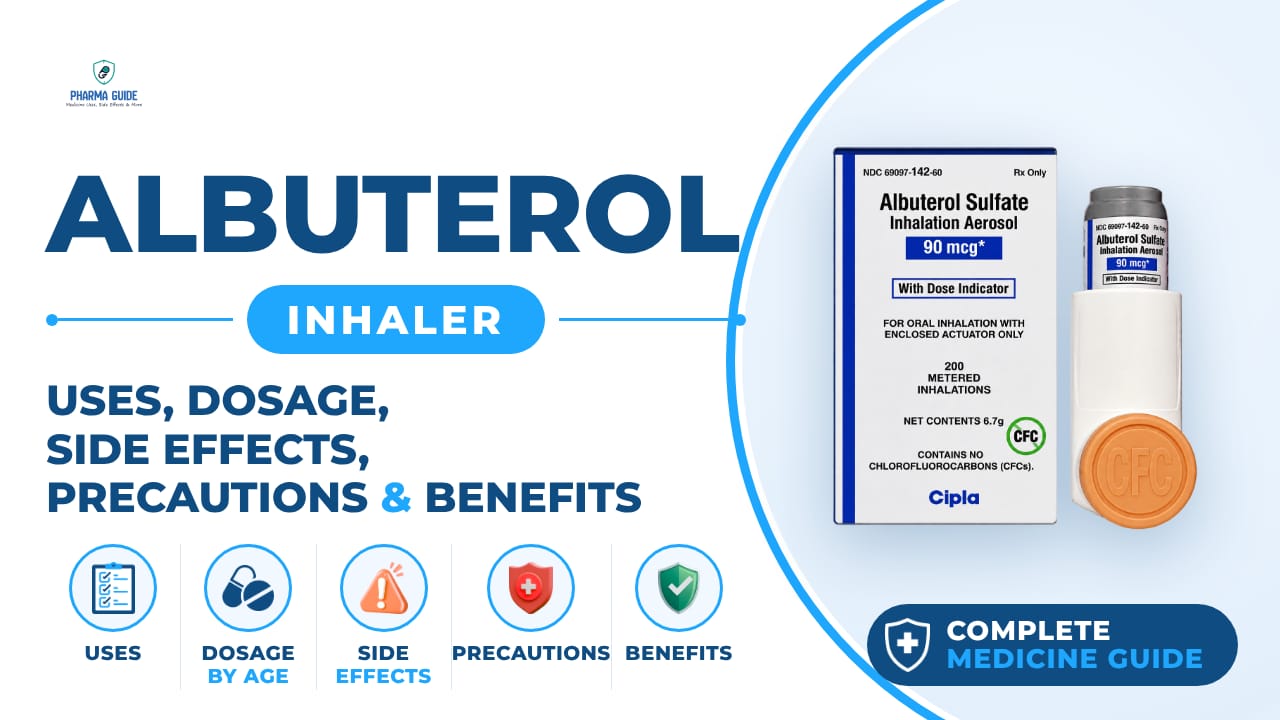
| Generic name | Albuterol (salbutamol) |
|---|---|
| Drug class | Adrenergic bronchodilator (short-acting beta-2 agonist) |
| Forms | Inhalation aerosol (metered-dose inhaler), Inhalation powder (dry powder inhaler), Inhalation solution (for use with a nebulizer) |
Quick overview
Albuterol Inhaler is an adrenergic bronchodilator (short-acting beta-2 agonist) used for quick relief of breathing problems, often called a rescue inhaler. It is breathed in through the mouth to open up the airways in the lungs and is used for asthma, bronchitis, emphysema, COPD, and exercise-induced bronchospasm. Effects typically begin within minutes and last about 4 to 6 hours.
What is Albuterol Inhaler
Albuterol (salbutamol) is a bronchodilator medicine that is breathed in through the mouth to open up the airways in the lungs. It is used for quick relief of breathing problems and is often called a rescue inhaler.
Albuterol Inhaler uses
- Treating or preventing bronchospasm (narrowing of the airways) in people with asthma, bronchitis, emphysema, and other lung diseases
- Treating or preventing bronchospasm in chronic obstructive pulmonary disease (COPD)
- Preventing bronchospasm caused by exercise
Benefits of Albuterol Inhaler
- Relieves cough, wheezing, and trouble breathing by increasing airflow through the airways
- Provides fast relief, often within minutes, during asthma attacks or bronchospasm episodes
- Effects typically last about 4 to 6 hours
How Albuterol Inhaler works
Albuterol relaxes the muscles around the airways, which opens them up quickly and improves airflow to the lungs. It works by activating certain receptors on airway muscle, which causes the muscle to relax.
Albuterol Inhaler dosage
Use this medicine only as directed by your doctor; do not use more of it or more often than ordered. Do not stop using this medicine or any asthma medicine without telling your doctor.
Shake the inhaler well before each spray. Breathe out fully before inhaling, then breathe in slowly and deeply while pressing the canister once. Hold your breath for about 10 seconds, then breathe out slowly. If you need more than one puff, wait about 1 minute before the next puff. Rinse your mouth with water after using your doses.
The inhaler should be at room temperature before use. Prime the inhaler by test-spraying it in the air before first use or if it has not been used for more than 2 weeks.
For inhalation powder devices, do not shake before use, and do not use a spacer with certain devices. The inhalation solution is used with a jet nebulizer connected to an air compressor, breathed in through a mouthpiece or face mask until the medicine is gone.
Do not allow a young child to use albuterol inhalation without help from an adult. If you miss a dose, take it as soon as you remember, but skip it if it is almost time for your next dose; do not double doses. Clean the inhaler mouthpiece regularly to prevent blockage.
| Age group | Dose |
|---|---|
| Under 4 Years | Use only if prescribed by a doctor |
| 4–11 Years | 1–2 inhalations (90 mcg per puff) every 4–6 hours as needed |
| 12 Years and Above | 1–2 inhalations (90 mcg per puff) every 4–6 hours as needed |
| Adults | 1–2 inhalations (90 mcg per puff) every 4–6 hours as needed |
| Older Adults (65+ years) | 1–2 inhalations (90 mcg per puff) as prescribed |
Available forms and strengths
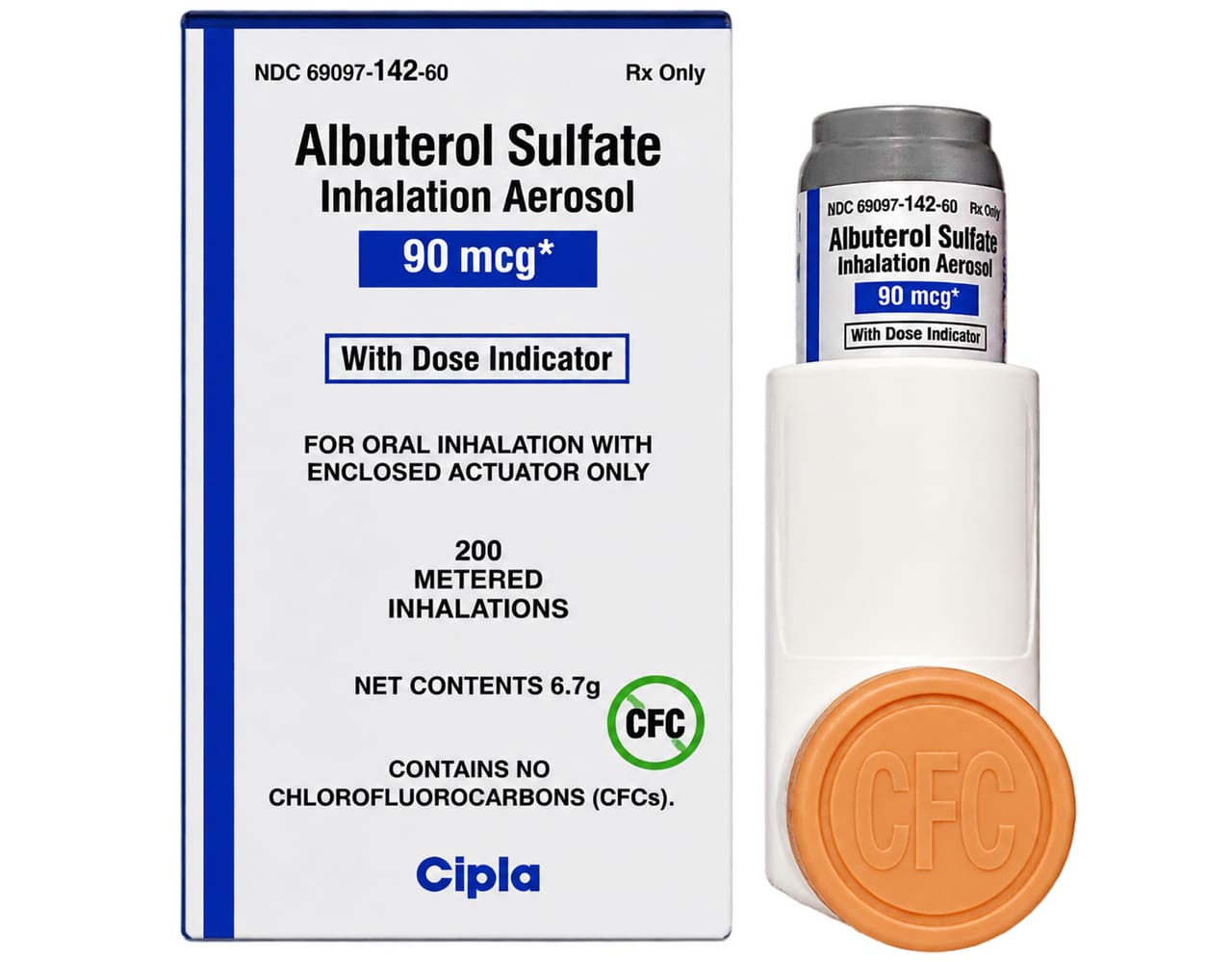
- Inhalation aerosol (metered-dose inhaler) — 90 mcg per puff
- Inhalation powder (dry powder inhaler)
- Inhalation solution (for use with a nebulizer)
Side effects of Albuterol Inhaler
Common
- Fast, irregular, pounding, or racing heartbeat
- Shakiness in the legs, arms, hands, or feet
- Trembling or shaking of the hands or feet
- Chest pain
- Nervousness
- Headache
- Dizziness
- Sore throat
- Runny nose
- Upset stomach, vomiting
- Body aches, back pain
- Cough, sinus pain, stuffy nose
Serious
- Signs of a serious allergic reaction: hives, itching, skin rash, trouble breathing or swallowing, swelling of the hands, face, mouth, lips, tongue, or throat
- Paradoxical bronchospasm - worsening cough, wheezing, or trouble breathing after using the medicine
- Fast, irregular, or pounding heartbeat, chest pain, or fluttering in the chest
- Signs of low potassium - leg cramps, constipation, irregular heartbeat, extreme thirst, increased urination, numbness or tingling, muscle weakness
- Signs of high blood sugar - increased thirst, increased urination, hunger, dry mouth, fruity breath odor, drowsiness, dry skin, blurred vision, weight loss
- Seizures
- Fainting or lightheadedness
Warnings and precautions
This medicine can cause paradoxical bronchospasm, meaning your breathing or wheezing could get worse instead of better. This can be life-threatening. Get medical help right away if you have coughing, difficulty breathing, or wheezing after using this medicine.
Using too much albuterol can be fatal. Only use it as prescribed by your doctor. Needing to use your inhaler more often than usual, or finding it doesn't work as well, can be an early sign of a serious asthma attack and needs medical attention right away.
Serious allergic reactions, including a life-threatening reaction called anaphylaxis, can happen with this medicine. Do not use this medicine along with other similar inhaled bronchodilator medicines unless your doctor tells you to. This medicine can lower potassium levels in the blood, which may cause serious problems.
Talk to your doctor if you are pregnant or planning to become pregnant. It isn't known if albuterol will harm an unborn baby, but poorly controlled asthma during pregnancy can raise risks for both mother and baby, so the benefits of using albuterol may outweigh the risks.
It is not known if albuterol passes into breast milk. Talk to your doctor about the safest way to feed your baby if you are using this medicine.
Use with caution if you have kidney disease, since the medicine may build up in the body because it is removed more slowly.
Use the inhaler exactly as prescribed by your healthcare provider. Do not exceed the recommended number of inhalations. Inform your doctor if you have heart problems, high blood pressure, irregular heartbeat, or thyroid disorders.
Discuss the use of this medicine with alcohol with your healthcare professional, since interactions may occur.
Check the inhaler technique regularly to ensure the medicine reaches the lungs properly. Do not share the inhaler with other people. Keep the inhaler clean and store it according to the manufacturer's instructions.
Storage
- Store at room temperature, away from heat and direct light
- Do not freeze
- Keep the medicine in the foil pouch until you are ready to use it
- Store unopened vials at room temperature, away from heat and direct light; an open vial must be used right away
- Keep out of the reach of children
- Do not keep outdated medicine or medicine no longer needed
- Do not keep this medicine inside a car where it could be exposed to extreme heat or cold
- Do not poke holes in the canister or throw it into a fire, even if the canister is empty
- Store Proventil HFA or Ventolin HFA inhaler with the mouthpiece down
- Throw away certain inhalers 13 months after opening the foil pouch, when the dose counter reaches zero, or after the expiration date, whichever comes first
When to see a doctor
- Get medical help right away if your breathing does not improve or gets worse after using this medicine, or if you notice coughing, wheezing, or difficulty breathing that started after using it
- Seek help right away if your inhaler doesn't seem to work as well as usual and you find you need to use it more often
- Get emergency medical help for signs of an allergic reaction, such as hives, difficulty breathing, or swelling of the face, lips, tongue, or throat
- Call your doctor right away if you notice signs of low potassium, such as leg cramps, irregular heartbeat, extreme thirst, increased urination, or muscle weakness
- Contact your doctor if your asthma symptoms, such as wheezing and trouble breathing, get worse over a few hours or days, as you may need another medicine to control your symptoms
Alternatives
- Ventolin
- ProAir
- Proventil
Watch the video
FAQs
How fast does the Albuterol Inhaler work?
Effects typically begin within minutes and last about 4 to 6 hours, providing fast relief during asthma attacks or bronchospasm episodes.
What is the Albuterol Inhaler used for?
It is used to treat or prevent bronchospasm in people with asthma, bronchitis, emphysema, COPD, and other lung diseases, as well as to prevent bronchospasm caused by exercise.
What is the typical dosage for adults using the Albuterol Inhaler?
Adults typically use 1-2 inhalations (90 mcg per puff) every 4-6 hours as needed.
What are the serious side effects of the Albuterol Inhaler?
Serious side effects include signs of allergic reaction, paradoxical bronchospasm (worsening cough or wheezing), fast or irregular heartbeat, signs of low potassium, signs of high blood sugar, seizures, and fainting.
How should the Albuterol Inhaler be stored?
Store at room temperature away from heat and direct light, do not freeze, keep it in the foil pouch until ready to use, and do not store it inside a car where it could be exposed to extreme temperatures.
General information, not medical advice
Your prescriber and the leaflet in your pack know your situation. This page does not.
- Follow your prescriber and the leaflet
- Don't start, stop, or change a dose on your own
- Doses and warnings differ by country and product
Sources
- Mayo Clinic - Albuterol (inhalation route) Description, Precautions, Side Effects
- Drugs.com - Albuterol Inhalation
- Albuterol Sulfate HFA Prescribing Information, Teva Pharmaceuticals USA, Inc.
- Hattiesburg Clinic - Albuterol Inhalers: Uses, Safety and Proper Technique
- Albuterol Sulfate Inhalation Solution Prescribing Information, Mylan Pharmaceuticals Inc.
Video
Related medicines

Injectafer Injection: Uses, Dosage, Side Effects, Precautions and Alternates
Iron products
Injectafer (ferric carboxymaltose) treats iron deficiency anemia and heart failure-related iron deficiency via IV. Learn uses, dosage, side effects, and

Gliclazide Tablet: Uses, Dosage, Side Effects, Precautions and Alternates
Sulfonylurea (hypoglycemic/antidiabetic agent)
Gliclazide Tablet is a sulfonylurea for type 2 diabetes that boosts insulin release. Learn about dosage, side effects, warnings, and precautions.