
Safety
General information, not medical advice
Your prescriber and the leaflet in your pack know your situation. This page does not.
- Follow your prescriber and the leaflet
- Don't start, stop, or change a dose on your own
- Doses and warnings differ by country and product
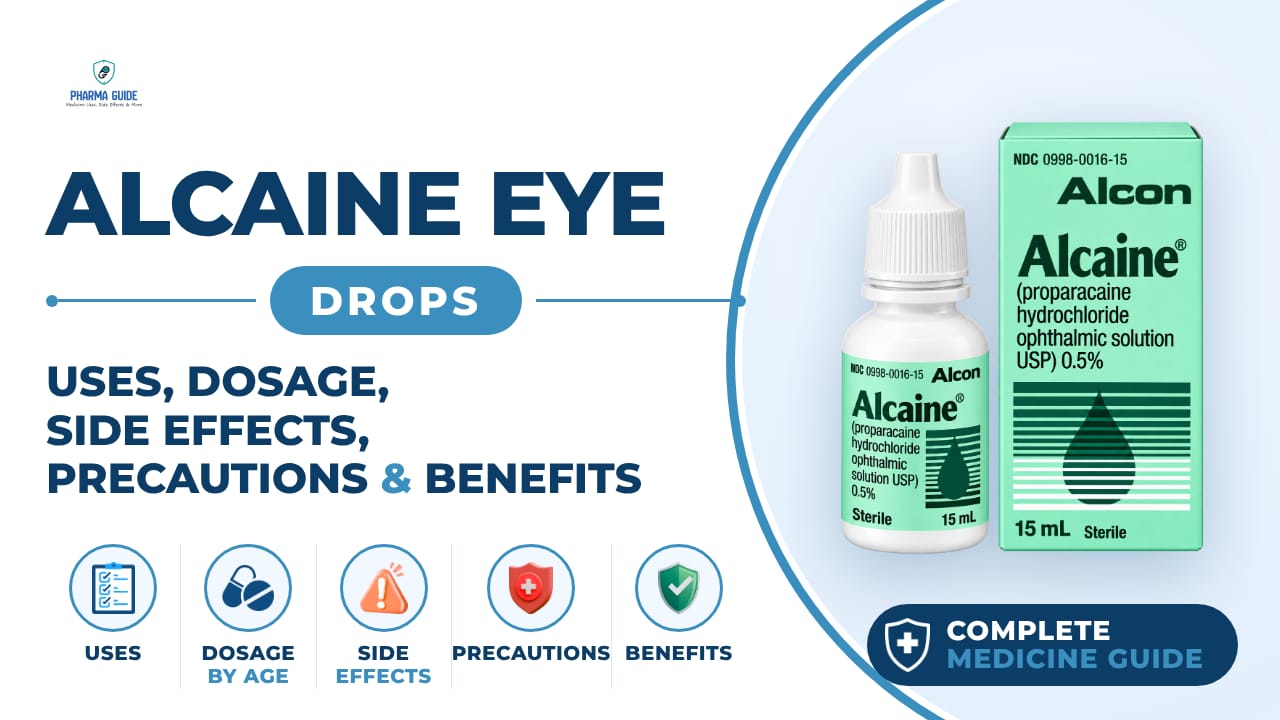
Alcaine Eye Drops: Uses, Dosage, Side Effects, Precautions and Alternates
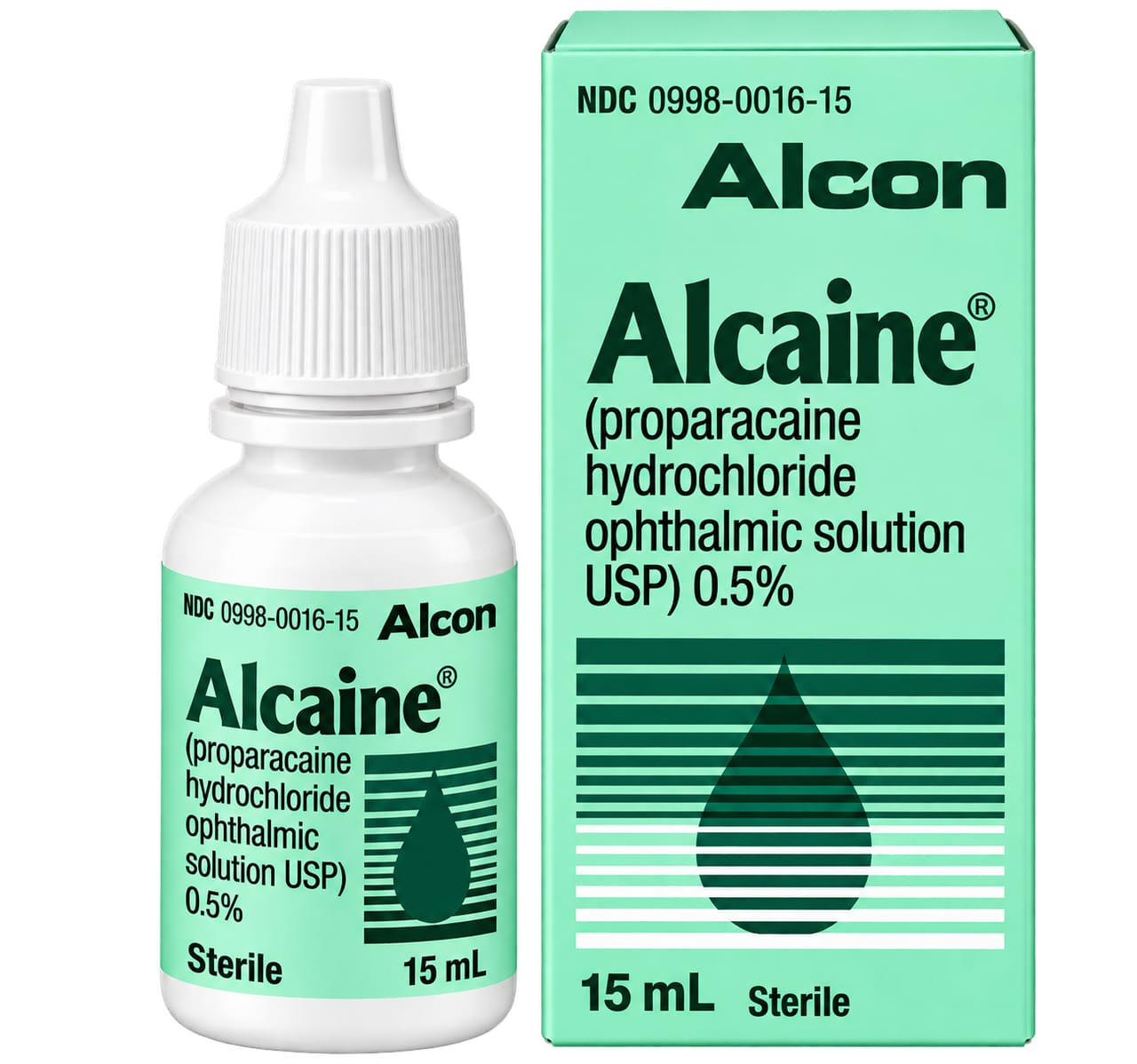
| Generic name | Proparacaine hydrochloride (also called proxymetacaine hydrochloride) |
|---|---|
| Drug class | Ophthalmic anesthetic (local anesthetic) |
| Forms | Eye drop solution |
Quick overview
Alcaine Eye Drops contain proparacaine hydrochloride (also called proxymetacaine hydrochloride), an ophthalmic anesthetic used to numb the eye before exams, procedures, or surgery. It is given only by a doctor or healthcare professional and is never used by patients on their own at home. It starts working within about 30 seconds and wears off within about 15 to 20 minutes.
What is Alcaine Eye Drops
Alcaine is a numbing medicine (local anesthetic) put into the eye to block pain before eye exams, procedures, or surgery. It is only given by a doctor or other healthcare professional, never used by patients on their own.
Alcaine Eye Drops uses
- Numbing the eye before measuring eye pressure (tonometry)
- Numbing the eye for gonioscopic examination
- Removing foreign bodies or stitches from the eye
- Preparing the eye before surgery such as cataract removal
- Conjunctival scraping for diagnosis
Benefits of Alcaine Eye Drops
- Quickly numbs the surface of the eye so procedures cause little or no pain
- Starts working within about 30 seconds
- Short-acting, wearing off within about 15 to 20 minutes
How Alcaine Eye Drops works
Alcaine works on the nerve endings in the eye. It blocks sodium from moving into nerve cells, which stops the nerves from sending pain signals, so the eye becomes numb.
Alcaine Eye Drops dosage
Only a healthcare provider will give you this medicine; it is not for you to use at home. You will usually get just one dose for a routine eye exam or short procedure. For eye surgery, you may be given several doses before and during the operation.
Soft contact lenses should be removed before the drops are given, and should not be put back in until the numbness has fully gone and some time has passed. Avoid touching or rubbing your eye until the numbing effect has completely worn off. Keep your eye protected and covered as advised until feeling returns.
| Age group | Dose |
|---|---|
| Children and adolescents under 18 years | No separate age-specific dose is provided in the current U.S. label; administration is determined by the ophthalmic healthcare professional |
| 18–39 years | For tonometry, removal of foreign bodies, or sutures: 1–2 drops in each eye once before the procedure |
| 40–64 years | 1–2 drops in each eye once before the procedure |
| 65–74 years | Same usual adult procedural dosing; no specific age-based adjustment |
Available forms and strengths
- Eye drop solution
Side effects of Alcaine Eye Drops
Common
- Eye redness or mild discomfort
- Watery eyes
- Increased winking or blinking
- Stinging or burning feeling in the eye
- Dilated pupils causing blurred vision
Serious
- Signs of an allergic reaction such as hives, difficulty breathing, or swelling of the face, lips, tongue, or throat
- Slow healing after eye surgery
- Vision changes
- A restless or nervous feeling followed by depression
- Severe burning, stinging, or irritation in the eyes after the drops are given
- Permanent corneal damage or vision loss from repeated or prolonged use
Warnings and precautions
- Avoid touching or rubbing your eye until the numbing effect has completely worn off, since you could scratch and damage the surface of your eye without feeling it.
- Using this medicine repeatedly or for a long time, or misusing it, can cause permanent damage to the cornea and even loss of vision.
- This medicine should only be used by a healthcare professional in a medical setting, never given to you to use at home.
- Do not wear contact lenses while your eye is numb, and avoid contact lens wear until the anesthetic has fully worn off.
- Tell your doctor if you have allergies, heart problems, an overactive thyroid, epilepsy, lung or breathing problems, or myasthenia gravis before this medicine is used.
- This medicine is not recommended during pregnancy. Tell your doctor if you are pregnant so they can discuss the risks and benefits with you.
- Tell your doctor if you are breastfeeding, as it is not known whether this medicine passes into breast milk, and caution is needed.
- No standard kidney-specific dose adjustment is established for topical procedural use. No standard liver-specific adjustment is established. No major direct interaction is established with alcohol with a single supervised ophthalmic dose.
- This medicine can cause blurred vision or make your eyes very sensitive to light. Be careful driving or using machines until your vision is clear.
Storage
- Store in a refrigerator between 2°C and 8°C
- Do not freeze
- Protect from light
- Do not use if the solution is darker than a pale yellow or if it looks discoloured
- Discard the container 4 weeks after opening
- Do not use the product on more than one person
- Discard any unused product
- Do not use after the expiry date
When to see a doctor
- Get emergency medical help right away if you have signs of an allergic reaction, such as hives, trouble breathing, or swelling of your face, lips, tongue, or throat.
- Tell your caregivers right away if you have severe burning, stinging, or irritation in your eyes after getting the drops.
- Call your doctor right away if you notice slow healing after eye surgery, vision changes, or feel restless or nervous followed by depression.
- Call your doctor immediately or go to the nearest hospital emergency department if you notice shortness of breath, wheezing, swelling of the face, lips, or tongue, or a rash, itching, or hives.
Alternatives
- Tetracaine ophthalmic
- Benoxinate/oxybuprocaine ophthalmic
- Other ophthalmologist-selected topical eye anesthetics
Watch the video
FAQs
What is Alcaine Eye Drops used for?
Alcaine is used to numb the eye before procedures such as measuring eye pressure (tonometry), gonioscopic examination, removing foreign bodies or stitches, preparing for surgery like cataract removal, and conjunctival scraping for diagnosis.
How fast does Alcaine Eye Drops work and how long does it last?
It starts working within about 30 seconds and wears off within about 15 to 20 minutes.
Can I use Alcaine Eye Drops at home?
No, it is only given by a doctor or healthcare professional in a medical setting and is never used by patients on their own at home.
What are the common side effects of Alcaine Eye Drops?
Common side effects include eye redness or mild discomfort, watery eyes, increased blinking, stinging or burning, and dilated pupils causing blurred vision.
Can I wear contact lenses after using Alcaine Eye Drops?
No, soft contact lenses should be removed before the drops are given and should not be worn again until the numbness has fully gone and some time has passed.
General information, not medical advice
Your prescriber and the leaflet in your pack know your situation. This page does not.
- Follow your prescriber and the leaflet
- Don't start, stop, or change a dose on your own
- Doses and warnings differ by country and product
Sources
Video
Related medicines

Injectafer Injection: Uses, Dosage, Side Effects, Precautions and Alternates
Iron products
Injectafer (ferric carboxymaltose) treats iron deficiency anemia and heart failure-related iron deficiency via IV. Learn uses, dosage, side effects, and

Gliclazide Tablet: Uses, Dosage, Side Effects, Precautions and Alternates
Sulfonylurea (hypoglycemic/antidiabetic agent)
Gliclazide Tablet is a sulfonylurea for type 2 diabetes that boosts insulin release. Learn about dosage, side effects, warnings, and precautions.