
Safety
General information, not medical advice
Your prescriber and the leaflet in your pack know your situation. This page does not.
- Follow your prescriber and the leaflet
- Don't start, stop, or change a dose on your own
- Doses and warnings differ by country and product
Alecensa Capsule: Uses, Dosage, Side Effects, Precautions and Alternates
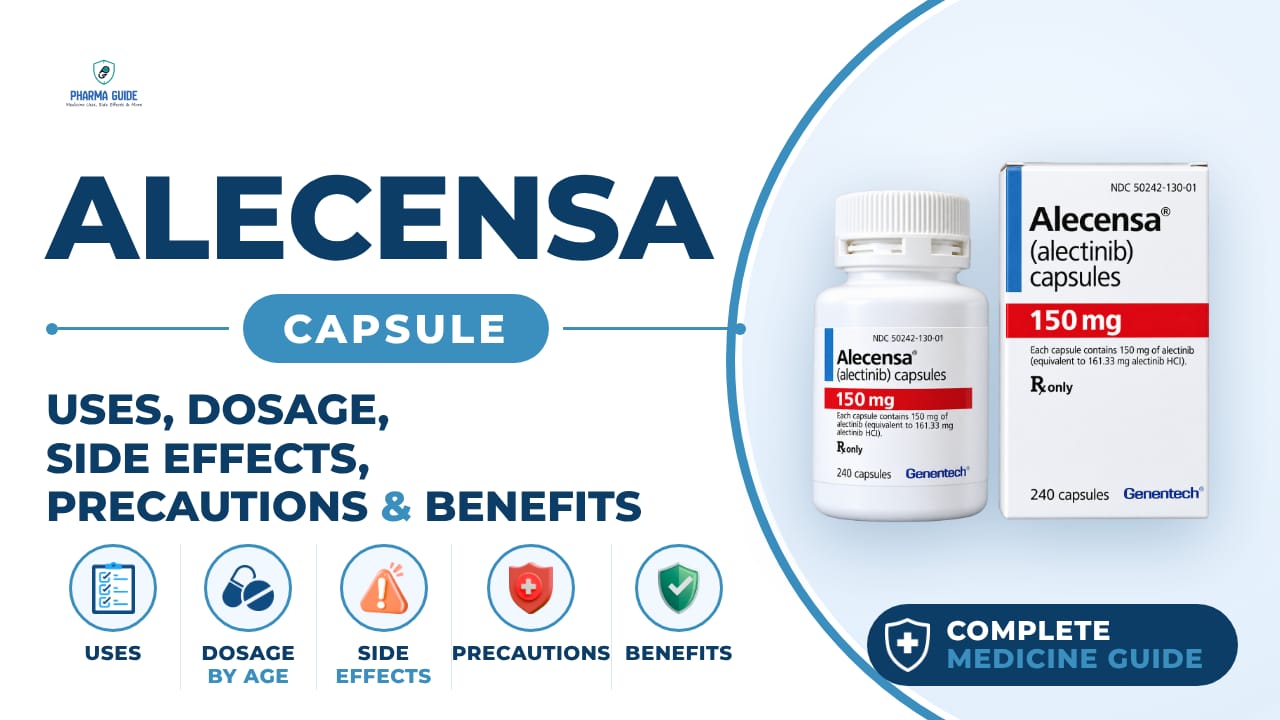
| Generic name | alectinib |
|---|---|
| Drug class | Kinase inhibitor (ALK/RET tyrosine kinase inhibitor) |
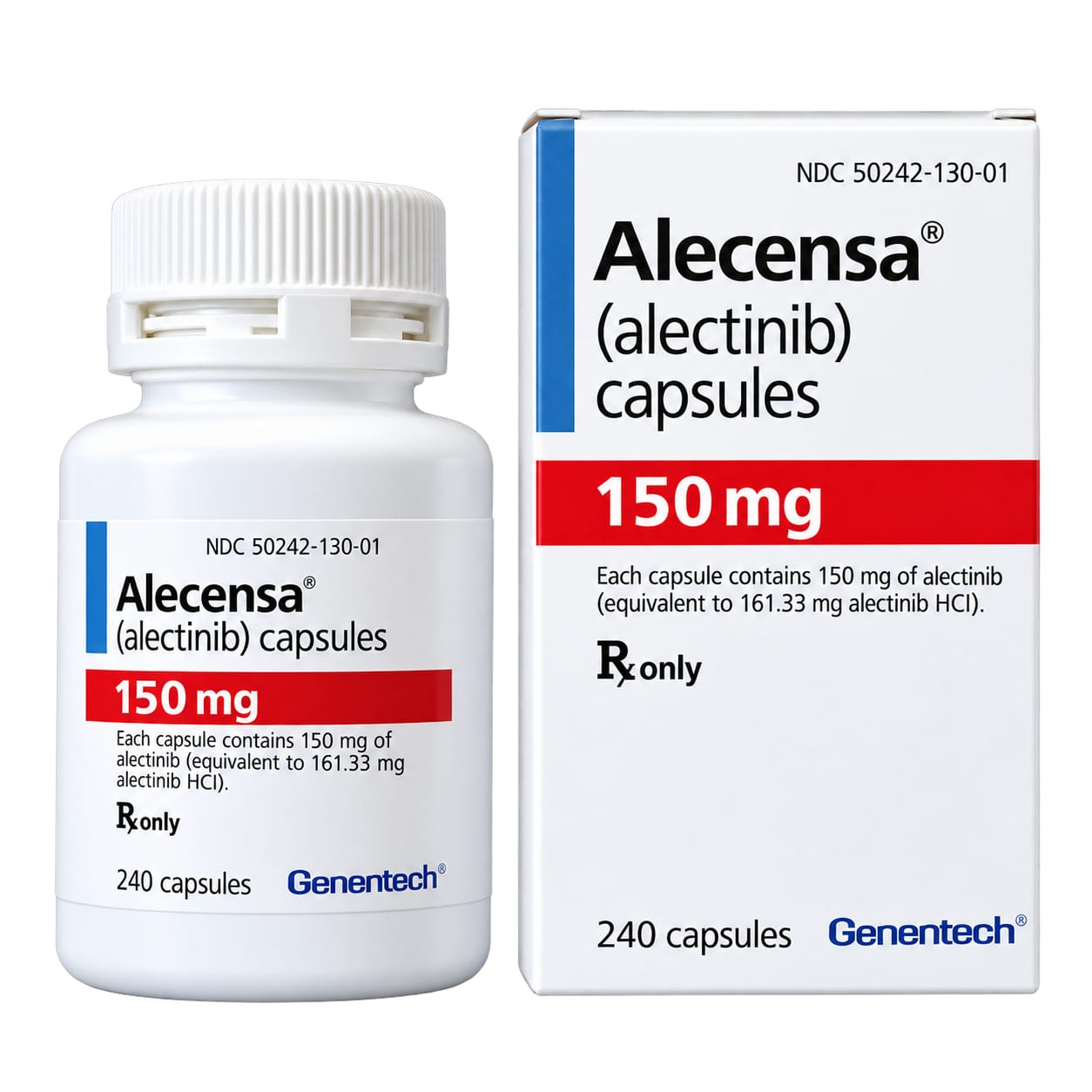
| Forms | Hard capsule (150 mg) |
Quick overview
Alecensa Capsule contains the active substance alectinib, a kinase inhibitor that targets ALK and RET tyrosine kinase. It is used to treat ALK-positive non-small cell lung cancer (NSCLC), including as adjuvant treatment after surgery and as first-line or later-line treatment for advanced disease. It is taken by mouth twice daily with food and is associated with various common and serious side effects that require monitoring.
What is Alecensa Capsule
Alecensa is a cancer medicine that contains the active substance alectinib. It is used to treat a type of lung cancer called non-small cell lung cancer (NSCLC) that is ALK-positive, meaning the cancer cells have a fault in the ALK gene.
Alecensa Capsule uses
- Adjuvant (post-surgery) treatment after complete tumour removal for adults with ALK-positive non-small cell lung cancer at high risk of recurrence
- First-line treatment of adults with ALK-positive advanced or metastatic non-small cell lung cancer
- Treatment of adults with ALK-positive advanced non-small cell lung cancer who were previously treated with crizotinib
Benefits of Alecensa Capsule
- May slow down or stop the growth of the cancer
- May help shrink the cancer
- May help prevent the tumour from coming back after surgical removal
How Alecensa Capsule works
Alecensa blocks the action of an enzyme called ALK tyrosine kinase. Abnormal forms of this enzyme help cancer cells grow. By blocking it, Alecensa can slow or stop cancer growth and may shrink tumours.
Alecensa Capsule dosage
Take this medicine by mouth twice a day with food. Swallow each capsule whole; do not open or dissolve the capsules. If you vomit after taking a dose, do not take an extra dose — just take your next dose at the usual time. If you miss a dose and it is close to the time of your next dose, skip the missed dose and continue with your regular schedule; do not take a double dose to make up for a missed dose. Continue taking this medicine for as long as your doctor prescribes it; do not stop without talking to your doctor first. This medicine is not for use in children or adolescents under 18 years of age.
| Age group | Dose |
|---|---|
| Under 18 years | Safety and effectiveness have not been established |
| 18–64 years | 600 mg twice daily with food |
| 65–74 years | 600 mg twice daily with food |
Available forms and strengths
Hard capsule (150 mg)
Side effects of Alecensa Capsule
Common
- Constipation
- Myalgia (muscle pain)
- Oedema (swelling)
- Anaemia
- Rash
- Increased bilirubin
- Increased ALT and AST (liver enzyme changes)
- Diarrhoea
- Nausea
- Vomiting
- Fatigue
- Cough
- Weight gain
- Altered sense of taste
- Vision disorders (blurred vision, double vision, floaters)
- Headache
- Increased blood creatine phosphokinase
Serious
- Interstitial lung disease / pneumonitis (lung inflammation)
- Liver injury (hepatotoxicity), including drug-induced liver injury
- Slow heart beat (bradycardia), which can cause fainting, dizziness or low blood pressure
- Severe muscle pain, tenderness or weakness with creatine phosphokinase elevation
- Haemolytic anaemia (abnormal breakdown of red blood cells)
- Gastrointestinal perforation (hole in the gut wall)
- Severe photosensitivity (sunburn reaction)
- Kidney problems including acute kidney injury
- Severe hypertriglyceridemia, including life-threatening acute pancreatitis
Warnings and precautions
- This medicine may cause severe or life-threatening lung inflammation (pneumonitis). Seek medical help right away for new or worsening breathing problems, cough, or fever.
- Serious liver injury can occur, especially in the first 3 months of treatment. Your doctor will do regular blood tests to monitor your liver.
- This medicine may increase the risk of a hole forming in the stomach or intestine wall, especially in people with a history of diverticulitis or abdominal cancer spread.
- Your skin may become more sensitive to sunlight. Avoid prolonged sun exposure during treatment and for at least 7 days after stopping, and use strong sunscreen and lip balm.
- This medicine contains lactose. People with certain rare inherited sugar intolerance conditions should not take it.
- This medicine can cause a slow heartbeat (bradycardia), which can be serious. Your heart rate and blood pressure should be monitored.
- This medicine can cause breakdown of red blood cells (haemolytic anaemia).
- Do not take this medicine if you are pregnant, as it may harm your unborn baby. Women who can become pregnant must use highly effective contraception during treatment and for at least 5 weeks after the last dose. Men must use effective contraception for at least 3 months after their last dose if their partner could become pregnant.
- Do not breastfeed while taking this medicine, because it is not known if the medicine passes into breast milk and could harm the baby.
- No dose change is needed for mild or moderate kidney problems. The medicine has not been specifically studied in severe kidney impairment, but because very little of it is removed by the kidneys, no dose change is expected to be needed.
- No dose change is needed for mild or moderate liver problems. If you have severe liver impairment, your doctor will prescribe a lower starting dose and monitor your liver function closely.
- Discuss alcohol use with the oncology team, especially if liver tests are abnormal.
- This medicine can cause dizziness, fainting, low blood pressure, slow heartbeat, or vision problems, so take care when driving or operating machinery.
Storage
- Keep this medicine out of the sight and reach of children
- Do not use after the expiry date shown on the carton and blister or bottle
- If packed in blisters, store in the original package to protect from moisture
- If packed in bottles, store in the original package and keep the bottle tightly closed to protect from moisture
- Do not throw away medicines via wastewater or household waste; ask your pharmacist how to dispose of medicines you no longer use
When to see a doctor
- Get medical help right away if you notice yellowing of your skin or eyes, dark urine, itchy skin, loss of appetite, nausea, vomiting, tiredness, or unusual bleeding or bruising — these may be signs of liver problems.
- Seek help immediately if you have new or worsening breathing difficulty, shortness of breath, cough (with or without mucus), or fever.
- Contact your doctor right away if you have unexplained muscle pain, tenderness, or weakness that does not go away.
- Seek help right away if you feel dizzy, faint, or notice a very slow heartbeat.
- Get medical help if you feel unusually tired, weak, or short of breath, as these may be signs of red blood cell breakdown.
- Seek urgent medical attention if you have severe stomach or abdominal pain, fever, chills, vomiting, or a swollen or rigid abdomen, as these could be signs of a hole in the gut wall.
Alternatives
- Lorlatinib
- Brigatinib
- Ceritinib
Watch the video
FAQs
What is Alecensa Capsule used for?
Alecensa Capsule is used to treat ALK-positive non-small cell lung cancer (NSCLC). It is used as adjuvant treatment after complete tumour removal in patients at high risk of recurrence, as first-line treatment for advanced or metastatic disease, and in patients previously treated with crizotinib.
How should I take Alecensa Capsule?
Alecensa Capsule should be taken by mouth twice a day with food. The capsules should be swallowed whole and not opened or dissolved. If you vomit after a dose, do not take an extra dose; just continue with your next scheduled dose. If you miss a dose close to your next one, skip it rather than doubling up.
What are the common side effects of Alecensa Capsule?
Common side effects include constipation, muscle pain, swelling, anaemia, rash, increased bilirubin and liver enzymes, diarrhoea, nausea, vomiting, fatigue, cough, weight gain, altered taste, vision disorders, headache, and increased creatine phosphokinase.
What serious risks are linked to Alecensa Capsule?
Serious risks include lung inflammation (pneumonitis), liver injury, slow heartbeat (bradycardia), severe muscle pain with creatine phosphokinase elevation, haemolytic anaemia, gastrointestinal perforation, severe photosensitivity, kidney problems, and severe hypertriglyceridemia with risk of pancreatitis.
Can Alecensa Capsule be taken during pregnancy?
No, Alecensa Capsule should not be taken during pregnancy as it may harm the unborn baby. Women who can become pregnant must use highly effective contraception during treatment and for at least 5 weeks after the last dose, while men must use effective contraception for at least 3 months after their last dose.
General information, not medical advice
Your prescriber and the leaflet in your pack know your situation. This page does not.
- Follow your prescriber and the leaflet
- Don't start, stop, or change a dose on your own
- Doses and warnings differ by country and product
Sources
Video
Related medicines

Injectafer Injection: Uses, Dosage, Side Effects, Precautions and Alternates
Iron products
Injectafer (ferric carboxymaltose) treats iron deficiency anemia and heart failure-related iron deficiency via IV. Learn uses, dosage, side effects, and

Gliclazide Tablet: Uses, Dosage, Side Effects, Precautions and Alternates
Sulfonylurea (hypoglycemic/antidiabetic agent)
Gliclazide Tablet is a sulfonylurea for type 2 diabetes that boosts insulin release. Learn about dosage, side effects, warnings, and precautions.