
Safety
General information, not medical advice
Your prescriber and the leaflet in your pack know your situation. This page does not.
- Follow your prescriber and the leaflet
- Don't start, stop, or change a dose on your own
- Doses and warnings differ by country and product
Alfuzosin Tablet: Uses, Dosage, Side Effects, Precautions and Alternates
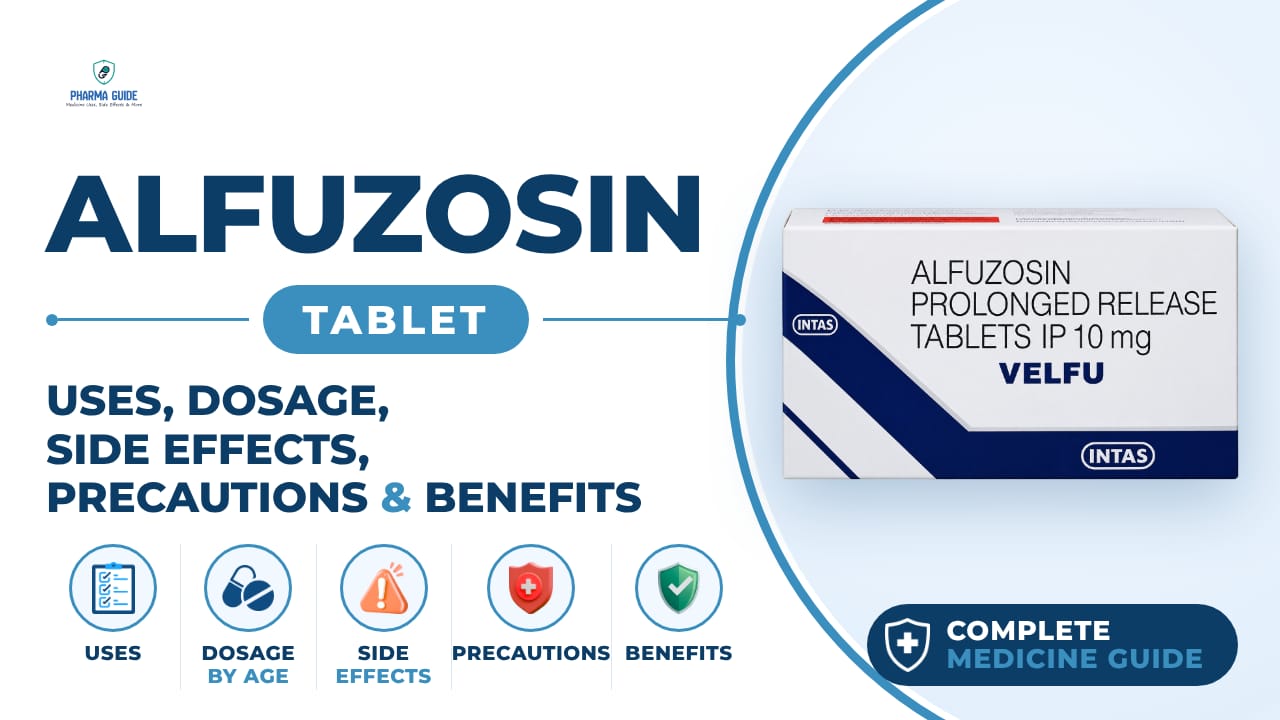
| Generic name | Alfuzosin |
|---|---|
| Drug class | Alpha blocker (alpha-1 adrenergic receptor antagonist) |
| Forms | Extended-release tablet |
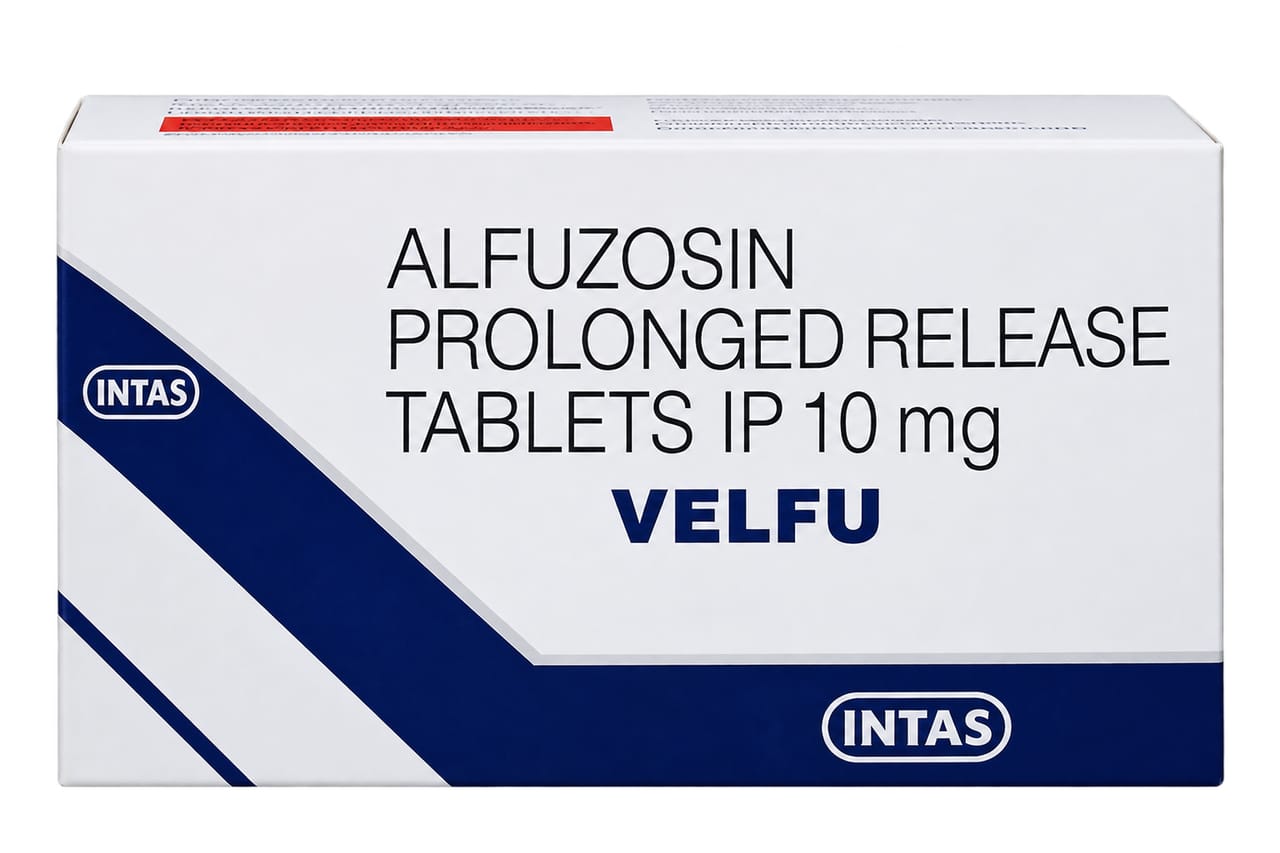
Quick overview
Alfuzosin Tablet is a prescription alpha blocker used in men to treat urinary symptoms caused by an enlarged prostate gland (benign prostatic hyperplasia, or BPH). It is taken as an extended-release tablet, once a day, immediately after a meal. Alfuzosin works by relaxing muscles in the prostate and bladder to help urine flow more easily and to ease symptoms such as frequent, urgent, or weak urination.
What is Alfuzosin Tablet
Alfuzosin is a prescription medicine used in men to treat the urinary symptoms caused by an enlarged prostate gland, a condition called benign prostatic hyperplasia (BPH). It is taken as an extended-release tablet that releases the medicine slowly over the day.
Alfuzosin Tablet uses
- Treats symptoms of benign prostatic hyperplasia (BPH), an enlarged prostate
- Helps relieve frequent need to pee
- Helps relieve urgent need to pee
- Helps with waking up overnight to pee
- Helps with the feeling that the bladder is not empty after peeing
- Helps with trouble starting or stopping the urine stream
- Helps with weak urine stream
- Helps reduce straining while urinating
Benefits of Alfuzosin Tablet
- Improves urine flow
- Reduces bothersome urinary symptoms of BPH
- Taken only once a day
- Available as a lower-cost generic tablet
How Alfuzosin Tablet works
Alfuzosin blocks certain receptors in the bladder and prostate that cause the muscles there to tighten. By relaxing these muscles in the prostate and bladder, it allows urine to flow more easily and reduces BPH symptoms.
Alfuzosin Tablet dosage
Take once a day, immediately after a meal; do not take it on an empty stomach. Take it after the same meal every day so your body absorbs it consistently. Swallow the tablet whole with a glass of water; do not split, chew, or crush it. Try to take it at the same time every day. Keep taking it even if you feel well; do not stop without talking to your doctor, since it controls BPH but does not cure it. This medicine is not intended for use in women or children.
| Age group | Dose |
|---|---|
| Under 18 years | Not recommended |
| 18–60 years | 10 mg, once/day |
| 60+ years | 10 mg, once/day |
Available forms and strengths
- Extended-release tablet
Side effects of Alfuzosin Tablet
Common
- Dizziness
- Headache
- Tiredness/fatigue
- Stuffy or runny nose
- Upper respiratory tract infection or cold symptoms
- Diarrhoea
- Stomach pain
- Heartburn
- Constipation
- Nausea
- Decreased sexual drive/ability
Serious
- Severe allergic reaction: skin rash, itching, swelling of face/tongue/throat, severe dizziness, trouble breathing or swallowing
- Chest pain
- Fainting or severe dizziness on standing up
- Fast, pounding, or irregular heartbeat
- Painful or prolonged erection lasting more than 4 hours (priapism)
Warnings and precautions
- Alfuzosin is not meant for use in women, including during pregnancy. Alfuzosin is not meant for use in women who are breastfeeding.
- Use with caution if you have kidney problems, as it may raise the risk of side effects. Severe kidney problems have not been well studied with this medicine.
- Do not take alfuzosin if you have moderate to severe liver problems, since the liver breaks down this medicine and further liver damage could occur.
- Avoid alcohol while taking alfuzosin, as it can lower your blood pressure and cause dizziness, headache, or lightheadedness.
- This medicine may cause dizziness, so avoid driving or operating machinery that needs full alertness until you know how it affects you.
- This medicine can rarely cause a painful erection that lasts a long time (priapism). This needs urgent medical care because, if untreated, it can cause permanent erection problems.
- Tell your doctor before cataract eye surgery, since this medicine can cause complications affecting the iris during the operation.
- This medicine should be used carefully if you have a heart rhythm condition called QT prolongation, or if you take other medicines that can cause this problem.
- Since prostate cancer can cause symptoms similar to BPH, your doctor may want to test for prostate cancer before starting this medicine.
- This medicine can interact with many other drugs, so tell your doctor about all medicines you take, including blood pressure medicines and certain antifungal or HIV drugs.
Storage
- Keep this medication in the container it came in, tightly closed, and out of reach of children.
- Store it at room temperature and away from light and excess heat and moisture (not in the bathroom).
- Dispose of unneeded medications in a way so that pets, children, and other people cannot take them. Do not flush this medication down the toilet. Use a medicine take-back program.
When to see a doctor
- Get emergency help right away if you have signs of a serious allergic reaction, such as skin rash, swelling of the face, lips, tongue or throat, trouble breathing or swallowing, or severe dizziness.
- Seek medical help immediately if you have an erection lasting more than 4 hours or a painful erection unrelated to sexual activity.
- Get emergency medical help if you have chest pain, a fast or abnormal heartbeat, trouble breathing, pain spreading to your back, jaw or arm, or sweating with nausea, which could be signs of a heart attack.
- Call your doctor right away if you feel dizzy, lightheaded, or faint when standing up, especially if these symptoms do not improve.
- If you think you have taken too much of this medicine, get medical help right away or contact a poison control center.
Alternatives
- Terazosin
- Silodosin
- Tamsulosin
Watch the video
FAQs
What is Alfuzosin Tablet used for?
Alfuzosin is used in men to treat urinary symptoms caused by an enlarged prostate gland (benign prostatic hyperplasia, or BPH), such as frequent, urgent, or weak urination.
How should I take Alfuzosin Tablet?
Take it once a day, immediately after a meal, swallowing the tablet whole with water. Do not split, chew, or crush it, and try to take it after the same meal and at the same time every day.
What are the common side effects of Alfuzosin?
Common side effects include dizziness, headache, tiredness, stuffy or runny nose, diarrhoea, stomach pain, heartburn, constipation, nausea, and decreased sexual drive or ability.
Can women take Alfuzosin Tablet?
No, Alfuzosin is not meant for use in women, including during pregnancy or breastfeeding, and is also not recommended for children.
What should I do if I get a prolonged erection while taking this medicine?
Seek medical help immediately if you have an erection lasting more than 4 hours or a painful erection unrelated to sexual activity, as this needs urgent care to prevent permanent erection problems.
General information, not medical advice
Your prescriber and the leaflet in your pack know your situation. This page does not.
- Follow your prescriber and the leaflet
- Don't start, stop, or change a dose on your own
- Doses and warnings differ by country and product
Sources
Video
Related medicines

Injectafer Injection: Uses, Dosage, Side Effects, Precautions and Alternates
Iron products
Injectafer (ferric carboxymaltose) treats iron deficiency anemia and heart failure-related iron deficiency via IV. Learn uses, dosage, side effects, and

Gliclazide Tablet: Uses, Dosage, Side Effects, Precautions and Alternates
Sulfonylurea (hypoglycemic/antidiabetic agent)
Gliclazide Tablet is a sulfonylurea for type 2 diabetes that boosts insulin release. Learn about dosage, side effects, warnings, and precautions.