
Safety
General information, not medical advice
Your prescriber and the leaflet in your pack know your situation. This page does not.
- Follow your prescriber and the leaflet
- Don't start, stop, or change a dose on your own
- Doses and warnings differ by country and product
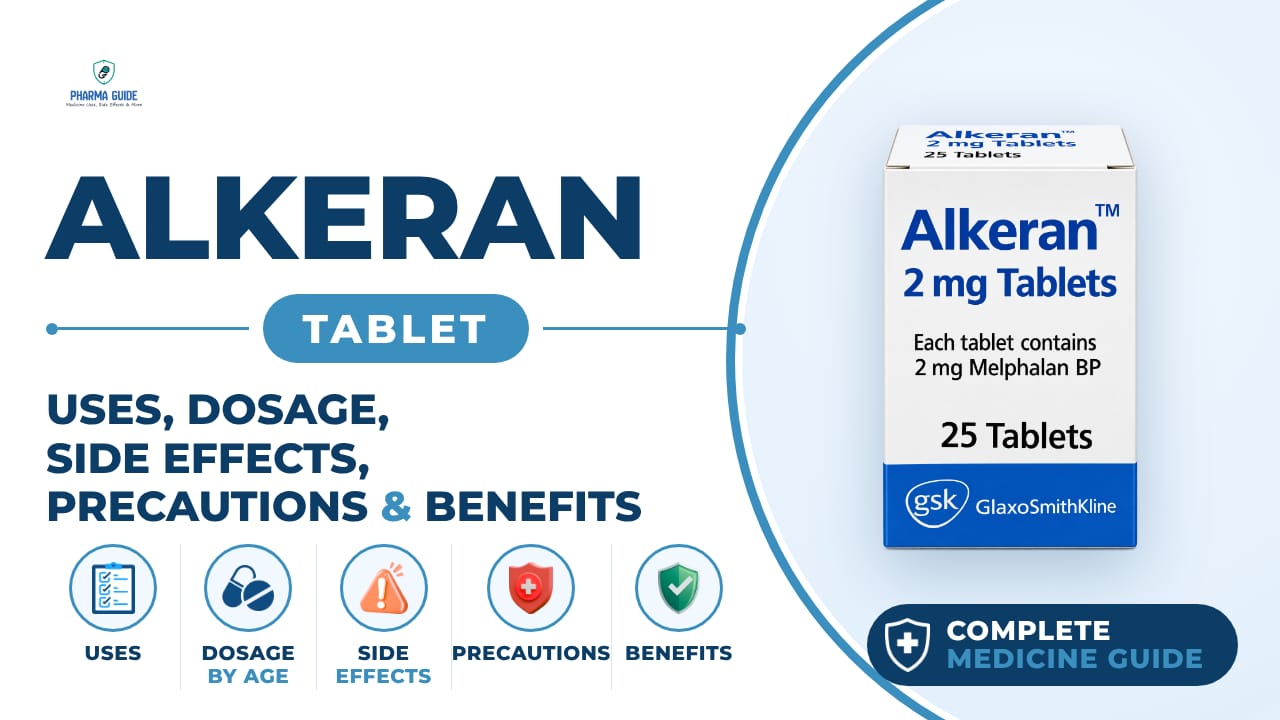
Alkeran Tablet: Uses, Dosage, Side Effects, Precautions and Alternates
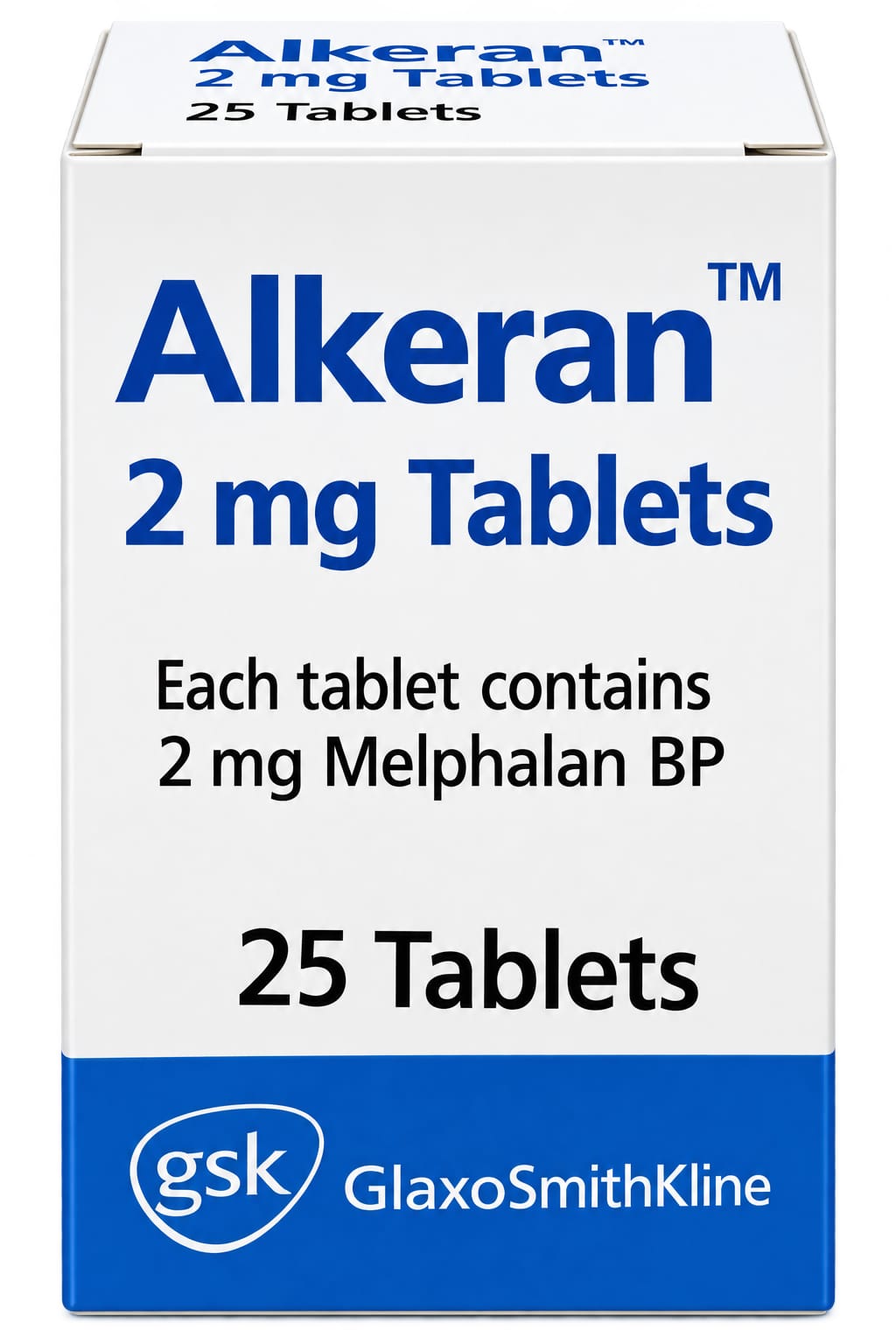
| Generic name | melphalan |
|---|---|
| Drug class | alkylating agent |
| Forms | Film-coated tablets, Powder for solution/injection (other brands/forms) |
Quick overview
Alkeran Tablet contains the active ingredient melphalan, a medicine from the alkylating agent class. It is a prescription chemotherapy medicine used to treat multiple myeloma, advanced ovarian cancer, and sometimes advanced breast cancer or polycythaemia rubra vera. It works by damaging the DNA of cancer cells to stop them from growing and spreading. It must be used exactly as directed by a cancer specialist, with regular blood test monitoring.
What is Alkeran Tablet
Alkeran is a prescription cancer medicine (chemotherapy) that contains the active ingredient melphalan. It belongs to a group of medicines called alkylating agents.
Alkeran Tablet uses
- Treatment of multiple myeloma (a cancer of plasma cells in the bone marrow)
- Treatment of advanced ovarian cancer (adenocarcinoma)
- Sometimes used for advanced breast cancer
- Sometimes used for polycythaemia rubra vera (a blood disorder with too many red blood cells)
Benefits of Alkeran Tablet
- Can help slow the growth of cancer cells in multiple myeloma
- Can help control symptoms and disease in advanced ovarian cancer
- May have a therapeutic effect on some patients with advanced breast cancer
- Can help control polycythaemia rubra vera in some patients
How Alkeran Tablet works
Melphalan attaches to the DNA inside cancer cells and links the two strands of DNA together. This stops the cells from copying themselves and growing, which kills them or stops them from spreading.
Alkeran Tablet dosage
Take this medicine exactly as your doctor tells you, following the specific treatment schedule for your type of cancer. Taking the tablets right after food can delay how quickly the medicine is absorbed and can lower the total amount that gets into your blood, so your doctor's instructions about timing with meals should be followed carefully. Do not break, crush, or chew the tablets. Follow your doctor's instructions on which days to take the medicine during each treatment cycle, since doses are often given on an on-and-off schedule. You will need regular blood tests during treatment so your doctor can check your blood cell counts and adjust treatment if needed. Use in children is rare and there are no set dosing guidelines. There is no specific extra dosing information for elderly patients, but it is often used at the usual adult dose in this group.
| Age group | Dose |
|---|---|
| Under 18 years | No standard age-based pediatric dose is established; treatment is specialist-directed and protocol-based |
| 18–39 years | For multiple myeloma, historical U.S. labeling lists 6 mg orally once daily initially, with subsequent adjustment according to blood counts |
| 40–64 years | Same labeled adult regimen may be used; dosing is individualized according to hematologic response |
| 65–74 years | No separate age-specific dose; usually individualized cautiously according to blood counts, kidney function, and tolerance |
Available forms and strengths
- Film-coated tablets
- Powder for solution/injection (other brands/forms)
Side effects of Alkeran Tablet
Common
- Nausea and vomiting
- Diarrhea
- Low blood cell counts
- Mouth ulcers or sores
- Hair loss (alopecia)
- Liver problems
- Skin rash
- Feeling hot or tingling at the application site
- Muscle pain, muscle wasting, or increased muscle enzyme levels
Serious
- Severe bone marrow suppression leading to serious infection or bleeding
- Low white blood cells (leukopenia), low platelets (thrombocytopenia), or anemia
- Unusual bleeding or bruising, black tarry stools, blood in urine or stools, pinpoint red spots on skin
- Fever, chills, cough or hoarseness, lower back or side pain, or painful urination (signs of infection)
- Sudden skin rash or itching, swelling of face/lips/tongue, trouble breathing (allergic reaction)
- Fast or irregular heartbeat
- Shortness of breath or troubled breathing
- Interstitial lung disease or pulmonary fibrosis (scarring of the lungs)
- Liver problems including hepatitis or jaundice (yellowing of skin or eyes)
- Kidney problems, including acute kidney injury
- Secondary cancers, including leukemia, occurring months or years later
- Blood clots, including deep vein thrombosis and pulmonary embolism, especially when combined with certain other medicines
Warnings and precautions
- This medicine can severely lower your bone marrow's ability to make blood cells, which can lead to serious infection or bleeding.
- This medicine has been linked to the development of blood cancers like leukemia.
- This medicine can cause changes to chromosomes and should be considered capable of causing genetic mutations in humans.
- Do not have any vaccinations, especially live vaccines, without your doctor's approval while taking this medicine and after you stop, because your weakened immune system may not be able to handle them safely, and you could also catch infections from people recently vaccinated with certain live vaccines.
- This medicine must only be given under the care of a doctor experienced in treating cancer with these types of medicines, because of its serious risks.
- This medicine may affect your ability to have children in the future, in both men and women, and may cause permanent infertility.
- This medicine should not be given to anyone who has had an allergic reaction to melphalan before.
- This medicine should be avoided during pregnancy, especially in the first three months, because it may harm an unborn baby. Effective contraception is needed during and after treatment.
- Mothers taking this medicine should not breastfeed.
- This medicine is cleared more slowly by the body in people with kidney problems, so your doctor may need to lower your dose and monitor you closely. High doses can also cause sudden kidney injury.
- Liver problems, including hepatitis and jaundice, have been reported rarely with this medicine.
- Alcohol should be discussed with the oncology team because treatment can cause gastrointestinal and liver-related adverse effects.
- There is no information available on whether this medicine affects your ability to drive or use machines.
Storage
- Store at 2°C to 8°C (in the refrigerator)
- Keep the tablets in the original bottle or amber bottle to protect them from light
- ALKERAN tablets should be destroyed in accordance with relevant local regulatory requirements concerning the disposal of cytotoxic medicines
- Provided the outer coating of the tablet is intact, there is no risk in handling ALKERAN Tablets
When to see a doctor
- Get medical help right away if you notice signs of infection such as fever, chills, cough or hoarseness, lower back or side pain, or pain when urinating.
- Get medical help right away if you notice unusual bleeding or bruising, black tarry stools, blood in your urine or stools, or small red spots on your skin.
- Get emergency help if you have signs of a serious allergic reaction, such as throat tightness, trouble breathing, hives or itching, swelling, chest pain, fast heartbeat, or dizziness.
- Tell your provider right away if you or your partner becomes pregnant during treatment, since this medicine can harm an unborn baby.
- Get medical help if you develop sudden skin rash or itching, shortness of breath, or troubled breathing.
Alternatives
- Cyclophosphamide
- Bendamustine
- Bortezomib
- Daratumumab
Watch the video
FAQs
What is Alkeran Tablet used for?
Alkeran Tablet is used to treat multiple myeloma, advanced ovarian cancer, and is sometimes used for advanced breast cancer or polycythaemia rubra vera.
How does Alkeran Tablet work?
Its active ingredient, melphalan, attaches to DNA inside cancer cells and links the two DNA strands together, stopping the cells from copying themselves and growing, which kills them or stops them from spreading.
How should Alkeran Tablet be taken?
It should be taken exactly as directed by your doctor, following your specific treatment schedule. Taking it right after food can lower how much medicine gets into your blood, so timing with meals should follow your doctor's instructions. The tablets should not be broken, crushed, or chewed, and regular blood tests are needed during treatment.
What are the serious side effects of Alkeran Tablet?
Serious side effects include severe bone marrow suppression leading to infection or bleeding, low blood cell counts, liver and kidney problems, interstitial lung disease, secondary cancers like leukemia, and blood clots such as deep vein thrombosis or pulmonary embolism.
Can Alkeran Tablet be used during pregnancy?
No, it should be avoided during pregnancy, especially in the first three months, because it may harm an unborn baby. Effective contraception is needed during and after treatment, and breastfeeding should be avoided.
General information, not medical advice
Your prescriber and the leaflet in your pack know your situation. This page does not.
- Follow your prescriber and the leaflet
- Don't start, stop, or change a dose on your own
- Doses and warnings differ by country and product
Sources
Video
Related medicines

Injectafer Injection: Uses, Dosage, Side Effects, Precautions and Alternates
Iron products
Injectafer (ferric carboxymaltose) treats iron deficiency anemia and heart failure-related iron deficiency via IV. Learn uses, dosage, side effects, and

Gliclazide Tablet: Uses, Dosage, Side Effects, Precautions and Alternates
Sulfonylurea (hypoglycemic/antidiabetic agent)
Gliclazide Tablet is a sulfonylurea for type 2 diabetes that boosts insulin release. Learn about dosage, side effects, warnings, and precautions.