
Safety
General information, not medical advice
Your prescriber and the leaflet in your pack know your situation. This page does not.
- Follow your prescriber and the leaflet
- Don't start, stop, or change a dose on your own
- Doses and warnings differ by country and product
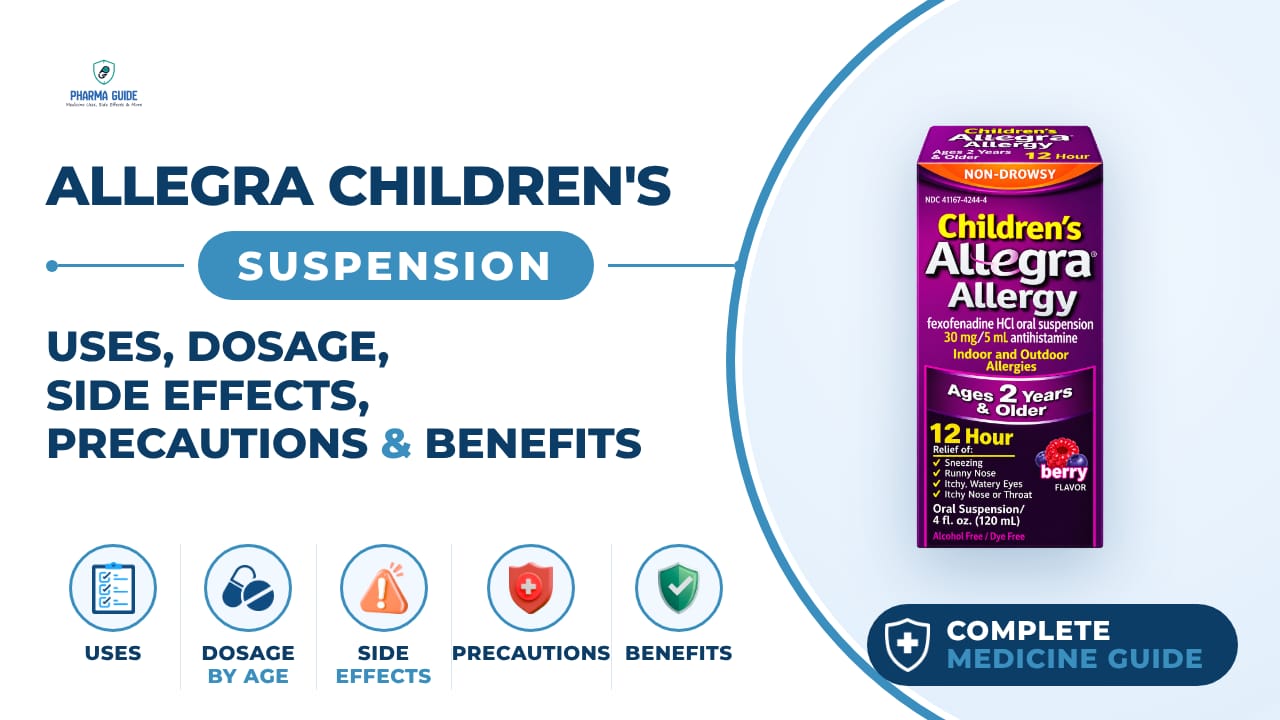
Allegra Children's Suspension: Uses, Dosage, Side Effects, Precautions and Alternates
| Generic name | Fexofenadine |
|---|---|
| Drug class | Second-generation H1 antihistamine |
| Forms | Oral suspension (liquid), Tablet, Orally disintegrating tablet |
Quick overview
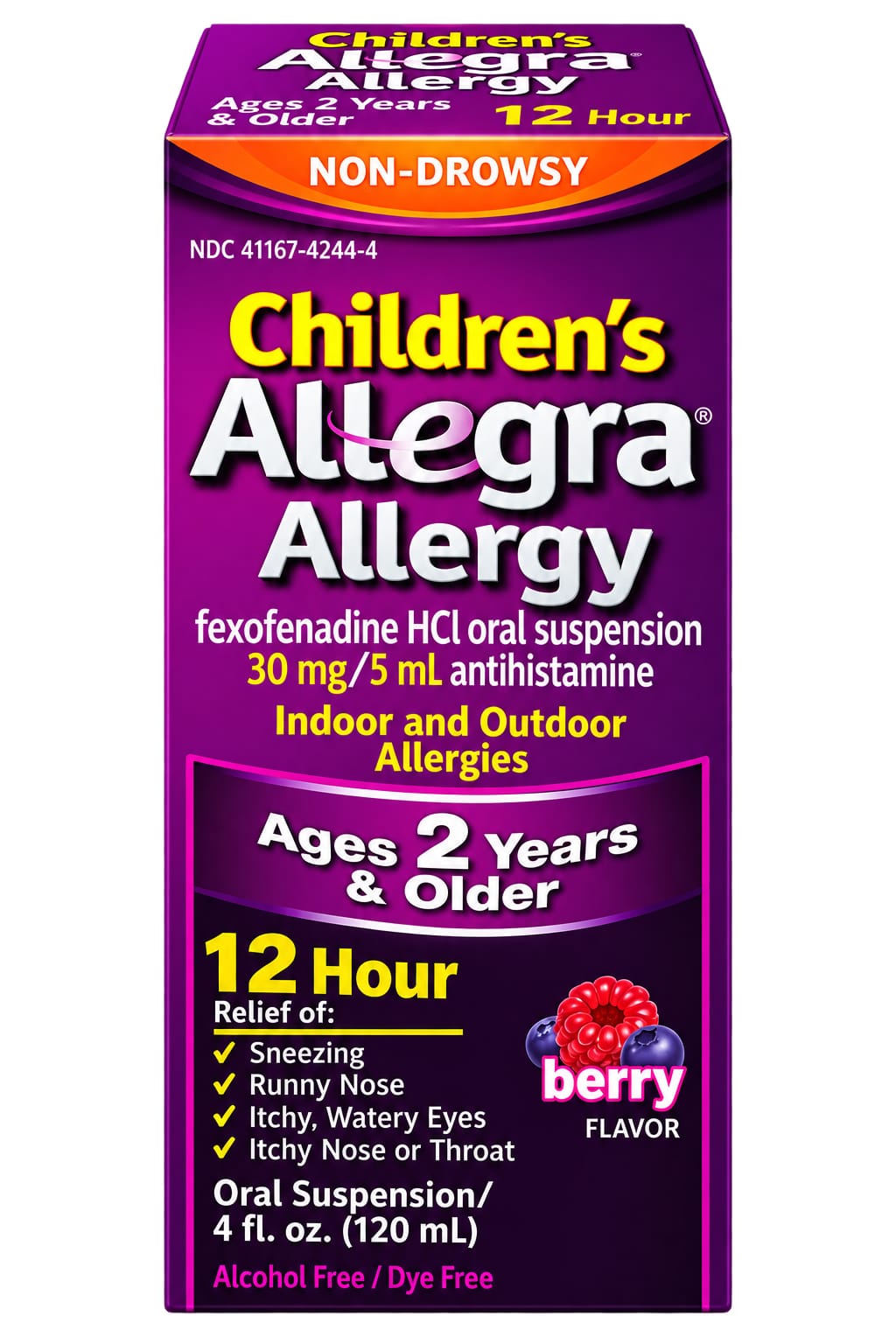
Allegra Children's Suspension contains fexofenadine, a second-generation H1 antihistamine, used to relieve allergy symptoms and skin rashes in children. It helps with sneezing, runny nose, itchy or watery eyes, and hives (urticaria). It is given as a liquid, measured with a dosing cup, and should be used exactly as directed by a doctor or on the label.
What is Allegra Children's Suspension
Allegra Children's Suspension is a liquid antihistamine medicine used to treat allergy symptoms and skin rashes in children. It contains fexofenadine hydrochloride.
Allegra Children's Suspension uses
- Relief of symptoms of allergic rhinitis (sneezing, runny nose, itchy/watery eyes)
- Relief of symptoms of urticaria (hives, itching)
- Treats skin itching and hives caused by chronic idiopathic urticaria in children at least 6 months old
- Relieves seasonal and perennial allergy symptoms including runny nose, sneezing, itchy or watery eyes, and itchy nose or throat
Benefits of Allegra Children's Suspension
- Relieves sneezing and runny nose
- Reduces itching and watery eyes
- Helps control hives (urticaria)
- Non-sedating/less drowsy in most patients
How Allegra Children's Suspension works
This medicine blocks histamine, a natural substance your body releases during an allergic reaction. It mainly works outside the brain, which is why it causes less drowsiness than older allergy medicines.
Allegra Children's Suspension dosage
Use exactly as directed on the label, or as prescribed by your doctor. Always follow directions on the medicine label about giving cough or cold medicine to a child. Ask a doctor before giving this liquid to a child younger than 2 years old.
Take this medicine only with water. Shake the oral suspension (liquid) well before you measure a dose. Use the dosing cup provided, or use a medicine dose-measuring device, not a kitchen spoon.
Can be taken with or without food; take it at the same time each day as prescribed. Avoid taking it with fruit juices such as apple, orange, or grapefruit close to the dose. Avoid taking an antacid within 2 hours before or after you take this medicine.
Call your doctor if symptoms do not improve, or if they get worse. Take it exactly as your doctor prescribed; do not change the dose or stop early on your own.
| Age group | Dose |
|---|---|
| Under 2 years | Ask a doctor; no standard OTC self-treatment dose |
| 2–5 years | 5 mL (30 mg) every 12 hours |
| 12–17 years | 10 mL (60 mg) every 12 hours |
| 65 years and older | Ask a doctor before use, particularly because kidney function may affect dosing |
Available forms and strengths
- Oral suspension (liquid) — 30 mg per 5 mL
- Tablet
- Orally disintegrating tablet
Side effects of Allegra Children's Suspension
Common
- Headache
- Back pain
- Cold symptoms such as stuffy nose, sinus pain, sore throat
- Dizziness
- Nausea
- Vomiting
- Diarrhea
- Fatigue
- Drowsiness (rare)
- Dry mouth
Serious
- Signs of an allergic reaction: hives, difficulty breathing, swelling of the face, lips, tongue, or throat
- Flu-like symptoms (fever, chills, unusual tiredness)
- New or worsening cough
- Pain
- Signs of an ear infection: fever, ear pain or full feeling, trouble hearing, drainage from the ear, fussiness in a child
Warnings and precautions
- Do not take this medicine with fruit juice such as apple, orange, or grapefruit juice.
- This medicine may contain phenylalanine and could be harmful if you have phenylketonuria (PKU).
- Do not take more than the prescribed dose. Use with caution in severe kidney impairment, as a dose adjustment may be needed.
- This medicine is not for use during an acute severe allergic reaction (anaphylaxis).
- Older adults may be more sensitive to the effects of this medicine. If you are 65 or older, ask a doctor before taking it.
- Ask a doctor before using this medicine if you are pregnant or breastfeeding. Ask a doctor or pharmacist if this medicine is safe to use if you have kidney disease. Use with caution if you have liver disease; your doctor may adjust the dose or monitor your liver function. Use alcohol with caution while taking this medicine. This medicine may cause drowsiness or affect your concentration; do not drive until you know how it affects you.
Storage
- Store in its original package at room temperature, away from moisture and heat
- Do not allow liquid medicine to freeze
- Store below 25°C, protected from light and moisture
- Keep bottle tightly closed; do not freeze
- Keep out of reach of children
When to see a doctor
- Get emergency medical help if you have signs of an allergic reaction: hives, difficulty breathing, or swelling of your face, lips, tongue, or throat.
- Stop the medicine and seek help immediately for a rash, swelling of the face or lips, wheezing, or difficulty breathing.
- Stop using this medicine and call your doctor at once if you have flu-like symptoms, a new or worsening cough, pain, or signs of an ear infection.
- Call your doctor if symptoms do not improve, or if they get worse.
Alternatives
- Cetirizine
- Loratadine
- Levocetirizine
- Fexofenadine tablets for appropriate ages
Watch the video
FAQs
What is Allegra Children's Suspension used for?
It is used to relieve allergy symptoms like sneezing, runny nose, and itchy or watery eyes, as well as hives (urticaria) and itching in children.
What is the dosage of Allegra Children's Suspension for children?
For ages 2–5 years, the dose is 5 mL (30 mg) every 12 hours. For ages 12–17 years, it is 10 mL (60 mg) every 12 hours. Children under 2 years should only use it if a doctor advises it.
Can Allegra Children's Suspension be taken with fruit juice?
No, it should not be taken with fruit juices such as apple, orange, or grapefruit juice close to the dose. It should be taken only with water.
What are the common side effects of Allegra Children's Suspension?
Common side effects include headache, back pain, cold symptoms like stuffy nose or sore throat, dizziness, nausea, vomiting, diarrhea, fatigue, dry mouth, and rarely drowsiness.
How should Allegra Children's Suspension be stored?
It should be stored in its original package at room temperature below 25°C, protected from light and moisture, with the bottle tightly closed, and never allowed to freeze.
General information, not medical advice
Your prescriber and the leaflet in your pack know your situation. This page does not.
- Follow your prescriber and the leaflet
- Don't start, stop, or change a dose on your own
- Doses and warnings differ by country and product
Sources
Video
Related medicines

Injectafer Injection: Uses, Dosage, Side Effects, Precautions and Alternates
Iron products
Injectafer (ferric carboxymaltose) treats iron deficiency anemia and heart failure-related iron deficiency via IV. Learn uses, dosage, side effects, and

Gliclazide Tablet: Uses, Dosage, Side Effects, Precautions and Alternates
Sulfonylurea (hypoglycemic/antidiabetic agent)
Gliclazide Tablet is a sulfonylurea for type 2 diabetes that boosts insulin release. Learn about dosage, side effects, warnings, and precautions.