
Safety
General information, not medical advice
Your prescriber and the leaflet in your pack know your situation. This page does not.
- Follow your prescriber and the leaflet
- Don't start, stop, or change a dose on your own
- Doses and warnings differ by country and product
Allegra-D Tablet: Uses, Dosage, Side Effects, Precautions and Alternates
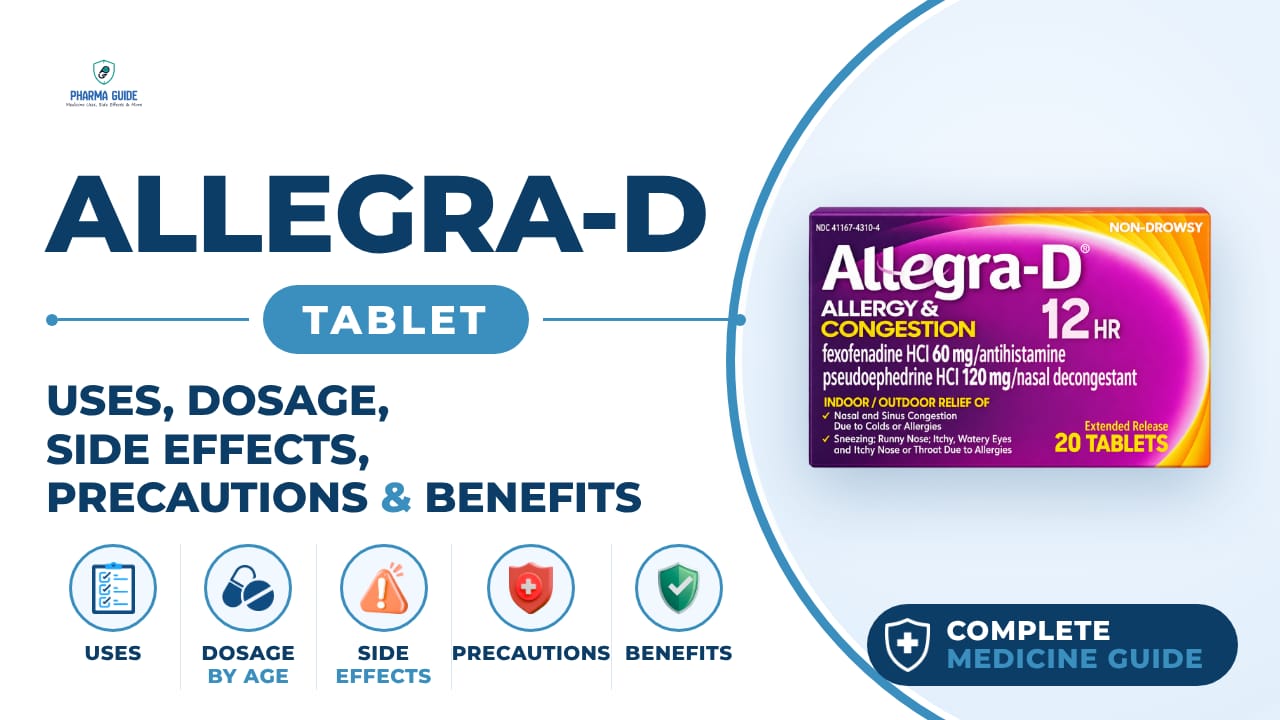
| Generic name | Fexofenadine hydrochloride and pseudoephedrine hydrochloride |
|---|---|
| Drug class | Histamine H1-Receptor Antagonist/Sympathomimetic Amine |
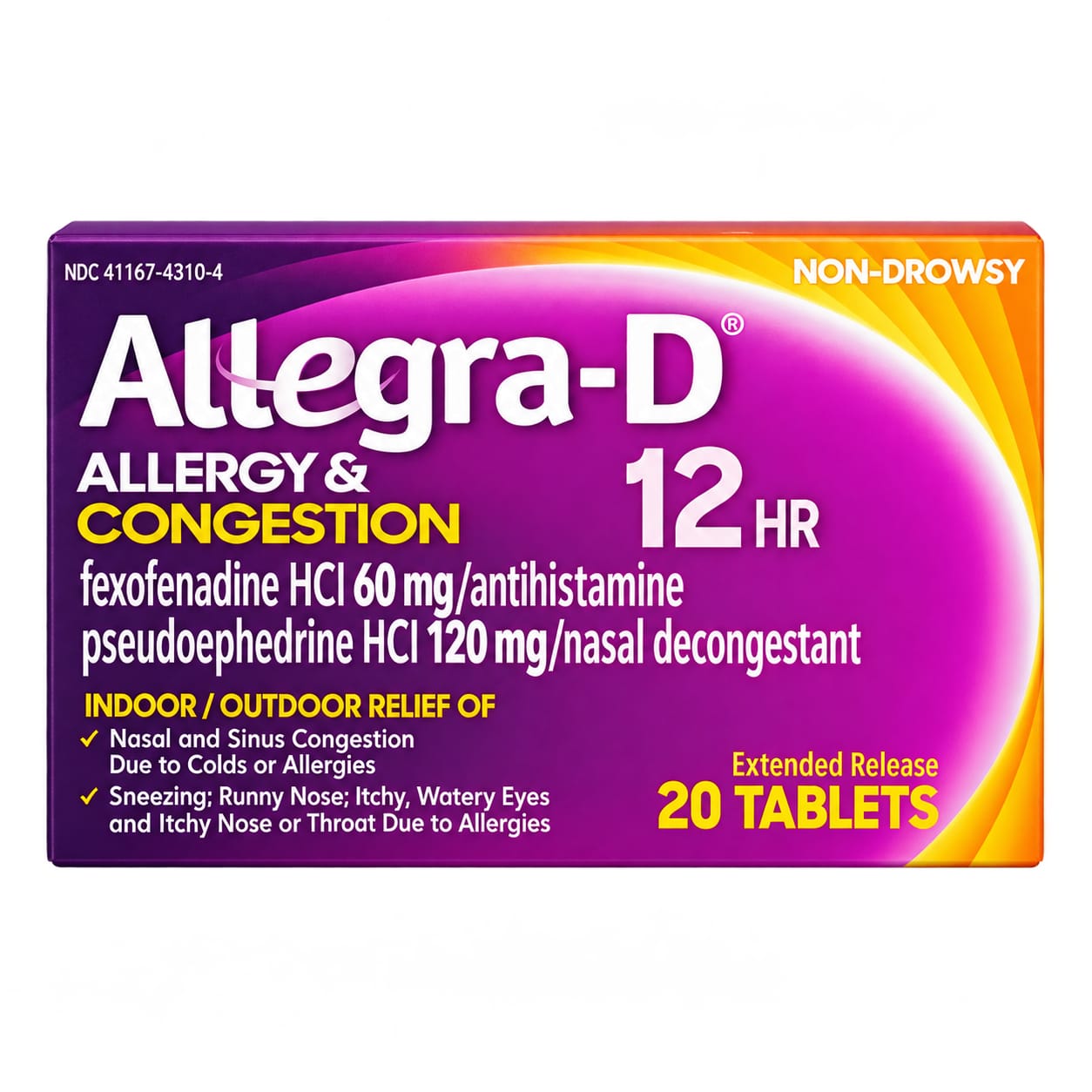
| Forms | Sustained-release caplets (fexofenadine 60 mg/pseudoephedrine 120 mg), Extended-release tablets (fexofenadine 180 mg/pseudoephedrine 240 mg) |
Quick overview
Allegra-D Tablet combines fexofenadine hydrochloride, an antihistamine, with pseudoephedrine hydrochloride, a decongestant. It is used to relieve seasonal allergy symptoms such as sneezing, runny nose, itchy or watery eyes, and nasal congestion. It is available as sustained-release caplets and extended-release tablets and is intended for adults and children 12 years of age and older.
What is Allegra-D Tablet
Allegra-D is a combination medicine with two ingredients: an antihistamine called fexofenadine and a decongestant called pseudoephedrine. It is used to treat seasonal allergy symptoms, including nasal congestion.
Allegra-D Tablet uses
- Relief of sneezing
- Relief of runny nose (rhinorrhea)
- Relief of itchy nose, palate, or throat
- Relief of itchy, watery, red eyes
- Temporary relief of nasal congestion associated with seasonal allergic rhinitis
Benefits of Allegra-D Tablet
- Relieves seasonal allergy symptoms
- Reduces nasal congestion
- Helps with sneezing and runny nose
- Reduces itchy or watery eyes
- Combines a non-sedating antihistamine with a decongestant
How Allegra-D Tablet works
Allegra-D contains two medicines. Fexofenadine is an antihistamine that blocks histamine to relieve watery eyes, itching, runny nose and sneezing. Pseudoephedrine is a decongestant that narrows blood vessels in the nose to relieve stuffy nose and congestion.
Allegra-D Tablet dosage
Swallow the caplet or tablet whole with a glass of water on an empty stomach; do not break or chew it. Do not take with fruit juices such as grapefruit, orange, or apple juice, as this can reduce how well the medicine is absorbed. Take on an empty stomach, since food can reduce how well the medicine is absorbed. Avoid taking an antacid containing aluminum or magnesium within 2 hours of taking this medicine.
If a dose is missed, take the next dose at the next scheduled time in the normal amount; do not take two doses at the same time. This medicine is meant for adults and children 12 years of age and older; it is not recommended for children under 12. People 65 years of age or older should ask a doctor before use. Avoid prolonged use unless advised by a doctor. You may notice tablet remnants in your stool; this is normal and you should continue taking the medicine as directed.
| Age group | Dose |
|---|---|
| 12–17 years | Allegra-D 12 Hour: 1 tablet every 12 hours; Allegra-D 24 Hour: 1 tablet once daily |
| 18–64 years | Same adult regimen: 12-hour tablet every 12 hours or 24-hour tablet once daily |
Available forms and strengths
- Sustained-release caplets (fexofenadine 60 mg/pseudoephedrine 120 mg)
- Extended-release tablets (fexofenadine 180 mg/pseudoephedrine 240 mg)
Side effects of Allegra-D Tablet
Common
- Headache
- Insomnia (sleeplessness)
- Nausea
- Dry mouth
- Dizziness
- Indigestion
- Throat irritation
- Agitation
- Back pain
- Palpitations
Serious
- Hives, swelling of face/lips/tongue/throat, systemic anaphylaxis, or other allergic reactions
- Unusually slow or weak breathing (respiratory difficulty)
- Severe headache, blurred vision, trouble concentrating, chest pain, numbness, or seizure (signs of high blood pressure)
- Heart palpitations or fast, slow, or irregular heartbeat
- Confusion, severe dizziness, drowsiness, diminished mental alertness, hallucination, tremors, convulsions, or coma (signs of overdose)
- Urinating less than usual or not at all (urinary retention)
- Severe rash with high fever, blisters, skin peeling, or pain in mucous membranes (acute generalized exanthematous pustulosis)
- Stroke
Warnings and precautions
- Do not use this medicine if you are allergic to its ingredients, have severe or uncontrolled high blood pressure, have certain heart problems, are at risk of a type of glaucoma, have urinary retention risk from bladder or prostate problems, have taken an MAO inhibitor in the past two weeks, have difficulty swallowing, have a history of seizures, or use other nasal decongestants.
- Do not take this medicine with fruit juices, as they can reduce how well it works. Do not take with other antihistamines or decongestants.
- If you develop nervousness, dizziness, increased blood pressure, heart palpitations, rapid or irregular heartbeat, worsening headache, or sleeplessness, stop taking the medicine and talk to your doctor.
- This medicine may rarely cause a severe skin reaction. Stop using it and see a doctor right away if you get a fever, skin rash, or blisters.
- There is not enough research in pregnant women to know if this medicine is fully safe. It should be used during pregnancy only if the benefit outweighs the possible risk to the baby.
- This medicine is not generally recommended for breastfeeding mothers unless the benefit to the mother outweighs the possible risk to the baby. Pseudoephedrine passes into breast milk.
- People with reduced kidney function should use this medicine carefully and may need a lower starting dose, because the body clears the medicine more slowly. No dose change is needed for people with liver problems.
- Drinking alcohol can increase certain side effects of this medicine. This medicine may affect your thinking or reactions, so be careful if you drive or do activities that require alertness.
Storage
- Store caplets/tablets at 15-30°C.
- Store medication in tightly closed container in a cool, dry place.
- Protect from light and moisture.
- Keep out of reach and sight of children.
When to see a doctor
- Get emergency help right away for signs of a serious allergic reaction: hives, trouble breathing, or swelling of the face, lips, tongue, or throat. Stop taking the medicine and call your doctor right away if you have pounding or fluttering heartbeats, severe dizziness, anxiety, restlessness, tremors, or nervousness.
- If you think you or someone you are caring for has taken too much of this medicine, contact a healthcare professional or hospital emergency department right away, even if there are no symptoms.
Alternatives
- Fexofenadine
- Cetirizine
- Loratadine
Watch the video
FAQs
What is Allegra-D Tablet used for?
Allegra-D is used to relieve seasonal allergy symptoms such as sneezing, runny nose, itchy or watery eyes, and nasal congestion associated with seasonal allergic rhinitis.
How should I take Allegra-D Tablet?
Swallow the caplet or tablet whole with water on an empty stomach without breaking or chewing it. Avoid taking it with fruit juices like grapefruit, orange, or apple juice, and avoid aluminum or magnesium antacids within 2 hours of taking it.
What are the common side effects of Allegra-D Tablet?
Common side effects include headache, insomnia, nausea, dry mouth, dizziness, indigestion, throat irritation, agitation, back pain, and palpitations.
Can Allegra-D Tablet be used during pregnancy or breastfeeding?
There is not enough research to confirm full safety in pregnancy, so it should only be used if the benefit outweighs the risk. It is not generally recommended for breastfeeding mothers unless benefits outweigh possible risks, as pseudoephedrine passes into breast milk.
Who should not take Allegra-D Tablet?
It should not be used by people allergic to its ingredients, those with severe or uncontrolled high blood pressure, certain heart problems, glaucoma risk, urinary retention risk, those who took an MAO inhibitor in the past two weeks, those with difficulty swallowing or a history of seizures, or those using other nasal decongestants.
General information, not medical advice
Your prescriber and the leaflet in your pack know your situation. This page does not.
- Follow your prescriber and the leaflet
- Don't start, stop, or change a dose on your own
- Doses and warnings differ by country and product
Sources
Video
Related medicines

Injectafer Injection: Uses, Dosage, Side Effects, Precautions and Alternates
Iron products
Injectafer (ferric carboxymaltose) treats iron deficiency anemia and heart failure-related iron deficiency via IV. Learn uses, dosage, side effects, and

Gliclazide Tablet: Uses, Dosage, Side Effects, Precautions and Alternates
Sulfonylurea (hypoglycemic/antidiabetic agent)
Gliclazide Tablet is a sulfonylurea for type 2 diabetes that boosts insulin release. Learn about dosage, side effects, warnings, and precautions.