
Safety
General information, not medical advice
Your prescriber and the leaflet in your pack know your situation. This page does not.
- Follow your prescriber and the leaflet
- Don't start, stop, or change a dose on your own
- Doses and warnings differ by country and product
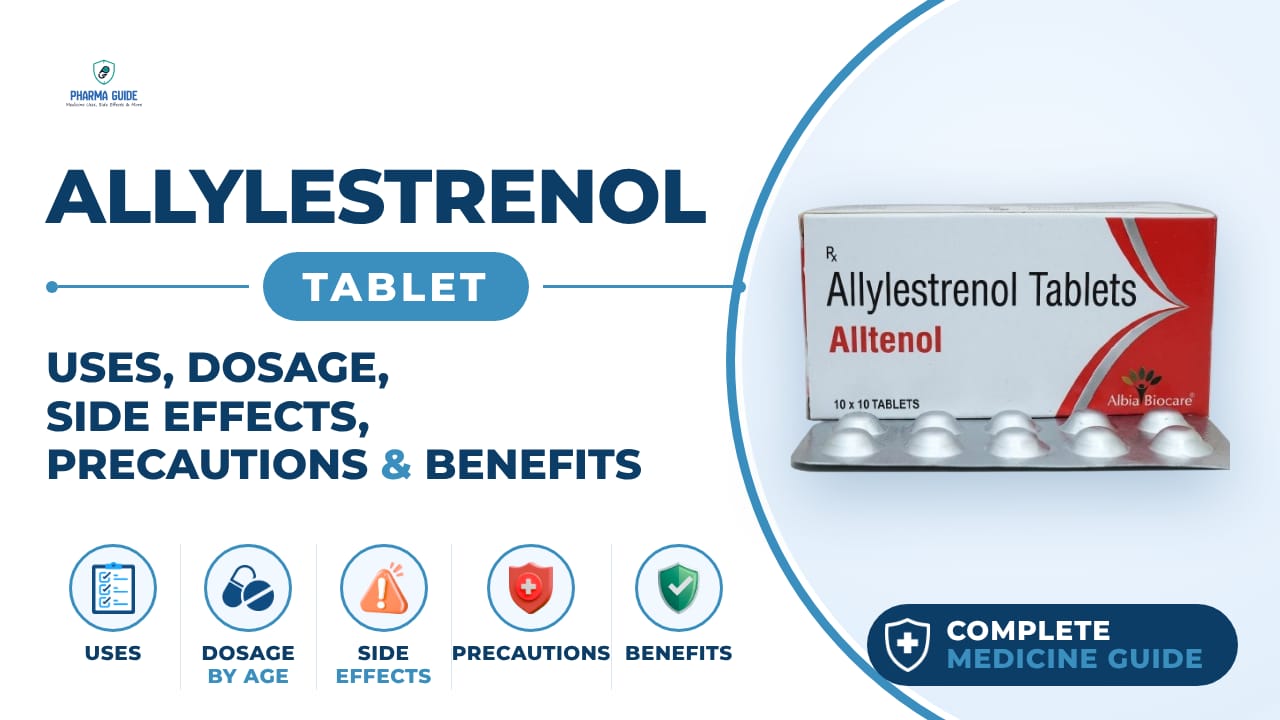
Allylestrenol Tablet: Uses, Dosage, Side Effects, Precautions and Alternates
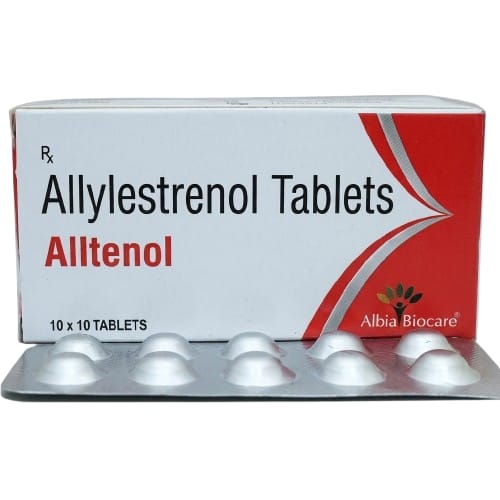
| Generic name | Allylestrenol |
|---|---|
| Drug class | Progestogen (synthetic progesterone hormone) |
| Forms | Tablet |
Quick overview
Allylestrenol Tablet contains allylestrenol, a synthetic progestogen that works like the natural hormone progesterone. It is used in pregnant women to help prevent miscarriage and early labor. It also has uses related to menstrual cycle irregularities and certain pregnancy-related complications.
What is Allylestrenol Tablet
Allylestrenol is a man-made hormone that acts like progesterone, a natural female hormone important for the menstrual cycle and pregnancy. It is used to help prevent miscarriage and early labor in pregnant women.
Allylestrenol Tablet uses
- Prevent premature labor
- Prevent miscarriage
- Treat habitual abortion (repeated pregnancy loss)
- Threatened abortion (bleeding or cramping in early pregnancy)
- Intrauterine growth retardation
- Failure of nidation (embryo not attaching to the womb)
- Irregular menstrual cycle
- Amenorrhea (absence of periods)
- Depression occurring before periods
Benefits of Allylestrenol Tablet
- Supports progesterone-related activity.
- Helps reduce uterine contractions in selected cases.
- May support pregnancy maintenance in specific situations.
- May help manage certain pregnancy-related complications when prescribed.
- Supports the hormonal environment needed for pregnancy.
How Allylestrenol Tablet works
Allylestrenol acts like the natural hormone progesterone. It relaxes the uterus muscles to help stop contractions that could cause early labor, and it helps keep the uterine lining in place to prevent bleeding.
Allylestrenol Tablet dosage
Allylestrenol Tablet can be taken with or without food. Take it at the same time every day. Do not take in larger or smaller amounts than prescribed, and do not stop taking this medicine without talking to your doctor first, even if you feel better.
If you miss a dose, take it as soon as you remember; if it is almost time for your next dose, skip the missed one and do not double up. To help with nausea, avoid taking it on an empty stomach. If it makes you dizzy or drowsy, try taking it before bedtime.
| Age group | Dose |
|---|---|
| Under 18 years | Not recommended |
| 18–64 years | 5 mg, 3 times/day |
| 65+ years | 5 mg, 3 times/day |
Available forms and strengths
- Tablet
Side effects of Allylestrenol Tablet
Common
- Headache
- Nausea and vomiting
- Swelling of hands and feet (fluid retention/edema)
- Bloating
- Tiredness
- Excessive hair growth
- Irregular periods or spotting
- Changes in appetite
- Acne or oily skin
- Skin rash
- Mood changes, including depression or irritability
- Changes in libido
- Breast tenderness
- Weight changes
- Dizziness
- Stomach discomfort
- Muscle pain
- Fever
Serious
- Signs of a severe allergic reaction such as rash, itching, swelling of the face, tongue, or throat, severe dizziness, or trouble breathing
- Loss of vision, bulging eyes, or double vision
- Pain and swelling in the leg or pain while breathing (possible sign of blood clot)
Warnings and precautions
- Do not use this medicine if you are allergic to it. Allergic reactions are rare, but get medical help right away if you notice rash, itching or swelling of the face, tongue, or throat, severe dizziness, or trouble breathing.
- Do not use this medicine if you have an incomplete abortion, as it may cause serious side effects. Do not use this medicine if you have a hormone-dependent cancer, as it may make the condition worse. Do not use this medicine if you have had a history of blood clots (thrombophlebitis), as it may worsen the condition.
- Use with caution if you have breathing disorders such as asthma, emphysema, or chronic bronchitis, as symptoms could get worse. Stop taking this medicine right away if you notice loss of vision, bulging eyes, or double vision, and tell your doctor about any blurred vision or very dry eyes. Do not drive or operate machines if you have these symptoms.
- Use with caution if you have a history of depression, since it may get worse. Tell your doctor right away about any changes in mood or behavior. This medicine is not recommended for children under 16 years old because its safety and effectiveness have not been proven in this age group.
- Pregnancy: This medicine is generally considered safe to use during pregnancy, but you should discuss the risks and benefits with your doctor before taking it. It should not be used after delivery.
- Breastfeeding: This medicine is not recommended while breastfeeding because it may harm your infant.
- Kidney: Use with caution if you have kidney problems, as it may make your condition worse. Your doctor may adjust your dose or suggest another medicine.
- Liver: This medicine is not recommended if you have severe liver disease, since high doses or long-term use may raise liver enzymes and affect liver function, increasing the risk of serious side effects.
- Alcohol: It is not known how this medicine interacts with alcohol. Talk to your doctor before drinking alcohol while taking this medicine.
- Driving: This medicine may affect your alertness, so avoid driving or operating machinery while taking it.
Storage
- Keep in a cool and dry place
- Do not refrigerate
- Keep away from the reach of children and pets
- Make sure unused medicine is disposed of properly
When to see a doctor
- Get emergency medical help right away if you think you have taken too much of this medicine. Tell your doctor if you notice regular spotting or bleeding during your period, or if you have headaches, pain and swelling in your leg, or pain while breathing. Seek immediate medical attention if you have signs of a severe allergic reaction, such as rash, itching, swelling of the face, tongue, or throat, severe dizziness, or trouble breathing.
Alternatives
- Hydroxyprogesterone
- Dydrogesterone
- Progesterone
Watch the video
FAQs
What is Allylestrenol Tablet used for?
It is used to prevent premature labor and miscarriage, treat habitual and threatened abortion, intrauterine growth retardation, failure of nidation, irregular menstrual cycles, amenorrhea, and pre-period depression.
How does Allylestrenol Tablet work?
It acts like natural progesterone, relaxing uterus muscles to stop contractions that could cause early labor and helping keep the uterine lining in place to prevent bleeding.
What is the dosage of Allylestrenol Tablet?
For adults aged 18-64 and those 65 and above, the usual dose is 5 mg, three times a day. It is not recommended for those under 18 years.
What are the common side effects of Allylestrenol Tablet?
Common side effects include headache, nausea and vomiting, swelling of hands and feet, bloating, tiredness, excessive hair growth, irregular periods, acne, mood changes, and breast tenderness.
Is Allylestrenol Tablet safe during pregnancy?
It is generally considered safe during pregnancy, but you should discuss the risks and benefits with your doctor before taking it, and it should not be used after delivery.
General information, not medical advice
Your prescriber and the leaflet in your pack know your situation. This page does not.
- Follow your prescriber and the leaflet
- Don't start, stop, or change a dose on your own
- Doses and warnings differ by country and product
Sources
Video
Related medicines

Injectafer Injection: Uses, Dosage, Side Effects, Precautions and Alternates
Iron products
Injectafer (ferric carboxymaltose) treats iron deficiency anemia and heart failure-related iron deficiency via IV. Learn uses, dosage, side effects, and

Gliclazide Tablet: Uses, Dosage, Side Effects, Precautions and Alternates
Sulfonylurea (hypoglycemic/antidiabetic agent)
Gliclazide Tablet is a sulfonylurea for type 2 diabetes that boosts insulin release. Learn about dosage, side effects, warnings, and precautions.