
Safety
General information, not medical advice
Your prescriber and the leaflet in your pack know your situation. This page does not.
- Follow your prescriber and the leaflet
- Don't start, stop, or change a dose on your own
- Doses and warnings differ by country and product
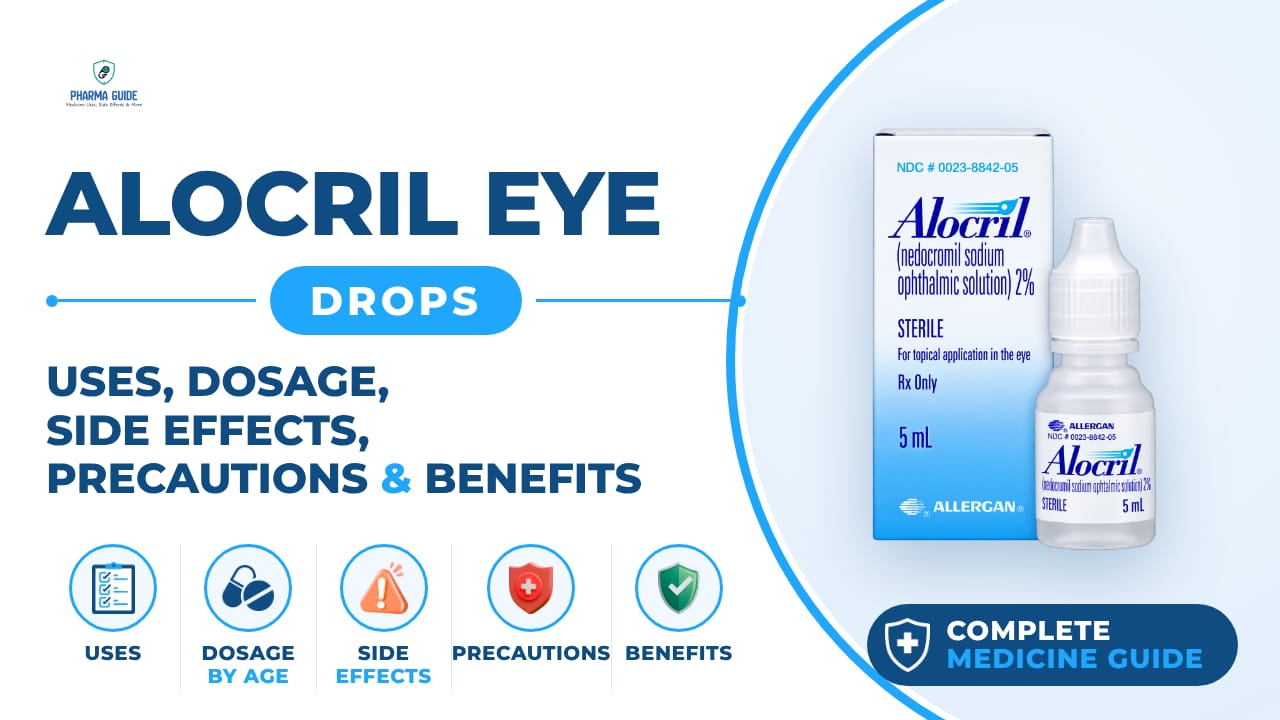
Alocril Eye Drops: Uses, Dosage, Side Effects, Precautions and Alternates
| Generic name | nedocromil |
|---|---|
| Drug class | mast cell stabilizer |
| Forms | ophthalmic solution (eye drops) |
Quick overview
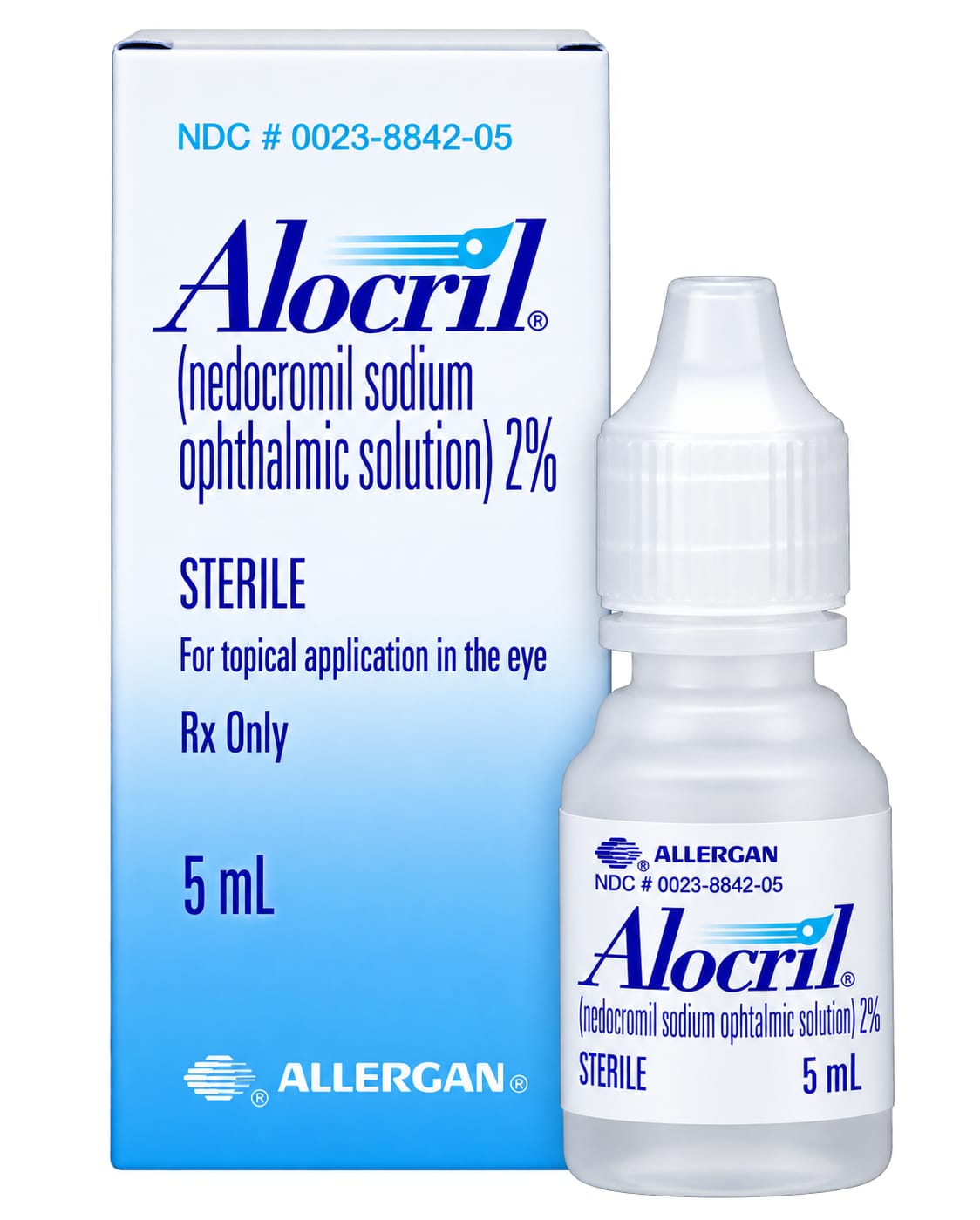
Alocril (nedocromil) is a mast cell stabilizer eye drop used to treat itching caused by allergic conjunctivitis. It works by preventing certain eye cells from releasing chemicals that trigger allergic symptoms such as itching, redness, watering, and burning. It is available as an ophthalmic solution and is used regularly throughout the allergy season as directed by a doctor.
What is Alocril Eye Drops
Alocril (nedocromil) ophthalmic solution is a mast cell stabilizer, which is an anti-allergic medication, used to treat eye symptoms of allergic conditions, such as inflammation, itching, watering, and burning.
Alocril Eye Drops uses
- Treatment of itching associated with allergic conjunctivitis (eye allergies)
Benefits of Alocril Eye Drops
- Helps relieve itchy eyes caused by allergies.
- Helps reduce redness and irritation from allergic conjunctivitis.
- Can help control watery eyes and burning discomfort related to allergies.
- Helps prevent and control recurrent allergic eye symptoms when used as prescribed.
How Alocril Eye Drops works
Alocril works by stopping certain cells in your eye from releasing chemicals that cause allergic symptoms like itching and redness. It blocks the release of these chemicals from mast cells, which are involved in allergic reactions.
Alocril Eye Drops dosage
Use the eye drops regularly, as directed by your doctor, at evenly spaced times each day. Start using the drops as close as possible to the start of your allergy symptoms, and keep using them throughout your allergy season, even if your symptoms go away.
Wash your hands thoroughly before and after using the drops. Tilt your head back, gently pull down your lower eyelid, and look up before placing the drop. Avoid letting the dropper tip touch your eye, eyelid, fingers, or any other surface, and avoid placing the drops directly on the cornea (the clear area over the pupil); place them just inside the lower eyelid instead. Blink a few times after the drop goes in so it spreads over the eye, then close your eyes and wipe away any extra solution with a clean tissue.
Do not wear soft contact lenses while using this medicine; if you wear hard or gas-permeable lenses, take them out before using the drops and wait at least 5 minutes before putting them back in. Do not use other eye medications at the same time without checking with your doctor first; if you do use another eye medicine, wait about 5 minutes between drops.
If you miss a dose, use it as soon as you remember, unless it is almost time for your next dose — do not double up on drops. This medicine has not been shown to be safe or effective for children under 3 years old.
| Age group | Dose |
|---|---|
| Under 3 years | Safety and effectiveness not established |
| 3–11 years | 1–2 drops in each affected eye twice daily |
| 12–17 years | 1–2 drops in each affected eye twice daily |
| 18–64 years | 1–2 drops in each affected eye twice daily |
| 65+ years | 1–2 drops in each affected eye twice daily |
Available forms and strengths
- Ophthalmic solution (eye drops)
Side effects of Alocril Eye Drops
Common
- Burning, stinging, or irritation of the eye
- Itchy eyes
- Eye redness
- Headache
- Stuffy or runny nose
- Bad or unpleasant taste in the mouth
- Increased eye sensitivity to light
- Blurred vision
- Dry or itching eyes
- Sore throat
- Taste changes
- Sneezing
- Cough
Serious
- Hives
- Difficulty breathing
- Swelling of face, lips, tongue, or throat
- Severe burning, stinging, or irritation after using the medicine
- Sudden vision loss
- Tunnel vision
- Eye pain or swelling
- Seeing halos around lights
- Fast, irregular, or pounding heartbeats
- Fluttering in the chest
- Shortness of breath
- Sudden dizziness, lightheadedness, or passing out
- Severe headache, confusion, slurred speech, arm or leg weakness, trouble walking, loss of coordination, feeling unsteady, very stiff muscles, high fever, profuse sweating, or tremors
Warnings and precautions
- This medicine is contraindicated in people who have shown an allergic reaction (hypersensitivity) to nedocromil sodium or any of the other ingredients.
- Do not let the tip of the dropper touch your eye, surrounding areas, fingers, or any other surface — this can contaminate the solution with bacteria that cause eye infections, which can seriously damage the eye and cause vision loss.
- Do not wear soft contact lenses while using this medicine, and avoid contact lens use while you have signs of allergic conjunctivitis.
- Do not use other eye medicines at the same time as this one unless your doctor tells you to.
- This medicine has not been shown to be safe or effective in children younger than 3 years old.
- This medicine should be used during pregnancy only if your doctor decides it's clearly needed. It isn't known if this medicine passes into human breast milk. Talk to your doctor before breastfeeding while using it. Alcohol can affect how some medications work, so tell your prescriber if you drink alcohol.
Storage
- Store at 2–25°C (36–77°F) or according to the specific product label.
- Keep the bottle tightly closed when not in use.
- Protect from excessive heat and direct sunlight.
- Do not freeze, and avoid touching the dropper tip to help prevent contamination.
- Keep out of reach and sight of children and pets.
When to see a doctor
- Get medical help right away if you have hives, trouble breathing, or swelling of your face, lips, tongue, or throat, or severe burning, stinging, or irritation after using the medicine.
- Seek medical care right away if you have serious eye symptoms such as sudden vision loss, blurred vision, tunnel vision, eye pain or swelling, or seeing halos around lights.
- Seek medical care right away if you have serious heart symptoms such as fast, irregular, or pounding heartbeats, fluttering in your chest, shortness of breath, or sudden dizziness, lightheadedness, or passing out.
- Seek medical care right away if you have a severe headache, confusion, slurred speech, arm or leg weakness, trouble walking, loss of coordination, feeling unsteady, very stiff muscles, high fever, profuse sweating, or tremors.
Alternatives
- Ketotifen Eye Drops
- Lastacaft (Alcaftadine) Eye Drops
- Pataday (Olopatadine) Eye Drops
- Cromolyn Sodium Eye Drops
Watch the video
FAQs
What is Alocril Eye Drops used for?
Alocril is used to treat itching associated with allergic conjunctivitis (eye allergies).
How does Alocril Eye Drops work?
Alocril works by stopping certain cells in the eye, called mast cells, from releasing chemicals that cause allergic symptoms like itching and redness.
What is the dosage for Alocril Eye Drops?
For ages 3 and up, the typical dose is 1–2 drops in each affected eye twice daily. It has not been shown to be safe or effective in children under 3 years old.
Can I wear contact lenses while using Alocril Eye Drops?
No, you should not wear soft contact lenses while using this medicine. If you wear hard or gas-permeable lenses, remove them before using the drops and wait at least 5 minutes before putting them back in.
What are the common side effects of Alocril Eye Drops?
Common side effects include burning, stinging, or irritation of the eye, itchy eyes, eye redness, headache, stuffy or runny nose, bad taste in the mouth, increased light sensitivity, and blurred vision.
General information, not medical advice
Your prescriber and the leaflet in your pack know your situation. This page does not.
- Follow your prescriber and the leaflet
- Don't start, stop, or change a dose on your own
- Doses and warnings differ by country and product
Sources
Video
Related medicines
Intal Inhaler: Uses, Dosage, Side Effects, Precautions and Alternates
Mast cell stabilizer
Intal Inhaler (cromolyn sodium) prevents asthma symptoms by stabilizing mast cells. Learn its uses, dosage, side effects, and precautions here.

Injectafer Injection: Uses, Dosage, Side Effects, Precautions and Alternates
Iron products
Injectafer (ferric carboxymaltose) treats iron deficiency anemia and heart failure-related iron deficiency via IV. Learn uses, dosage, side effects, and