
Safety
General information, not medical advice
Your prescriber and the leaflet in your pack know your situation. This page does not.
- Follow your prescriber and the leaflet
- Don't start, stop, or change a dose on your own
- Doses and warnings differ by country and product
Intal Inhaler: Uses, Dosage, Side Effects, Precautions and Alternates
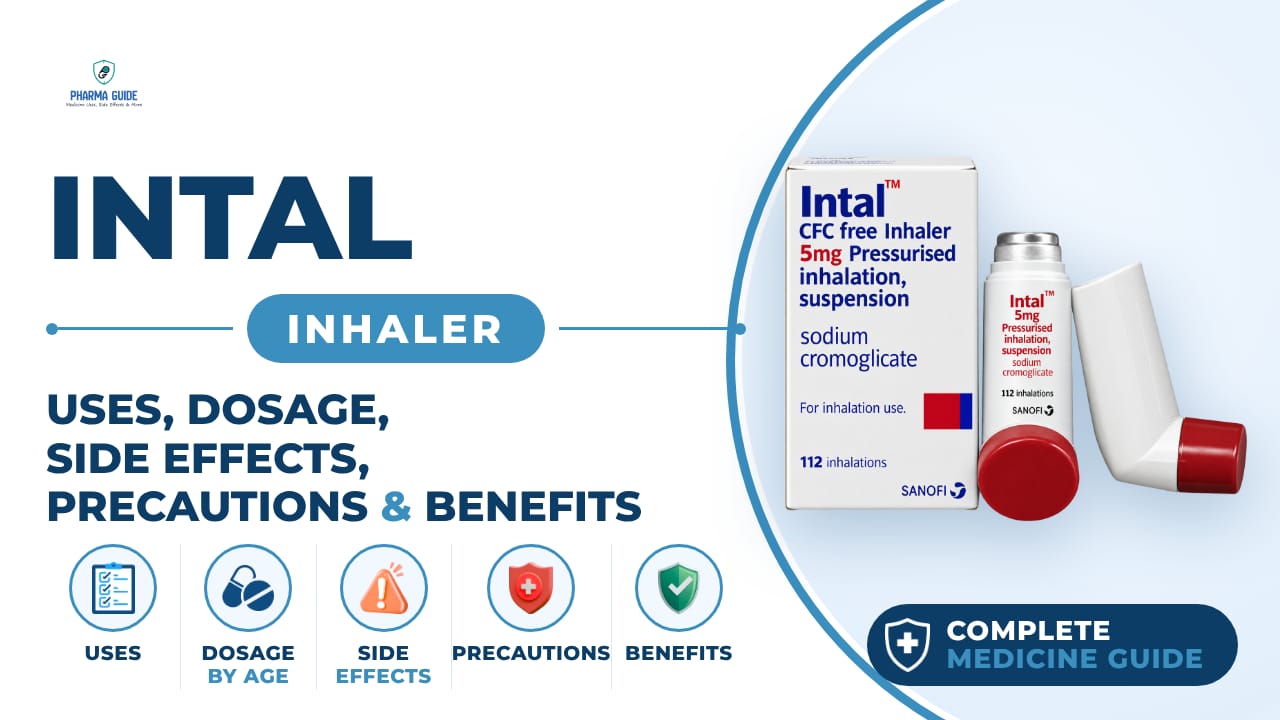
| Generic name | cromolyn sodium |
|---|---|
| Drug class | Mast cell stabilizer |
| Forms | Metered dose aerosol inhaler, Inhalation solution (for use with a nebulizer), Capsules for inhalation (used with a Spinhaler or Halermatic device) |
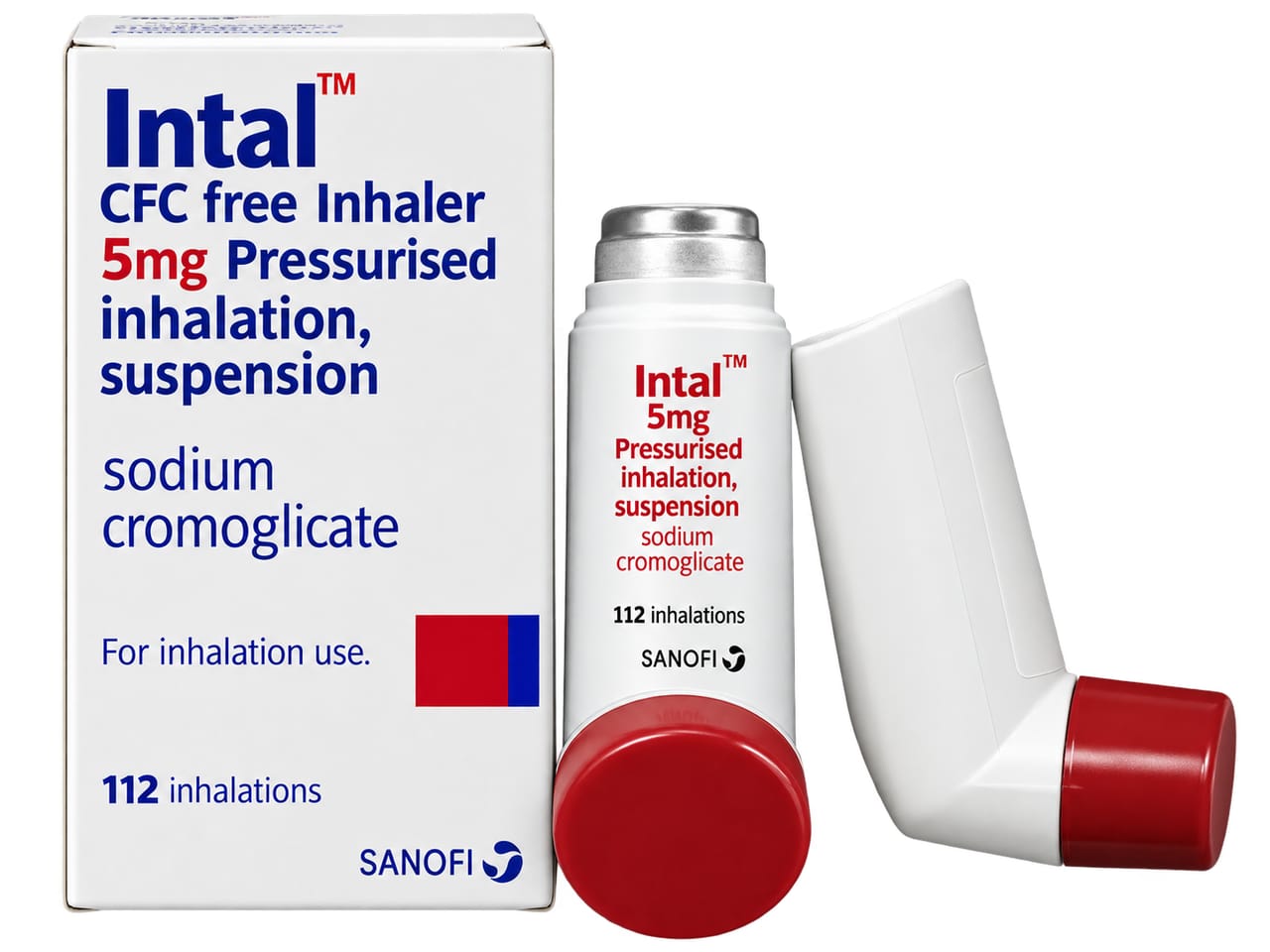
Quick overview
Intal Inhaler contains cromolyn sodium, a mast cell stabilizer, and is used to prevent asthma symptoms. It is delivered as a metered dose aerosol spray that is breathed in through the mouth. It works by preventing certain inflammatory cells in the lungs from releasing substances that trigger asthma symptoms or airway narrowing, and it is intended for regular preventive use rather than treatment of a sudden asthma attack.
What is Intal Inhaler
Intal Inhaler is an inhaled anti-inflammatory medicine used to prevent asthma symptoms. It contains cromolyn sodium and is delivered as a metered dose aerosol spray that you breathe in through your mouth.
Intal Inhaler uses
- Prevents symptoms of asthma when used regularly
- Used before exposure to triggers like exercise, cold air, pollen, aspirin, chemicals, or air pollution to prevent wheezing or breathing difficulty
- Can be used alone or together with other asthma medicines such as bronchodilators or corticosteroids
Benefits of Intal Inhaler
- Reduces inflammation in the lungs, which lowers the number and severity of asthma attacks
- May help prevent bronchospasm triggered by exercise, cold air, or environmental irritants in some patients
How Intal Inhaler works
The medicine works by acting on certain inflammatory cells in the lungs, stopping them from releasing substances that cause asthma symptoms or sudden narrowing of the airways.
Intal Inhaler dosage
This medicine must be used by oral inhalation only and should not be swallowed. It should be used regularly every day at evenly spaced times as directed by your doctor, since its effect depends on consistent use. Do not use it to treat a sudden asthma attack that has already started — it only works to prevent symptoms. When used before exercise or exposure to a trigger, it should be taken shortly before exposure, generally within 10 to 15 minutes but no more than 60 minutes beforehand.
Shake the inhaler gently before use and test or prime it before first use or if it hasn't been used for a while. Breathe out fully before using the inhaler, then breathe in slowly and deeply while pressing the canister, and hold your breath for several seconds afterward so the medicine can spread through the lungs. Do not breathe out into the inhaler, as this can clog the valve. If more than one puff is needed, wait about a minute between puffs and shake the inhaler again before the next puff. The canister should be at room temperature before use for best results.
Do not stop treatment or reduce the dose without talking to your doctor, since stopping suddenly can make asthma worse. It may take several weeks of regular use before you notice the full benefit.
| Age group | Dose |
|---|---|
| Under 5 years | The Intal metered-dose inhaler did not have an established routine dose for this age group |
| 5–64 years | 2 inhalations four times daily at regular intervals |
Available forms and strengths
- Metered dose aerosol inhaler
- Inhalation solution (for use with a nebulizer)
- Capsules for inhalation (used with a Spinhaler or Halermatic device)
Side effects of Intal Inhaler
Common
- Throat irritation or dryness
- Bad or unpleasant taste
- Cough
- Wheeze
- Nausea
- Dryness of mouth or throat irritation
Serious
- Severe allergic (anaphylactic) reactions
- Severe bronchospasm with coughing and difficulty breathing
- Swelling of the face, lips, tongue, or eyelids
- Hives or itching of the skin
- Shortness of breath or tightness in the chest
- Difficulty swallowing
- Low blood pressure
- Eosinophilic pneumonia (lung inflammation)
Warnings and precautions
- This medicine does not treat a sudden asthma attack and should never be used for that purpose, especially a severe, life-threatening asthma attack.
- Severe allergic (anaphylactic) reactions can happen after using this medicine.
- Because of the propellants in the inhaler, it should be used carefully in people with coronary artery disease or a history of irregular heartbeat.
- The inhaler should be stopped if the patient develops a specific type of lung inflammation called eosinophilic pneumonia.
- Do not stop using this medicine suddenly, since doing so after regular use may make your asthma worse.
- Cromolyn is not known to be harmful during pregnancy, but animal studies cannot fully predict effects in humans, so it should only be used in pregnancy if clearly needed and after discussing risks and benefits with your doctor.
- It is not known whether this medicine passes into breast milk, so caution is advised and your doctor should weigh the benefits and risks before you use it while breastfeeding.
- People with reduced kidney function may need a lower dose because the drug is partly cleared from the body through the kidneys. People with reduced liver function may need a lower dose because the drug is partly cleared from the body through the liver.
- This medicine has not been shown to increase the effects of alcohol, but you should still be cautious with alcohol until you know how the medicine affects you.
- This medicine does not cause drowsiness and does not appear to affect your ability to drive or operate machinery, but take care until you know how it affects you.
Storage
- Store between 15 to 30°C (59 to 86°F)
- Contents under pressure — do not puncture, incinerate, or place near sources of heat
- Exposure to temperatures above 120°F may cause the canister to burst
- Avoid spraying in eyes
- Keep out of the reach of children
- Do not freeze
- Do not leave the canister inside a car where it could be exposed to extreme heat or cold
- Do not keep outdated medicine or medicine no longer needed
When to see a doctor
- Get medical help right away if you have severe chest tightness along with coughing and trouble breathing.
- Get medical help right away if you notice signs of a severe allergic reaction, such as rash, itching, hives, swelling of the face, lips, or tongue, shortness of breath, wheezing, or trouble breathing.
- Contact your doctor as soon as possible if you have difficulty swallowing, hives, increased wheezing or difficulty breathing, itching, low blood pressure, shortness of breath, tightness in the chest, or swelling of the face, lips, or eyelids.
Alternatives
- Montelukast
- Inhaled corticosteroids
- Budesonide
Watch the video
FAQs
What is Intal Inhaler used for?
It is used to prevent asthma symptoms by reducing lung inflammation, and can be used before exposure to triggers like exercise, cold air, pollen, aspirin, chemicals, or air pollution to prevent wheezing or breathing difficulty.
Can Intal Inhaler be used to treat a sudden asthma attack?
No, it should never be used to treat a sudden or severe asthma attack since it only works to prevent symptoms, not relieve one that has already started.
What is the dosage of Intal Inhaler for adults?
For ages 5 to 64 years, the typical dose is 2 inhalations four times daily at regular intervals. There is no established routine dose for children under 5 years.
What are the common side effects of Intal Inhaler?
Common side effects include throat irritation or dryness, bad or unpleasant taste, cough, wheeze, nausea, and dryness of the mouth.
How long before exercise should Intal Inhaler be used?
When used before exercise or exposure to a trigger, it should generally be taken 10 to 15 minutes beforehand, and no more than 60 minutes before exposure.
General information, not medical advice
Your prescriber and the leaflet in your pack know your situation. This page does not.
- Follow your prescriber and the leaflet
- Don't start, stop, or change a dose on your own
- Doses and warnings differ by country and product
Sources
Video
Related medicines
Alocril Eye Drops: Uses, Dosage, Side Effects, Precautions and Alternates
mast cell stabilizer
Alocril (nedocromil) eye drops treat itching from allergic conjunctivitis. Learn how it works, dosage, side effects, precautions, and alternatives.

Injectafer Injection: Uses, Dosage, Side Effects, Precautions and Alternates
Iron products
Injectafer (ferric carboxymaltose) treats iron deficiency anemia and heart failure-related iron deficiency via IV. Learn uses, dosage, side effects, and