
Safety
General information, not medical advice
Your prescriber and the leaflet in your pack know your situation. This page does not.
- Follow your prescriber and the leaflet
- Don't start, stop, or change a dose on your own
- Doses and warnings differ by country and product
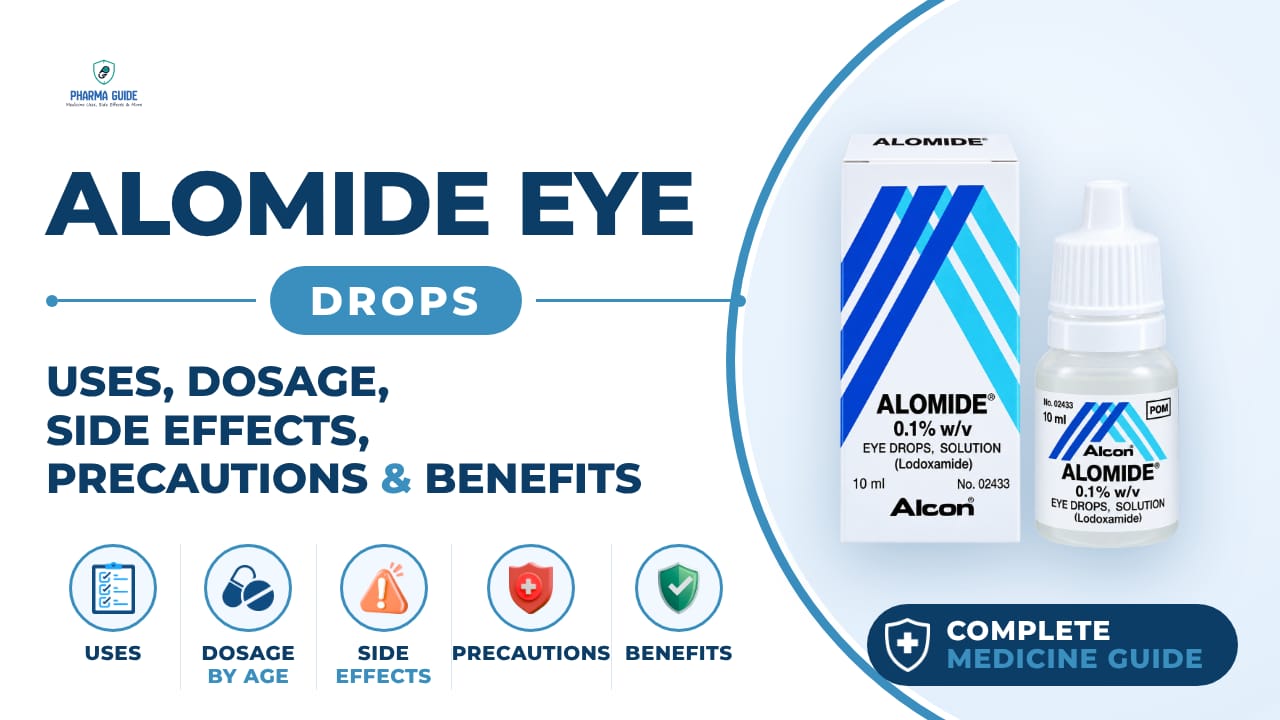
Alomide Eye Drops: Uses, Dosage, Side Effects, Precautions and Alternates
| Generic name | lodoxamide (lodoxamide tromethamine) |
|---|---|
| Drug class | Ophthalmic mast cell stabilizer / ophthalmic antihistamines and decongestants |
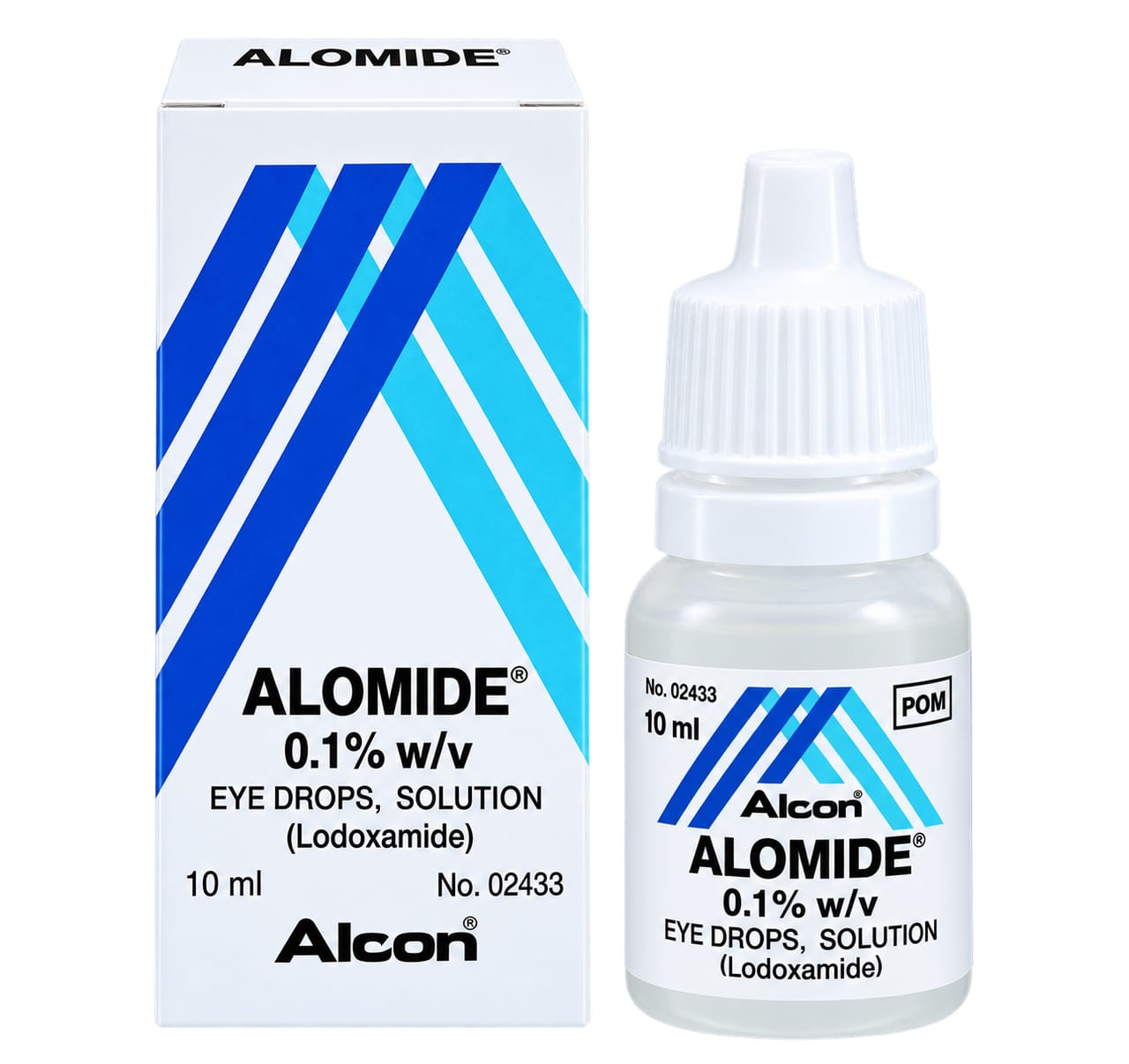
| Forms | Ophthalmic solution (eye drops), 0.1% |
Quick overview
Alomide Eye Drops contain lodoxamide tromethamine 0.1%, an ophthalmic mast cell stabilizer available by prescription. They are used to treat allergy-related eye symptoms and certain allergic eye conditions in adults and children at least 2 years old. The drops work by stopping mast cells from releasing substances that cause inflammation. They are typically used up to four times daily for as long as your doctor directs.
What is Alomide Eye Drops
Alomide is a prescription eye drop containing lodoxamide tromethamine 0.1%. It is used to treat allergy-related eye symptoms and certain allergic eye conditions.
Alomide Eye Drops uses
- Treats allergy-related eye symptoms such as redness, itching, burning, watery eyes, and sensitivity to light
- Treats symptoms of certain types of allergic conjunctivitis caused by allergens like pollen, ragweed, grass, dust, or animal hair and dander
- For use in adults and children at least 2 years old
Benefits of Alomide Eye Drops
- Helps reduce allergy symptoms in the eyes by calming the immune response that causes inflammation
How Alomide Eye Drops works
Alomide is a mast cell stabilizer. It stops certain immune cells (mast cells) from releasing histamine and other substances that cause inflammation, which helps reduce allergy symptoms in the eye.
Alomide Eye Drops dosage
Follow all directions on your prescription label and use the medicine exactly as directed. Wash your hands before using the eye drops, and shake the eye drops before each use. Pull down your lower eyelid to make a small pocket, place a drop in the pocket, then close your eyes for 1 to 2 minutes. Do not touch the dropper tip to your eye or any other surface to avoid contaminating it.
Do not wear soft contact lenses while using this medicine; wait at least 15 minutes after use before putting contact lenses back in. Wait at least 10 minutes before using any other eye drops. You may need to use this medicine for up to 3 months during certain times of the year, so follow your doctor's instructions carefully.
If you miss a dose, use it as soon as you remember, but skip it if it is almost time for your next dose; do not use two doses at once.
| Age group | Dose |
|---|---|
| Under 2 years | Safety and effectiveness are not established |
| 2–11 years | 1–2 drops in each affected eye 4 times daily |
| 18–64 years | 1–2 drops in each affected eye 4 times daily |
| 65–74 years | Same standard dosage; no specific age-based adjustment established |
Available forms and strengths
- Ophthalmic solution (eye drops), 0.1%
Side effects of Alomide Eye Drops
Common
- Eye itching, watering, pain, or redness
- Blurred vision
- Dry or watery eyes, crusting or drainage
- Headache
- Feeling like something is in your eye
- Eye burning, stinging, or irritation
Serious
- Severe burning or stinging when applying the eye drops
- Severe eye discomfort
- Ongoing burning or stinging
- Appearance of blood inside the eye
- Signs of a severe allergic reaction: hives, difficulty breathing, swelling of face, lips, tongue, mouth, or throat, racing heart, fever, swollen lymph nodes, trouble swallowing, dizziness, fainting, nausea, vomiting, stomach cramps, or joint pain
Warnings and precautions
- Do not use this medicine if you are allergic to lodoxamide or any of its ingredients.
- Do not wear soft contact lenses while using this medicine. The preservative can be absorbed by soft contact lenses and may permanently stain or irritate them.
- Wait at least 15 minutes before putting your contact lenses back in.
- Do not touch the dropper tip to your eye or any surface, as a contaminated dropper can infect your eye and cause serious vision problems.
- Do not use other eye medications unless your doctor tells you to.
- It is not known if or how this medicine could affect pregnancy or harm an unborn baby. Tell your doctor if you are pregnant or plan to become pregnant.
- It is not known if this medicine passes into breast milk. Tell your doctor if you are breastfeeding or plan to breastfeed.
- No routine kidney-specific dose adjustment is established.
- No routine liver-specific dose adjustment is established.
- There are no known interactions between this medicine and alcohol.
- Temporary blurred vision may occur after applying eye drops; wait until vision is clear before driving.
Storage
- Store at cool room temperature away from moisture and heat
- Keep the bottle tightly closed when not in use
- Store between 68 F and 77 F (20 C and 25 C); can tolerate 59 F to 86 F (15 C to 30 C) for shorter periods, such as during transport
- Store in a cool, dry place
When to see a doctor
- Get emergency medical help right away if you have signs of a serious allergic reaction, such as hives, difficulty breathing, or swelling of the face, lips, tongue, or throat.
- Stop using the medicine and call your doctor right away if you have severe burning or stinging, severe eye discomfort, ongoing burning or stinging, or notice blood inside your eye.
- Seek emergency medical attention or contact a poison control center if anyone accidentally swallows the medicine.
Alternatives
- Cromolyn sodium eye drops
- Nedocromil eye drops
- Pemirolast eye drops
- Ketotifen eye drops
Watch the video
FAQs
What is Alomide Eye Drops used for?
Alomide Eye Drops are used to treat allergy-related eye symptoms such as redness, itching, burning, watery eyes, and light sensitivity, as well as symptoms of certain types of allergic conjunctivitis caused by allergens like pollen, ragweed, grass, dust, or animal hair and dander.
How does Alomide Eye Drops work?
Alomide is a mast cell stabilizer. It stops certain immune cells (mast cells) from releasing histamine and other substances that cause inflammation, helping reduce allergy symptoms in the eye.
What is the dosage of Alomide Eye Drops for children?
For children ages 2 to 11 years, the dose is 1 to 2 drops in each affected eye 4 times daily, the same as the adult dosage.
Can I wear contact lenses while using Alomide Eye Drops?
No, you should not wear soft contact lenses while using this medicine, as the preservative can be absorbed and may permanently stain or irritate them. Wait at least 15 minutes after using the drops before putting your contact lenses back in.
What are the serious side effects of Alomide Eye Drops?
Serious side effects include severe burning or stinging when applying the drops, severe eye discomfort, ongoing burning or stinging, blood appearing inside the eye, and signs of a severe allergic reaction such as hives, difficulty breathing, or swelling of the face, lips, tongue, or throat.
General information, not medical advice
Your prescriber and the leaflet in your pack know your situation. This page does not.
- Follow your prescriber and the leaflet
- Don't start, stop, or change a dose on your own
- Doses and warnings differ by country and product
Sources
Video
Related medicines

Injectafer Injection: Uses, Dosage, Side Effects, Precautions and Alternates
Iron products
Injectafer (ferric carboxymaltose) treats iron deficiency anemia and heart failure-related iron deficiency via IV. Learn uses, dosage, side effects, and

Gliclazide Tablet: Uses, Dosage, Side Effects, Precautions and Alternates
Sulfonylurea (hypoglycemic/antidiabetic agent)
Gliclazide Tablet is a sulfonylurea for type 2 diabetes that boosts insulin release. Learn about dosage, side effects, warnings, and precautions.