
Safety
General information, not medical advice
Your prescriber and the leaflet in your pack know your situation. This page does not.
- Follow your prescriber and the leaflet
- Don't start, stop, or change a dose on your own
- Doses and warnings differ by country and product
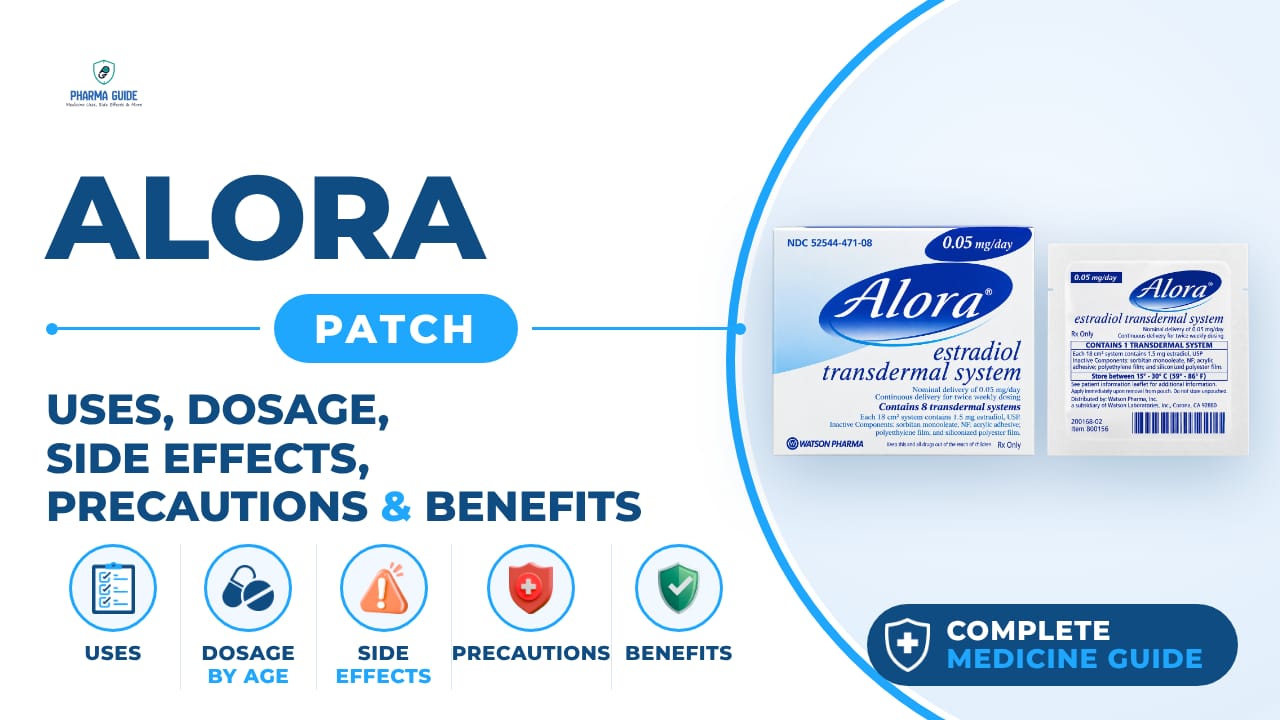
Alora Patch: Uses, Dosage, Side Effects, Precautions and Alternates
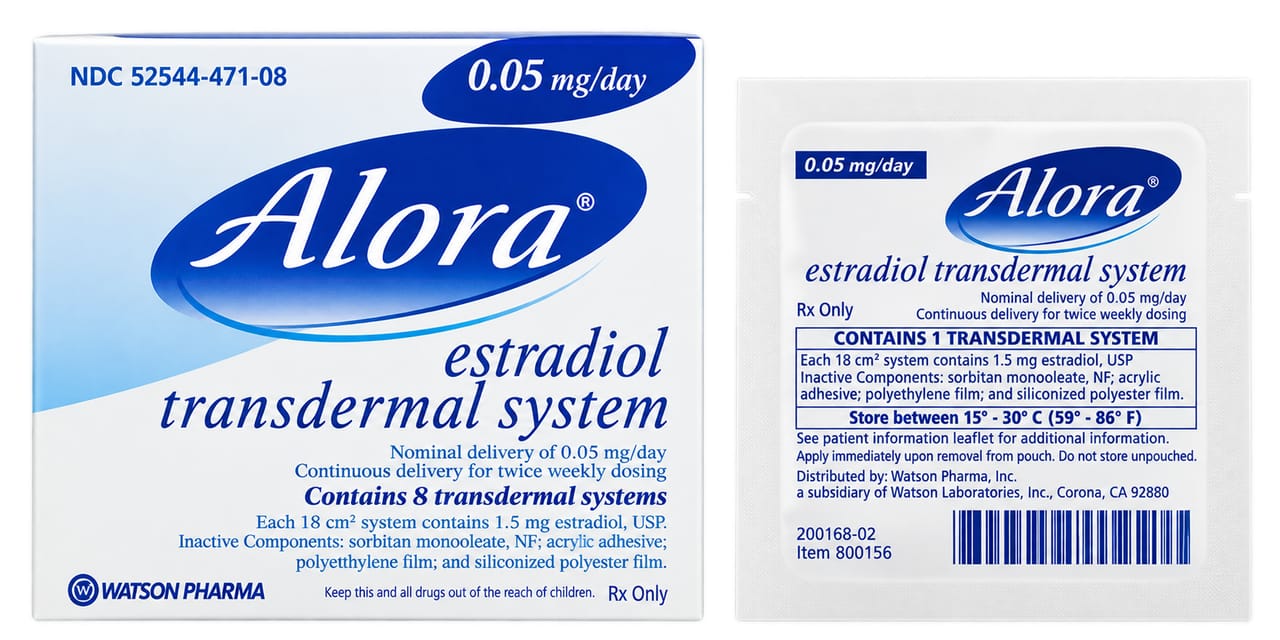
| Generic name | estradiol transdermal system |
|---|---|
| Drug class | Estrogen Derivatives |
| Forms | Transdermal system (skin patch) |
Quick overview
Alora Patch is a transdermal skin patch containing estradiol, a form of estrogen, used after menopause to help with symptoms caused by the body making less estrogen. It can help relieve hot flashes, vaginal dryness, and other menopause-related symptoms, and may help prevent postmenopausal osteoporosis. The patch is applied to the skin twice weekly and should be used exactly as directed by a healthcare provider.
What is Alora Patch
Alora is a skin patch that contains estradiol, a form of estrogen (female sex hormone). It is used after menopause to help with symptoms caused by the body making less estrogen.
Alora Patch uses
- Treats menopause symptoms such as dryness, burning, and itching of the vaginal area
- Reduces urgency or irritation of urination related to menopause
- Reduces moderate to severe hot flashes
- Treats moderate to severe symptoms of vulvar and vaginal atrophy due to menopause
- Treats ovarian disorders, infertility, and abnormal vaginal bleeding
- Treats low estrogen levels caused by hypogonadism, castration, or primary ovarian failure
- Helps prevent postmenopausal osteoporosis (thin, weak bones)
Benefits of Alora Patch
- Helps relieve moderate to severe hot flashes associated with menopause
- Helps reduce night sweats and other vasomotor symptoms
- Replaces estrogen lost after menopause through the skin
- Helps relieve vaginal dryness, irritation, and discomfort related to menopause
- Can help prevent postmenopausal osteoporosis in appropriate women
How Alora Patch works
Estrogen attaches to receptors found throughout the body, including the brain, reproductive tract, and bones. After menopause, lower estrogen levels change how these tissues work, causing hot flashes, vaginal dryness, and bone loss. Alora replaces some of this estrogen, which can help ease these symptoms.
Alora Patch dosage
Apply the patch only to the skin; it is not swallowed. Apply a new patch two times each week, on the same two days each week. Apply the first patch to a clean, dry area of the lower abdomen. After the first patch, rotate to a different area of the lower abdomen, upper buttocks, or outer hip each time, and do not use the same skin area twice within one week.
Make sure the skin is clean, dry, cool, and free of powder, oil, or lotion before applying. Do not apply to skin that has cuts, rashes, or irritation. Never apply the patch to the breasts, and avoid the waistline, since tight clothing can rub the patch off.
Press the patch firmly in place with the palm of your hand for about 10 seconds, especially around the edges. Apply the patch immediately after removing it from its protective pouch.
If the patch falls off, try reapplying it; if it will not stick, apply a new patch to a different area and keep your original schedule. Do not wear two patches at the same time, and do not cut the patch.
Do not stop using the patch without talking to your healthcare provider first. Talk with your healthcare provider regularly, about every 3 to 6 months, about whether you still need treatment.
| Age group | Dose |
|---|---|
| Under 18 years | Not indicated; safety and effectiveness not established |
| 18+ years – Premenopausal women | Not routinely indicated for menopausal therapy |
| Postmenopausal women – Vasomotor symptoms | Start 0.05 mg/day, applied twice weekly |
| Postmenopausal women – Osteoporosis prevention | Start 0.025 mg/day, applied twice weekly |
| 65+ years | Use the lowest effective individualized dose |
Available forms and strengths
- Transdermal system (skin patch)
Side effects of Alora Patch
Common
- Skin redness or irritation where the patch was worn
- Nausea or vomiting
- Upset stomach or stomach cramps
- Bloating
- Constipation
- Breast swelling, tenderness, or pain
- Nipple discharge
- Headache
- Weight changes
- Acne or skin color changes
- Increased facial or body hair
- Thinning scalp hair
- Back pain
- Joint pain
- Cold-like symptoms (stuffy nose, sneezing, sinus pain, sore throat)
- Changes in menstrual periods or breakthrough bleeding
- Vaginal itching or discharge
- Fluid retention (swelling, rapid weight gain)
- Dizziness
- Rash or itching
- Fungal infections
Serious
- Chest pain or heavy feeling, pain spreading to the arm or shoulder, sweating, general ill feeling (possible heart attack)
- Sudden numbness or weakness, especially on one side of the body (possible stroke)
- Sudden severe headache, sudden vision changes, problems with speech or balance
- Sudden cough, wheezing, rapid breathing, or coughing up blood
- Pain, swelling, warmth, or redness in one or both legs (possible blood clot)
- Pain, swelling, or tenderness in the stomach
- Jaundice (yellowing of the skin or eyes)
- A new lump in the breast
- Unusual vaginal bleeding or pelvic pain
- Memory problems, confusion, or unusual behavior
- Signs of high blood calcium such as nausea, vomiting, constipation, increased thirst or urination, muscle weakness, bone pain, or lack of energy
- Signs of dangerously high blood pressure such as severe headache, blurred vision, buzzing in the ears, anxiety, confusion, chest pain, shortness of breath, or uneven heartbeats
- Signs of a serious allergic reaction such as hives, difficulty breathing, or swelling of the face, lips, tongue, or throat
Warnings and precautions
- Alora should not be used by women who are pregnant. Tell your doctor right away if you become pregnant while using this medicine.
- The hormone in Alora can pass into breast milk and may reduce the amount of milk produced. Talk to your doctor before breastfeeding while using this medicine.
- Tell your doctor if you have kidney disease before using this medicine. Do not use this medicine if you have liver disease, since estrogens may not be broken down properly by a damaged liver.
- Estrogens increase the risk of cancer of the lining of the uterus (endometrial cancer). Any unusual vaginal bleeding after menopause should be checked by a doctor right away.
- Estrogens, with or without a progestin, should not be used to try to prevent heart disease, stroke, or dementia.
- Using estrogen alone can raise the chances of stroke or blood clots.
- Using estrogen alone may increase the chance of dementia, based on a study of women 65 years of age or older.
- Using estrogen combined with a progestin can raise the chances of heart attack, stroke, breast cancer, or blood clots.
- Do not use this medicine if you have unusual vaginal bleeding, certain cancers, a history of heart attack, stroke, or blood clots, or liver disease.
- Smoking while using this medicine greatly increases the risk of blood clots, stroke, or heart attack.
- If you need major surgery or will be on bed rest for a long time, tell your doctor, since you may need to stop using this medicine for a while.
- This medicine may cause dark, blotchy patches on the skin that can worsen with sun exposure.
- If you are going to have an MRI, tell the testing staff you are wearing this patch, since it may contain metal that can cause burns during the scan.
Storage
- Store at 20–25°C (68–77°F) at controlled room temperature.
- Keep each patch in its original sealed pouch until ready to use.
- Protect from excessive heat, moisture, and direct sunlight.
- Do not refrigerate or freeze the patches.
- Keep out of reach and sight of children and pets, including used patches.
When to see a doctor
- Get emergency help right away if you have signs of a serious allergic reaction, such as hives, trouble breathing, or swelling of the face, lips, tongue, or throat.
- Remove the patch and call your doctor right away if you have signs of a heart attack, such as chest pain or pressure that spreads to the jaw or shoulder, nausea, or sweating.
- Get medical help right away for signs of a stroke, such as sudden numbness or weakness on one side of the body, sudden severe headache, slurred speech, or vision or balance problems.
- Get medical help right away for signs of a blood clot, such as sudden vision loss, sharp chest pain, shortness of breath, coughing up blood, or pain or warmth in one or both legs.
- Call your doctor right away if you notice a new breast lump, unusual vaginal bleeding, changes in vision or speech, sudden severe headaches, or severe chest or leg pain with shortness of breath, weakness, and fatigue.
- If you think you have taken too much or someone has swallowed a patch, contact a poison control center right away or seek emergency care if there are serious symptoms like passing out or trouble breathing.
Alternatives
- Estradot (Estradiol Patch)
- Minivelle (Estradiol Patch)
- Climara (Estradiol Patch)
- Vivelle-Dot (Estradiol Patch)
Watch the video
FAQs
What is Alora Patch used for?
Alora Patch is used to treat menopause symptoms such as hot flashes, vaginal dryness, burning, and itching, as well as urinary urgency related to menopause. It can also help prevent postmenopausal osteoporosis and treat low estrogen levels from conditions like hypogonadism or ovarian failure.
How often should Alora Patch be applied?
A new patch should be applied twice each week, on the same two days each week, to a clean, dry area of the lower abdomen, upper buttocks, or outer hip, rotating the application site each time.
Can Alora Patch be applied to the breasts?
No, Alora Patch should never be applied to the breasts. It should also be applied away from the waistline, since tight clothing can rub the patch off.
What should I do if the Alora Patch falls off?
If the patch falls off, try reapplying it. If it will not stick, apply a new patch to a different skin area and continue with your original dosing schedule.
What are the serious risks associated with Alora Patch?
Serious risks include increased chances of heart attack, stroke, blood clots, and endometrial cancer, as well as a possible increased risk of dementia in women 65 and older using estrogen alone.
General information, not medical advice
Your prescriber and the leaflet in your pack know your situation. This page does not.
- Follow your prescriber and the leaflet
- Don't start, stop, or change a dose on your own
- Doses and warnings differ by country and product
Sources
Video
Related medicines

Injectafer Injection: Uses, Dosage, Side Effects, Precautions and Alternates
Iron products
Injectafer (ferric carboxymaltose) treats iron deficiency anemia and heart failure-related iron deficiency via IV. Learn uses, dosage, side effects, and

Gliclazide Tablet: Uses, Dosage, Side Effects, Precautions and Alternates
Sulfonylurea (hypoglycemic/antidiabetic agent)
Gliclazide Tablet is a sulfonylurea for type 2 diabetes that boosts insulin release. Learn about dosage, side effects, warnings, and precautions.