
Safety
General information, not medical advice
Your prescriber and the leaflet in your pack know your situation. This page does not.
- Follow your prescriber and the leaflet
- Don't start, stop, or change a dose on your own
- Doses and warnings differ by country and product
Alosetron Tablet: Uses, Dosage, Side Effects, Precautions and Alternates
| Generic name | alosetron hydrochloride |
|---|---|
| Drug class | Serotoninergic neuroenteric modulators (selective serotonin 5-HT3 antagonist) |
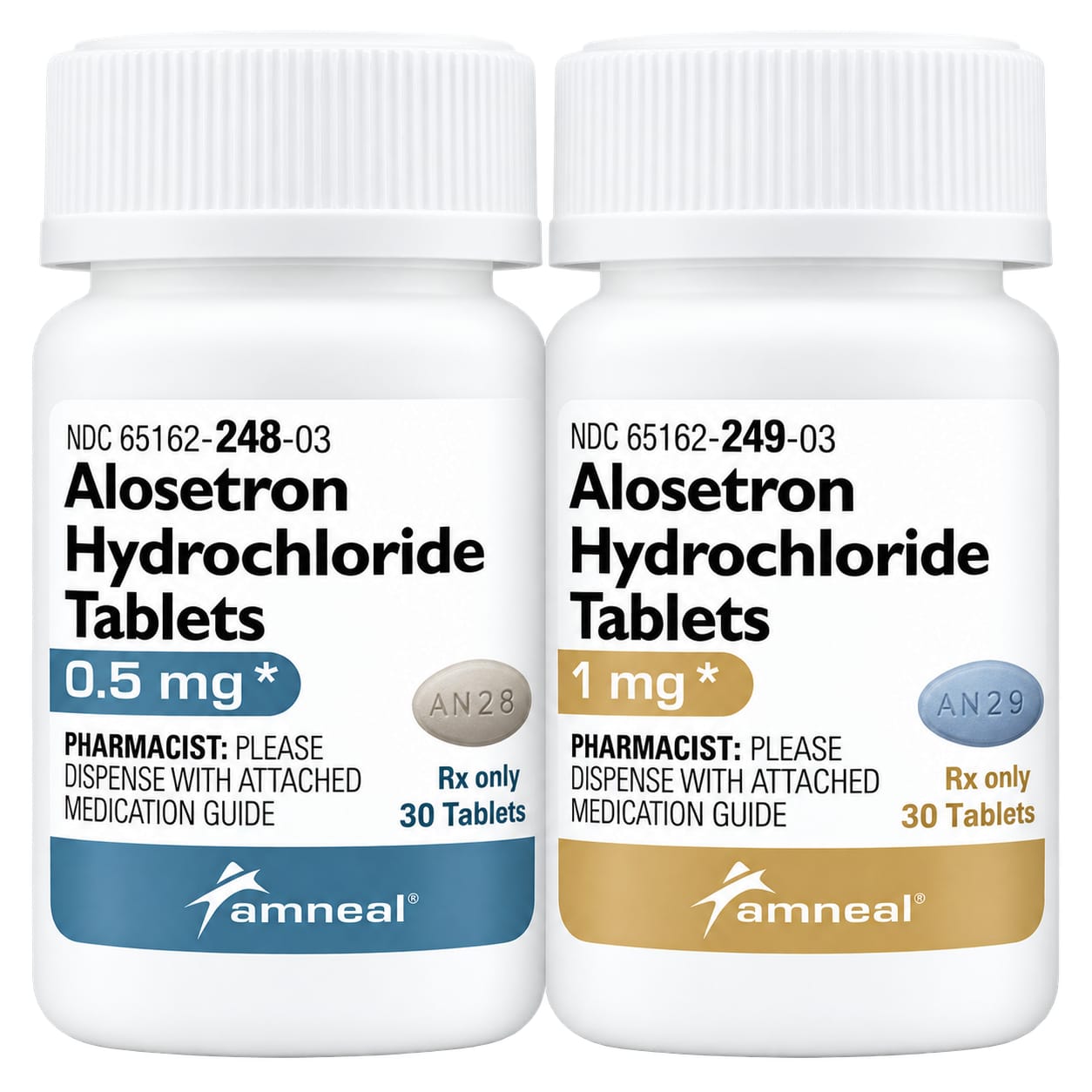
| Forms | Tablets (0.5 mg and 1 mg) |
Quick overview
Alosetron Tablet (alosetron hydrochloride) is a prescription serotoninergic neuroenteric modulator used to treat severe, chronic diarrhea-predominant irritable bowel syndrome (IBS) in women. It is given only after other treatments have not worked and is not approved for use by men or anyone younger than 18 years old. The medicine can reduce abdominal pain, urgency, and diarrhea, but it carries serious risks related to constipation and reduced blood flow to the bowel.
What is Alosetron Tablet
Alosetron Tablet is a prescription medicine used to treat severe chronic irritable bowel syndrome (IBS) in women whose main symptom is diarrhea. It is given only after other treatments have not worked.
Alosetron Tablet uses
- Treats severe diarrhea-predominant irritable bowel syndrome (IBS) in women who have had symptoms for 6 months or longer and have not responded well to other treatments.
- Not approved for use by men or by anyone younger than 18 years old.
Benefits of Alosetron Tablet
- Can reduce stomach pain and discomfort caused by IBS.
- Can reduce the sudden urgent need to have a bowel movement.
- Can reduce diarrhea.
- May lead to less difficulty sleeping, less tiredness, and less interference with daily activities and work in people with severe symptoms.
How Alosetron Tablet works
Alosetron blocks the action of a body chemical called serotonin in the gut. In IBS, the gut may overreact to serotonin, and this overreaction can make the intestines overactive, causing pain, urgency, and diarrhea. By blocking serotonin's effect on receptors in the gut, alosetron reduces these symptoms.
Alosetron Tablet dosage
Alosetron can be taken with or without food, twice a day, exactly as your doctor prescribes. Do not start taking this medicine if you are currently constipated. If you miss a dose, skip it and take your next dose at the regular time; do not take two doses at once.
Your doctor will usually check your progress about every 4 weeks to see if the dose needs to change. Stop taking the medicine right away and contact your doctor if you develop constipation, new or worsening stomach pain, or blood in your stool. If you stop taking it because of constipation, do not start again unless your doctor tells you to.
If symptoms have not improved after 4 weeks, contact your doctor; stopping suddenly may cause symptoms to return within 1 to 2 weeks.
| Age group | Dose |
|---|---|
| Under 12 years | Not recommended. Safety and effectiveness have not been established in pediatric patients. |
| 18–39 years | 0.5 mg twice daily initially |
| 40–64 years | Usually 0.5 mg twice daily initially, with a possible increase to 1 mg twice daily after 4 weeks when medically appropriate. |
Available forms and strengths
- Tablets (0.5 mg and 1 mg)
Side effects of Alosetron Tablet
Common
- Constipation
- Nausea
- Stomach or intestinal pain and discomfort
- Abdominal distention
- Gas and reflux
- Hemorrhoids
Serious
- New or worsening constipation that can lead to serious bowel blockage
- Signs of reduced blood flow to the bowel (ischemic colitis): new or worsening stomach pain, blood in stools, or bloody diarrhea
- Allergic reaction: hives, difficulty breathing, swelling of face, lips, tongue, or throat
Warnings and precautions
- This medicine can cause rare but serious bowel problems, including severe constipation complications and reduced blood flow to the bowel (ischemic colitis), which can lead to hospital stay and, rarely, blood transfusion, surgery, or death.
- Do not start this medicine if you are constipated.
- This medicine should not be restarted if you develop ischemic colitis.
- This medicine must not be combined with fluvoxamine, since it can greatly increase the levels of this drug in your blood.
- People who are elderly, debilitated, or taking other medicines that slow the bowel may have a greater chance of serious constipation complications.
- This medicine should not be used by people with a history of severe constipation, bowel blockage, poor blood flow to the intestines, Crohn's disease, ulcerative colitis, diverticulitis, or severe liver disease.
- Animal studies did not show harm to the fetus, but there are no well-controlled studies in pregnant women, so this medicine should only be used during pregnancy if clearly needed.
- It is not known if this medicine passes into human breast milk. Caution should be used if taking it while breastfeeding, and you should tell your doctor if the nursing baby develops constipation or bloody stools.
- No dose adjustment is needed for people with reduced kidney function, since the kidneys play only a small role in removing this drug from the body.
- This medicine is processed by the liver, so people with liver problems may have higher levels of the drug in their body. It should not be used in people with severe liver disease and should be used carefully in people with mild to moderate liver problems.
- No specific direct alcohol interaction is highlighted in the prescribing information, but alcohol may aggravate gastrointestinal symptoms in some people with IBS.
- Alosetron is not generally considered strongly sedating, but patients should avoid driving if they experience dizziness or other symptoms that affect alertness.
Storage
- Store at 25°C (77°F); brief exposure to temperatures between 15-30°C (59-86°F) is permitted.
- Protect from light and moisture.
- Keep out of the reach of children.
When to see a doctor
- Stop taking this medicine and call your doctor right away if you become constipated.
- Get medical help immediately if you have rectal bleeding, bloody diarrhea, or new or worsening abdominal pain, as these can be signs of a serious bowel blood flow problem.
- If constipation does not go away after stopping the medicine, contact your doctor again.
- Get emergency help for signs of a serious allergic reaction, such as hives, difficulty breathing, or swelling of the face, lips, tongue, or throat.
- If you think you have taken too much of this medicine, seek emergency medical help or contact your local poison control center.
Alternatives
- Rifaximin
- Eluxadoline
- Loperamide
Watch the video
FAQs
Who can use Alosetron Tablet?
It is used by women with severe, chronic diarrhea-predominant IBS who have had symptoms for 6 months or longer and have not responded well to other treatments. It is not approved for men or anyone younger than 18 years old.
What should I do if I become constipated while taking Alosetron Tablet?
Stop taking the medicine right away and contact your doctor. If you stop because of constipation, do not start again unless your doctor tells you to.
What are the serious risks of Alosetron Tablet?
It can cause rare but serious bowel problems, including severe constipation complications and reduced blood flow to the bowel (ischemic colitis), which can lead to hospital stay and, rarely, blood transfusion, surgery, or death.
Can Alosetron Tablet be combined with other medicines?
It must not be combined with fluvoxamine, since it can greatly increase the levels of this drug in your blood. People taking other medicines that slow the bowel may have a greater chance of serious constipation complications.
What is the typical dosage of Alosetron Tablet?
Adults aged 18-39 years typically start at 0.5 mg twice daily. Adults aged 40-64 years usually start at 0.5 mg twice daily, with a possible increase to 1 mg twice daily after 4 weeks if medically appropriate. It is not recommended for children under 12.
General information, not medical advice
Your prescriber and the leaflet in your pack know your situation. This page does not.
- Follow your prescriber and the leaflet
- Don't start, stop, or change a dose on your own
- Doses and warnings differ by country and product
Sources
Video
Related medicines

Injectafer Injection: Uses, Dosage, Side Effects, Precautions and Alternates
Iron products
Injectafer (ferric carboxymaltose) treats iron deficiency anemia and heart failure-related iron deficiency via IV. Learn uses, dosage, side effects, and

Gliclazide Tablet: Uses, Dosage, Side Effects, Precautions and Alternates
Sulfonylurea (hypoglycemic/antidiabetic agent)
Gliclazide Tablet is a sulfonylurea for type 2 diabetes that boosts insulin release. Learn about dosage, side effects, warnings, and precautions.