
Safety
General information, not medical advice
Your prescriber and the leaflet in your pack know your situation. This page does not.
- Follow your prescriber and the leaflet
- Don't start, stop, or change a dose on your own
- Doses and warnings differ by country and product
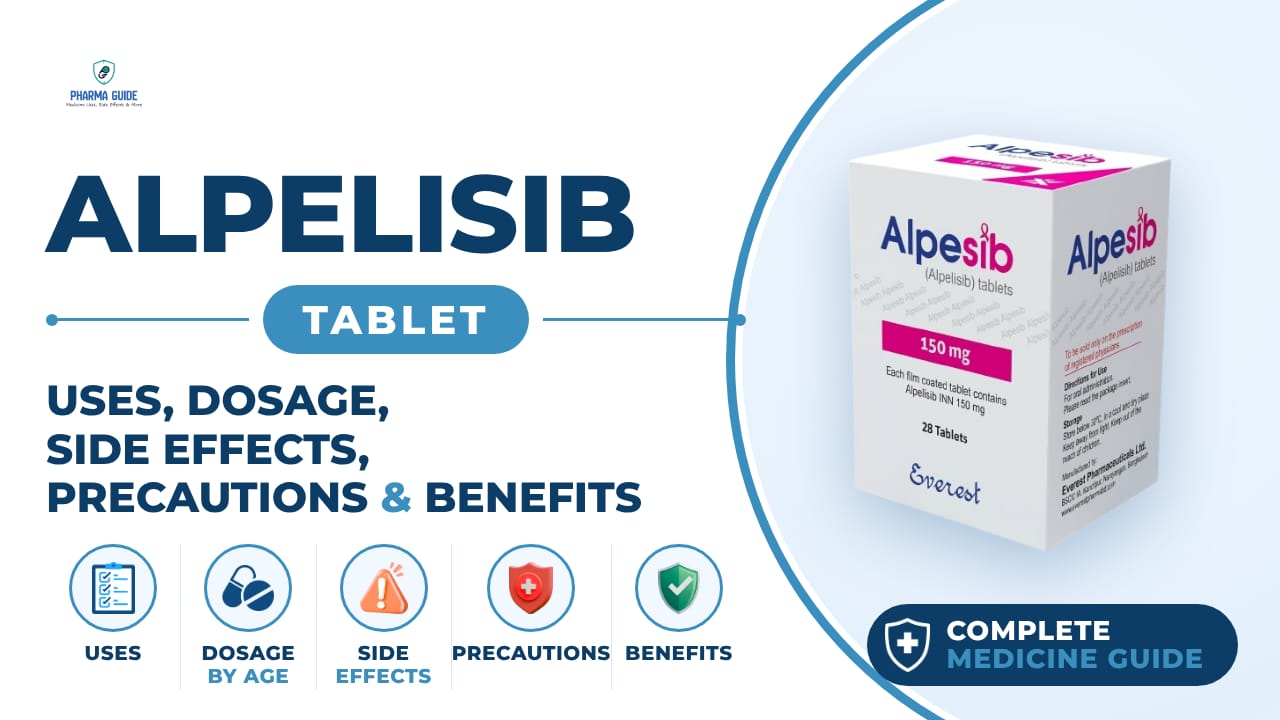
Alpelisib Tablet: Uses, Dosage, Side Effects, Precautions and Alternates
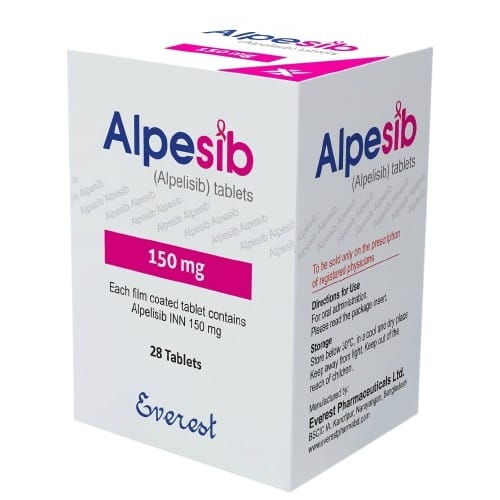
| Generic name | alpelisib |
|---|---|
| Drug class | PI3K inhibitors |
| Forms | Tablet |
Quick overview
Alpelisib Tablet (brand names Piqray and Vijoice) is a targeted cancer medicine belonging to the PI3K inhibitor class. Piqray is used for certain PIK3CA-mutated breast cancers in men and postmenopausal women, while Vijoice is used for PIK3CA-Related Overgrowth Spectrum (PROS). It is only used for tumors or conditions with a confirmed PIK3CA mutation. It is taken as a tablet, usually once daily with food.
What is Alpelisib Tablet
Alpelisib (brand names Piqray and Vijoice) is a targeted cancer tablet. Piqray is used to treat certain types of breast cancer in men and postmenopausal women, and Vijoice is used to treat a condition called PROS (PIK3CA-Related Overgrowth Spectrum). Alpelisib is only used for tumors with a PIK3CA mutation, which is confirmed by an FDA-approved test.
Alpelisib Tablet uses
- Breast cancer in men and postmenopausal women that is PIK3CA-mutated, advanced or metastatic, hormone receptor (HR)-positive, HER2-negative, and has progressed on or after hormone-based treatment, used together with fulvestrant
- PIK3CA-Related Overgrowth Spectrum (PROS) with severe symptoms in patients who need ongoing treatment and are 2 years or older
Benefits of Alpelisib Tablet
- Targets cancer cells with specific PIK3CA mutations
- May slow cancer cell growth
- May help delay disease progression
- May help control advanced breast cancer
- May improve disease control when combined with appropriate hormone therapy
How Alpelisib Tablet works
Alpelisib blocks a protein pathway called PI3K, which cancer or overgrown cells use to grow and divide. In PIK3CA-mutated breast cancer, blocking this pathway slows cancer growth. In PROS, blocking this pathway reduces abnormal cell growth and may improve symptoms.
Alpelisib Tablet dosage
Take the tablets with food, at the same time each day. Swallow the tablet whole; do not crush, chew, or break it, and do not use a cracked or broken tablet. If you are taking Vijoice and cannot swallow the tablets whole, they may be dissolved in water and the mixture drunk right away, following your doctor's instructions. If you vomit shortly after taking a dose, do not take another dose that day; wait until your next scheduled dose. Alpelisib is usually taken together with fulvestrant on its own separate injection schedule; keep the two schedules separate. Treatment is usually continued until the disease gets worse or side effects become unacceptable. Your blood sugar and other blood tests will need to be checked regularly during treatment.
| Age group | Dose |
|---|---|
| Under 18 years | Not recommended |
| 18–64 years | 300 mg, once/day |
| 65+ years | 300 mg, once/day |
Available forms and strengths
- Tablet
Side effects of Alpelisib Tablet
Common
- Nausea, vomiting
- Loss of appetite, weight loss
- Feeling weak or tired
- Mouth sores
- Rash
- Hair loss
- Abnormal blood tests
- High blood sugar
- Diarrhea
- Low white blood cell count
- Higher liver enzyme levels
- Change in how things taste
- Headache
- Itchy or dry skin
- Stomach pain
- Swelling in arms or legs
- Heartburn
- Dry mouth
Serious
- Severe allergic reaction: hives, difficulty breathing, swelling of face, lips, or throat, fast heartbeat
- Severe skin reaction: fever, sore throat, burning eyes, skin pain, red or purple rash with blistering and peeling
- Serious drug reaction affecting many body parts: rash, fever, swollen glands, muscle aches, severe weakness, unusual bruising, yellowing of skin or eyes
- Chest pain, cough, feeling short of breath
- Severe or ongoing diarrhea
- Blisters or ulcers in the mouth, red or swollen gums, trouble swallowing
- Pale skin, unusual tiredness, cold hands and feet
- Little or no urination
- High blood sugar symptoms: increased thirst, increased urination, dry mouth, fruity breath odor, confusion, hunger, weight loss
- Serious lung problems: trouble breathing, dry cough, chest pain
- Pancreatitis: severe stomach pain spreading to the back, fever, nausea, vomiting
- Colitis: stomach pain, mucus or blood in stool
Warnings and precautions
- Alpelisib can cause severe diarrhea, which can be life-threatening if it leads to dehydration or kidney damage. Call your doctor right away if diarrhea is severe.
- This medicine can cause dangerously high blood sugar, sometimes leading to a serious condition called ketoacidosis. Blood sugar should be checked before and regularly during treatment.
- Serious skin reactions can occur, including blistering and peeling skin.
- Lung problems such as inflammation of the lungs can develop during treatment.
- This medicine may harm an unborn baby, based on animal studies.
- This medicine may decrease fertility in both men and women.
- Alpelisib can harm an unborn baby. Women should not use it while pregnant and should use effective birth control during treatment and for at least 1 week after the last dose.
- Men should use condoms and effective birth control if their partner could become pregnant, for at least 1 week after the last dose. Tell your doctor right away if pregnancy occurs.
- Do not breastfeed while using alpelisib and for at least 1 week after the last dose. If also taking fulvestrant, breastfeeding may need to be avoided for up to 1 year after the last dose.
- Tell your doctor if you have kidney disease before starting this medicine.
- Caution is advised in patients with severe liver impairment.
Storage
- Store Vijoice at 68°F to 77°F (20°C to 25°C); excursions permitted between 15°C and 30°C (59°F and 86°F)
- Store Piqray at room temperature between 68°F to 77°F (20°C to 25°C)
- Keep this medication in the container it came in, tightly closed, and out of reach of children
- Store it at room temperature and away from excess heat and moisture (not in the bathroom)
- Do not flush this medication down the toilet; dispose of unneeded medication through a medicine take-back program
When to see a doctor
- Get emergency help for signs of a severe allergic reaction: hives, warmth or tingling, difficulty breathing, fast heartbeats, or swelling of the face or throat.
- Seek medical help right away for chest pain, cough, or shortness of breath.
- Call your doctor at once for severe or ongoing diarrhea.
- Get medical help for signs of very high blood sugar: increased thirst, increased urination, dry mouth, fruity breath odor, confusion, hunger, or weight loss.
- Call your doctor if you have blisters or ulcers in your mouth, red or swollen gums, or trouble swallowing.
- Call your doctor if you have pale skin, unusual tiredness, or cold hands and feet.
- Call your doctor if you have little or no urination.
- Get emergency care for watery or bloody diarrhea with stomach pain.
- Get emergency help for trouble swallowing or breathing, rash, hives, flushing, fever, or fast heartbeat.
- If an overdose is suspected, seek emergency medical attention or contact your local poison control center right away.
Alternatives
- Ribociclib
- Everolimus
- Capivasertib
Watch the video
FAQs
What is Alpelisib Tablet used for?
Alpelisib (Piqray) is used with fulvestrant for PIK3CA-mutated, HR-positive, HER2-negative advanced or metastatic breast cancer in men and postmenopausal women that has progressed after hormone therapy. Alpelisib (Vijoice) is used for severe PIK3CA-Related Overgrowth Spectrum (PROS) in patients 2 years or older needing ongoing treatment.
How should I take Alpelisib Tablet?
Take it with food at the same time each day, swallowing the tablet whole without crushing, chewing, or breaking it. Vijoice tablets may be dissolved in water and drunk right away if needed. If you vomit after a dose, do not take another dose that day.
What is the dosage of Alpelisib Tablet for adults?
The usual dose for adults aged 18 to 64 and for those 65 and older is 300 mg once daily. It is not recommended for patients under 18 years of age.
What are the serious side effects of Alpelisib Tablet?
Serious side effects include severe or ongoing diarrhea, dangerously high blood sugar, severe skin reactions, lung problems, pancreatitis, colitis, and severe allergic reactions. Regular blood sugar and blood tests are needed during treatment.
Can Alpelisib Tablet affect pregnancy or fertility?
Yes, alpelisib may harm an unborn baby and may decrease fertility in both men and women. Effective birth control is needed during treatment and for at least 1 week after the last dose, and breastfeeding should be avoided during this time.
General information, not medical advice
Your prescriber and the leaflet in your pack know your situation. This page does not.
- Follow your prescriber and the leaflet
- Don't start, stop, or change a dose on your own
- Doses and warnings differ by country and product
Sources
Video
Related medicines

Injectafer Injection: Uses, Dosage, Side Effects, Precautions and Alternates
Iron products
Injectafer (ferric carboxymaltose) treats iron deficiency anemia and heart failure-related iron deficiency via IV. Learn uses, dosage, side effects, and

Gliclazide Tablet: Uses, Dosage, Side Effects, Precautions and Alternates
Sulfonylurea (hypoglycemic/antidiabetic agent)
Gliclazide Tablet is a sulfonylurea for type 2 diabetes that boosts insulin release. Learn about dosage, side effects, warnings, and precautions.