
Safety
General information, not medical advice
Your prescriber and the leaflet in your pack know your situation. This page does not.
- Follow your prescriber and the leaflet
- Don't start, stop, or change a dose on your own
- Doses and warnings differ by country and product
Altretamine Capsule: Uses, Dosage, Side Effects, Precautions and Alternates
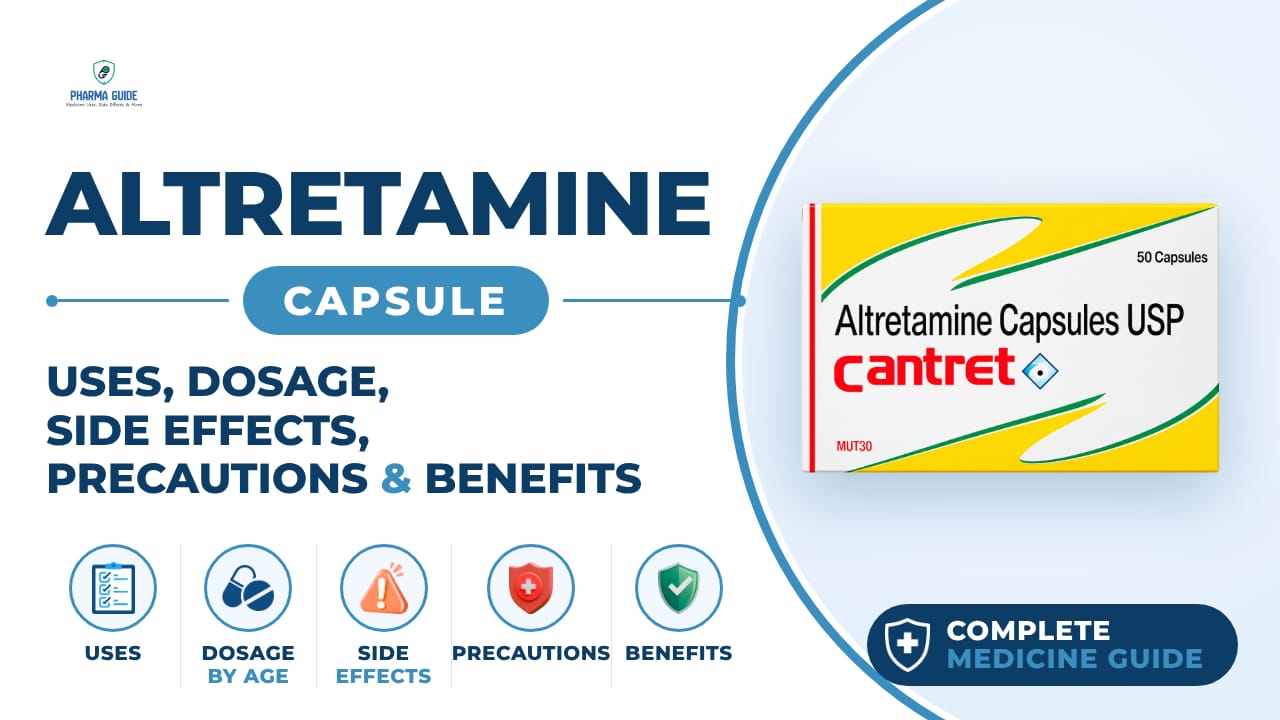
| Generic name | Altretamine |
|---|---|
| Drug class | Antineoplastic agent (miscellaneous antineoplastics) |
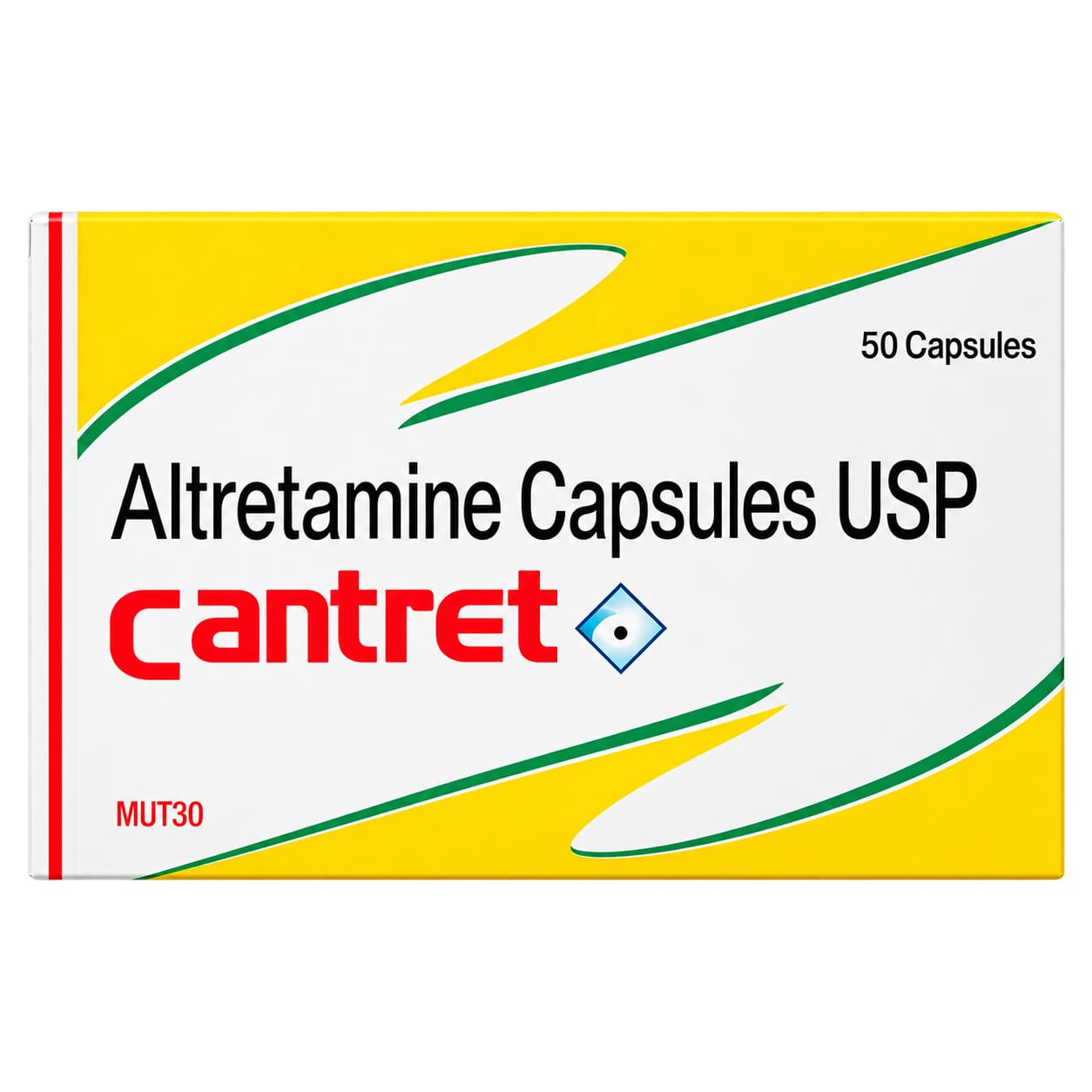
| Forms | Capsule |
Quick overview
Altretamine Capsule (generic name: Altretamine) is an antineoplastic agent used to treat ovarian cancer that has not improved or has worsened after treatment with other medicines. It is taken by mouth and works by slowing or stopping the growth of cancer cells. It is available as a capsule, and use requires monitoring due to possible nerve and blood cell effects.
What is Altretamine Capsule
Altretamine is an anticancer medicine used to treat ovarian cancer that has not improved or has gotten worse after treatment with other medicines. It comes as a capsule you take by mouth.
Altretamine Capsule uses
- Treatment of ovarian cancer that has not improved or that has worsened after treatment with other medications
- Treats persistent ovarian cancer
- Treats recurrent ovarian cancer
- May be used after previous platinum or alkylating-agent chemotherapy
- Provides palliative anticancer treatment in selected patients
Benefits of Altretamine Capsule
- Used in palliative treatment of cancer of the female reproductive system in patients who have not improved after therapy with other medicines
- Provides an oral anticancer treatment option
- May be considered after first-line therapy has failed
- Can help control recurrent ovarian cancer in selected patients
How Altretamine Capsule works
Altretamine works by slowing or stopping the growth of cancer cells in the body. It is changed by the body into other substances that are thought to cause this effect, though it isn't fully clear which substance or process is mainly responsible.
Altretamine Capsule dosage
Altretamine is taken by mouth as a capsule, usually four times a day: a dose after each meal and a dose at bedtime. It is usually taken for 14 or 21 days in a row, and this cycle may be repeated about once every 4 weeks depending on how you respond. Take it at around the same time every day, and follow your prescription label directions carefully, asking your doctor or pharmacist to explain anything you don't understand.
Do not take more or less than prescribed, or take it more often than prescribed. Do not stop taking it without talking to your doctor. Unless your doctor says otherwise, continue your normal diet.
If you miss a dose, take it as soon as you remember, but if it's almost time for the next dose, skip the missed dose and continue your regular schedule. Do not double up.
| Age group | Dose |
|---|---|
| Under 18 years | Safety and effectiveness are not established; no standard pediatric dose |
| 18–29 years | 0.5 mg twice daily initially |
| 30–39 years | 0.5 mg twice daily initially |
| 40–49 years | 0.5 mg twice daily initially |
Available forms and strengths
- Capsule
Side effects of Altretamine Capsule
Common
- Nausea and vomiting
- Loss of appetite
- Unusual tiredness or weakness
- Dizziness
- Pale skin
- Fainting
- Skin rash and itching
- Hair loss
- Mild numbness or tingling
- Mood changes
- Burning, numbness, or tingling in the arms and feet
- Diarrhea
Serious
- Fever, chills, sore throat, ongoing cough and congestion, or other signs of infection
- Unusual bleeding or bruising
- Bloody or black, tarry stools
- Bloody vomit or vomit that looks like coffee grounds
- Bleeding gums
- Small, round, red or purple spots on the skin
- Severe numbness, tingling, or cold feeling in the hands or feet
- Weakness in the arms or legs, or loss of ability to move the arms or legs
- Severe or continuous vomiting
- Light-headed feeling like you might pass out
- Severe dizziness or spinning sensation
- Seizures (convulsions)
- Upper stomach pain, dark urine, clay-colored stools, or jaundice (yellowing of skin or eyes)
- Signs of an allergic reaction: hives, difficulty breathing, swelling of the face, lips, tongue, or throat
- Changes in mood or loss of consciousness
Warnings and precautions
- Altretamine may cause severe nerve damage. Call your doctor right away if you have pain, burning, numbness, or tingling in the hands or feet; weakness in the arms or legs; loss of ability to move your arms or legs; changes in mood; or loss of consciousness.
- This medicine can lower the blood cells that help fight infection and help blood clot, so your blood will need to be tested often.
- This medicine should not be used in people with severe nerve problems or severe bone marrow suppression.
- This medicine is not recommended for people with a known allergy to altretamine or its other ingredients.
- This medicine should be used with extreme caution in people with nerve disorders like peripheral neuropathy, since it may make the condition worse; it is not recommended for those with severe nerve dysfunction.
- This medicine should be used with caution in people with conditions like low platelets, low white blood cells, anemia, or bone marrow suppression; blood counts should be checked before and during treatment, and it is not recommended for severe bone marrow depression.
- This medicine is not recommended for use in males, children, and adolescents.
- This medicine is not recommended during pregnancy unless absolutely necessary, as it may harm the unborn baby. Tell your doctor right away if you become pregnant while taking it.
- This medicine is not recommended while breastfeeding unless absolutely necessary. Your doctor may have you stop breastfeeding or stop the medicine depending on your condition.
- This medicine should be used carefully in people with kidney disease, since it may make their condition worse. Your doctor may need to monitor your kidney function and adjust your dose.
- This medicine should be used carefully in people with liver disease, as it may worsen their condition. Your liver function may need close monitoring during treatment.
- It isn't known how this medicine interacts with alcohol, so you should ask your doctor before drinking.
- Neurologic adverse effects such as dizziness or sensory changes can make driving unsafe.
Storage
- Keep this medication in the container it came in, tightly closed, and out of reach of children.
- Store it at room temperature and away from excess heat and moisture (not in the bathroom).
- Dispose of unneeded medications in a way so that pets, children, and other people cannot take them.
- Do not flush this medication down the toilet.
- Use a medicine take-back program; talk to your pharmacist about take-back programs in your community.
When to see a doctor
- Get emergency help right away if you have signs of an allergic reaction such as hives, trouble breathing, or swelling of the face, lips, tongue, or throat.
- Stop taking this medicine and call your doctor right away if you have severe numbness, tingling, or cold feeling in your hands or feet; severe or continuous vomiting; fever, chills, flu symptoms, mouth sores, pale skin, easy bruising or bleeding, unusual weakness; a light-headed feeling like you might pass out; severe dizziness or spinning sensation; a seizure; or upper stomach pain, dark urine, clay-colored stools, or yellowing of the skin or eyes.
- Call your doctor immediately if you notice pain, burning, numbness, or tingling in your hands or feet, weakness in your arms or legs, loss of ability to move your arms or legs, mood changes, or loss of consciousness.
- In case of overdose, seek emergency medical treatment or contact your doctor right away.
Alternatives
- Carboplatin
- Paclitaxel
- Gemcitabine
Watch the video
FAQs
What is Altretamine Capsule used for?
It is used to treat ovarian cancer that has not improved or has gotten worse after treatment with other medicines, including persistent or recurrent ovarian cancer.
How is Altretamine Capsule taken?
It is taken by mouth as a capsule, usually four times a day after each meal and at bedtime, typically for 14 or 21 days in a row, with the cycle repeated about once every 4 weeks depending on response.
What are the common side effects of Altretamine Capsule?
Common side effects include nausea and vomiting, loss of appetite, tiredness, dizziness, pale skin, fainting, skin rash and itching, hair loss, mild numbness or tingling, mood changes, and diarrhea.
What precautions should be followed with Altretamine Capsule?
It may cause severe nerve damage and lower blood cells that fight infection and help clotting, so blood tests are needed often. It should not be used in people with severe nerve problems or severe bone marrow suppression, and is not recommended during pregnancy or breastfeeding unless necessary.
What should I do if I miss a dose of Altretamine Capsule?
Take the missed dose as soon as you remember, but if it's almost time for the next dose, skip the missed one and continue your regular schedule without doubling up.
General information, not medical advice
Your prescriber and the leaflet in your pack know your situation. This page does not.
- Follow your prescriber and the leaflet
- Don't start, stop, or change a dose on your own
- Doses and warnings differ by country and product
Sources
Video
Related medicines

Injectafer Injection: Uses, Dosage, Side Effects, Precautions and Alternates
Iron products
Injectafer (ferric carboxymaltose) treats iron deficiency anemia and heart failure-related iron deficiency via IV. Learn uses, dosage, side effects, and

Gliclazide Tablet: Uses, Dosage, Side Effects, Precautions and Alternates
Sulfonylurea (hypoglycemic/antidiabetic agent)
Gliclazide Tablet is a sulfonylurea for type 2 diabetes that boosts insulin release. Learn about dosage, side effects, warnings, and precautions.