
Safety
General information, not medical advice
Your prescriber and the leaflet in your pack know your situation. This page does not.
- Follow your prescriber and the leaflet
- Don't start, stop, or change a dose on your own
- Doses and warnings differ by country and product
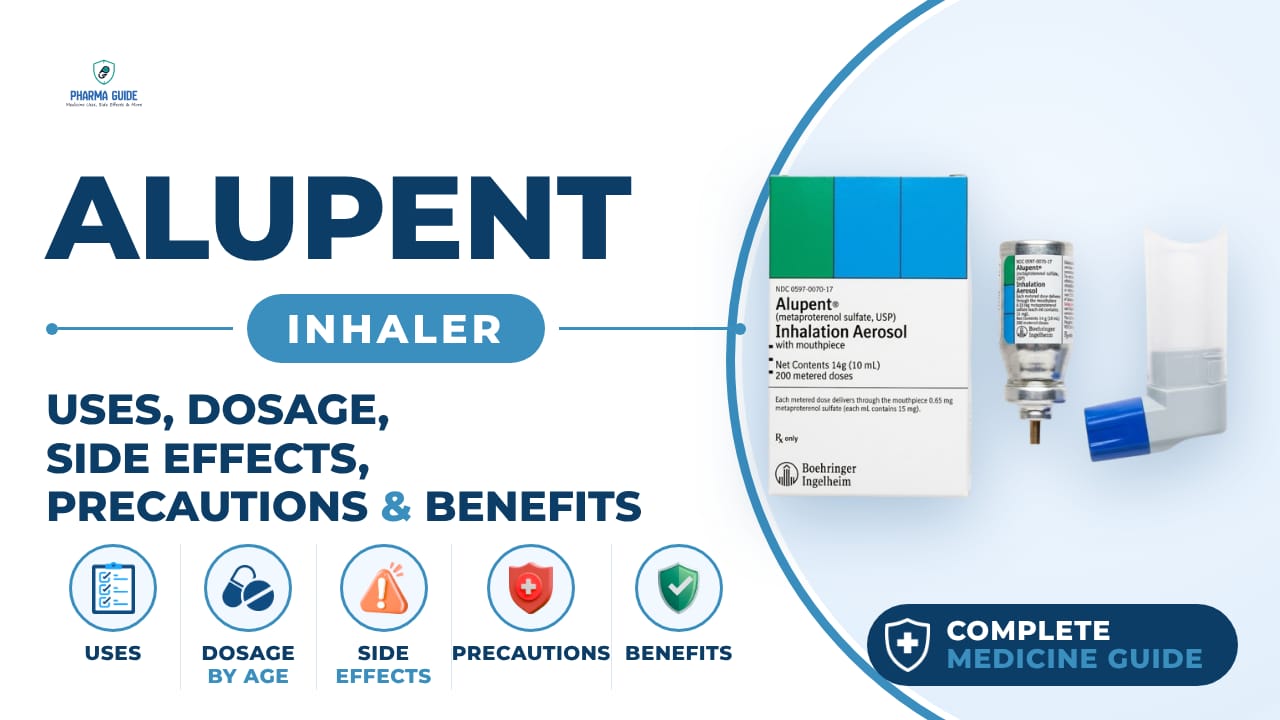
Alupent Inhaler: Uses, Dosage, Side Effects, Precautions and Alternates
| Generic name | metaproterenol sulfate |
|---|---|
| Drug class | Beta2 Agonists (adrenergic bronchodilator) |
| Forms | Inhalation aerosol (metered-dose inhaler), Tablet, Syrup |
Quick overview
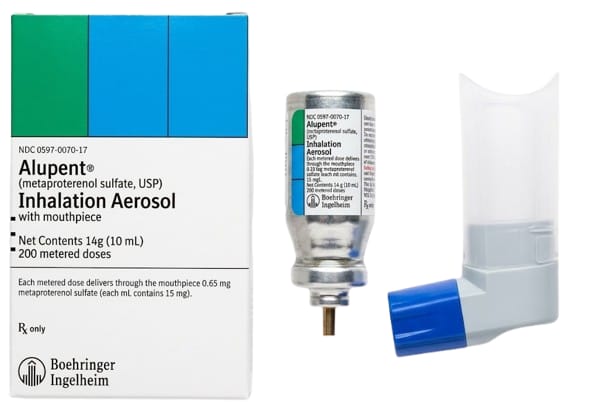
Alupent Inhaler (metaproterenol sulfate) is a bronchodilator from the Beta2 Agonist class, used to relieve bronchial asthma, reversible bronchospasm, and wheezing or shortness of breath caused by airway narrowing. It works by relaxing airway muscles to widen the airways and improve airflow. The brand name product has been discontinued, though similar generic versions may still be available in some places.
What is Alupent Inhaler
Alupent is a bronchodilator medicine given by breathing it in through the mouth using an inhaler. The brand name product has been discontinued, but similar generic versions may still be available in some places.
Alupent Inhaler uses
- Bronchial asthma
- Reversible bronchospasm
- Asthma-related wheezing
- Shortness of breath caused by airway narrowing
- Bronchospasm associated with bronchitis or emphysema
Benefits of Alupent Inhaler
- Helps open narrowed airways
- Improves airflow
- Helps relieve wheezing
- Reduces shortness of breath
- Relaxes airway muscles
How Alupent Inhaler works
Alupent acts mainly on beta-2 receptors in the lungs, which triggers a chain of chemical changes inside airway muscle cells that makes them relax. This widens the airways and improves airflow, which can ease breathing difficulty caused by bronchospasm.
Alupent Inhaler dosage
Breathe out fully before using the inhaler to get as much air out of your lungs as possible. Shake the inhaler well before each use. Place the mouthpiece just in front of or sealed around your mouth with the canister held upright. Breathe in slowly and deeply while pressing down firmly once on the canister. Hold your breath for a few seconds, then breathe out slowly.
If more than one puff is needed, wait at least two minutes before the next puff and repeat the steps, including shaking the inhaler again. Do not use this inhaler mouthpiece with any other inhaled medicine. After finishing your doses, rinse your mouth with water and spit it out. Clean the mouthpiece every day with hot water and dry it thoroughly before use.
Use only as directed by your doctor; do not use more often or in higher amounts than prescribed. Not recommended for children under 12 years of age. Contact your doctor if you do not get the usual relief from your normal dose.
| Age group | Dose |
|---|---|
| Under 18 years | Not recommended |
| 18–64 years | 1.3–1.95 mg, not once/day |
| 65+ years | 1.3–1.95 mg, not once/day |
Available forms and strengths
- Inhalation aerosol (metered-dose inhaler)
- Tablet
- Syrup
Side effects of Alupent Inhaler
Common
- Headache
- Dizziness
- Lightheadedness
- Insomnia (trouble sleeping)
- Tremor or shakiness
- Nervousness
- Sweating
- Nausea
- Vomiting
- Diarrhea
- Dry mouth
- Throat irritation
- Cough
- Muscle or joint aches
- Loss of appetite
- Unusual tiredness or weakness
Serious
- Allergic reaction: difficulty breathing, closing of the throat, swelling of the lips, tongue, or face, or hives
- Chest pain or discomfort
- Irregular, fast, or pounding heartbeat
- Paradoxical bronchospasm (sudden worsening of wheezing or breathing difficulty right after using the inhaler)
- Fainting or feeling faint when standing up suddenly
- Signs of overdose such as confusion, shortness of breath, or general feeling of illness
Warnings and precautions
- Deaths have occurred in people who used too much of this type of inhaled medicine, though the exact cause isn't fully understood; some cases involved the heart stopping.
- This medicine can sometimes cause the airways to suddenly tighten instead of open, which can be life-threatening. If this happens, stop using it right away and get medical help.
- Do not use this medicine more often than your doctor has told you to. If your usual dose stops working, contact your doctor rather than taking more.
- This medicine should not be used by people who have certain fast or irregular heart rhythms.
- Do not use this medicine if you have ever had an allergic reaction to it or any of its ingredients, even though this type of reaction is rare.
- It is not known for certain whether this medicine can harm an unborn baby. Tell your doctor if you are pregnant or planning to become pregnant, since the medicine should only be used in pregnancy if the possible benefit is worth the possible risk.
- It is not known whether this medicine passes into breast milk, so talk to your doctor before breastfeeding while using it.
- This medicine rarely causes kidney problems.
- This medicine has only very mild effects on the liver.
- It is not known how this medicine interacts with alcohol because there isn't enough research on it.
- This medicine does not usually cause drowsiness, so it is generally considered safe to drive or operate machinery after using it.
Storage
- Store the canister at room temperature, away from heat and direct light
- Do not freeze
- Do not keep this medicine inside a car where it could be exposed to extreme heat or cold
- Do not poke holes in the canister or throw it into a fire, even if the canister is empty
- Store the medicine in a closed container at room temperature, away from heat, moisture, and direct light
- Keep out of the reach of children
- Do not keep outdated medicine or medicine no longer needed
- Ask your healthcare professional how you should dispose of any medicine you do not use
- Store between 59°F (15°C) and 77°F (25°C). Avoid excessive humidity.
When to see a doctor
- Get medical help right away if you have a fast, pounding, or irregular heartbeat.
- Contact your doctor right away if you have coughing, trouble breathing, shortness of breath, or wheezing after using this medicine, as it could mean the airways are tightening instead of opening.
- Get emergency help immediately if you notice signs of overdose such as chest pain or tightness, confusion, severe dizziness or fainting, shortness of breath, or a general feeling of being very unwell.
- Contact your doctor immediately if you experience an allergic reaction, such as difficulty breathing, throat tightness, or swelling of the lips, tongue, or face.
- Check with your doctor at once if your breathing problems continue or get worse even after using a dose of this medicine.
Alternatives
- Airomir
- Proventil
- Ventolin
Watch the video
FAQs
What is Alupent Inhaler used for?
It is used to relieve bronchial asthma, reversible bronchospasm, asthma-related wheezing, shortness of breath from airway narrowing, and bronchospasm associated with bronchitis or emphysema.
How does Alupent Inhaler work?
It acts mainly on beta-2 receptors in the lungs, triggering chemical changes inside airway muscle cells that make them relax, widening the airways and improving airflow.
Is Alupent Inhaler still available?
The brand name product has been discontinued, though similar generic versions of metaproterenol sulfate may still be available in some places.
What are the common side effects of Alupent Inhaler?
Common side effects include headache, dizziness, lightheadedness, insomnia, tremor, nervousness, sweating, nausea, vomiting, diarrhea, dry mouth, throat irritation, cough, muscle or joint aches, loss of appetite, and tiredness.
Can Alupent Inhaler be used in children?
It is not recommended for children under 12 years of age.
General information, not medical advice
Your prescriber and the leaflet in your pack know your situation. This page does not.
- Follow your prescriber and the leaflet
- Don't start, stop, or change a dose on your own
- Doses and warnings differ by country and product
Sources
Video
Related medicines

Injectafer Injection: Uses, Dosage, Side Effects, Precautions and Alternates
Iron products
Injectafer (ferric carboxymaltose) treats iron deficiency anemia and heart failure-related iron deficiency via IV. Learn uses, dosage, side effects, and

Gliclazide Tablet: Uses, Dosage, Side Effects, Precautions and Alternates
Sulfonylurea (hypoglycemic/antidiabetic agent)
Gliclazide Tablet is a sulfonylurea for type 2 diabetes that boosts insulin release. Learn about dosage, side effects, warnings, and precautions.