
Safety
General information, not medical advice
Your prescriber and the leaflet in your pack know your situation. This page does not.
- Follow your prescriber and the leaflet
- Don't start, stop, or change a dose on your own
- Doses and warnings differ by country and product
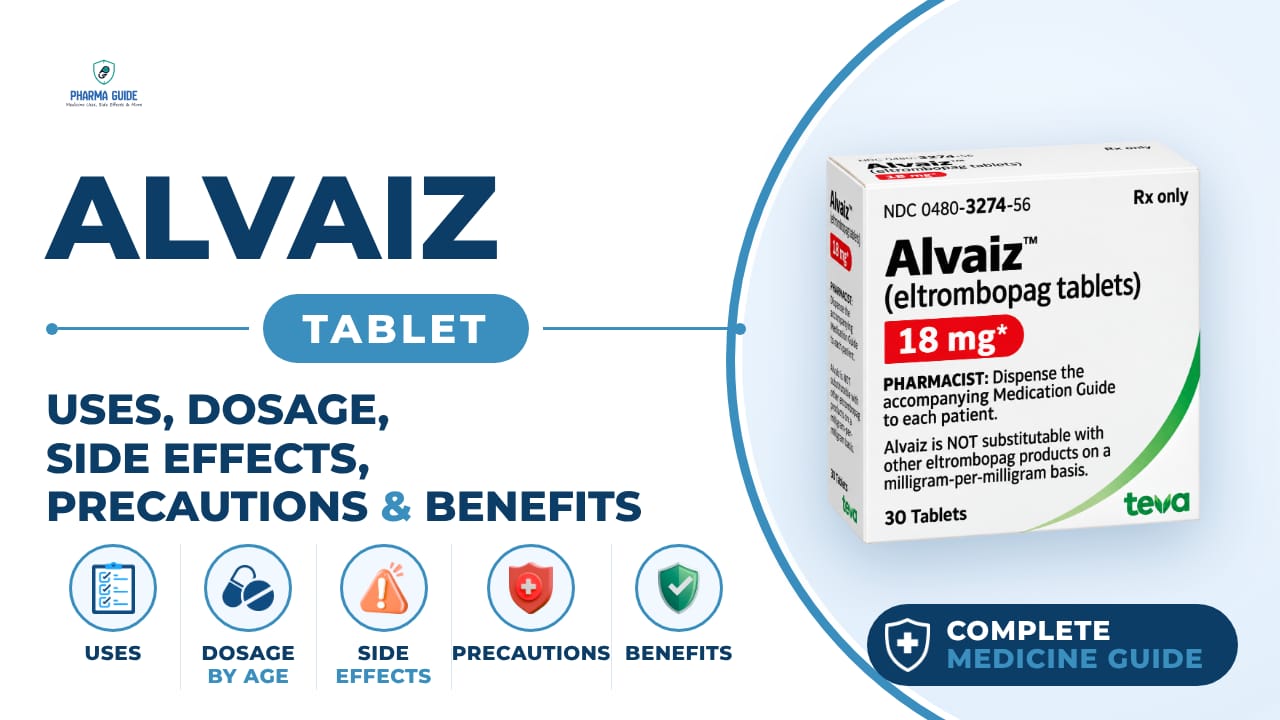
Alvaiz Tablet: Uses, Dosage, Side Effects, Precautions and Alternates
| Generic name | eltrombopag |
|---|---|
| Drug class | Platelet-stimulating agents (thrombopoietin receptor agonist) |
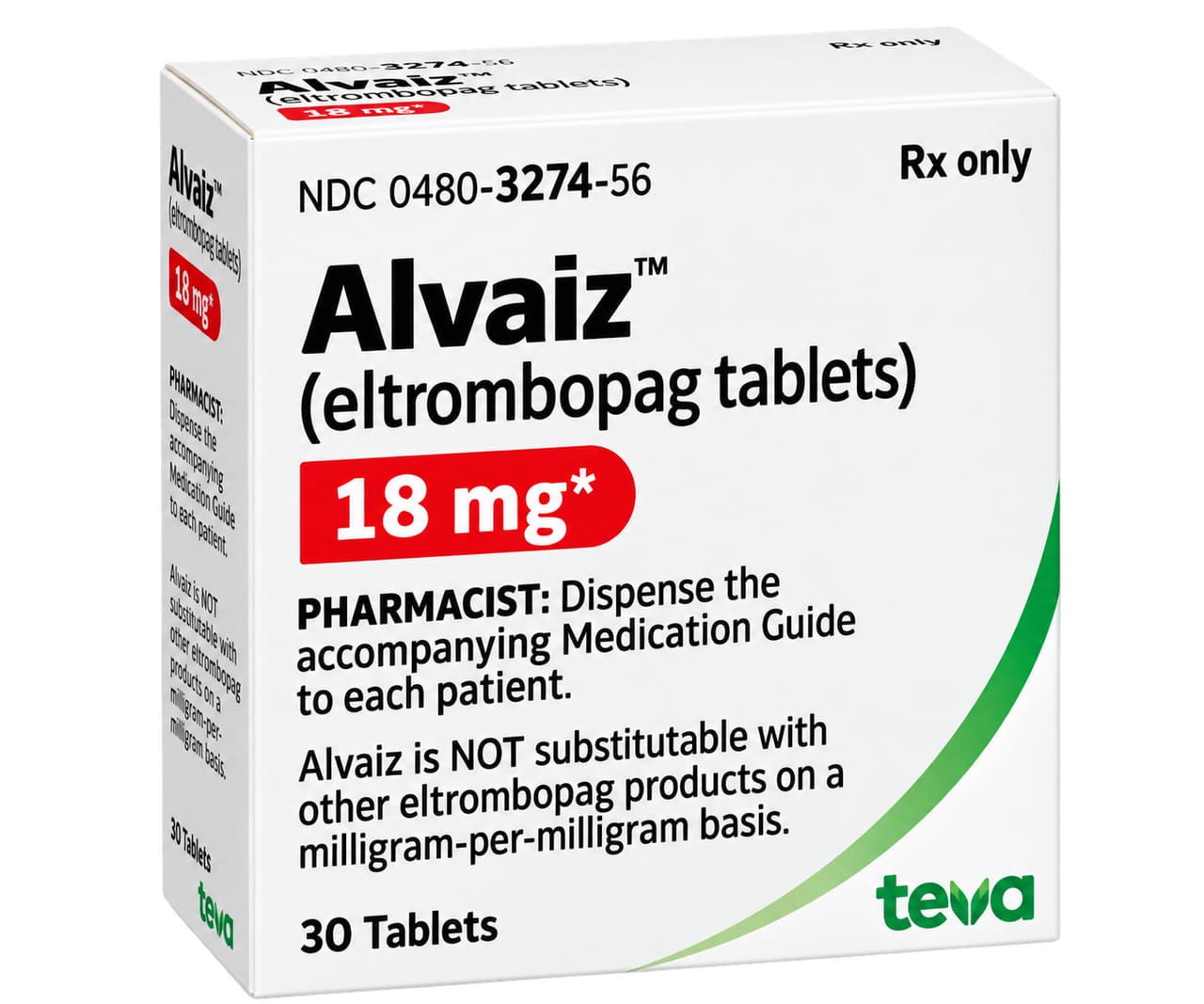
| Forms | 9 mg tablet, 18 mg tablet, 36 mg tablet, 54 mg tablet |
Quick overview
Alvaiz Tablet contains eltrombopag, a platelet-stimulating agent (thrombopoietin receptor agonist). It is a prescription tablet that helps raise low blood platelet counts when other treatments have not worked well enough, lowering the risk of bleeding. It is used in certain cases of chronic immune thrombocytopenia, chronic hepatitis C with low platelets, and severe aplastic anemia.
What is Alvaiz Tablet
Alvaiz is a prescription tablet that helps raise low blood platelet counts. It is used when other treatments have not worked well enough, to lower the risk of bleeding.
Alvaiz Tablet uses
- Low blood platelet counts (thrombocytopenia) due to persistent or chronic immune thrombocytopenia (ITP) in adults and children aged 6 and older, when other ITP medicines or spleen removal surgery have not worked well enough
- Low platelet counts due to chronic hepatitis C virus (HCV) infection in adults, before and during treatment with interferon, when thrombocytopenia prevents starting or continuing interferon-based treatment
- Severe aplastic anemia (SAA) in adults when other SAA medicines have not worked well enough
Benefits of Alvaiz Tablet
- Raises platelet counts to help lower the risk of bleeding
- Helps patients with chronic hepatitis C start or continue interferon-based antiviral therapy
How Alvaiz Tablet works
Alvaiz works by activating a receptor on bone marrow cells, which signals the body to produce more platelets. It is meant to raise platelet counts to reduce bleeding risk, not to make platelet counts completely normal.
Alvaiz Tablet dosage
Take exactly as your healthcare provider tells you to. Swallow the tablets whole; do not split, chew, or crush them, and do not mix with food or liquids. If you or your child cannot swallow tablets whole, tell your healthcare provider, since a different medicine will be needed. Alvaiz is not interchangeable with other eltrombopag products on a milligram-for-milligram basis, so do not switch products unless told to by your healthcare provider.
Take without food or with a meal that is low in calcium. Take at least 2 hours before or 4 hours after eating calcium-rich foods such as dairy products, calcium-fortified juices, certain fruits and vegetables, or mineral supplements. Do not take more than one dose in a day. Do not stop taking this medicine or change your dose or schedule without talking to your healthcare provider first. If you miss a dose, wait and take your next scheduled dose rather than doubling up.
| Age group | Dose |
|---|---|
| Under 6 years | Safety and effectiveness of Alvaiz tablets are not established |
| 6–11 years with persistent/chronic ITP | 36 mg once daily as the usual initial dose |
| 18–64 years with persistent/chronic ITP | 36 mg once daily as the usual initial dose |
| 65–74 years | Generally follows adult dosing, with dose adjustment according to platelet count, liver function, and tolerability |
Available forms and strengths
- 9 mg tablet
- 18 mg tablet
- 36 mg tablet
- 54 mg tablet
Side effects of Alvaiz Tablet
Common
- Low red blood cell count (anemia)
- Cough
- Nausea
- Tiredness/fatigue
- Fever
- Headache
- Abnormal liver function tests
- Diarrhea
Serious
- Severe or life-threatening liver problems (hepatotoxicity)
- Worsening of myelodysplastic syndrome (MDS) into acute myeloid leukemia (AML)
- High platelet counts and increased risk of blood clots, including clots in the lungs, legs, or that cause heart attacks or strokes
- Blood clots in the stomach area (abdomen), especially in people with chronic liver disease
- New or worsened cataracts
- Severe allergic reactions including breathing problems, swelling of the face/lips/mouth/throat, and hives
Warnings and precautions
- This medicine can increase the risk of severe and potentially life-threatening liver damage. Your healthcare provider will monitor your liver function before and during treatment.
- This medicine should not be used in people with a pre-cancerous blood condition called myelodysplastic syndrome (MDS), because it may increase the risk of progression to a serious blood cancer.
- This medicine may increase the risk of blood clots and related complications, even at normal or low platelet counts. Do not try to raise your platelet counts to normal levels.
- This medicine may increase the risk of cataracts or make existing cataracts worse.
- In patients with chronic hepatitis C, combining this medicine with interferon and ribavirin may increase the risk of liver function decline.
- It is not known if this medicine will harm an unborn baby.
- Tell your healthcare provider if you become pregnant or think you may be pregnant. Women who can become pregnant should use effective birth control during treatment and for at least 7 days after stopping.
- You should not breastfeed during treatment with this medicine. Talk to your healthcare provider about the best way to feed your baby during this time.
- No routine renal adjustment is specified, but significant kidney disease should be medically reviewed.
- People with liver problems may need a lower starting dose, and liver function will be monitored closely before and during treatment because of the risk of serious liver damage.
- It is not known for certain if alcohol affects this medicine, but since low platelet levels already raise bleeding risk, and alcohol can also increase bleeding risk, it is best to limit how much alcohol you drink.
- This medicine does not usually directly impair driving, but dizziness or other adverse effects may occur.
Storage
- Store at room temperature between 68°F to 77°F (20°C to 25°C) in the original container
- Can be exposed to temperatures between 59°F and 86°F (15°C and 30°C) for shorter periods, such as during transport
- Store in a cool, dry place
- Keep out of the reach of children
When to see a doctor
- Get medical help right away if you notice yellowing of the skin or eyes, pain in the upper right stomach area, unusual dark urine, confusion, unusual tiredness, or stomach swelling — these can be signs of liver problems.
- Get medical help right away if you have swelling, pain, or tenderness in your leg, which could be a sign of a blood clot.
- Get medical help right away if you have stomach-area pain, nausea, vomiting, or diarrhea, which could signal a blood clot in the abdomen, especially if you have chronic liver disease.
- Tell your healthcare provider about any changes in your eyesight during treatment.
- Stop taking this medicine and get help right away if you notice signs of a serious allergic reaction, such as breathing problems, swelling of the face, lips, mouth, tongue or throat, trouble swallowing, or hives.
- If you think you have taken too much of this medicine, contact your healthcare provider or a poison control center right away.
Alternatives
- Promacta
- Romiplostim
- Avatrombopag
- Doptelet
Watch the video
FAQs
What is Alvaiz Tablet used for?
Alvaiz Tablet is used to raise low blood platelet counts in chronic immune thrombocytopenia (ITP) when other treatments haven't worked, in chronic hepatitis C patients before or during interferon therapy, and in severe aplastic anemia when other treatments have failed.
How should Alvaiz Tablet be taken?
Swallow the tablets whole without splitting, chewing, or crushing them. Take without food or with a meal low in calcium, and avoid calcium-rich foods or supplements within 2 hours before or 4 hours after taking the dose. Do not take more than one dose a day.
What are the serious side effects of Alvaiz Tablet?
Serious side effects include severe liver problems, worsening of myelodysplastic syndrome into leukemia, high platelet counts with increased risk of blood clots, abdominal blood clots, new or worsened cataracts, and severe allergic reactions.
Can Alvaiz Tablet be taken during pregnancy or breastfeeding?
It is not known if Alvaiz Tablet will harm an unborn baby, so women who can become pregnant should use effective birth control during treatment and for at least 7 days after stopping. Breastfeeding is not recommended during treatment.
Does Alvaiz Tablet increase the risk of blood clots?
Yes, Alvaiz Tablet may increase the risk of blood clots and related complications even at normal or low platelet counts, so platelet counts should not be raised to normal levels.
General information, not medical advice
Your prescriber and the leaflet in your pack know your situation. This page does not.
- Follow your prescriber and the leaflet
- Don't start, stop, or change a dose on your own
- Doses and warnings differ by country and product
Sources
Video
Related medicines

Injectafer Injection: Uses, Dosage, Side Effects, Precautions and Alternates
Iron products
Injectafer (ferric carboxymaltose) treats iron deficiency anemia and heart failure-related iron deficiency via IV. Learn uses, dosage, side effects, and

Gliclazide Tablet: Uses, Dosage, Side Effects, Precautions and Alternates
Sulfonylurea (hypoglycemic/antidiabetic agent)
Gliclazide Tablet is a sulfonylurea for type 2 diabetes that boosts insulin release. Learn about dosage, side effects, warnings, and precautions.