
Safety
General information, not medical advice
Your prescriber and the leaflet in your pack know your situation. This page does not.
- Follow your prescriber and the leaflet
- Don't start, stop, or change a dose on your own
- Doses and warnings differ by country and product
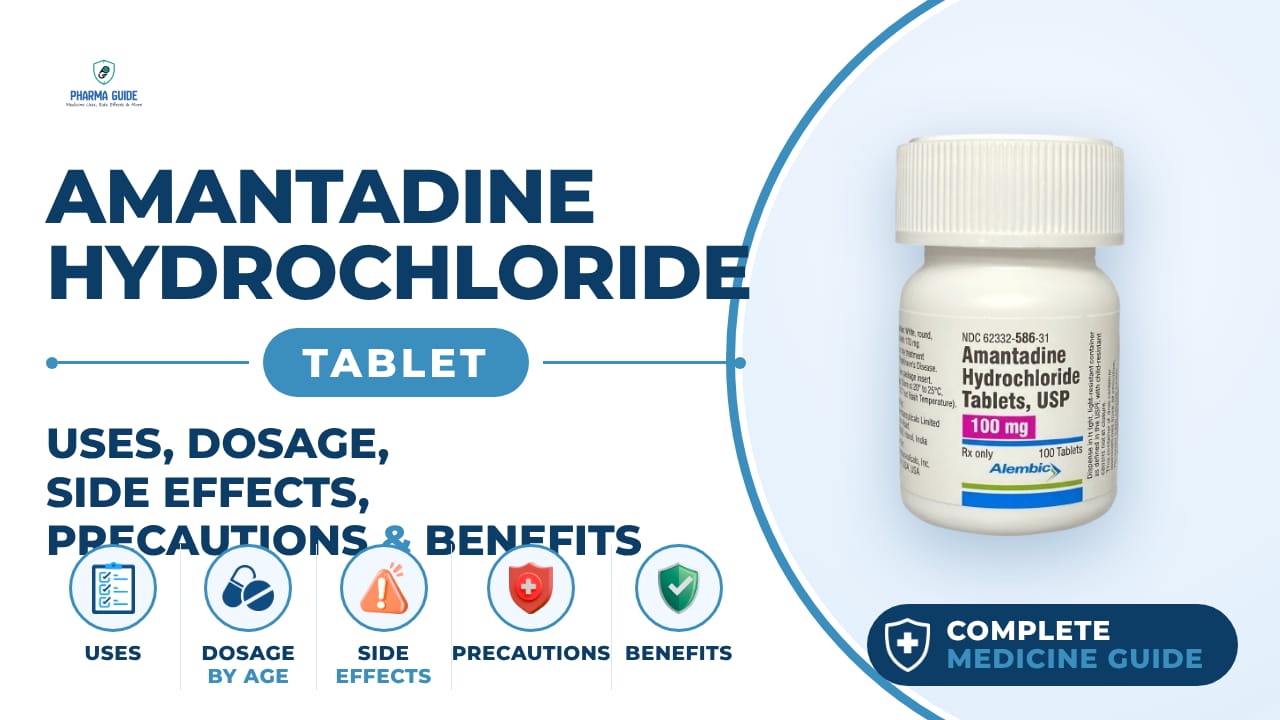
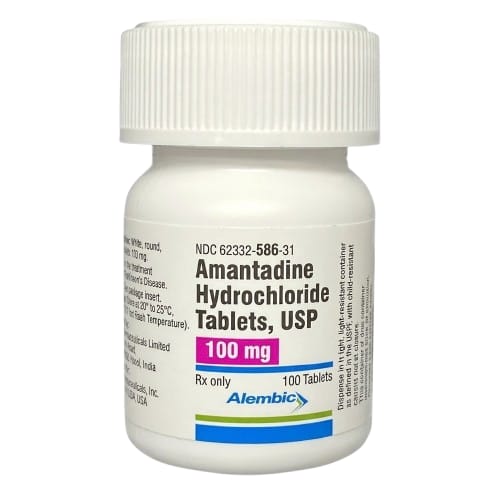
Amantadine Hydrochloride Tablet: Uses, Dosage, Side Effects, Precautions and Alternates
| Generic name | amantadine |
|---|---|
| Drug class | NMDA antagonist |
| Forms | Tablet, Capsule, Oral solution (liquid) |
Quick overview
Amantadine Hydrochloride Tablet (amantadine) is an NMDA antagonist used for Parkinson's disease, related movement problems, and selected cases of influenza A. It works by affecting brain chemicals and by blocking certain virus actions in the body. It can cause side effects ranging from nausea and dizziness to more serious reactions, and it requires careful use, especially in people with kidney or liver problems.
What is Amantadine Hydrochloride Tablet
Amantadine is an antiviral medicine that also affects brain chemicals. It is used for Parkinson's disease and related movement problems, and for influenza A.
Amantadine Hydrochloride Tablet uses
- Parkinson's disease
- Parkinsonism
- Drug-induced movement disorders
- Medication-related extrapyramidal symptoms
- Selected cases of influenza A where specifically indicated; resistance limits its usefulness
Benefits of Amantadine Hydrochloride Tablet
- May improve movement and mobility
- May help reduce muscle stiffness
- May reduce tremors in some patients
- May help control involuntary movements caused by certain medicines
- May improve daily functioning in Parkinson's disease
How Amantadine Hydrochloride Tablet works
Amantadine blocks a brain receptor called NMDA, which raises dopamine levels in the brain. This helps improve movement symptoms like tremor, stiffness, and slowness. It is also an antiviral medicine that blocks the actions of viruses in the body.
Amantadine Hydrochloride Tablet dosage
Take amantadine exactly as prescribed by your doctor and follow your prescription label. You may take it with or without food. You may need to take it only at bedtime; follow your doctor's instructions. Swallow the capsule or tablet whole; do not crush, chew, or break it.
If you cannot swallow a capsule whole, open it and sprinkle the medicine into a spoonful of applesauce and swallow the mixture right away without chewing; do not save it for later. If using the liquid form, measure it carefully with a dosing syringe or medicine dose-measuring device, not a kitchen spoon.
If treating the flu, start taking the medicine soon after flu symptoms begin and keep taking it for the full prescribed length of time, even if you feel better. Do not stop taking amantadine suddenly if you are treating Parkinson's symptoms; your doctor will tell you how to lower the dose slowly over time.
If you miss a dose, skip it and take your next dose at the regular time; do not take two doses at once. Call your doctor if you miss several doses in a row.
| Age group | Dose |
|---|---|
| Under 18 years | Not recommended |
| 18–64 years | 100 mg, twice/day |
| 65+ years | 100 mg, twice/day |
Available forms and strengths
- Tablet
- Capsule
- Oral solution (liquid)
Side effects of Amantadine Hydrochloride Tablet
Common
- Nausea
- Dizziness or lightheadedness
- Trouble sleeping (insomnia)
- Dry mouth
- Constipation or diarrhea
- Headache
- Feeling tired or sleepy
- Swelling in legs or feet
- Falls
Serious
- Suicidal thoughts or behaviors
- Neuroleptic malignant syndrome (very high fever, irregular pulse, sweating, muscle stiffness, confusion, changes in blood pressure)
- Signs of overdose: fast heartbeat, difficulty breathing, decreased urination, stiff or rigid arms or legs, confusion, possible death
- Hallucinations or seeing/hearing things that are not there
- Severe mood changes, depression, agitation, aggression, or behavior changes
- Seizures
- Shortness of breath or swelling that could mean heart failure
- Severe allergic reaction: hives, difficulty breathing, swelling of face, lips, tongue, or throat
- Vision changes, blurry vision, vision loss, or eye pain
- Painful or difficult urination
- Falling asleep suddenly during normal daytime activities
Warnings and precautions
- Amantadine may harm an unborn baby. Tell your doctor if you are pregnant or planning to become pregnant. You should not breastfeed while taking amantadine.
- If you have kidney problems, your dose may need to be changed, since amantadine is cleared from the body by the kidneys. Taking too high a dose for your kidney function can be fatal.
- Amantadine can rarely cause liver problems, so people with a history of liver disease should use it with caution and may need blood tests to check liver function.
- Do not drink alcohol while taking amantadine, as it can cause dangerous side effects like dizziness, confusion, and low blood pressure.
- Avoid driving or operating machinery until you know how amantadine affects you, since it can cause sudden sleepiness, dizziness, or blurred vision.
- Amantadine can cause people to suddenly fall asleep during daily activities, even without feeling drowsy first, which can be dangerous while driving
- Amantadine can raise the risk of suicidal thoughts or behavior, especially at the start of treatment or when the dose changes
- Amantadine can cause hallucinations and other mental changes, especially in people with a history of mental health conditions or if the medicine is stopped suddenly
- Amantadine can lower blood pressure and cause dizziness or fainting, especially when standing up quickly
- Suddenly stopping amantadine or lowering the dose can cause a serious condition with very high fever, confusion, irregular pulse, sweating, and muscle stiffness, similar to neuroleptic malignant syndrome, and can also worsen Parkinson's symptoms
- Amantadine can cause unusual urges such as strong sexual or gambling urges, urges to spend money, or binge eating, which can be hard to control
- Rarely, people have died from overdosing on amantadine, especially those with kidney problems, so it must be taken exactly as prescribed
- People with a history of seizures may have a higher risk of having a seizure while taking amantadine
- Some people have developed heart failure while taking amantadine, especially those with a history of heart failure or swelling in the arms or legs
- People with Parkinson's disease may have a higher risk of skin cancer, so skin changes should be reported to a doctor
- Heat stroke has happened in people taking amantadine, so caution is needed in hot weather and during physical activity
- Do not stop taking amantadine suddenly without talking to your doctor, since this can increase the risk of side effects or worsen your condition
Storage
- Store at room temperature, 20–25°C
- Keep the container tightly closed
- Protect from light and moisture
- Keep out of reach of children
- Do not use after the expiry date
When to see a doctor
Get emergency help right away if you have signs of a severe allergic reaction, such as hives, difficulty breathing, or swelling of the face, lips, tongue, or throat.
Call your doctor right away if you have extreme drowsiness, feel like you might pass out, shortness of breath, swelling in your hands or feet, painful urination, depression, aggression, hallucinations, thoughts of hurting yourself, a seizure, or signs of a severe nervous system reaction such as very stiff muscles, high fever, sweating, confusion, and fast or uneven heartbeats.
Seek emergency medical attention if you think you have taken too much amantadine, as an overdose can be fatal and may cause confusion, agitation, hallucinations, severe headache, muscle stiffness, trouble breathing, fast heartbeats, or seizures.
Call your doctor if your symptoms do not improve, or if you develop a fever with a headache, cough, skin rash, or other new symptoms.
Alternatives
- Pramipexole
- Carbidopa
- Levodopa
Watch the video
FAQs
What is Amantadine Hydrochloride Tablet used for?
It is used for Parkinson's disease, parkinsonism, drug-induced movement disorders, medication-related extrapyramidal symptoms, and selected cases of influenza A where specifically indicated.
How does Amantadine Hydrochloride Tablet work?
It blocks a brain receptor called NMDA, which raises dopamine levels and helps improve movement symptoms like tremor, stiffness, and slowness. It also blocks the actions of viruses in the body.
What is the dosage of Amantadine Hydrochloride Tablet for adults?
For adults aged 18-64 and those 65 and older, the typical dose is 100 mg twice a day. It is not recommended for those under 18 years.
What are the common side effects of Amantadine Hydrochloride Tablet?
Common side effects include nausea, dizziness or lightheadedness, trouble sleeping, dry mouth, constipation or diarrhea, headache, tiredness, swelling in legs or feet, and falls.
Can I stop taking Amantadine Hydrochloride Tablet suddenly?
No, you should not stop suddenly if treating Parkinson's symptoms, as this can worsen symptoms or cause a serious condition with very high fever, confusion, irregular pulse, sweating, and muscle stiffness. Your doctor will guide you on lowering the dose slowly.
General information, not medical advice
Your prescriber and the leaflet in your pack know your situation. This page does not.
- Follow your prescriber and the leaflet
- Don't start, stop, or change a dose on your own
- Doses and warnings differ by country and product
Sources
Video
Related medicines

Injectafer Injection: Uses, Dosage, Side Effects, Precautions and Alternates
Iron products
Injectafer (ferric carboxymaltose) treats iron deficiency anemia and heart failure-related iron deficiency via IV. Learn uses, dosage, side effects, and

Gliclazide Tablet: Uses, Dosage, Side Effects, Precautions and Alternates
Sulfonylurea (hypoglycemic/antidiabetic agent)
Gliclazide Tablet is a sulfonylurea for type 2 diabetes that boosts insulin release. Learn about dosage, side effects, warnings, and precautions.