
Safety
General information, not medical advice
Your prescriber and the leaflet in your pack know your situation. This page does not.
- Follow your prescriber and the leaflet
- Don't start, stop, or change a dose on your own
- Doses and warnings differ by country and product
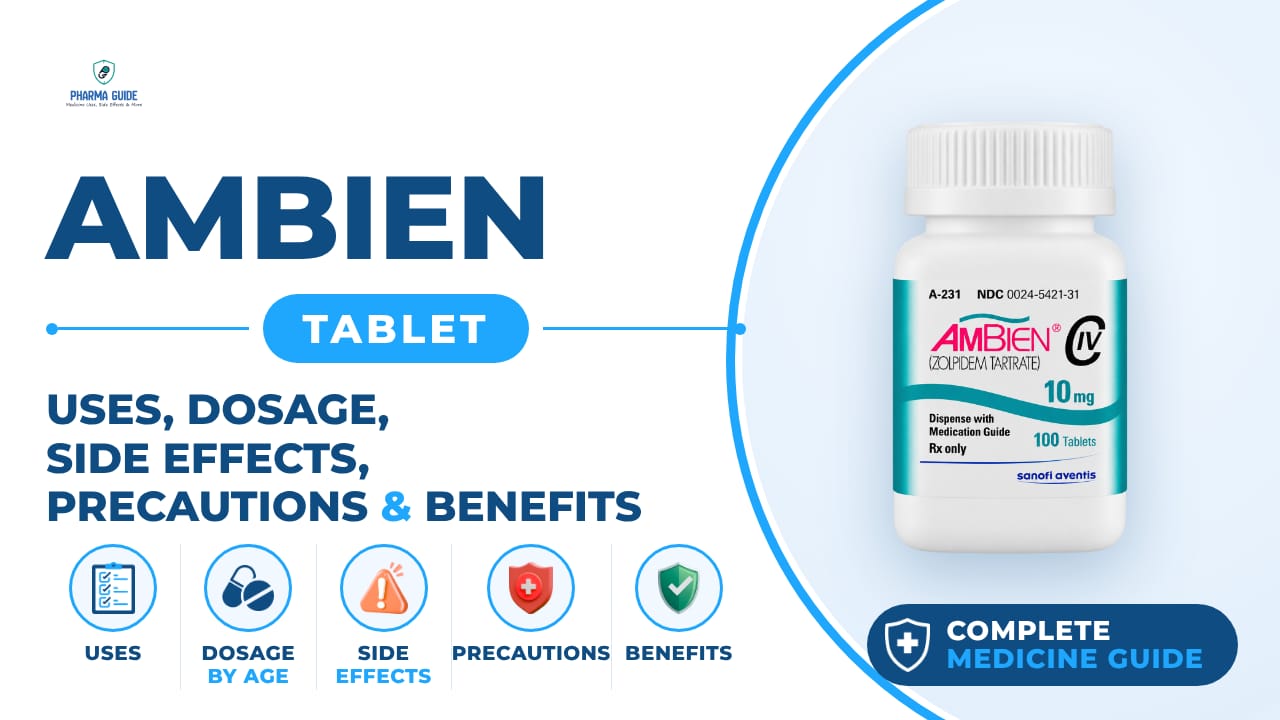
Ambien Tablet: Uses, Dosage, Side Effects, Precautions and Alternates
| Generic name | zolpidem tartrate |
|---|---|
| Drug class | GABA A receptor positive modulator |
| Forms | Immediate-release tablet, Extended-release tablet (Ambien CR), Sublingual tablet (Edluar), Capsule, Oral spray |
Quick overview
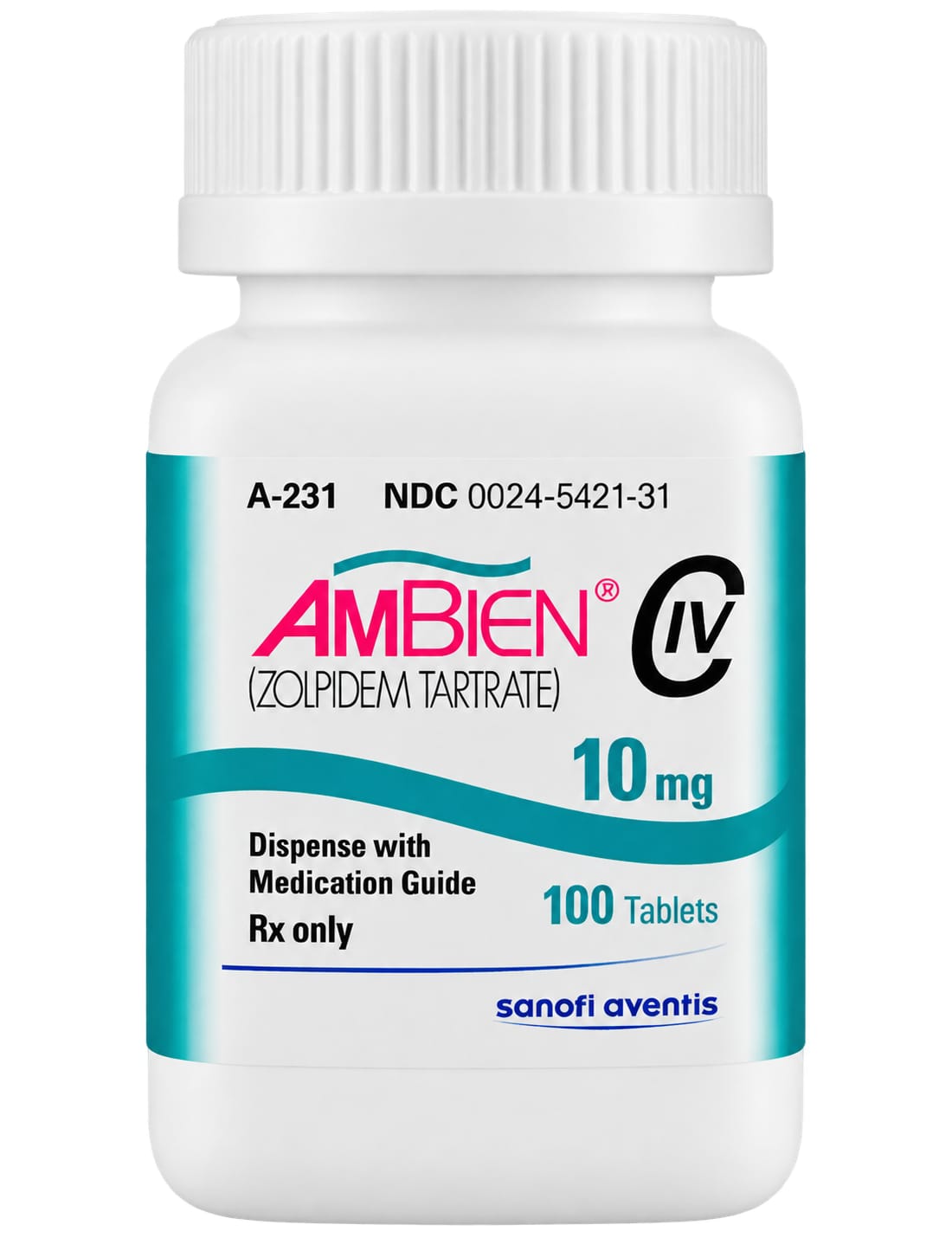
Ambien Tablet (zolpidem tartrate) is a prescription sleep medicine used for the short-term treatment of insomnia in adults. It belongs to the GABA A receptor positive modulator drug class and helps you fall asleep faster and stay asleep through the night. It is taken by mouth right before bed, only when a full night's sleep is possible.
What is Ambien Tablet
Ambien is a prescription sleep medicine used for the short-term treatment of insomnia in adults. It helps you fall asleep faster and stay asleep through the night. The generic name is zolpidem tartrate, and it belongs to the GABA A receptor positive modulator drug class.
Ambien Tablet uses
- Short-term treatment of insomnia (trouble falling asleep)
- Sleep maintenance insomnia (staying asleep through the night)
Benefits of Ambien Tablet
- Helps you fall asleep faster
- Helps you stay asleep through the night
- Works quickly, usually within 15 to 30 minutes
How Ambien Tablet works
Ambien works on receptors in the brain called GABA receptors, which slow down brain activity. This helps you relax and fall asleep.
Ambien Tablet dosage
Take this medication by mouth with water, right before you get into bed, only when you are ready for sleep. It is better to take this medication on an empty stomach; do not take it with or right after a meal, since food can make it work more slowly. Only take a dose if you have time for a full night's sleep of about 7 to 8 hours.
Do not take double or extra doses; this medication should only be taken immediately before going to sleep. If you have been taking this medication for several weeks, do not stop suddenly on your own; your care team may want to lower your dose gradually to avoid withdrawal symptoms.
Extended-release tablets should be swallowed whole; do not chew, crush, break, or dissolve them. Sublingual tablets should be placed under the tongue and allowed to dissolve; do not swallow them whole or drink water with them.
Talk to your care team about use of this medication in children, since special care may be needed. Avoid taking this medication if you have had any alcohol that evening or before bedtime.
| Age group | Dose |
|---|---|
| Under 18 Years | Not recommended unless prescribed by a doctor |
| Adults (18–64 Years) | 5–10 mg once daily before bedtime |
| Older Adults (65+ years) | 5 mg once daily before bedtime |
Available forms and strengths
- Immediate-release tablet
- Extended-release tablet (Ambien CR)
- Sublingual tablet (Edluar)
- Capsule
- Oral spray
Side effects of Ambien Tablet
Common
- Headache
- Drowsiness/sleepiness
- Dizziness
- Diarrhea
- Grogginess or drugged feeling
Serious
- Complex sleep behaviors such as sleepwalking, sleep-driving, making phone calls, or having sex while not fully awake
- Slowed or shallow breathing (respiratory depression)
- Severe allergic reaction: swelling of face, lips, tongue, or throat, trouble breathing, hives, itching
- Confusion, hallucinations, agitation, or other abnormal thoughts and behavior changes
- Worsening depression or thoughts of suicide or self-harm
- Memory loss
- Severe drowsiness or unusual tiredness leading to falls
- Liver problems (hepatic encephalopathy) in people with severe liver disease
- Withdrawal symptoms such as stomach cramps, sweating, tremors, vomiting, or seizures if stopped suddenly
Warnings and precautions
- This medication can cause complex sleep behaviors like sleepwalking, sleep-driving, preparing and eating food, making phone calls, or having sex while not fully awake, sometimes without any memory of it. These behaviors can lead to serious injury or death. Stop taking the medication and call your care team right away if this happens.
- Do not take this medication if you have had a complex sleep behavior reaction to it in the past, or if you are allergic to zolpidem.
- This medicine can cause serious breathing problems, especially in people with lung disease, sleep apnea, or myasthenia gravis, or when combined with opioids or other medicines that slow breathing.
- Stopping this medication suddenly after taking it for a while can cause withdrawal symptoms such as stomach cramps, vomiting, sweating, tremors, or seizures. Doses should be reduced gradually under a doctor's guidance.
- This medication is a controlled substance with risk of misuse, dependence, and addiction. Take it only as prescribed and do not share it with others.
- This medication should be used during pregnancy only if clearly needed. Babies born to mothers who use it late in the third trimester may have breathing problems, unusual sleepiness, or limpness at birth.
- A small amount of this medication passes into breast milk and may cause excess sleepiness in a nursing baby. You may consider pumping and discarding breast milk during treatment and for 23 hours after taking a dose to lower the risk to your baby.
- No dose adjustment is generally needed for kidney problems, but tell your doctor if you have kidney disease.
- People with liver problems clear this medication more slowly and may need a lower dose. This medication should be avoided in people with severe liver disease because it can lead to brain problems (encephalopathy).
- Do not drink alcohol while taking this medication. Combining alcohol with this medicine can increase drowsiness, dizziness, and slowed breathing, and raises the risk of dangerous sleep behaviors.
- Do not drive or operate machinery until you know how this medication affects you. Wait at least 8 hours after taking it before driving or doing activities that require full alertness, since you may still be impaired even if you feel awake.
Storage
- Store at room temperature between 20 and 25 degrees C (68 and 77 degrees F).
- Keep out of the reach of children and pets.
- This medication can be abused; keep it in a safe place to protect it from theft.
- Do not share this medication with anyone; selling or giving it away is dangerous and against the law.
- Mix any unused medication with a substance like cat litter or coffee grounds, then throw it away in a sealed container like a sealed bag or coffee can with a lid.
- Do not use the medication after the expiration date.
When to see a doctor
- Get emergency help right away if you have signs of a severe allergic reaction, such as swelling of the tongue, lips, face, or throat, trouble breathing, or nausea and vomiting.
- Call your care team right away if you find out you have done activities like driving, eating, or other tasks while not fully awake and don't remember them.
- Call your care team right away if you or your family notice new or worsening depression, thoughts of harming yourself, unusual behavior, confusion, hallucinations, or memory loss.
- Seek emergency medical help right away if you or someone else shows signs of overdose, such as passing out, trouble breathing, or being unable to wake up.
- Call your care team if breathing problems occur while taking this medication.
Alternatives
- Zaleplon
- Doxepin
- Temazepam
Watch the video
FAQs
What is Ambien Tablet used for?
Ambien is used for the short-term treatment of insomnia in adults, helping with both falling asleep faster and staying asleep through the night.
How fast does Ambien Tablet work?
Ambien works quickly, usually within 15 to 30 minutes, so it should be taken right before bed when you are ready for sleep.
What is the dosage of Ambien Tablet for adults?
Adults aged 18 to 64 typically take 5 to 10 mg once daily before bedtime, while older adults 65 and above take 5 mg once daily before bedtime.
What are the serious side effects of Ambien Tablet?
Serious side effects include complex sleep behaviors like sleepwalking or sleep-driving, slowed or shallow breathing, severe allergic reactions, confusion, hallucinations, worsening depression, memory loss, and withdrawal symptoms if stopped suddenly.
Can I drink alcohol while taking Ambien Tablet?
No, you should not drink alcohol while taking Ambien, as combining it with alcohol can increase drowsiness, dizziness, slowed breathing, and the risk of dangerous sleep behaviors.
General information, not medical advice
Your prescriber and the leaflet in your pack know your situation. This page does not.
- Follow your prescriber and the leaflet
- Don't start, stop, or change a dose on your own
- Doses and warnings differ by country and product
Sources
Video
Related medicines

Injectafer Injection: Uses, Dosage, Side Effects, Precautions and Alternates
Iron products
Injectafer (ferric carboxymaltose) treats iron deficiency anemia and heart failure-related iron deficiency via IV. Learn uses, dosage, side effects, and

Gliclazide Tablet: Uses, Dosage, Side Effects, Precautions and Alternates
Sulfonylurea (hypoglycemic/antidiabetic agent)
Gliclazide Tablet is a sulfonylurea for type 2 diabetes that boosts insulin release. Learn about dosage, side effects, warnings, and precautions.