
Safety
General information, not medical advice
Your prescriber and the leaflet in your pack know your situation. This page does not.
- Follow your prescriber and the leaflet
- Don't start, stop, or change a dose on your own
- Doses and warnings differ by country and product
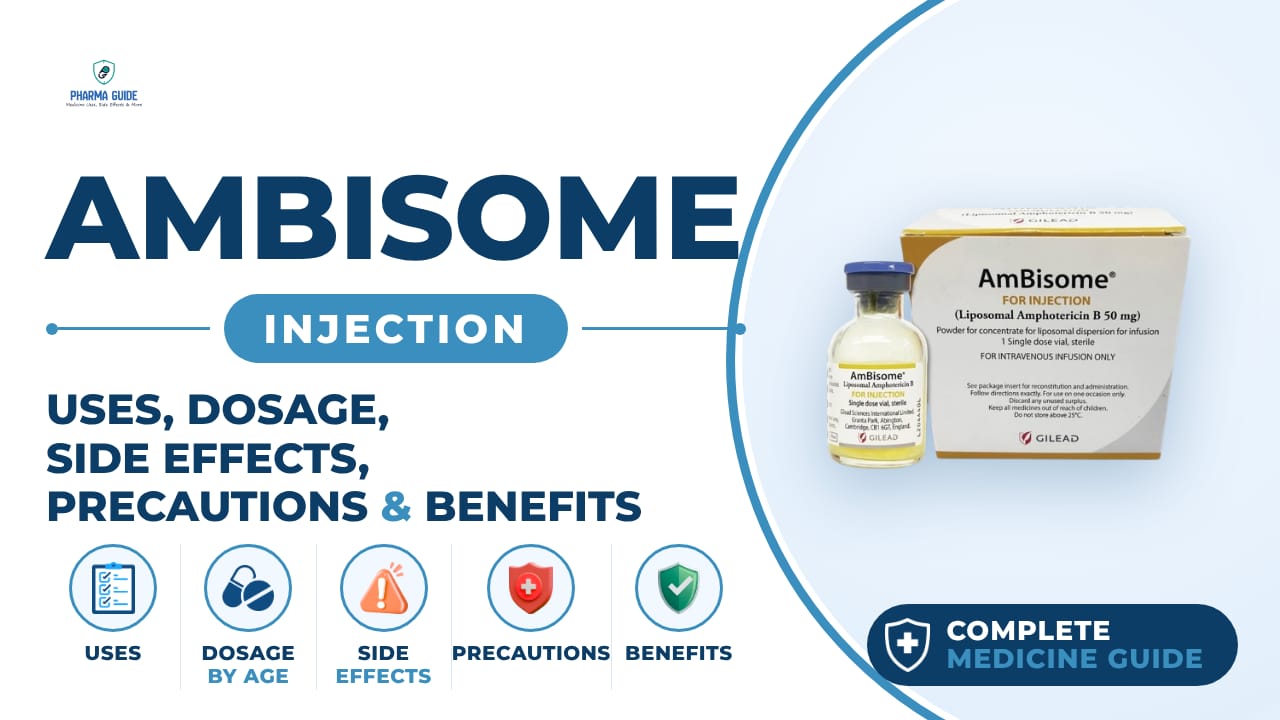
AmBisome Injection: Uses, Dosage, Side Effects, Precautions and Alternates
| Generic name | amphotericin B liposomal |
|---|---|
| Drug class | Polyenes (antifungal) |
| Forms | Injection |
Quick overview
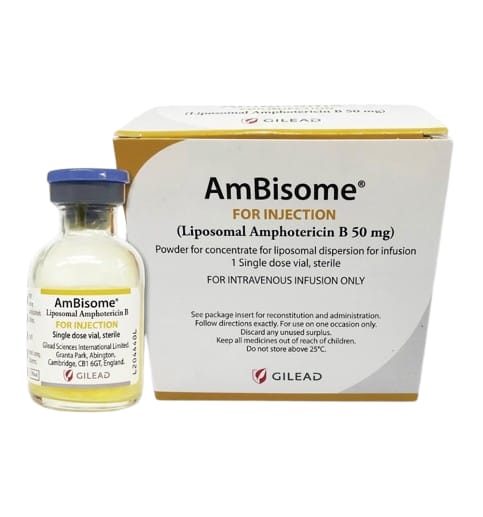
AmBisome Injection (amphotericin B liposomal) is an antifungal medicine from the polyenes class, given by IV infusion. It contains amphotericin B wrapped inside tiny fat bubbles called liposomes, which helps it reach infected tissues while causing fewer side effects than older amphotericin B products. It is used to treat serious fungal infections and visceral leishmaniasis, and it must be administered under medical supervision.
What is AmBisome Injection
AmBisome is an antifungal medicine given by IV infusion. It contains amphotericin B wrapped inside tiny fat bubbles called liposomes, which helps it reach infected tissues while causing fewer side effects than older amphotericin B products.
AmBisome Injection uses
- Serious fungal infections inside the body
- Suspected fungal infections in patients with fever and a low white blood cell count (neutropenia)
- Cryptococcal meningitis in people with HIV
- Prevention of fungal infections in high-risk liver transplant patients
- Visceral leishmaniasis (a parasitic disease, also called black fever)
Benefits of AmBisome Injection
- Treats serious fungal infections.
- Helps treat invasive Aspergillus infections.
- Helps treat invasive Candida infections.
- Treats certain Cryptococcus infections.
- Used for cryptococcal meningitis in eligible patients.
How AmBisome Injection works
The medicine attaches to a substance called ergosterol in the wall of fungus cells. This creates holes in the fungus cell wall so important particles leak out, which kills the fungus.
AmBisome Injection dosage
AmBisome is given as a slow infusion into a vein, usually taking about 2 hours to complete. It is given by or under the supervision of a doctor or nurse, typically in a hospital or clinic setting. Treatment may continue for several weeks or months depending on the infection being treated. Your breathing, blood pressure, oxygen levels, kidney function, and other vital signs will be watched closely during treatment. An existing IV line must be flushed with dextrose solution before the infusion, or a separate line should be used.
| Age group | Dose |
|---|---|
| Under 18 years | Not recommended |
| 18–64 years | 3–5 mg/kg, once/day |
| 65+ years | 3–5 mg/kg, once/day |
Available forms and strengths
- Injection
Side effects of AmBisome Injection
Common
- Stomach pain
- Nausea and vomiting
- Diarrhea
- Rash
- Chills
- Weakness
- Headache
- Back pain
- Joint and bone pain
- Trouble breathing
- Changes in liver blood tests
- Changes in kidney blood tests
- Fever, chills, hives, or itching during or shortly after the infusion
Serious
- Allergic reactions: hives, difficulty breathing, swelling of face, lips, tongue, or throat
- Kidney problems: little or no urination, swelling in feet or ankles, feeling tired or short of breath
- Low potassium: leg cramps, constipation, irregular heartbeats, fluttering in chest, increased thirst or urination, numbness or tingling, muscle weakness
- Low magnesium: dizziness, irregular heartbeats, feeling jittery, muscle cramps or spasms, cough or choking feeling
- Low calcium: muscle spasms or contractions, numbness or tingling around mouth, fingers, or toes
- Liver damage: unexplained stomach pain, nausea, vomiting, dark urine, pale stools, yellowing of skin or eyes
- Chest tightness or chest pain
- Irregular heartbeat
- Unusual bleeding or bruising
- Seizures (convulsions)
Warnings and precautions
- There have been no adequate, well-controlled studies of AmBisome in pregnant women. It should only be used during pregnancy if the possible benefits outweigh the potential risks. Tell your doctor if you are pregnant or planning to become pregnant.
- It is not known whether AmBisome passes into breast milk, but because of the potential for serious side effects in breastfed infants, a decision should be made whether to stop breastfeeding or stop the medicine, considering how important the medicine is for the mother.
- This medicine can cause kidney damage. People with existing kidney disease are at higher risk and should tell their doctor about it before treatment.
- This medicine can cause liver damage, especially in people with existing liver problems or those who drink alcohol during treatment.
- Avoid alcohol while receiving this medicine, as it can raise the risk of liver damage.
- Be careful driving or using machinery until you know how this medicine affects you.
- Severe allergic reactions, including anaphylaxis, have happened with amphotericin B medicines including AmBisome. If a severe reaction happens, the infusion should be stopped right away and not restarted.
- This medicine is not meant to replace other amphotericin B products on a dose-for-dose basis, since the products act and are handled by the body differently.
- Patients should have regular lab tests of kidney, liver, and blood function, and blood electrolyte levels (especially magnesium and potassium), during treatment.
- Using certain other medicines together with this one, such as chemotherapy drugs, steroids, digoxin, flucytosine, or other drugs that affect the kidneys, may increase the risk of side effects and needs careful monitoring.
Storage
- Unopened vials should be stored at temperatures up to 25°C (77°F)
- Keep in a cool, dry place where it stays below 25°C
- Keep out of reach of children
- Do not use after the expiry date marked on the packet
- Your doctor, nurse, or pharmacist will dispose of any left-over medicine
- The reconstituted product concentrate may be stored for up to 24 hours at 2°-8°C (36°-46°F) following reconstitution; do not freeze
- Injection of AmBisome should commence within 6 hours of dilution
When to see a doctor
- Get emergency help right away for signs of a severe allergic reaction: hives, trouble breathing, or swelling of the face, lips, tongue, or throat.
- Tell your caregiver right away if you feel dizzy, nauseated, light-headed, sweaty, hot or cold, or if you have a fast heartbeat, chest tightness, or trouble breathing during the infusion.
- Call your doctor right away if you notice signs of kidney problems, such as little or no urination, swelling in the feet or ankles, or feeling tired or short of breath.
- Call your doctor right away about signs of low potassium or magnesium, such as muscle cramps, irregular heartbeat, leg cramps, or numbness and tingling.
- Tell your doctor or nurse as soon as possible if you start to feel unwell after being given this medicine.
Alternatives
- Voriconazole
- Fungizone
- Abelcet
Watch the video
FAQs
What is AmBisome Injection used for?
It is used for serious fungal infections inside the body, suspected fungal infections with fever and low white blood cell count, cryptococcal meningitis in people with HIV, prevention of fungal infections in high-risk liver transplant patients, and visceral leishmaniasis.
How is AmBisome Injection given?
It is given as a slow IV infusion, usually taking about 2 hours, by or under the supervision of a doctor or nurse in a hospital or clinic setting. Treatment may continue for several weeks or months depending on the infection.
How does AmBisome Injection work?
It attaches to ergosterol in the fungus cell wall, creating holes so important particles leak out, which kills the fungus.
What are the serious side effects of AmBisome Injection?
Serious side effects include allergic reactions, kidney problems, low potassium, low magnesium, low calcium, liver damage, chest tightness or pain, irregular heartbeat, unusual bleeding or bruising, and seizures.
Can AmBisome Injection be used during pregnancy?
There have been no adequate, well-controlled studies in pregnant women, so it should only be used during pregnancy if the possible benefits outweigh the potential risks.
General information, not medical advice
Your prescriber and the leaflet in your pack know your situation. This page does not.
- Follow your prescriber and the leaflet
- Don't start, stop, or change a dose on your own
- Doses and warnings differ by country and product
Sources
- https://dailymed.nlm.nih.gov/dailymed/fda/fdaDrugXsl.cfm?setid=f7be6506-4d20-401e-a0ff-02ad7c33158a&type=display
- https://www.safetyandquality.gov.au/medicine-finder/am-bisome-powder-for-infusion#s2
- https://www.goodrx.com/ambisome/what-is?srsltid=AU7gw4VAVSfN2rs4elIT6_kkPC_mwkQBjfXFPXn7cRtWWtQTOHO3hyt-
Video
Related medicines

Injectafer Injection: Uses, Dosage, Side Effects, Precautions and Alternates
Iron products
Injectafer (ferric carboxymaltose) treats iron deficiency anemia and heart failure-related iron deficiency via IV. Learn uses, dosage, side effects, and

Gliclazide Tablet: Uses, Dosage, Side Effects, Precautions and Alternates
Sulfonylurea (hypoglycemic/antidiabetic agent)
Gliclazide Tablet is a sulfonylurea for type 2 diabetes that boosts insulin release. Learn about dosage, side effects, warnings, and precautions.