
Safety
General information, not medical advice
Your prescriber and the leaflet in your pack know your situation. This page does not.
- Follow your prescriber and the leaflet
- Don't start, stop, or change a dose on your own
- Doses and warnings differ by country and product
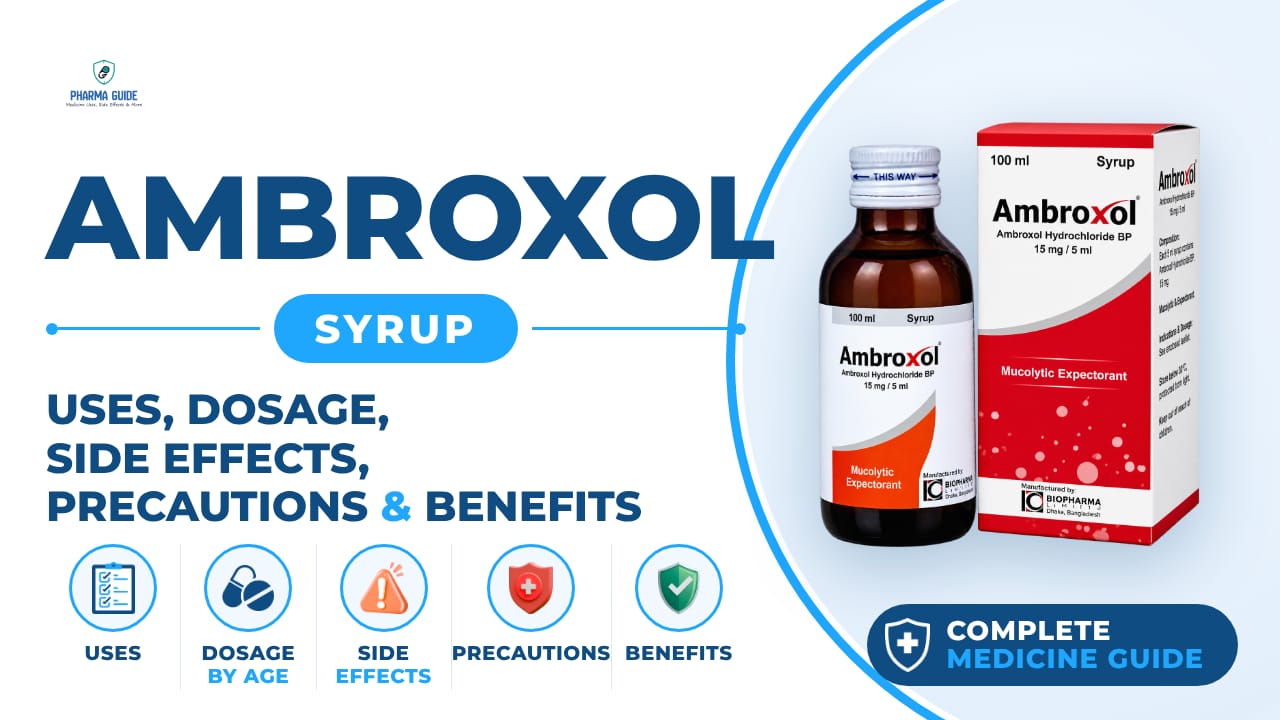
Ambroxol Syrup: Uses, Dosage, Side Effects, Precautions and Alternates
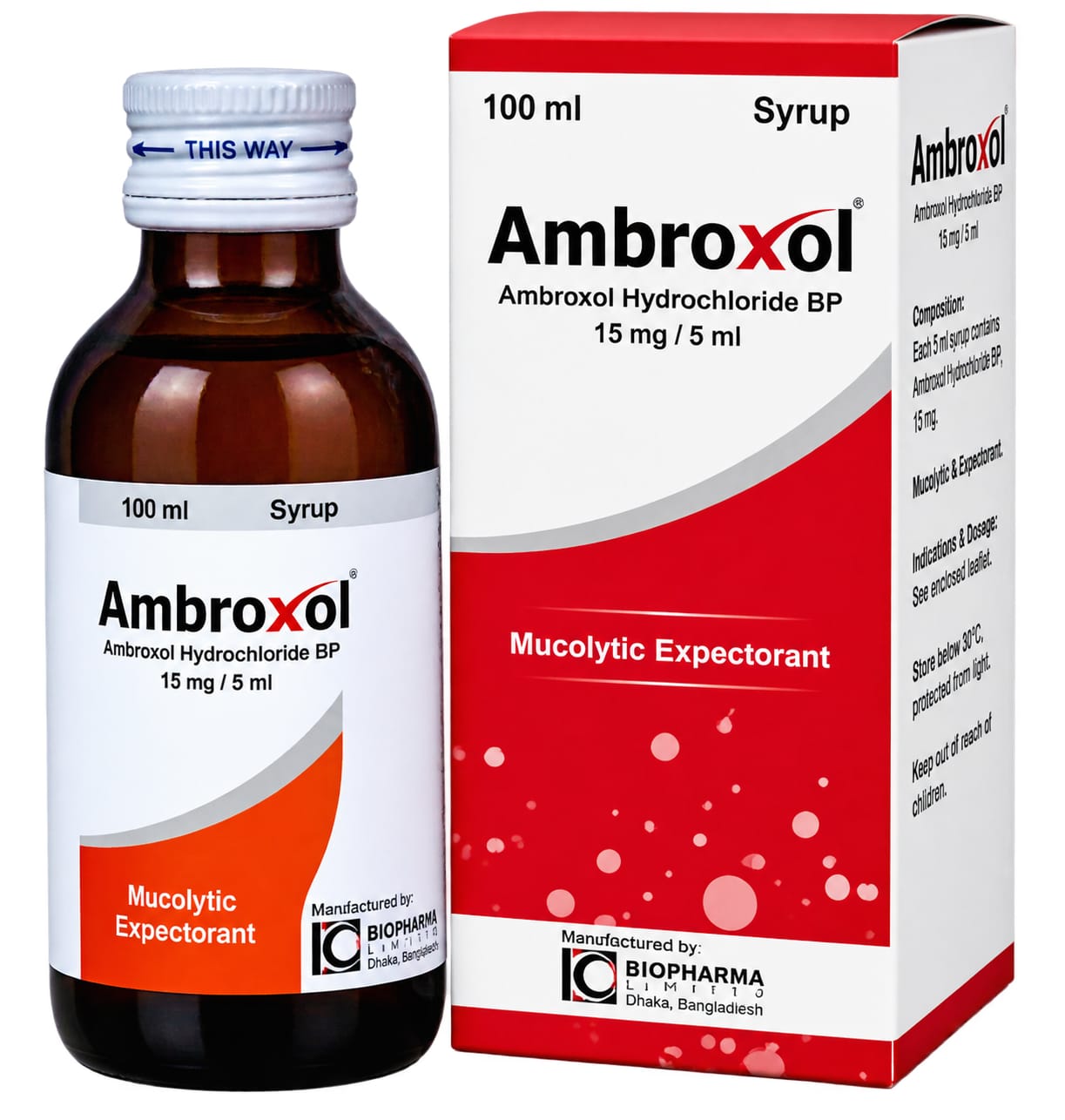
| Generic name | Ambroxol Hydrochloride |
|---|---|
| Drug class | Mucolytic and expectorant |
| Forms | Tablets, Syrup, Lozenges, Oral drops, Respules/inhalation solution |
Quick overview
Ambroxol Syrup contains Ambroxol Hydrochloride, a mucolytic and expectorant medicine used to treat respiratory conditions involving excessive or thick mucus in children and adults. It thins and loosens mucus so it can be coughed out more easily, helping you breathe easier, and it also has a mild numbing effect that can relieve sore throat discomfort. It is generally meant for short-term use and should be taken as directed by your doctor.
What is Ambroxol Syrup
Ambroxol is a medicine used to treat respiratory conditions with excessive or thick mucus in children and adults. It thins and loosens mucus so it can be coughed out more easily, helping you breathe easier. It also has a mild numbing effect that can relieve sore throat discomfort.
Ambroxol Syrup uses
- All forms of tracheobronchitis
- Emphysema with bronchitis pneumoconiosis
- Chronic inflammatory pulmonary conditions
- Bronchiectasis
- Bronchitis with bronchospasm asthma
- Acute exacerbations of bronchitis (used with an appropriate antibiotic)
- Chronic Obstructive Pulmonary Disease (COPD)
- Sinusitis
- Respiratory tract infections
- Sore throat relief
- Cough with mucus
Benefits of Ambroxol Syrup
- Helps clear thick or excessive phlegm to ease breathing
- Thins and loosens mucus so it is easier to cough out
- Has a local numbing effect that can relieve sore throat discomfort
- May help antibiotics reach mucus in the lungs better, supporting treatment of respiratory infections
- Does not cause drowsiness, so it can be used during the day
How Ambroxol Syrup works
Ambroxol breaks down the fibers that make mucus thick, making it thinner so it can be coughed out more easily. It starts working about 30 minutes after being taken, and the mucus stays thinner as long as you keep taking it.
Ambroxol Syrup dosage
Shake the syrup bottle well before use and measure the dose with a proper measuring device. This medicine is usually taken with food to help avoid stomach upset, though it can be taken with or without food. Take the medicine regularly for the length of time recommended by your doctor. Do not start or stop taking this medicine without consulting your doctor. This medicine is generally meant for short-term use; see your doctor if symptoms do not improve after a few days.
| Age group | Dose |
|---|---|
| Under 2 years | 2.5 mL twice daily — only under medical advice |
| 2–5 years | 2.5 mL 3 times daily |
| 6–12 years | 5 mL 2–3 times daily |
| 12 years & older | 10 mL 2–3 times daily |
| Adults | 10 mL 2–3 times daily |
Available forms and strengths
- Tablets
- Syrup
- Lozenges
- Oral drops
- Respules/inhalation solution
Side effects of Ambroxol Syrup
Common
- Nausea
- Vomiting
- Diarrhoea
- Stomach discomfort/upset
- Rashes and itching
- Heartburn/indigestion
- Dry mouth
- Taste disturbance
- Numbness in throat and mouth
- Dizziness
- Headache
Serious
- Allergic reactions such as rash, itching, swelling of the face, tongue, or throat, dizziness, or difficulty breathing
- Severe skin reactions such as Stevens-Johnson syndrome or toxic epidermal necrolysis, seen as skin rash or blistering
- Anaphylactic reaction with swelling of the face or throat and severe difficulty breathing
Warnings and precautions
- There are no absolute reasons this medicine cannot be used, but people with stomach ulcers should use it with caution.
- See a doctor before use if you have symptoms suggesting pneumonia or another lung infection, such as difficulty breathing at night, thick yellow or green mucus, blood-stained mucus, a fever over 38°C, or chest pain, or if you have a weakened immune system from medications like chemotherapy, or an existing lung condition.
- Do not take this medicine if you are allergic to ambroxol, bromhexine, or any other ingredient in it.
- It is not recommended for people with inherited galactose intolerance, lactase deficiency, or glucose-galactose malabsorption, since some products may contain lactose. Tell your doctor about all other medicines you take, since ambroxol may interact with other drugs and cause serious side effects. Avoid combining ambroxol with cough suppressants like codeine without medical advice, since this can stop the cough reflex that is needed to clear mucus and work against ambroxol's effect.
- Tablets should not be given to children under 6 years old, and the syrup or oral drops should not be given to children under 2 years old.
- Do not crush or chew tablets or capsules. Never take more medicine than recommended, since taking extra will not help symptoms and may cause poisoning or other side effects.
- Ambroxol is not recommended during the first trimester of pregnancy, and there isn't enough data to confirm it's safe later in pregnancy. Talk to your doctor before use if you are pregnant.
- Ambroxol is not recommended while breastfeeding because there isn't enough information about its safety in this situation, and it may pass into breast milk. Talk to your doctor before use.
- Use with caution if you have kidney problems, since impaired kidney function can cause the medicine to build up in the body and increase the risk of side effects. Your doctor may adjust the dose.
- Use with caution if you have liver problems, since this medicine is broken down in the liver and impaired liver function can cause it to build up and increase side effects. Your doctor may need to monitor liver function or adjust the dose.
- It isn't known how this medicine interacts with alcohol, so it's best to ask your doctor before drinking alcohol while taking it.
Storage
- Store at a temperature not exceeding 30 degrees celsius.
- Keep all medicine out of reach of children.
- Medicines should be stored at room temperature, out of direct sunlight, and away from heat.
- Don't freeze medications unless instructed to do so by the package insert.
- Keep children and pets away from drugs.
- Never pour or flush medications down the toilet or the drain unless instructed.
When to see a doctor
- Get emergency medical help right away if you think you or someone else has taken too much ambroxol syrup.
- Seek immediate medical attention if you notice signs of a serious allergic reaction, such as skin rash, itching or swelling (especially of the face, tongue, or throat), dizziness, or difficulty breathing.
- If a skin rash or blistering occurs, stop taking the medicine and get medical help immediately, as this could be a sign of a rare but serious skin reaction.
- See a doctor if your cough gets worse, produces colored mucus, does not improve after about a week of use, or if you experience any side effects that concern you.
Alternatives
- Lasolvan
- Mucosolvan
- Mucoangin
- Ambrolex
- Bisolvon
- Brontex
- Ambrodil
- Bromhexine
- Guaifenesin
Watch the video
FAQs
What is Ambroxol Syrup used for?
It is used to treat respiratory conditions with excessive or thick mucus, such as bronchitis, COPD, sinusitis, and respiratory tract infections, and it also helps relieve sore throat discomfort.
How does Ambroxol Syrup work?
Ambroxol breaks down the fibers that make mucus thick, thinning it so it can be coughed out more easily. It starts working about 30 minutes after being taken, and mucus stays thinner as long as you keep taking it.
What is the dosage of Ambroxol Syrup for children?
Dosage varies by age: children aged 2–5 years take 2.5 mL three times daily, 6–12 years take 5 mL two to three times daily, and those 12 years and older take 10 mL two to three times daily. Use in children under 2 years is only under medical advice.
What are the side effects of Ambroxol Syrup?
Common side effects include nausea, vomiting, diarrhoea, stomach upset, rashes, heartburn, dry mouth, taste disturbance, numbness in throat and mouth, dizziness, and headache. Serious effects can include allergic reactions and severe skin reactions like Stevens-Johnson syndrome.
Can Ambroxol Syrup be taken during pregnancy?
Ambroxol is not recommended during the first trimester of pregnancy, and there isn't enough data to confirm it's safe later in pregnancy, so you should talk to your doctor before use.
General information, not medical advice
Your prescriber and the leaflet in your pack know your situation. This page does not.
- Follow your prescriber and the leaflet
- Don't start, stop, or change a dose on your own
- Doses and warnings differ by country and product
Sources
Video
Related medicines

Injectafer Injection: Uses, Dosage, Side Effects, Precautions and Alternates
Iron products
Injectafer (ferric carboxymaltose) treats iron deficiency anemia and heart failure-related iron deficiency via IV. Learn uses, dosage, side effects, and

Gliclazide Tablet: Uses, Dosage, Side Effects, Precautions and Alternates
Sulfonylurea (hypoglycemic/antidiabetic agent)
Gliclazide Tablet is a sulfonylurea for type 2 diabetes that boosts insulin release. Learn about dosage, side effects, warnings, and precautions.