
Safety
General information, not medical advice
Your prescriber and the leaflet in your pack know your situation. This page does not.
- Follow your prescriber and the leaflet
- Don't start, stop, or change a dose on your own
- Doses and warnings differ by country and product
Ametop Gel: Uses, Dosage, Side Effects, Precautions and Alternates
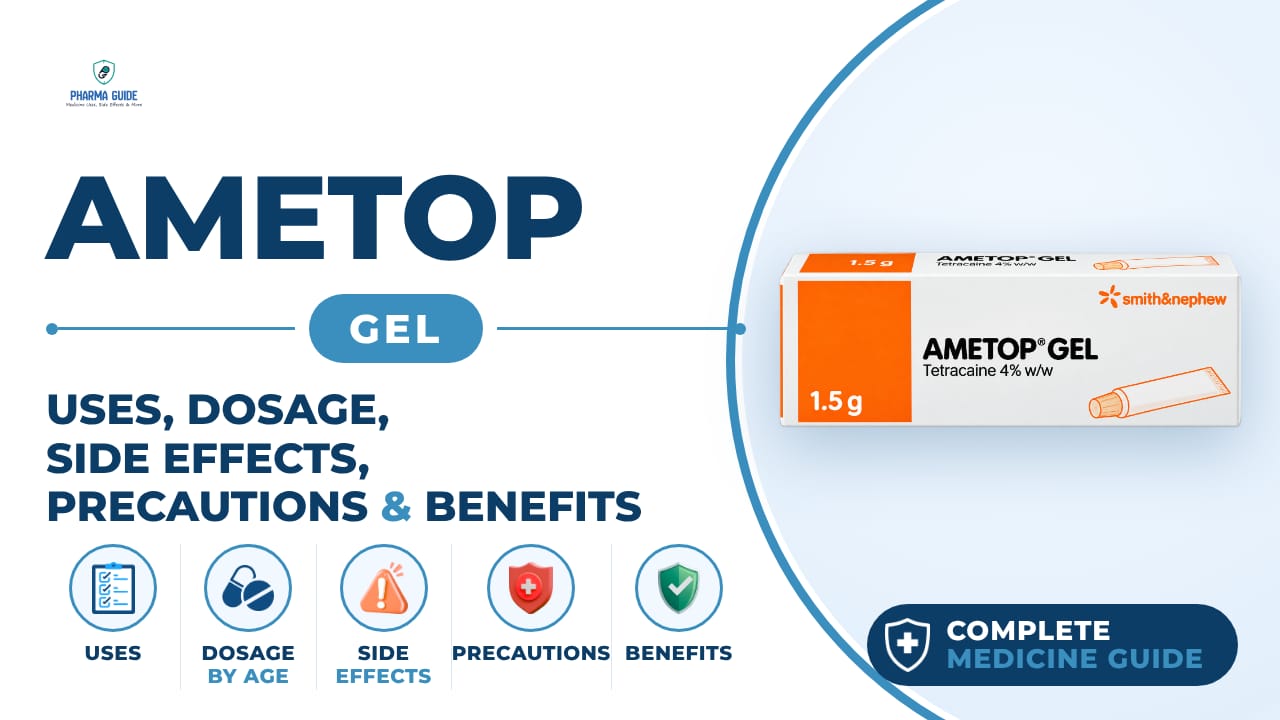
| Generic name | Tetracaine (amethocaine) |
|---|---|
| Drug class | Local anesthetic (ester type) |
| Forms | Topical gel |
Quick overview
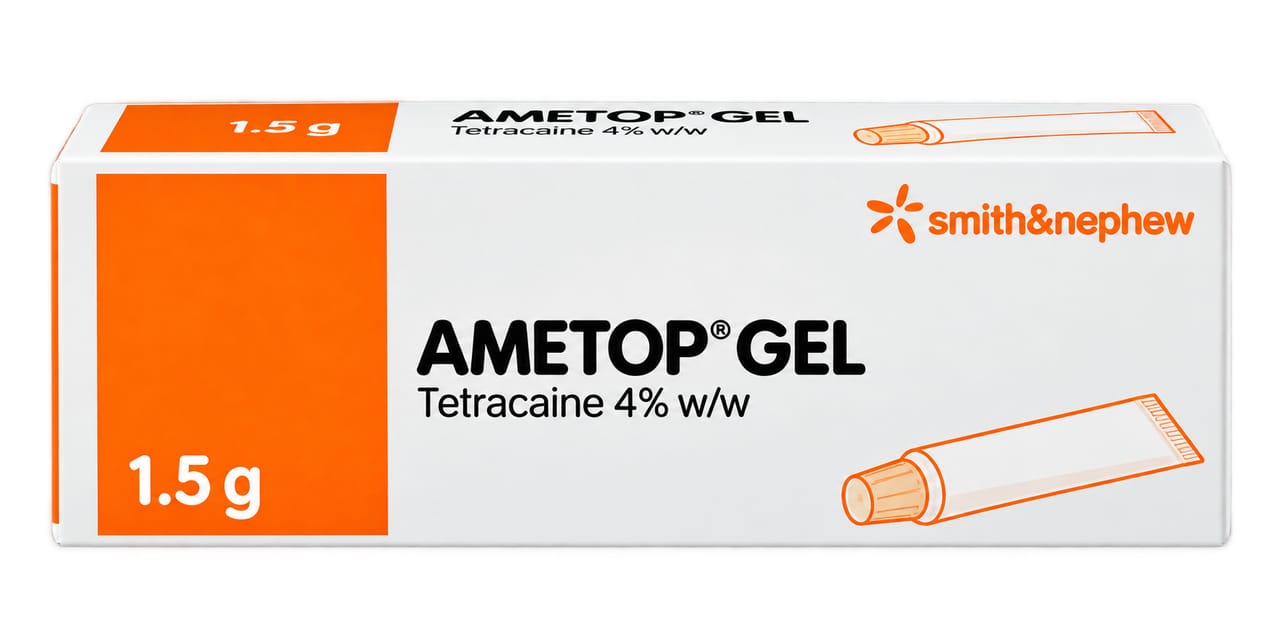
Ametop Gel is a topical local anesthetic gel containing 4% tetracaine (amethocaine), used to numb the skin before needle-related medical procedures such as blood draws, cannula insertion, and vaccinations. It works by blocking nerve signals in the skin and typically provides numbness lasting several hours after a single application. The gel is applied under an occlusive dressing for a set period before the procedure and then wiped off. It is not suitable for premature babies or infants under 1 month old.
What is Ametop Gel
Ametop Gel is a topical local anesthetic gel that contains 4% tetracaine. It is applied to the skin to numb it before certain medical procedures.
Ametop Gel uses
- Numbs the skin before needle punctures or blood draws (venepuncture)
- Numbs the skin before inserting a cannula for an IV drip
- Used before pediatric vaccinations
Benefits of Ametop Gel
- Reduces pain from needle insertion for injections or blood samples
- Can make veins easier to see and access because it widens blood vessels at the application site
- Numbing effect lasts several hours after a single application
How Ametop Gel works
Tetracaine blocks nerve signals by stopping sodium from moving across nerve fibers, which prevents pain signals from reaching the brain. It also widens blood vessels near the skin, which often causes mild redness at the application site.
Ametop Gel dosage
Apply Ametop Gel only to healthy, unbroken skin. Make sure the area is clean and dry before applying. Apply a thick layer to the center of the area to be numbed and cover with an occlusive dressing or bandage. Each tube is meant for a single use only.
Leave the gel on for about 30 minutes before a blood draw or about 45 minutes before a cannula is inserted. Do not leave the gel on the skin for more than 1 hour. Wipe the gel off with a gauze swab or tissue right before the procedure begins.
Do not apply to cuts, scrapes, rashes, or broken skin. Avoid contact with the eyes, ears, nose, mouth, or genitals; rinse with water right away if this happens. Wash hands thoroughly after applying or removing the gel; wearing a glove or finger cot during application may help avoid skin contact. This medicine is not for use in premature babies or infants under 1 month old.
| Age group | Dose |
|---|---|
| Under 1 month | Contraindicated in full-term newborns younger than 1 month and in premature infants within the specified neonatal period |
| Over 1 month–4 years | Maximum 1 g per application session; maximum 2 g in 24 hours |
| 5–12 years | Pediatric limits depend on exact age; children older than 5 years may receive up to 5 g per session and 7 g in 24 hours |
| 13–74 years | Maximum 5 g per session; maximum 7 g in 24 hours, with appropriate monitoring |
Available forms and strengths
- Topical gel, 4% tetracaine
Side effects of Ametop Gel
Common
- Mild redness (erythema) at the application site, caused by blood vessels widening
Serious
- Itching (pruritus) at the application site
- Mild swelling or fluid retention (oedema) at the site
- Blistering, hives, or severe rash from an allergic reaction
- Signs of overdose if swallowed or overused: numbness of the tongue, ringing in the ears, dizziness, nausea, or muscle twitching, which can progress to convulsions
Warnings and precautions
- Apply only to healthy, normal skin. Do not take it internally.
- This medicine should not be used in or near the middle ear, since it could be toxic to the ear.
- Using this gel repeatedly can increase the chance of developing an allergic reaction to tetracaine over time.
- People with epilepsy should use this medicine with caution.
- This gel contains preservatives that may cause allergic reactions, sometimes delayed.
- This medicine should not be used in premature babies or in babies less than 1 month old because their bodies may not process it properly.
- Do not apply to broken skin, mucous membranes, eyes, or ears.
- There isn't enough information on using this medicine during pregnancy. As a precaution, it's best to avoid using it while pregnant.
- It's not known if this medicine passes into breast milk, and a risk to the baby cannot be ruled out, so it is not recommended for breastfeeding mothers.
- No specific renal dosage adjustment is established. Significant kidney disease should be considered during medical assessment.
- No standard hepatic dosage adjustment is established. Patients with significant liver impairment require individual evaluation.
- No major direct interaction with alcohol is established, but alcohol-related impairment may complicate medical procedures.
- This medicine has little or no effect on your ability to drive or use machines.
Storage
- Store at 2-8°C in the refrigerator
- Do not freeze
- If stored at room temperature (at or below 25°C), it stays effective for up to 1 month
- Return any unused or expired medication to the pharmacy for proper disposal
- Dispose of unused product or waste material according to local requirements
When to see a doctor
- If severe blistering occurs at the application site, remove the gel right away and treat the area as needed; tell a healthcare provider.
- If the gel is accidentally swallowed, get medical help right away, as it can cause symptoms like tingling, numbness of the tongue, ringing in the ears, nausea, vomiting, muscle twitching, and eventually seizures.
- If you experience a severe skin reaction such as more intense redness, swelling, or itching at the site, seek medical advice.
Alternatives
- EMLA Cream
- Lidocaine Cream
- Lidocaine Topical Cream
Watch the video
FAQs
How long does Ametop Gel take to work?
Leave the gel on for about 30 minutes before a blood draw or about 45 minutes before a cannula is inserted, and do not leave it on for more than 1 hour.
What is Ametop Gel used for?
It is used to numb the skin before needle punctures or blood draws, before inserting a cannula for an IV drip, and before pediatric vaccinations.
Can Ametop Gel be used on babies?
No, it is not suitable for premature babies or infants under 1 month old because their bodies may not process it properly.
What are the common side effects of Ametop Gel?
Mild redness (erythema) at the application site is common, caused by blood vessels widening. Serious effects can include itching, swelling, or allergic reactions like blistering and hives.
How should Ametop Gel be stored?
Store it at 2-8°C in the refrigerator and do not freeze it; if kept at room temperature at or below 25°C, it stays effective for up to 1 month.
General information, not medical advice
Your prescriber and the leaflet in your pack know your situation. This page does not.
- Follow your prescriber and the leaflet
- Don't start, stop, or change a dose on your own
- Doses and warnings differ by country and product
Sources
Video
Related medicines

Injectafer Injection: Uses, Dosage, Side Effects, Precautions and Alternates
Iron products
Injectafer (ferric carboxymaltose) treats iron deficiency anemia and heart failure-related iron deficiency via IV. Learn uses, dosage, side effects, and

Gliclazide Tablet: Uses, Dosage, Side Effects, Precautions and Alternates
Sulfonylurea (hypoglycemic/antidiabetic agent)
Gliclazide Tablet is a sulfonylurea for type 2 diabetes that boosts insulin release. Learn about dosage, side effects, warnings, and precautions.