
Safety
General information, not medical advice
Your prescriber and the leaflet in your pack know your situation. This page does not.
- Follow your prescriber and the leaflet
- Don't start, stop, or change a dose on your own
- Doses and warnings differ by country and product
Amisulpride Tablet: Uses, Dosage, Side Effects, Precautions and Alternates
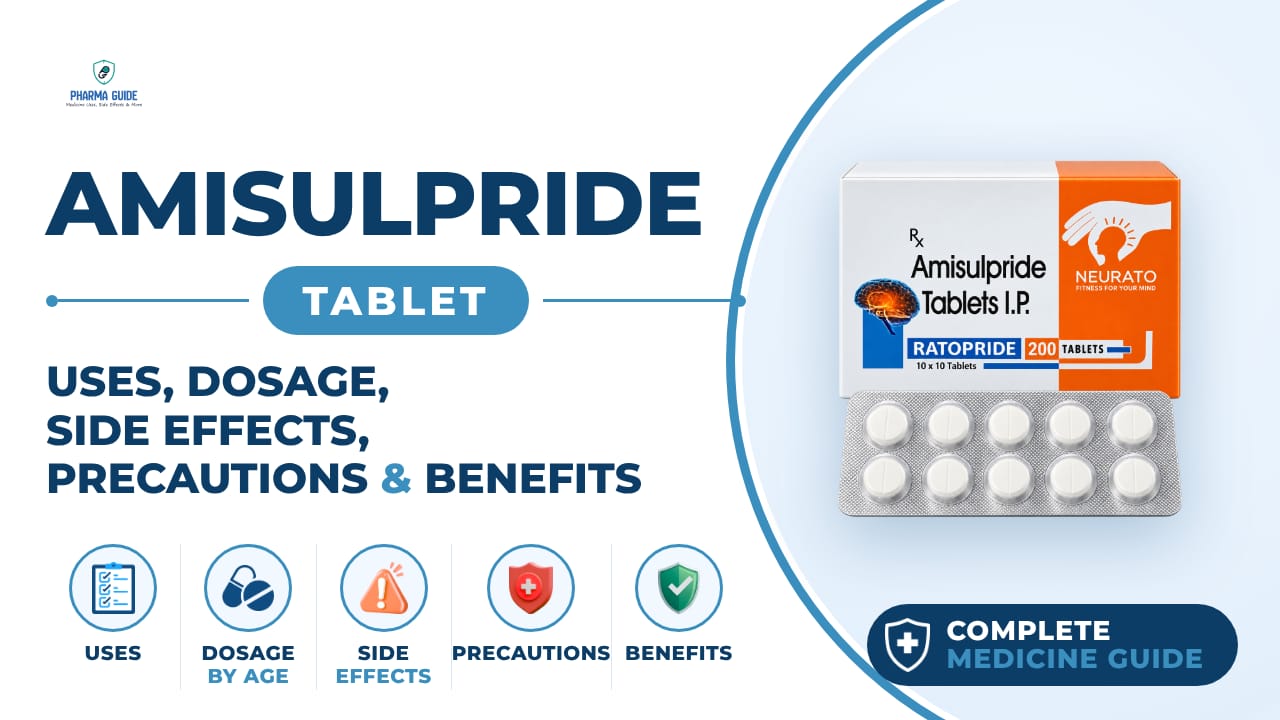
| Generic name | Amisulpride |
|---|---|
| Drug class | Atypical antipsychotic (dopamine D2/D3 receptor antagonist) |
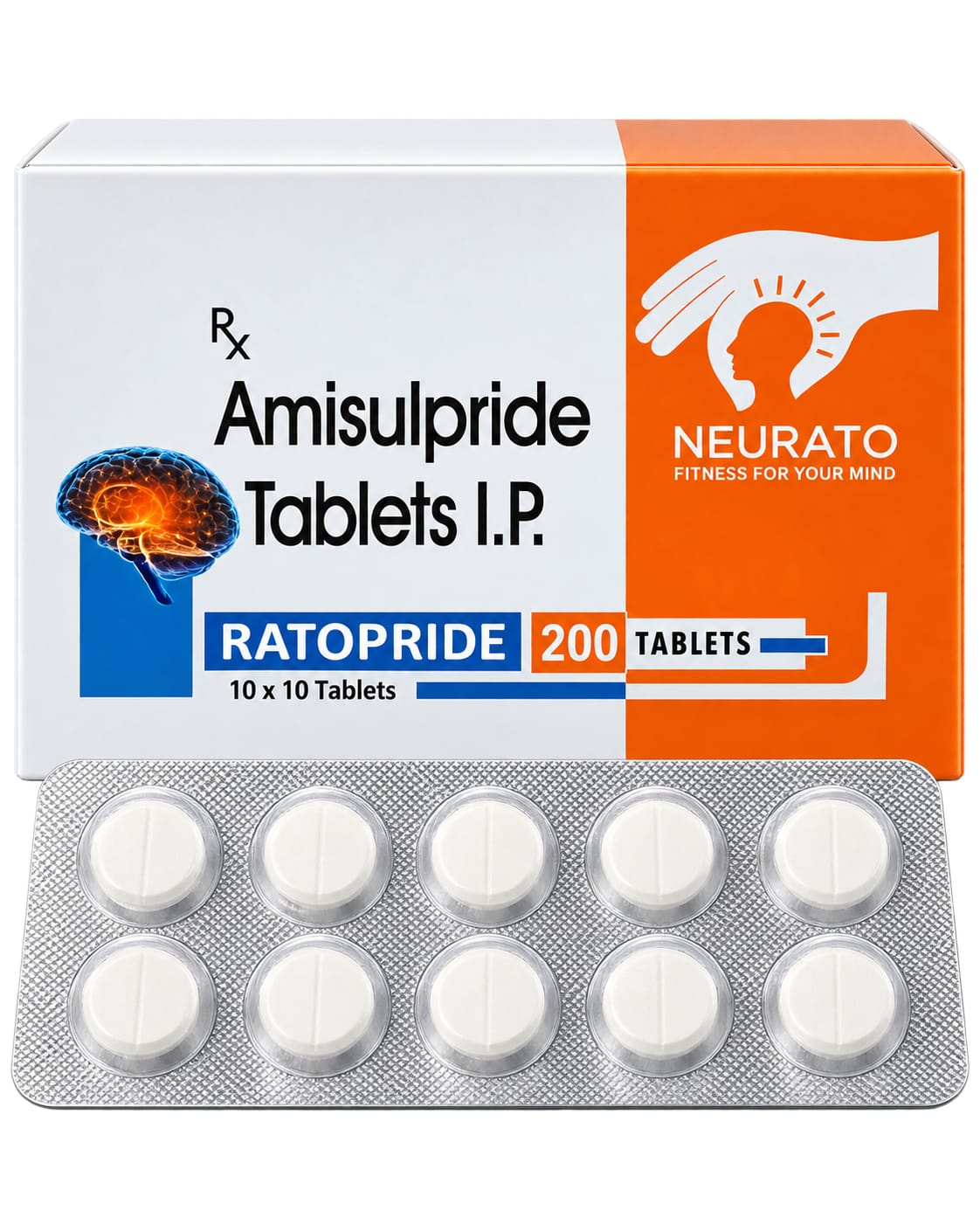
| Forms | Tablet |
Quick overview
Amisulpride Tablet is an atypical antipsychotic medicine used to treat symptoms like hallucinations, delusions, and thought disturbances, as well as lack of interest and apathy, that occur with mental disorders such as psychosis and schizophrenia. It works by blocking dopamine receptors in the brain, with different effects at low and high doses. This medicine is available as a tablet and should be used exactly as prescribed by your doctor.
What is Amisulpride Tablet
Amisulpride is an atypical antipsychotic medicine. It is used to treat symptoms like hallucinations, delusions, and thought disturbances, as well as lack of interest and apathy, that can occur with mental disorders such as psychosis and schizophrenia.
Amisulpride Tablet uses
- Acute and chronic schizophrenia, including both positive symptoms (hallucinations, delusions, confused thinking) and negative symptoms (social withdrawal, emotional flatness, apathy)
- Acute psychosis
- Helps improve attention, working memory, and depressive or anxiety symptoms linked to psychotic disorders
Benefits of Amisulpride Tablet
- Low doses help improve negative symptoms such as low motivation and poor social interaction
- Higher doses help control positive symptoms like hallucinations, confused thinking, and delusions
- May help improve attention and working memory
How Amisulpride Tablet works
This medicine works by blocking dopamine receptors in the brain. At low doses it blocks receptors that release dopamine, which increases dopamine activity and helps reduce negative symptoms. At higher doses it blocks dopamine receptors directly, which calms down overactive dopamine signals and helps reduce positive symptoms like hallucinations.
Amisulpride Tablet dosage
Take this medicine at least an hour before food. Drink plenty of water while taking this medicine. Your dose may change over time based on how you respond to treatment. Continue taking this medicine for the full recommended duration even if you start feeling better. If you miss a dose, take it as soon as you remember, but skip it if it is almost time for your next dose.
| Age group | Dose |
|---|---|
| Under 15 years | Contraindicated under current UK product labeling; no approved pediatric dosage |
| 15–17 years | Not routinely recommended; no established standard dosage |
| 18–64 years | Acute psychotic symptoms: 400–800 mg daily; predominantly negative symptoms: 50–300 mg daily |
| 65–74 years | No established age-specific dosage; treatment generally not recommended under some current UK labels because of increased adverse-effect risks |
Available forms and strengths
- Tablet
Side effects of Amisulpride Tablet
Common
- Weight gain and increased appetite
- Constipation, dry mouth, nausea, and stomach discomfort
- Drowsiness, sedation, insomnia, anxiety, dizziness
- Mild tremors
- Muscle stiffness, spasms, restlessness, or slow movement
- Irregular menstrual periods, lack of ovulation, milk discharge from the breasts, or breast enlargement in males
- Fever, excessive sweating, change in heart rate
- Restless legs, twitches in the tongue and face, trembling, excessive salivation
- Decreased libido
- Agitation and anxiety
Serious
- Heart rhythm problems, including QT interval prolongation or serious irregular heartbeats
- Neuroleptic Malignant Syndrome (a rare, life-threatening reaction with high fever, severe muscle rigidity, rapid breathing, and confusion)
- Severe chest pain
- Swelling, pain, and redness in the legs
- Increased frequency of infections
- Severe skin allergy
- Seizures
- Low potassium level with leg cramps, irregular heartbeats, fluttering in the chest, increased thirst or urination, numbness or tingling, or muscle weakness
- Sudden dizziness like you might pass out
- Fast or pounding heartbeats, fluttering in the chest
- Shortness of breath
- Signs of an allergic reaction such as hives, difficulty breathing, or swelling of the face, lips, tongue, or throat
- Suicidal thoughts or changes in behavior
Warnings and precautions
- Do not use this medicine if you have a prolactin-dependent tumor, a rare adrenal gland tumor called pheochromocytoma, severe liver or kidney disease without dose adjustment, or if you are breastfeeding.
- This medicine should not be used in people with Parkinson's disease, as it can make symptoms worse.
- This medicine should be used with caution in people with heart rhythm disorders, as the risk of serious side effects is higher.
- This medicine should not be used in people with a history of Neuroleptic Malignant Syndrome, and it should be restarted only with caution if this has happened before.
- This medicine should not be used in children who have not yet gone through puberty, due to a higher risk of hormone-related side effects and growth problems.
- Elderly people should use this medicine with caution because they have a higher risk of serious side effects.
- This medicine should be started only after low potassium levels in the body have been corrected, and should be used carefully in people with low potassium.
- This medicine has been linked to suicidal thoughts in some patients. Patients should be counseled about this, and any change in behavior suggesting suicidal thoughts should be reported to the doctor.
- This medicine has some potential for abuse and habit-forming behavior has been reported in a few cases.
- Use of this medicine during pregnancy is not recommended unless absolutely necessary. It should only be used if the benefits outweigh the risks.
- This medicine is not recommended while breastfeeding. If it must be used, breastfeeding should be stopped, so talk to your doctor first.
- This medicine should be used carefully in people with reduced kidney function, and your doctor may need to adjust your dose and monitor you closely.
- This medicine should not be used in people with severe liver disease unless the dose is adjusted by a doctor.
- Avoid or limit alcohol while taking this medicine, as it increases the risk of side effects such as confusion, lack of focus, anxiety, and drowsiness. Contact your doctor if you feel very drowsy.
- This medicine can cause moderate to severe drowsiness and may reduce your ability to concentrate, so avoid driving or operating heavy machinery after taking it.
Storage
- Store at or below 25°C (some regional product guidelines permit up to 30°C). Do not store the medication in warm areas like bathrooms or near kitchen stoves.
- Keep the tablets in their original blister pack or container to protect them from light and humidity. Do not remove them and store them in a daily pill organizer unless advised otherwise.
When to see a doctor
- Get emergency medical help if you have signs of an allergic reaction, such as hives, difficulty breathing, or swelling of your face, lips, tongue, or throat.
- Call your doctor right away if you have sudden dizziness like you might pass out, fast or pounding heartbeats, fluttering in your chest, or shortness of breath.
- Call your doctor right away if you have signs of low potassium, such as leg cramps, constipation, irregular heartbeats, fluttering in your chest, increased thirst or urination, numbness or tingling, or muscle weakness.
- Seek immediate emergency care if you develop signs of Neuroleptic Malignant Syndrome, such as high fever, severe muscle rigidity, rapid breathing, and confusion.
- Contact a doctor if you suspect an overdose, which may cause excessive drowsiness, a drop in blood pressure, agitation, or coma.
Alternatives
- Quetiapine
- Olanzapine
- Risperidone
- Aripiprazole
Watch the video
FAQs
What is Amisulpride Tablet used for?
It is used to treat symptoms like hallucinations, delusions, and thought disturbances, as well as lack of interest and apathy, that occur with mental disorders such as psychosis and schizophrenia.
How does Amisulpride Tablet work?
It works by blocking dopamine receptors in the brain. At low doses it increases dopamine activity to help reduce negative symptoms, while at higher doses it blocks dopamine receptors directly to calm overactive signals and reduce positive symptoms like hallucinations.
How should I take Amisulpride Tablet?
Take this medicine at least an hour before food and drink plenty of water while taking it. Continue taking it for the full recommended duration even if you start feeling better, and if you miss a dose, take it as soon as you remember unless it is almost time for your next dose.
What are the common side effects of Amisulpride Tablet?
Common side effects include weight gain, constipation, dry mouth, nausea, drowsiness, insomnia, anxiety, dizziness, mild tremors, muscle stiffness, irregular menstrual periods, and decreased libido.
Can Amisulpride Tablet be used during pregnancy or breastfeeding?
Use during pregnancy is not recommended unless absolutely necessary and only if benefits outweigh risks. It is not recommended while breastfeeding, so breastfeeding should be stopped if it must be used.
General information, not medical advice
Your prescriber and the leaflet in your pack know your situation. This page does not.
- Follow your prescriber and the leaflet
- Don't start, stop, or change a dose on your own
- Doses and warnings differ by country and product
Sources
Video
Related medicines

Injectafer Injection: Uses, Dosage, Side Effects, Precautions and Alternates
Iron products
Injectafer (ferric carboxymaltose) treats iron deficiency anemia and heart failure-related iron deficiency via IV. Learn uses, dosage, side effects, and

Gliclazide Tablet: Uses, Dosage, Side Effects, Precautions and Alternates
Sulfonylurea (hypoglycemic/antidiabetic agent)
Gliclazide Tablet is a sulfonylurea for type 2 diabetes that boosts insulin release. Learn about dosage, side effects, warnings, and precautions.